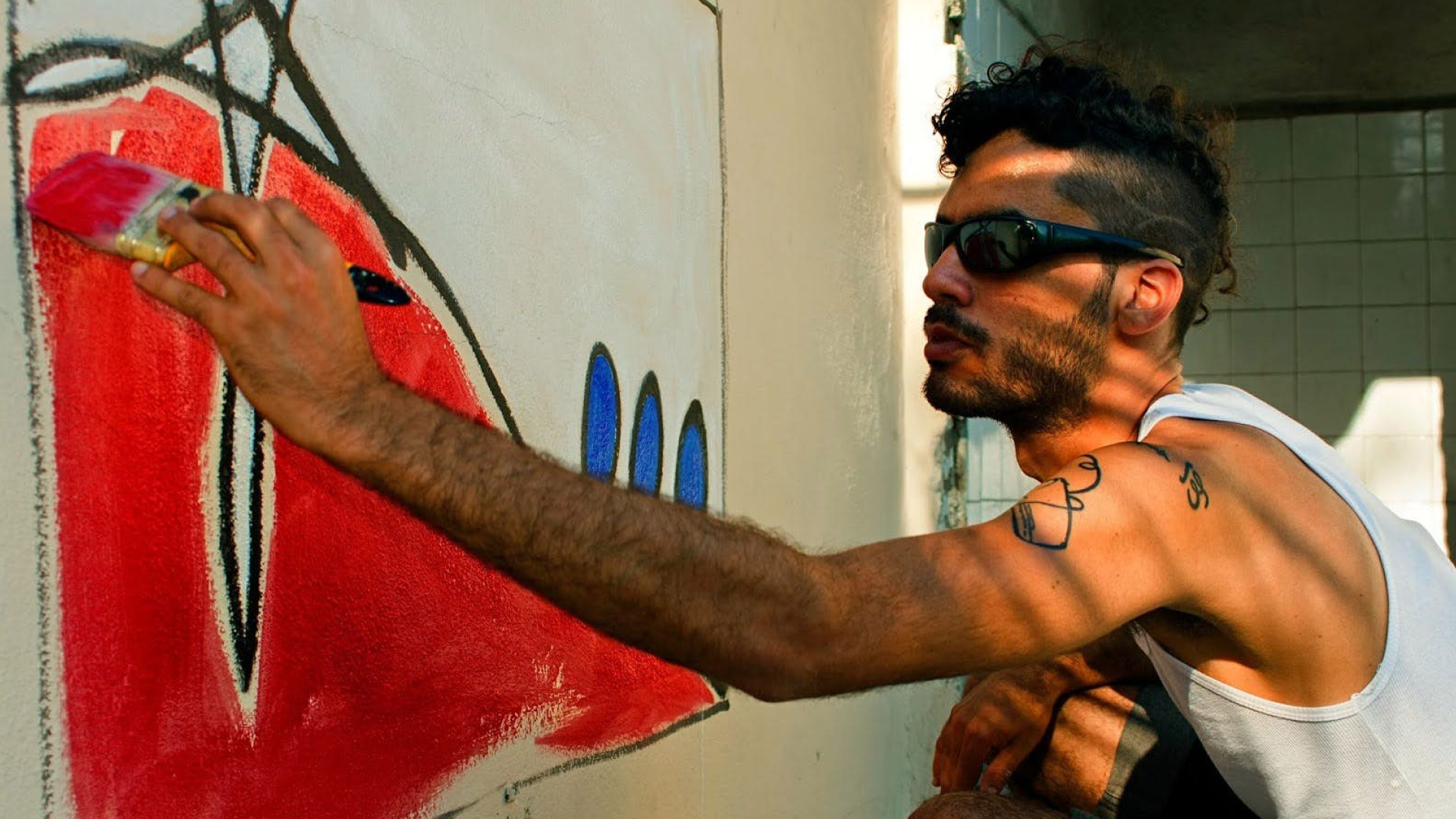
In December, Maldonado was arbitrarily arrested and accused of criminal defamation for “insulting” the leaders of the Cuban revolution. Though he was never formally charged, he spent almost 10 months in jail. Last Sunday, Maldonado was detained again while marching with the Ladies in White on their traditional Sunday walk that calls for freedom and democracy in Cuba. Maldonado was handcuffed and taken back to his house in a police car to prevent his participation in the peaceful march.
“The release of El Sexto was possible thanks to the intense campaign launched by international organizations and activists, both in Cuba and abroad. Unfortunately, this is not the fate of many of the regime’s other prisoners of conscience, whose cases never make headlines in the media. We should keep in mind that El Sexto’s case is not the first, and will not be the last, as long as Cuba remains a totalitarian state,” said Thor Halvorssen, president of HRF. “This case shows the completely arbitrary nature of the Cuban justice system, governed by a despotic dynasty for more than half a century,” added Halvorssen.
Maldonado was arrested on December 25, 2014, while on his way to present a performance art piece called “Rebelión en la Granja” — the Spanish title of George Orwell’s classic “Animal Farm” — which included two pigs emblazoned with the names Fidel and Raúl. His vehicle was stopped before he could reach the site of the presentation. Nevertheless, Maldonado was arrested and accused of criminal defamation under article 144(2) of the Cuban Criminal Code. This article makes “insulting” or “offending” high-ranking public officials a felony punishable by up to three years in prison.
During his imprisonment, Maldonado was denied access to an independent defense attorney because in order to practice their profession, all lawyers in Cuba are obligated to “consciously assume and contribute — within their duties — to defend, preserve, and be faithful to the principles comprised in the nation, the Revolution [ … ],” and this should be done “imbued with the righteous, noble, and humane ideas [ … ] inspired by the example set by the Commander in Chief Fidel Castro Ruz.”
On Tuesday, October 20, after nearly 10 months of arbitrary imprisonment, Maldonado was released by a government official who introduced himself as a “mediator.” The government official warned him “not to make the same mistake” while handing him a one-page report on prison letterhead that contained the phrase “modification of precautionary measure,” presumably pending trial. In a phone call with HRF, Maldonado said that he is unaware whether the case against him remains open. During his imprisonment, Maldonado was never notified in writing about formal charges, yet the court denied four requests to end his pre-trial detention.
In May, Maldonado was awarded the Václav Havel International Prize for Creative Dissent during HRF’s Oslo Freedom Forum for his bravery and ingenuity in peacefully denouncing the Cuban dictatorship. In September, Amnesty International declared Maldonado a “prisoner of conscience, detained solely for peacefully exercising his right to freedom of expression.”
“Criminal defamation charges for ‘insulting’ or ‘offending’ public officials are commonly used by authoritarian regimes as a tool to repress expression critical of the government and promote self-censorship. As the Inter-American Commission on Human Rights has already established, criminal defamation or insult laws violate the American Declaration of the Rights and Duties of Man, of which Cuba is a signatory,” said Javier El-Hage, chief legal officer of HRF. “The case of Danilo is one of dozens, maybe hundreds of cases in a country that imposes sweeping content-based restrictions to speech by artists. Under article 39 of the regime’s 1976 constitution, ‘artistic creativity is free as long as its content is not contrary to the revolution,’” added El-Hage.