

Read The Signal
On September 9, the Israel Defense Forces struck Doha, the capital of Qatar, killing five members of Hamas and one Qatari security officer. Israeli officials initially claimed the White House had signed off on the operation. The United States said it had been notified shortly before—not by Israel but by General Dan Caine, the chairman of the U.S. Joint Chiefs of Staff. While President Donald Trump suggested the strike might ultimately “serve as an opportunity for peace,” he called it “unfortunate” and criticized it publicly: “Unilaterally bombing inside Qatar, a Sovereign Nation and close Ally of the United States, that is working very hard and bravely taking risks with us to broker Peace, does not advance Israel or America’s goals.” The emir of Qatar was less ambivalent, calling it “an act of state terrorism.”
Although this wasn’t Israel’s first or last recent strike inside neighboring states, the Qatar hit was unprecedented. Unlike Iran, Qatar is a close partner of the U.S., hosting the largest American military base in the region.
Also unlike Iran, it has considerable sway in American politics. For years, the Qataris have been building out a powerful lobbying network in Washington. In May, they gave Trump a huge, ornate jumbo jet—a “palace in the sky,” per media commentary—supposedly worth US$400 million. They’re going into business with members of Trump’s family. And they’re cultivating relationships with right-wing influencers: The Qatari lobbying firm Lumen8 Advisors set up the interview the American political-media personality Tucker Carlson did with the prime minister of Qatar earlier this year.
What’s Qatar after here?
Nick Cleveland-Stout is a research associate in the Democratizing Foreign Policy program at the Quincy Institute for Responsible Statecraft and a co-author of the recent report “Soft Power, Hard Influence: How Qatar Became a Giant in Washington.” Cleveland-Stout says Qatar’s leadership has a strategy to develop its soft power internationally—and that strategy has two main parts: At home, they’re positioning Doha as a global capital of conflict mediation. And in the U.S., they’re buying as much influence as they possibly can. Which is a lot. No fewer than three of their former consultants and lobbyists have entered senior ranks in the Trump administration, one being the current head of the Federal Bureau of Investigation.
What may be most striking, to Cleveland-Stout, is how reactive the Qataris’ U.S.-influence strategy is. They’re spending big in Washington mainly to ward off challenges from their regional rivals—above all, Saudi Arabia, the United Arab Emirates, and Israel. All these countries have more entrenched lobbies in the U.S. capital; all of them pose a security threat to Qatar—which needs as much sway as it can get with the Americans on account of being so reliant on U.S. security guarantees. But the Israeli strike in Doha—that’s something new for the Qataris: an unprecedented test of how much all their spending can actually protect them when it matters …
Gustav Jönsson: Why were there Hamas negotiators in Qatar in September?

Nick Cleveland-Stout: Qatar has become the go-to mediator in the Middle East. A lot of people might think Qatar must be an American adversary because it hosts a Hamas office in Doha, but that’s because the United States requested it more than 10 years ago. The U.S. has a lot of baggage in the Middle East—many there simply won’t trust American initiatives—so the Americans see the value in having a regional partner like the Qataris, who can keep channels of dialogue open—not just with Hamas but also with, say, the Taliban.
Jönsson: How would you describe Qatar’s global influence strategy and the priorities driving it?
Cleveland-Stout: In 2017, there was this tremendous spat at the GCC—the Gulf Cooperation Council—where Saudi Arabia and the United Arab Emirates led a group of countries in blockading Qatar. At that moment, Qatar’s leaders realized they just didn’t have the influence on the global stage to prevent something like that from happening.
Qatar is a small country—of about 3 million people, only 350,000 of whom are Qatari citizens. To protect its ambitions, it needs to punch above its weight; and to punch above its weight, it needs soft power—especially, influence in Washington. Qatar’s positioning of itself as a global mediator has been part of that strategy. And the U.S. has often supported it.
The Guardian recently published a piece that estimated Qatar is currently mediating about 10 active conflicts worldwide. In fact, it’s getting so many mediation requests that it can’t even field them all. Qatar is going all in on soft power. It will host talks with pretty much anybody, whether that’s Hamas or combatants in Congo.
Qatar has become the go-to mediator in the Middle East.
Cleveland-Stout: The Qatar lobby might be the most talked-about lobby in Washington, D.C. Which might in turn surprise people who don’t pay close attention to conversations around foreign influence—but honestly, it’s the lobby I’ve heard most about this year.
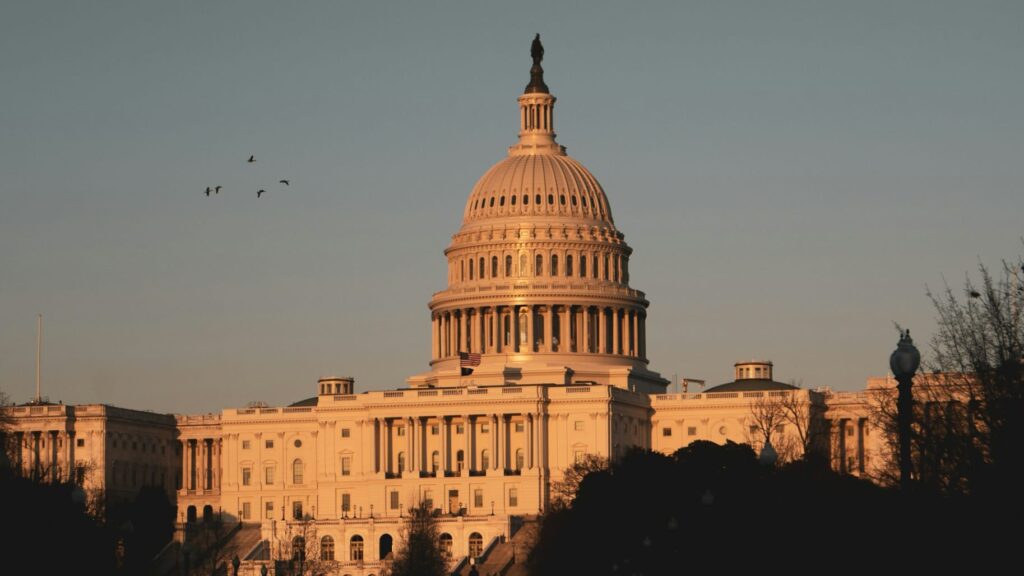
Currently, Qatar has 74 registered foreign agents under the Foreign Agents Registration Act, which is the U.S.’s foreign lobbying law. In total, it has 28 firms working on its behalf. There are several former members of Congress who work for them, including, I’d say most prominently, the former member of the U.S. House of Representatives from Virginia Jim Moran. Qatar isn’t the largest foreign lobby, but it ranks near the top in spending.
The Qatar lobby uses a few principal methods of influence, apart from hiring lobbyists. There’s the money they spend on think tanks—Qatar has had a fairly long and complicated relationship with the Brookings Institution, for example. They’re clearly not just funding think tanks out of the goodness of their hearts; they’re trying to get these institutions to convey the Qatari viewpoint.
Beyond that, some of their investments look more like political than business investments. They’ve been striking deals with close Trump allies and family members like Steve Witkoff and Jared Kushner.
And then there are the really eye-catching moves—like the $400 million jet they gave Trump.
Jönsson: Spectacular.
Cleveland-Stout: It’s a huge, flying conflict of interest.
Jönsson: But what are they trying to get, spending that kind of money?
Cleveland-Stout: A lot of their investment in building up this lobbying infrastructure took place in the wake of the GCC spat. Qatar was clearly caught flat-footed by the blockade. During it, they were even threatened with invasion from Saudi Arabia and the U.A.E. They clearly realized they needed someone to convey their views in Washington.
What surprised me when looking at what the Qataris want is that they’re largely reactive. Much of their lobbying is in response to pressure from pro-Israel groups, the Emirati lobby, and the Saudi lobby. All of which are more powerful than Qatar’s lobby. All of which spend more money, by any metric, than Qatar.
That reactive stance goes back to the GCC spat, yet we’re seeing it still today. To my mind, the October 7 Hamas attack on Israel in 2023 was a test of the Qatar lobby’s strength. Because right afterward, there were lots of think pieces in the media and legislators in Congress saying that Qatar should be treated as an American adversary, since they were hosting Hamas’ political offices in Doha.
Qatar is going all in on soft power.
Qatar has spent lots of money to counteract those claims. It sent its lobbyists to explain to lawmakers in the United States that Hamas’ political office was there at the Americans’ request and that Qatar is an important mediator between the U.S. and Hamas—essentially, to convey the Qatari government’s narrative.
They’ve had mixed success. But a lot of the proposals on the table right after October 7, like sanctioning Qatar or moving the Al-Udeid Air Base—the biggest American military installation in the Middle East—now seem off. So it appears they’ve passed that test, at least.
Jönsson: If there are so many other more powerful lobbies in Washington, why does Qatar get so much attention?
Cleveland-Stout: For a few reasons, but I think number one among them is that the Qatar lobby is the biggest foreign funder of American universities.
Pro-Israel groups especially will bring up that data point to help explain the loss of support among America’s youth for Israel, especially regarding its military campaign in Gaza.
But it’s a misleading statistic, in a way. The vast majority of those funds go toward Education City, which is a hub of U.S. satellite campuses based in Doha. Cornell, Georgetown, Northwestern, Texas A&M, to name a few, have campuses there. When you subtract the funding going toward those campuses, Qatar ranks much lower on the list.
Jönsson: You say Qatar has had some success—how would you grade it?
Cleveland-Stout: It really is mixed. I think they’ve been quite successful with the Trump administration, for which many of their lobbying-and-consultancy alumni now work. You have the director of the Federal Bureau of Investigation, Kash Patel, who’s a former Qatari consultant. You have Attorney General Pam Bondi, who used to work for Ballard Partners, a lobbying firm based in Tallahassee, which was getting $115,000 a month from Qatar. And then you have Lee Zeldin, administrator of the Environmental Protection Agency, which may be a less relevant role for Qatar’s purposes, but who was also a Qatari consultant at one point.
But even though the Trump administration seems genuinely understanding of the Qatari perspective, they still oftentimes defer to Israel over Qatar—as we saw with the recent strike in Doha, when the Israelis appear to have given the Trump administration a heads-up but chose not to tell their Qatari counterparts in time to prevent it.
That said, Trump seems to have a genuinely good relationship with the Qataris, and it’s hard not to imagine that it’s not at least in part because of the former Qatar consultants and lobbyists in the administration. Let’s not forget, Bondi signed the legal memo saying that the transfer of the jumbo jet from Qatar was perfectly legal. If that’s not a conflict of interest, I don’t know what is.
Foreign influence is a bipartisan affair.
But there are still plenty of people in Congress who are very hostile to Qatar, who will still introduce amendments that blame Qatar for October 7, or at the very least see them as an accomplice. So it’s a real mixed bag, especially in the Republican Party, which has people who see it as a great ally as well as those who see it as a sponsor of terrorism.
Jönsson: What about the Democratic side?
Cleveland-Stout: The Democrats are somewhat more understanding of Qatar’s position as a mediator, but there are nonetheless Democrats who will reflexively criticize it. I think that’s largely because they think Qatar has too close a relationship with the Trump administration. You see more Democrats criticize the Qataris for being close with Trump than for their role as a regional partner.
Qatar runs a certain risk. They’ve been focusing too much, it seems, on their relationship with Republican lawmakers, the Trump administration in particular, such that three years from now, if a Democrat becomes president, they might not have the requisite lobbying infrastructure in place. That’s probably on their minds.
But foreign influence is a bipartisan affair. Foreign governments hire whichever lobbying firm the political winds tell them. If they see themselves leaning too hard on the Republican side, they’re going to hire a Democratic firm that can help them make inroads with Democrats.

Looking at their current roster of lobbyists, they have people on both sides. They have ex-staffers for the former Democratic senator Jeanne Shaheen. They have ex-staffers for the current Democratic senator Chris Murphy. They have ex-staffers for a number of former Democratic members of the U.S. House of Representatives. So, I don’t think they’re especially worried in the end—but it’s probably on their minds.
Jönsson: What would you say the Doha strike might show about the limits of Qatari influence?
Cleveland-Stout: I’d say it shows something significant. Israel struck a Gulf country that isn’t just a major non-NATO ally but that also hosts the biggest U.S. military base in the region. The Doha strike totally broke up the negotiations over a ceasefire in Gaza. I saw the strike as a clear indication that despite everything we know about the Qataris’ influence in Washington, they’re still struggling to keep up with their regional competitors—not least, here, the Israelis.
When a reporter recently asked Trump about Qatari influence, his response was that Qatar needs better public relations. Which is fairly ironic considering Qatar is already spending tens of millions of dollars a year on lobbyists and public relations. But its competitors are still outspending it, by a lot—Saudi Arabia, the U.A.E., and, domestically, American pro-Israel groups. Trump understands that money buys influence. And yet this episode shows there are limits to that. You can invest in lobbyists; you can invest in a PR strategy; you can invest in real estate close to presidential allies—you can do all those things, but when Israel decided to execute this strike inside Doha, none of it really mattered. That’s the difference between buying access and having decisive strategic weight in Washington.