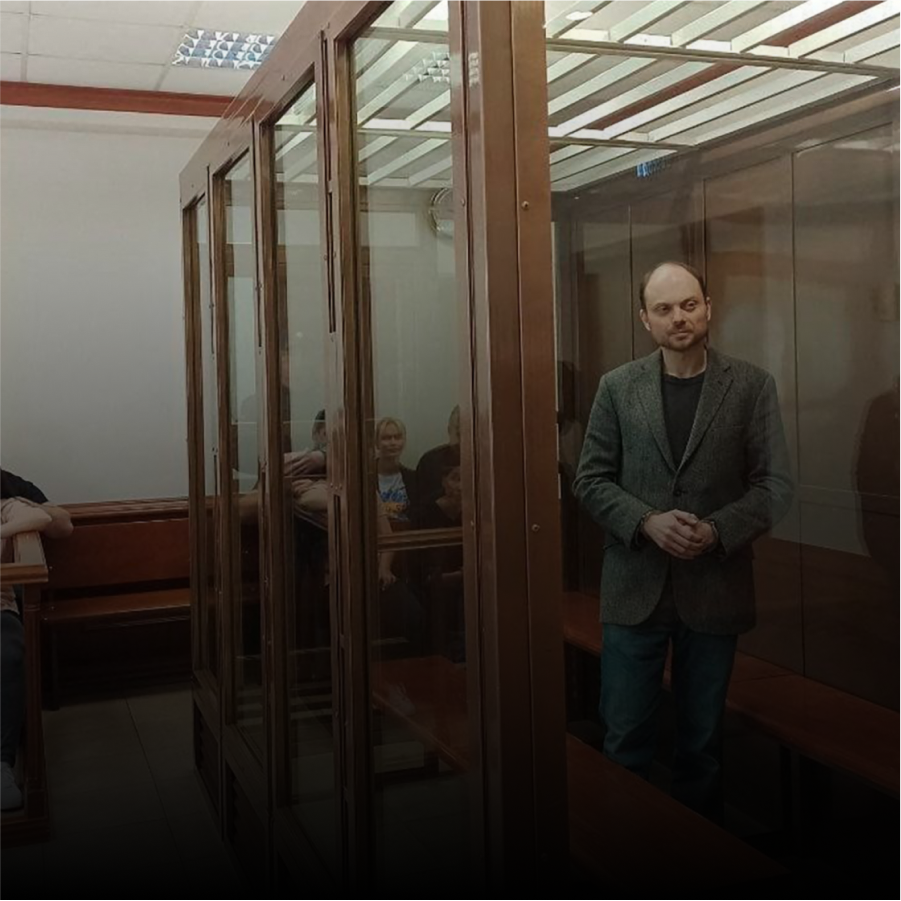

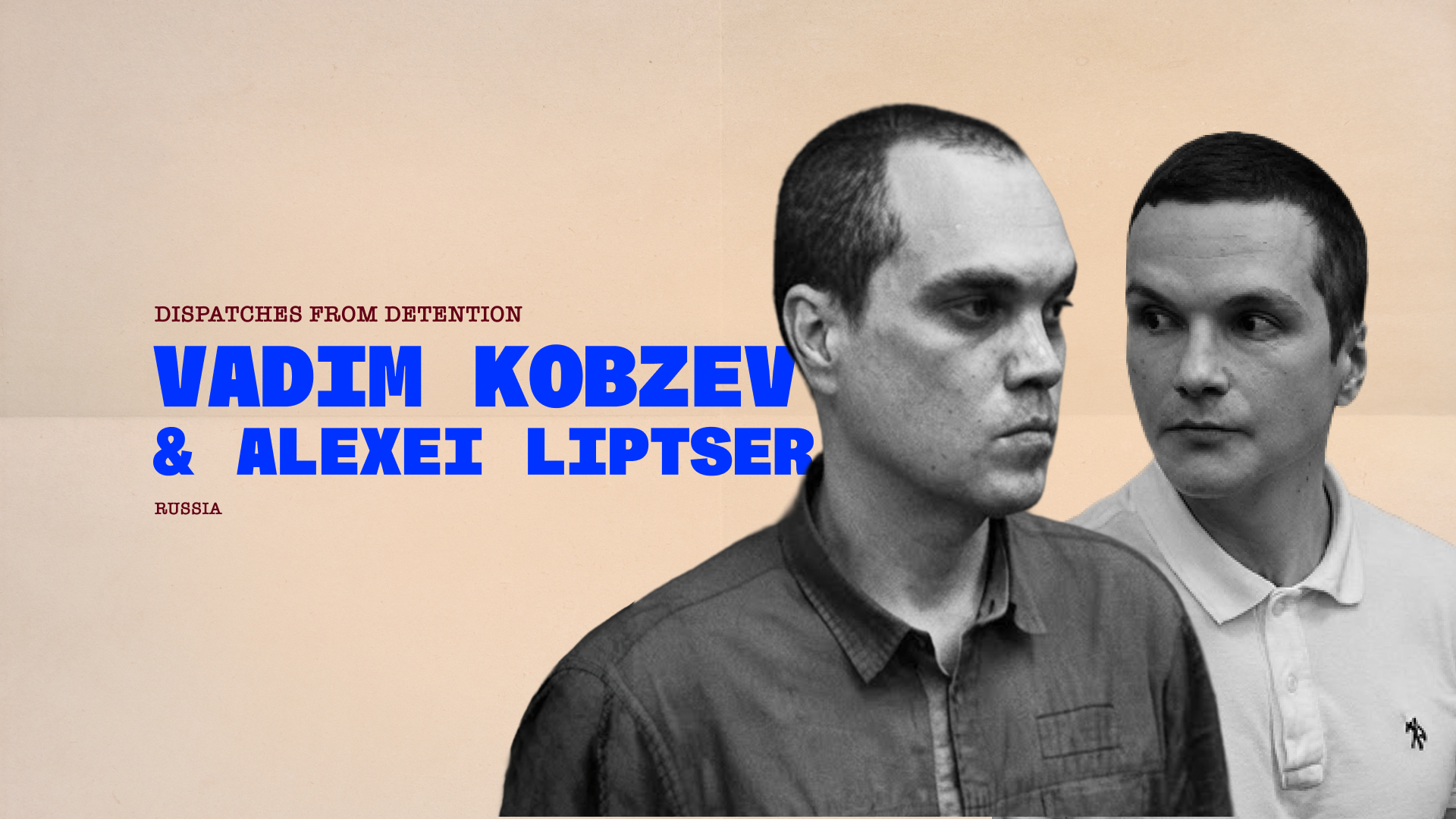
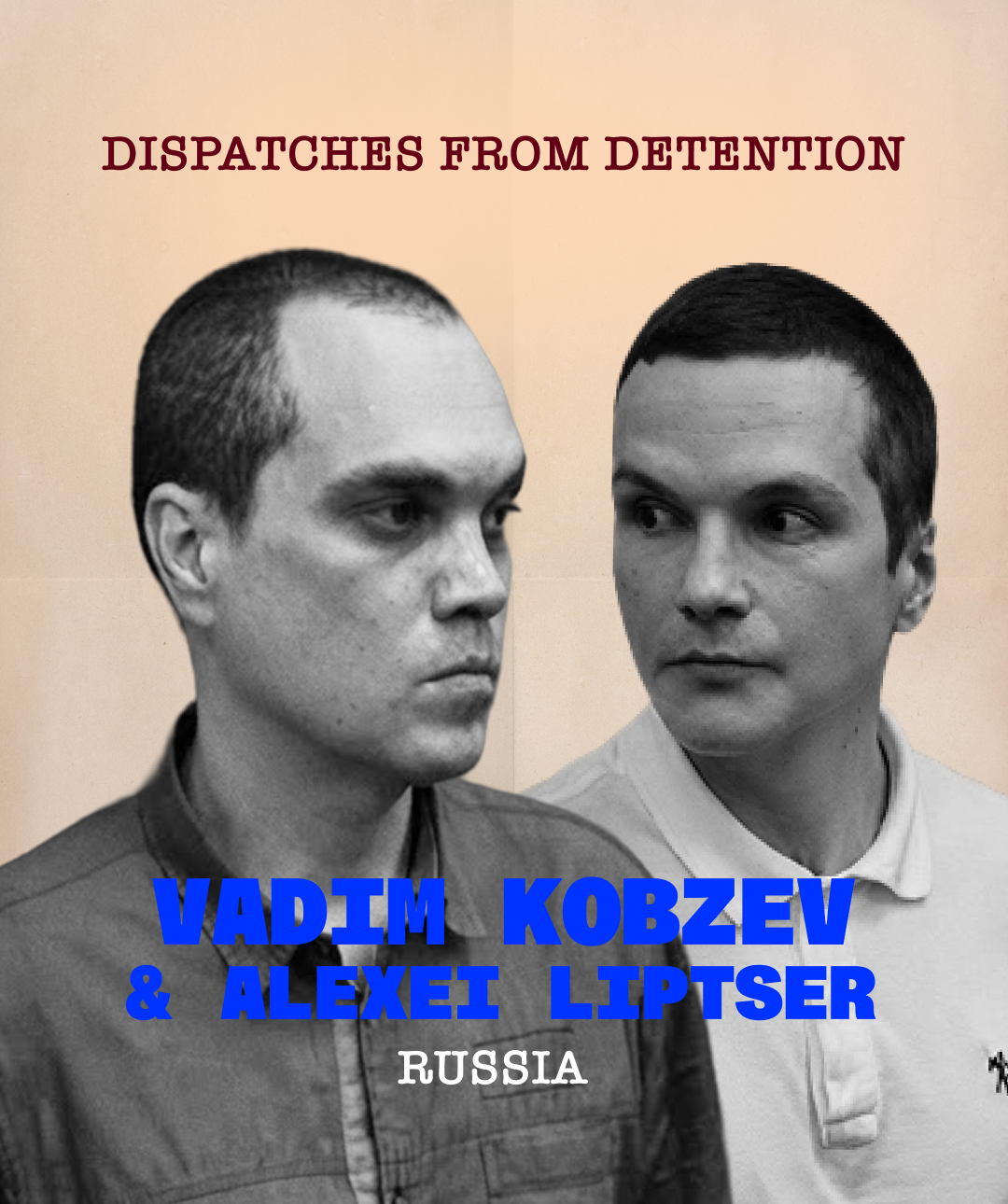

On Oct. 13, 2023, Vadim Kobzev and Alexei Liptser were arrested on so-called “extremism” charges because they had worked as lawyers for the late Russian opposition leader, Alexei Navalny. Before their arrest, Russia had labeled Navalny’s organization, the Anti-Corruption Foundation, as “extremist” in a widely criticized court opinion and then used that designation to target all those who supported Navalny, including his lawyers. Kobzev received a sentence of five and a half years, and Liptser received five years. Both are now imprisoned in remote penal colonies.
In May 2026, an interview with Kobzev — conducted through a series of letters from prison — was shared on a Telegram channel. When asked to reflect on his situation, Kobzev first turned to a quote from “Don Quixote” to explain why he has no regrets:

Yes, perhaps we achieved nothing, perhaps we defeated no one, but at least we can look at ourselves without disgust.”
Kobzev went on to share his thoughts on detention, freedom, and life, explaining the difference between what he called “outer freedom” and “inner freedom”:
Freedom means living the way you want, without submitting to anyone else’s opinion about how you ought to live. Freedom means having the right to choose for yourself how to build your life. This is outer freedom, freedom of action. In everyday and political terms, it can be explained in a simple but comprehensive formula, the one I prefer: freedom is when nobody gets in your way. Ultimately, it comes down to a choice: to be or not to be, to live or not to live.
This kind of freedom can be taken away, unlike inner freedom, the freedom of thought, which means that when you have to choose between ‘I know’ and ‘they say,’ you do not follow the authority of others. You don’t obey, you understand. You don’t believe, you think. For me, refusing to think and refusing to know, outsourcing the production of thoughts and meanings to someone else, whether a popular actor, a famous writer, or the state, constitutes a betrayal of inner freedom. The consequence of it is the loss of self-respect, personal dignity, and any sense of one’s own worth.”
His interviewer asked him to share about his experience in detention and the conditions in the penal colony, but Kobzev instead focused on his love for his family and his decision to live in the present:
I’m not ‘holding up.’ I’m not waiting for anything. I’m not counting the days. I live in the here and now. I was happy before prison, I’m happy in prison, and I know I’ll be happy after. I love life. I love my wife and my children. Scientists say that the capacity for happiness, satisfaction with life, and a predisposition toward well-being are inherited, just like intelligence. Apparently, that’s true, and I’m one of the lucky ones who won the relevant fragment of DNA in the evolutionary lottery.”
Kobzev also drew connections between the Soviet era in Russia and life in the penal colony:
I was born in 1983, so I caught the Soviet era at a very early age – practically not at all. Everything I later learned about life in the Soviet Union closely resembles my current stay in a correctional colony. In both places, life is temporary and directed toward a goal. In the penal colony, that goal is rehabilitation, after which the state may grant you parole or commute your sentence to a lighter one. In the USSR, the goal was communism. In both places, people wear identical clothes and eat identical food. The borders are closed, and communication with the outside world is censored by the state and strictly regulated. Physically leaving the premises is possible only for a small group of prisoners permitted to move about without an escort, and only for work.
…
In both places, the main commandment is: you must not think – the brass has already thought everything through and decided for you.”
When asked to share advice or a wish for those outside of detention, Kobzev resisted, explaining that he does not see himself as a teacher. Instead, he chose to highlight the work of American civil rights leader Rosa Parks:
Any wish carries a preachy connotation. As if to say: I know how things ought to be, so listen to me. I don’t know anything, and I don’t feel I have the right to give advice. I don’t like teaching anyone, and I don’t want to. A fool loves to teach. A wise man loves to learn.
In 1955, in Montgomery, Alabama, USA, Rosa Louise Parks said on a city bus: ‘I’m not moving.’ You know what happened next – the world moved instead.”
HRF calls on Russia to immediately release Vadim Kobzev and Alexei Liptser, and joins in Kobzev’s hope that one day, the world will move for those who refuse to step aside in the face of injustice and tyrants.
A member of HRF’s staff translated this interview into English from the original Russian.