

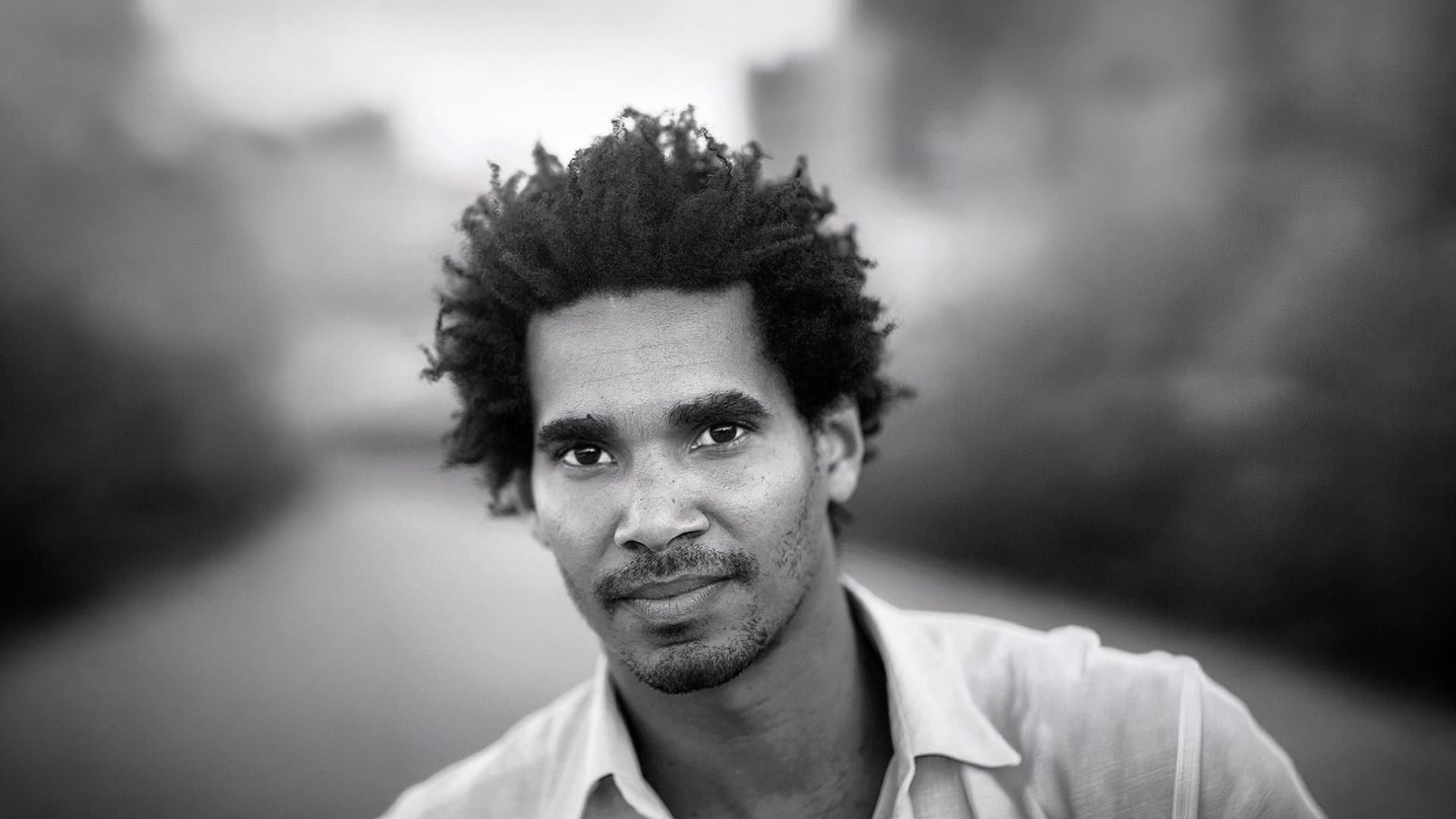
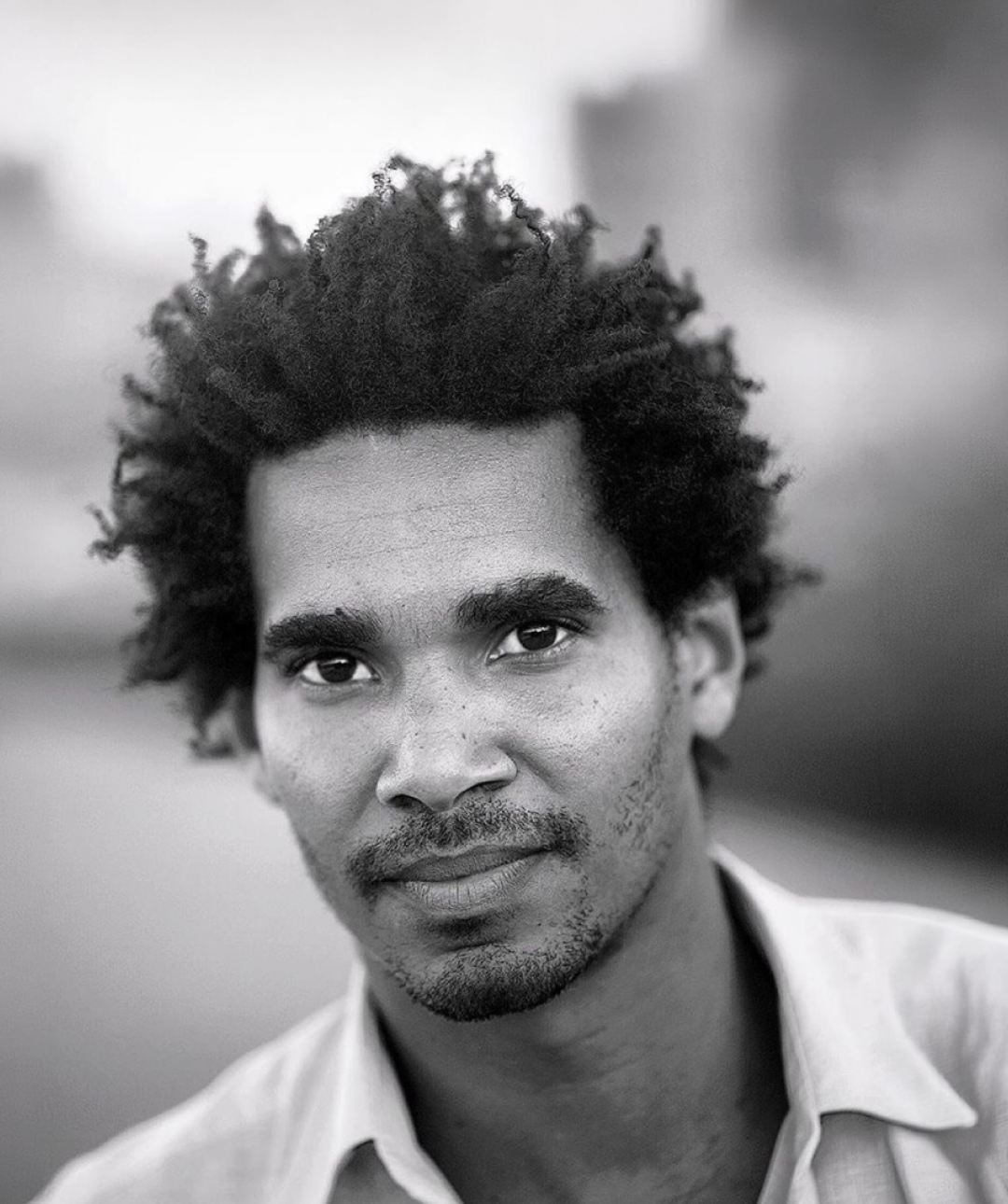

NEW YORK (July 18, 2026) – The Human Rights Foundation (HRF) welcomes the news that artist and prisoner of conscience Luis Manuel Otero Alcántara is no longer behind bars after five years of unjust imprisonment, and condemns the Cuban regime for forcing him into exile as the price of his freedom. On July 18, 2026, Otero Alcántara was placed on a flight to the United States after the regime made clear that he would not be permitted to live freely in his own country. The UN Working Group on Arbitrary Detention (WGAD) had already declared his detention arbitrary and in violation of international law, in response to a petition filed by HRF.
Otero Alcántara completed his five-year sentence on July 9, 2026. Rather than allowing him to return to his home in Havana, agents of Cuban State Security removed him from Guanajay maximum-security prison on July 7 and held him incommunicado at an undisclosed location, without informing his family or legal representatives of his whereabouts.
Otero Alcántara served his sentence in full. Cuban officials denied him the sentence reductions routinely granted under Cuban law, which allows up to 60 days off per year for good behavior. In April 2026, the Criminal Chamber of the People’s Supreme Court rejected an appeal filed on his behalf and confirmed that no reductions would be applied. Political prisoners in Cuba are systematically excluded from these benefits.
Otero Alcántara, a co-founder of the San Isidro Movement and a 2025 laureate of HRF’s Václav Havel International Prize for Creative Dissent, was arrested on July 11, 2021, as he attempted to join the largest anti-regime protests in Cuba in decades. In June 2022, a closed trial sentenced him to five years in prison on bogus charges of “insulting national symbols,” “contempt,” and “public disorder.” He was tried alongside fellow San Isidro Movement member Maykel Castillo Pérez, known as “Osorbo,” the rapper and co-author of the anthem “Patria y Vida,” who was sentenced to nine years on charges that included contempt, assault, and “defamation of institutions and organizations, and of heroes and martyrs.” Castillo Pérez remains in prison today.
In late 2022, acting on a petition submitted by HRF, the WGAD issued an opinion finding that Otero Alcántara’s detention was arbitrary and in violation of international law, and called for his immediate release. The regime ignored this demand for the remainder of his sentence.
Otero Alcántara’s expulsion follows a pattern the regime has applied for decades, one that offers anyone on the island who dares to criticize it only three paths: silence, imprisonment, or exile. In 2021, the regime forced fellow San Isidro Movement member Hamlet Lavastida into exile directly from arbitrary detention; HRF’s petition before the WGAD challenged his imprisonment alongside Otero Alcántara’s. Most of the 75 dissidents imprisoned during the 2003 Black Spring were released only on the condition that they board planes to Spain. Forced banishment does not amount to freedom, and an artist expelled from his own country is stripped of his right to live, create, and organize in his homeland.

We are relieved that Luis Manuel is out of a cell and that his loved ones can finally embrace him. Yet no one should confuse the end of an imprisonment with the restoration of liberty. To offer a citizen only prison or exile is to offer no genuine choice at all; it is coercion dressed as mercy, said HRF Chief Advocacy Officer Roberto González. Democratic governments must stop treating Cuba’s repression as background noise. They must refuse to let forced exile be laundered as clemency, and they must impose real and personal costs on the officials who jail, disappear, and banish those who dare to speak.
The persecution of Otero Alcántara is only one case among many. According to Prisoners Defenders, the number of political prisoners in Cuba is approaching 1,300, a historic high, with more than 175 new cases documented in the first half of 2026 alone. Hundreds of people remain incarcerated for participating in peaceful protests on July 11, 2021.
This machinery of repression is not new. Since the 1960s, the Cuban regime has executed, imprisoned, and banished tens of thousands of its citizens for exercising their basic rights and has driven wave after wave of Cubans into exile. Six decades of dictatorship have been sustained by the same methods now deployed against Otero Alcántara: arbitrary detention, sham trials, and the deliberate destruction of independent civic life.
HRF condemns the Cuban regime for its treatment of Luis Manuel Otero Alcántara and the thousands of Cubans, past and present, who have paid with their liberty and their lives for demanding basic rights. HRF calls on democratic nations to press for the immediate and unconditional release of all political prisoners in Cuba, and to demand that Cubans forced into exile be guaranteed the right to return to their country without reprisal.


HRF’s Impact Litigation Program is made possible through the generous support of the John Templeton Foundation and the Rising Tide Foundation.

The Human Rights Foundation (HRF) is a nonpartisan nonprofit organization that promotes and protects human rights globally, with a focus on closed societies.
Media Request
For interview requests or media inquiries, please fill out the form below.