
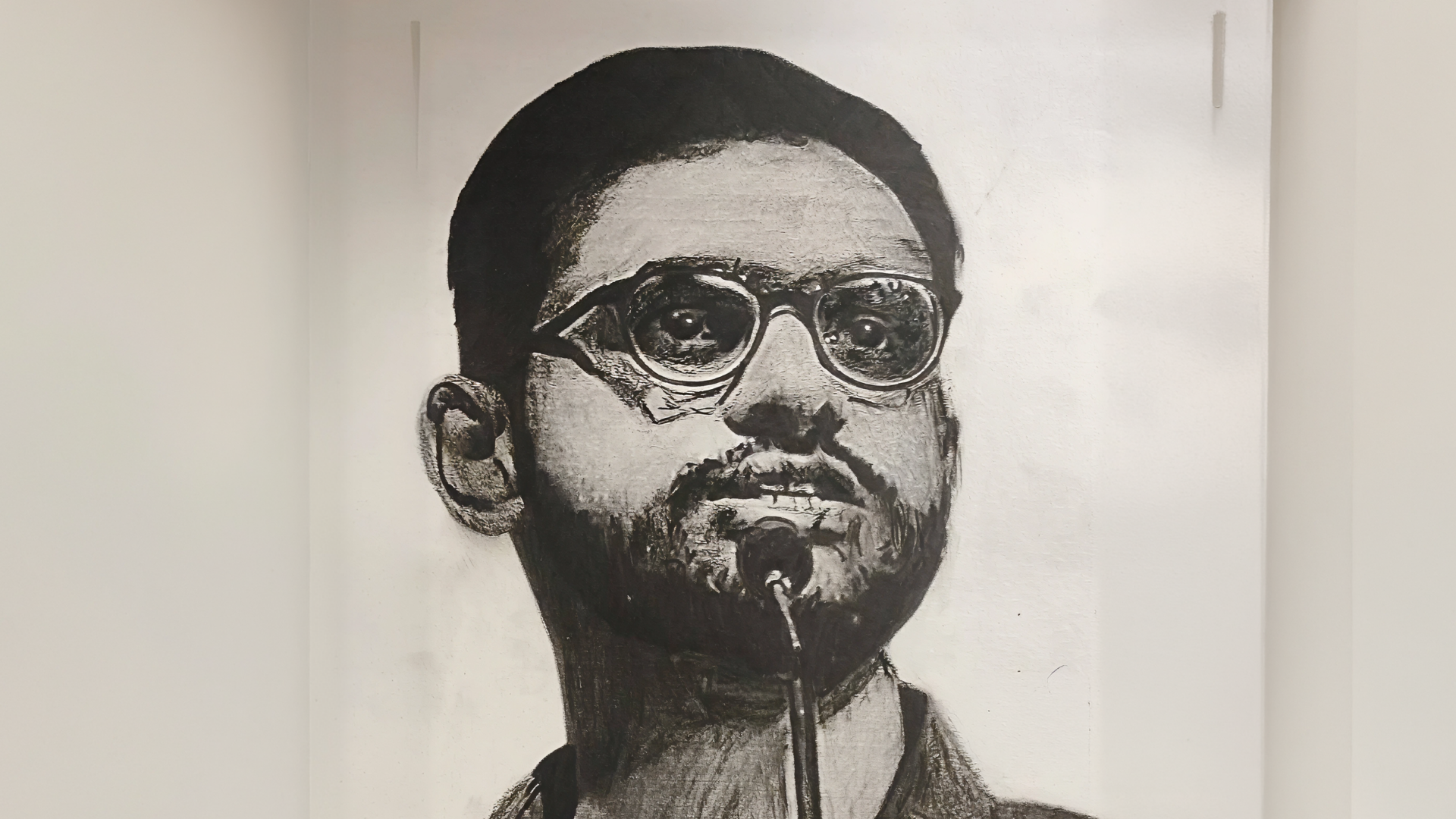

NEW YORK (Mar. 17, 2026) — The Human Rights Foundation (HRF) welcomes the favorable opinion of the UN Working Group on Arbitrary Detention (WGAD), which found India’s detention of activist Umar Khalid to be arbitrary and in violation of international human rights law.
Umar Khalid was arrested in September 2020 after emerging as a prominent voice in nationwide protests against the discriminatory Citizenship Amendment Act, which excludes Muslims from a fast-tracked path to Indian citizenship. He has languished in prison ever since, with his bail repeatedly denied. More than five years after his arrest, his trial is yet to begin.
In March 2025, HRF submitted a petition to the WGAD on Khalid’s behalf, arguing that his detention was legally baseless, discriminatory, and a direct result of the peaceful exercise of his fundamental rights. HRF’s submission highlighted serious fair trial violations, including the use of vague criminal provisions and excessively long pretrial detention. The WGAD transmitted HRF’s allegations to the Indian government through its regular communications procedure, but the government failed to respond.
In its opinion, the WGAD echoed HRF’s arguments and concluded that Khalid’s detention is arbitrary under international law. The Working Group expressed concern over “the application of vague and overbroad provisions of the Unlawful Activities (Prevention) Act to criminalize Mr. Khalid’s peaceful activities.” The WGAD further confirmed that “Mr. Khalid’s detention resulted from his legitimate exercise of the rights to freedom of expression, peaceful assembly, association, and participation in public affairs.”
“This opinion is crucial in a case like Umar Khalid’s, where the authorities have gone out of their way to create the illusion that he was legitimately detained, producing thousands of pages of fabricated evidence and 29 different charges,” said HRF Legal & Research Officer Hannah Van Dijcke. “The Working Group’s opinion establishes once and for all that there was never any lawful basis for Umar’s detention.”
The WGAD also noted that Khalid’s prolonged pretrial detention and repeated denial of bail — despite the absence of any judicial determination of guilt — have effectively violated his presumption of innocence, amounting to punishment through indefinite incarceration for charges that remain unproven and untried.
The Indian judicial system has failed Umar Khalid. It is time for the international community to take meaningful and coordinated action. HRF urges the international community to call for Khalid’s immediate release, and to hold the Indian government accountable for its violations of international law in his case.
HRF’s Tyranny Tracker classifies India as a Hybrid Authoritarian regime. The classification reflects a skewed electoral environment and the Indian judiciary’s failure to curb the misuse of laws against regime critics. Independent media, civil society, and marginalized groups are unfairly hindered in their ability to freely challenge the regime as a result of both legal and extralegal repression.
Supported by a grant from the John Templeton Foundation.