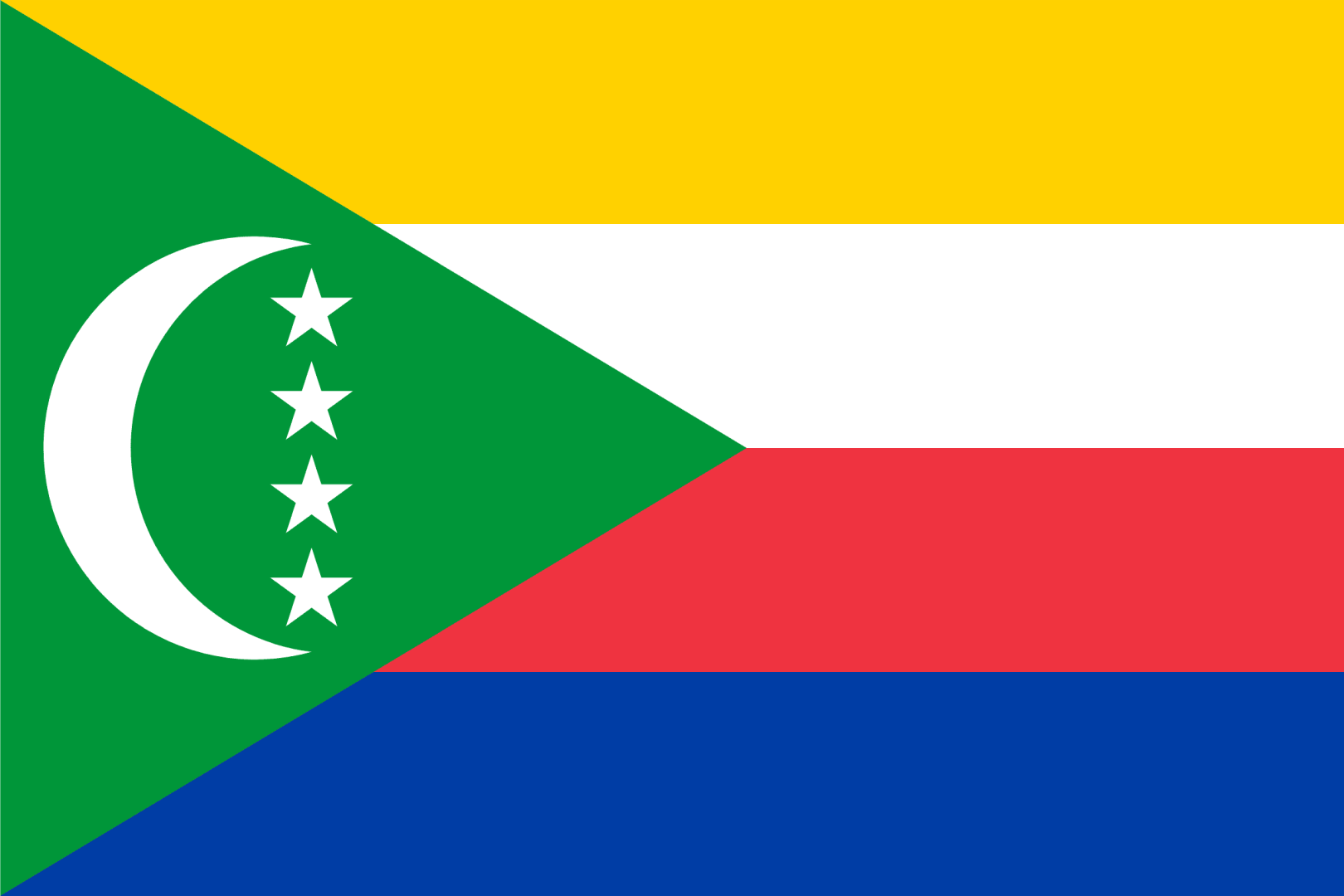
HRF classifies the Comoros as ruled by a fully authoritarian regime.
The Union of Comoros is a federal republic composed of three semi-autonomous Indian Ocean islands – Grande Comore, Anjouan, and Mohéli – with a presidential system of government. The Head of State, Azali Assoumani, a former military officer who previously led a 1999 coup and served an elected term between 2002 and 2006, returned to power through disputed 2016 elections before extending his rule through fraudulent 2019 and 2024 polls. Since gaining independence from France in July 1975, the Union has experienced a turbulent political history, with French mercenary and other foreign military invasions, 21 coup attempts, and secessionist crises. From 2001 to 2016, the archipelago experienced interludes of democratization; however, since coming to power, Assoumani’s regime has consolidated control over all branches of government with no meaningful checks on executive power.
Key Highlights
Elections are a sham, to the point where the real, mainstream political opposition does not have a realistic chance to meaningfully compete and possibly win. The regime has systematically barred opposition candidates, hindered the electoral campaign of opposition parties, undermined electoral oversight, and engaged in systematic, significant voting irregularities or electoral fraud.
Independent media, political leaders, civil society leaders, and members of the general public face overt and systematic retaliation if they openly criticize or challenge the regime. The regime has seriously and unfairly censored dissent, achieved a near monopoly over media coverage, harassed journalists, cracked down on political opposition leaders, and suppressed civil society organizations and public dissent. Authorities routinely deny authorizing protests or gatherings, subjecting protesters to indiscriminate violence and disproportionate force.
Institutions largely fail to serve as independent checks on the regime, allowing it to repress criticism, significantly undermine electoral competition, and consolidate the systematic dismantling of accountability mechanisms. The regime has undermined institutional accountability by abolishing the constitutional court, directly appointing Supreme Court judges, dominating the legislature, and channeling politically sensitive cases to a parallel and contested, regime-controlled State Security Court.