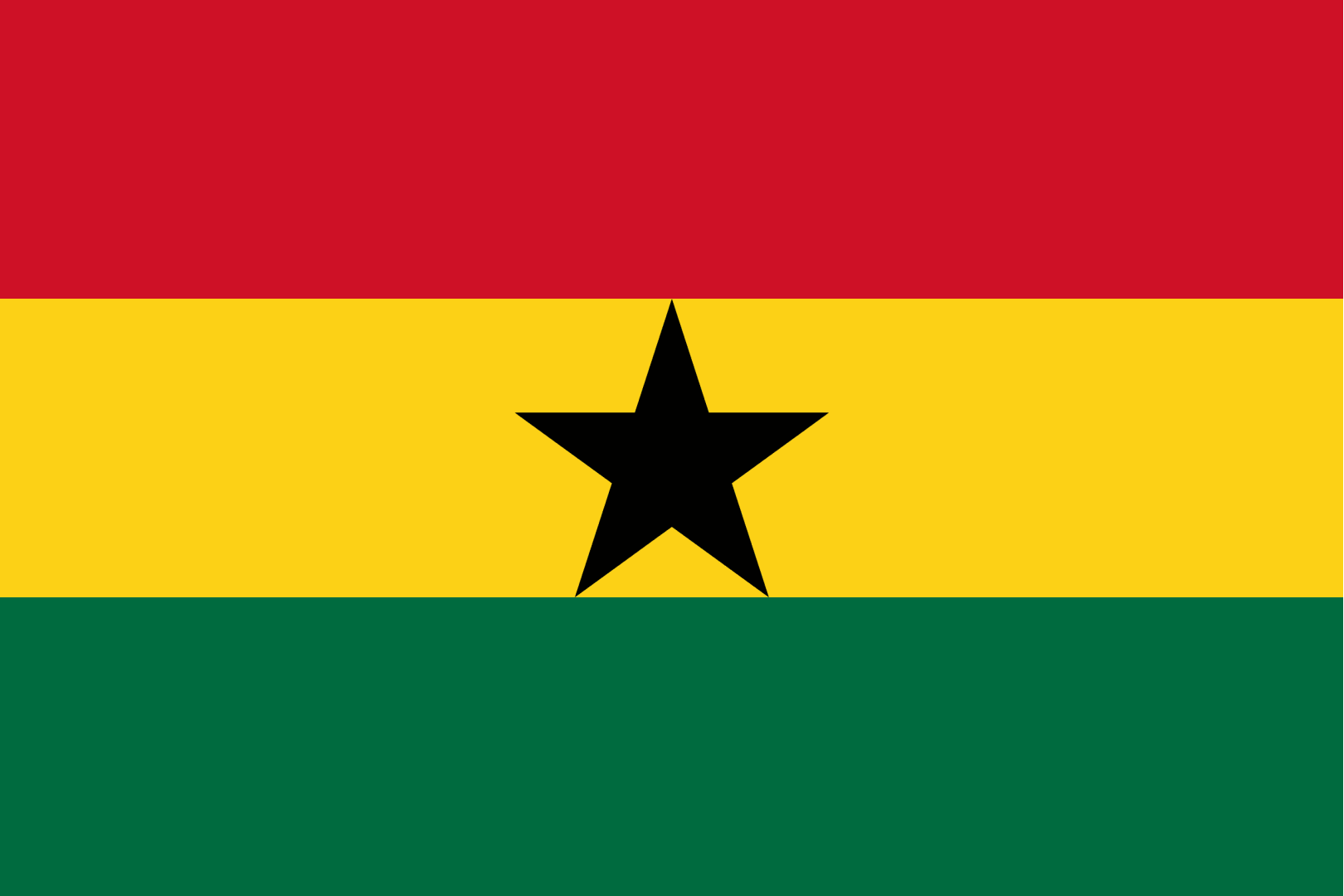
Ghana is a presidential republic. The Head of State, John Dramani Mahama, was democratically elected in the December 2024 presidential election, returning to power after previously serving a presidential term between 2012 and 2017. After gaining independence in 1957, Ghana experienced a series of military coups in 1966, 1972, 1978, and 1981 ushered in a quarter of a century of near-uninterrupted military rule. Since the advent of multi-party democracy in 1992, Ghana has maintained the longest period of uninterrupted civilian rule in its history, with nine consecutive elections marked by four peaceful handovers of power between the two major parties, the National Democratic Congress (NDC) and the New Patriotic Party (NPP).
Key Highlights
National elections are largely free and fair. Under the Fourth Republic, Ghana has enjoyed nine credible general elections and four peaceful transfers of power between the NPP and the NDC. Political parties can freely campaign and contest elections, and there have been no reported instances of incumbent governments restricting the activities of opposition candidates. Ghana’s Electoral Commission is generally viewed as one of the more reputable electoral management bodies on the African continent, though it has faced some past controversies.
Independent media, political leaders, civil society leaders, organizations, and members of the general public are largely free to openly criticize or challenge the government. Civil society in Ghana is robust and offers a vital check on government. The media space is vibrant, and journalists are not seriously repressed. However, the eight years of the last NPP administration (2016-24) saw a concerning pattern of government intimidation of critics and violent suppression of dissenting protests, prompting concerns about democratic backsliding.
Institutions are independent and largely serve as effective checks on the government. Electoral disputes are settled in the Supreme Court, and opposition election petitions are deliberated in a way that appears evidence-based and independent of external influence. Civil society uses the court system to check executive overreach, and institutions such as the Office of the Special Prosecutor help promote accountability. At the same time, the president’s expansive constitutional powers over other branches of government undermine healthy checks and balances necessary for institutional accountability. Capacity constraints and selective anticorruption efforts have limited the effectiveness of formal accountability bodies.