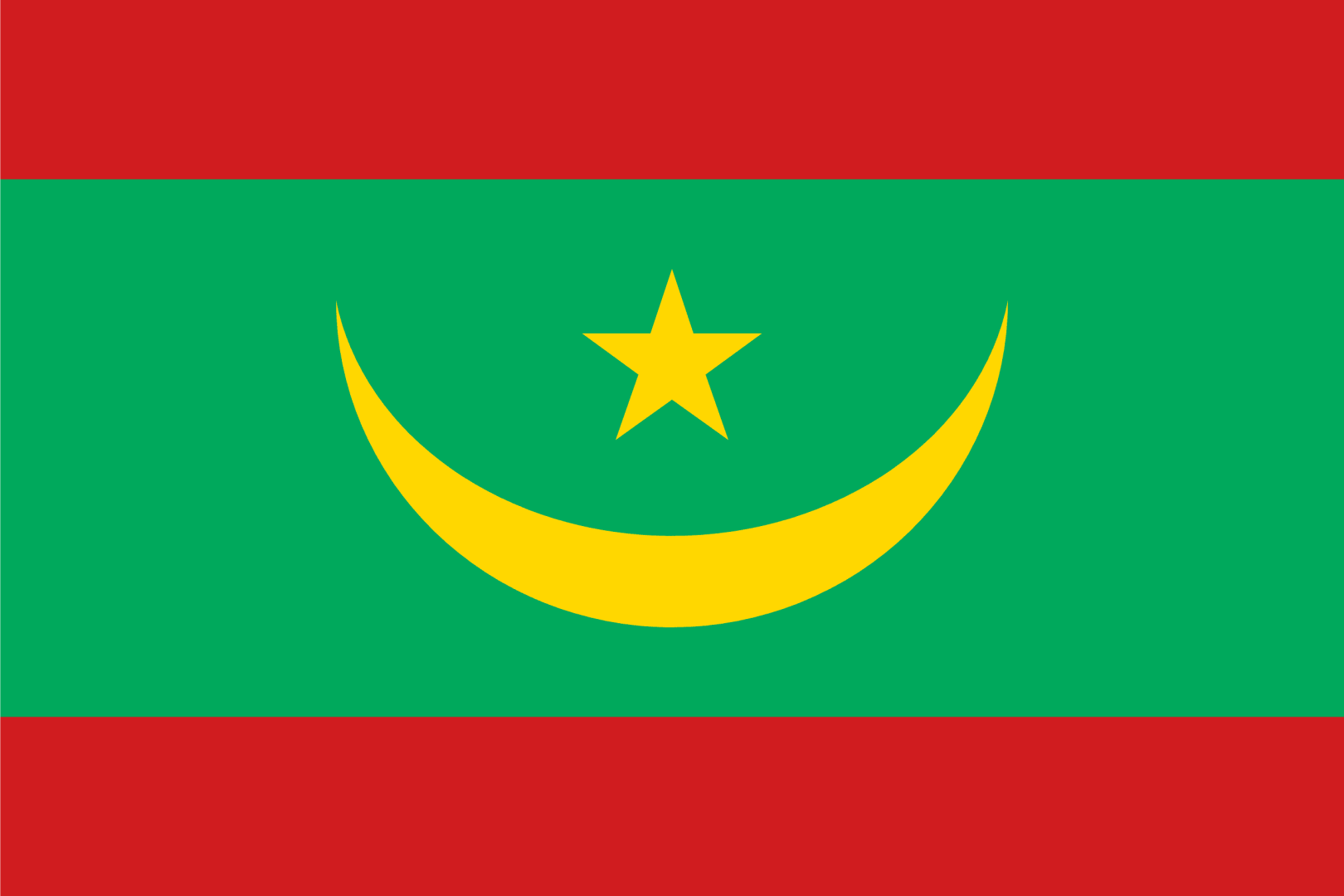
HRF classifies Mauritania as ruled by a fully authoritarian regime.
The Islamic Republic of Mauritania has experienced civilian and military dictatorship and frequent coups d’etat since declaring political independence from France in 1960. Despite the introduction of multi-party politics to regular presidential, parliamentary, and regional elections in 1991, the military continues to maintain consolidated control over executive, legislative, and judicial institutions, as well as influence over informal business elite and tribal networks, amid power struggles between its factions. The current president, Mohamed Ould Ghazouani, a high-ranking military and security official, came to power in the 2019 presidential elections, marking the country’s first peaceful transition of power from Mohamed Ould Abdel Aziz, a military officer who led coups in 2005 and 2008 and served as president for 10 years after winning two engineered elections.
Key Highlights
Elections are a façade to the point where the mainstream political opposition does not have a realistic chance to meaningfully compete and possibly win. Despite improvements made to electoral procedures under Ghazouani, the ruling military party, known as El Insaf or the Equity Party, dominates presidential and parliamentary politics and continues to abuse its power over the three branches of government to restrict the opposition. Since taking power in 2019, Ghazouani’s regime has maintained an unofficial moratorium on registering new political parties. In early 2025, the regime pushed through amendments to the Parties Law under the pretext of strengthening the democratic system that transferred power over party registration and regulation from the judiciary to the regime-controlled Ministry of the Interior. The amendments also introduced sweeping changes to political party regulations that, in practice, disrupt the ability of the opposition to organize and compete. Opposition supporters regularly declare election results as another army coup and face regime retaliation when they protest.
Political leaders, civil society leaders, protesters, and members of the general public are seriously and unfairly hindered in their ability to openly criticize or challenge the regime. At times, the regime abuses the 2021 Symbols Law and the 2016 Cybercrimes Law to restrict the ability of journalists, opposition figures, and dissidents to criticize the president, which encourages an environment of self-censorship across the country. The regime also, at times, unfairly shuts down protests, such as those that accuse the regime of committing electoral fraud in the aftermath of elections, when security forces violently disperse gatherings, storm opposition party headquarters, block access to wireless internet, and arrest politicians, activists, and journalists.
Institutions largely fail to serve as a check on the regime. Despite improvements made to the electoral system, the military regime maintains control and influence over the three branches of government, inhibiting institutions from acting independently or holding officials accountable. The president appoints judges to high courts, and the regime often ignores the rulings of lower courts, which grants a façade of judicial independence while depriving institutions of a real ability to hold regime officials accountable. Although not a systematic pattern, the present regime has also instrumentalized its influence over the courts to target political opponents, exemplified by the politically-motivated trial and sentencing of former president Mohamed Ould Abdel Aziz on embezzlement charges.