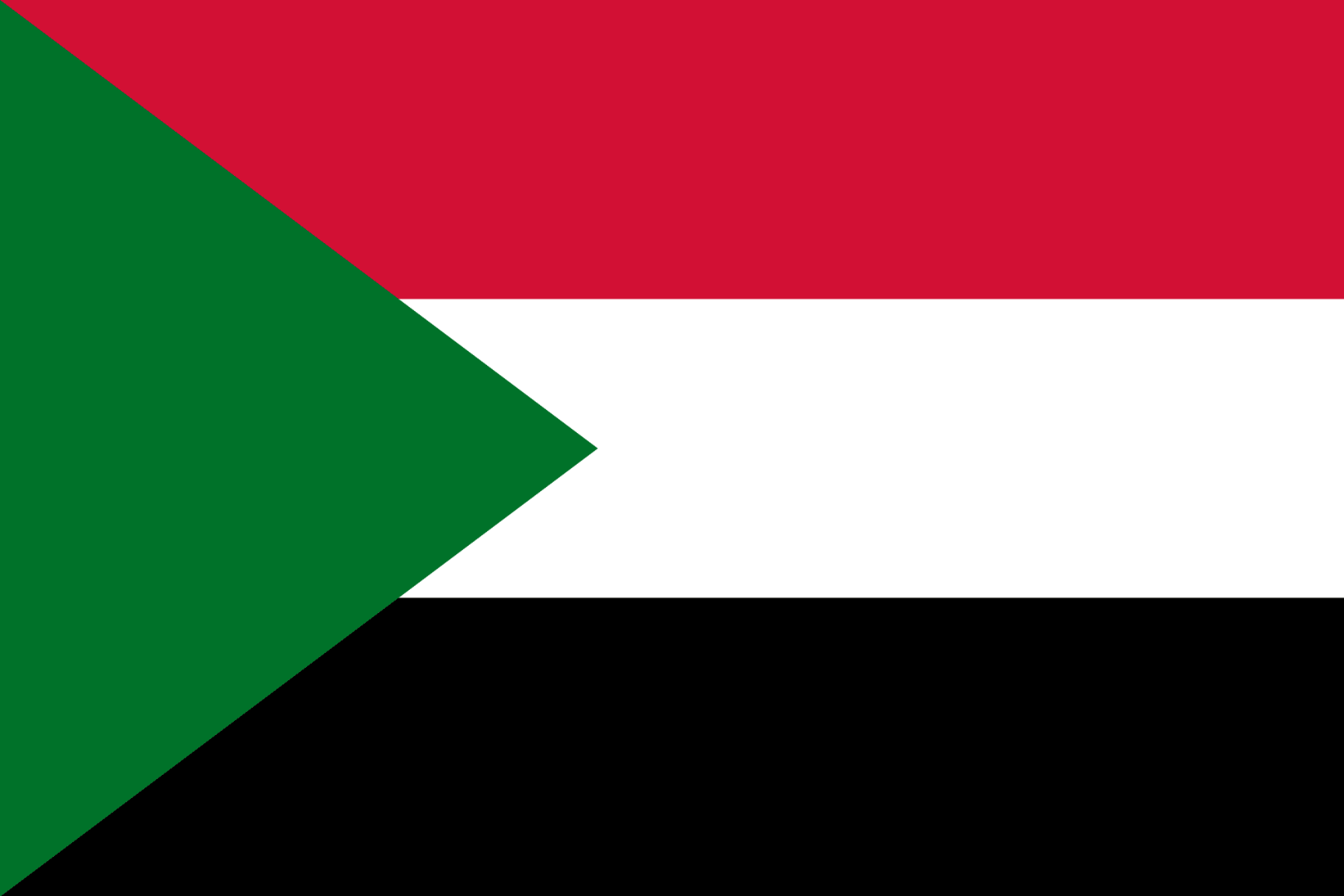
HRF classifies the Sudanese Armed Forces (SAF) controlled territories of Sudan as ruled by a fully authoritarian governing authority.
Sudan plunged into a conflict in April 2023 after a power struggle broke out between the SAF and the Rapid Support Forces (RSF), a powerful organized armed group (OAG). Following the 2019 ousting of long-serving President Omar al-Bashir, who came to power in a coup in 1989, the SAF capitalized on street protests calling for an end to his near three-decade authoritarian rule and mounted a coup against him. In October 2021, a joint military-civilian government was established with the aim of facilitating elections, but it was overthrown in another coup in the same month. The 2021 coup was staged by General Abdel Fattah al-Burhan, the head of the SAF and in effect the country’s president, and his previous deputy, RSF leader General Mohamed Hamdan Dagalo, better known as “Hemedti.” However, due to disagreements on incorporating the RSF’s 100,000 members into the formal military, confrontations between the two sides started in April 2023. The SAF controls Sudan’s capital, Khartoum, and the country’s north and east, including Port Sudan, which served as the de facto capital, while the RSF holds sway over most of western Sudan, particularly the Darfur and Kordofan regions. A separate rebel group, the Sudanese People’s Liberation Army-North (SPLA-N), controls parts of the Nuba Mountains in South Kordofan. More than 150,000 people have died in the conflict across the country, and about 12 to 14 million have been forcibly displaced.
Key Highlights
National-level elections are absent in SAF areas of control, rendering moot any assessment of electoral competition. Since the conflict began in April 2023, the SAF has solidified its political authority by systematically dissolving or neutralizing all civilian mechanisms that could challenge its authority. The SAF ensures that its areas of control function purely as a military administration governed by wartime mandates.
Independent media, political leaders, civil society leaders, organizations, and members of the general public face overt and systematic retaliation if they openly criticize or challenge the governing authority. By targeting dissidents through arbitrary detention, censorship, administrative closures and extrajudicial killings, the SAF intentionally deposes the organized opposition capable of mobilizing collective action or proposing a viable alternative governance model, and ensures self-censorship and political demobilization, thereby transforming the territory into a political vacuum where the military’s authority is absolute and uncontested.
Institutions largely fail to serve as independent checks on the governing authority. The power of the SAF, derived from force rather than constitutional mandate, places it above the rule of law. Institutions that once provided a degree of scrutiny, such as the judiciary, the central bank, and various government ministries, are now either staffed by military appointees or operate under explicit military directives. Consequently, any accountability mechanism—whether legislative oversight, judicial review of military orders, or even independent financial audit—is structurally nullified.