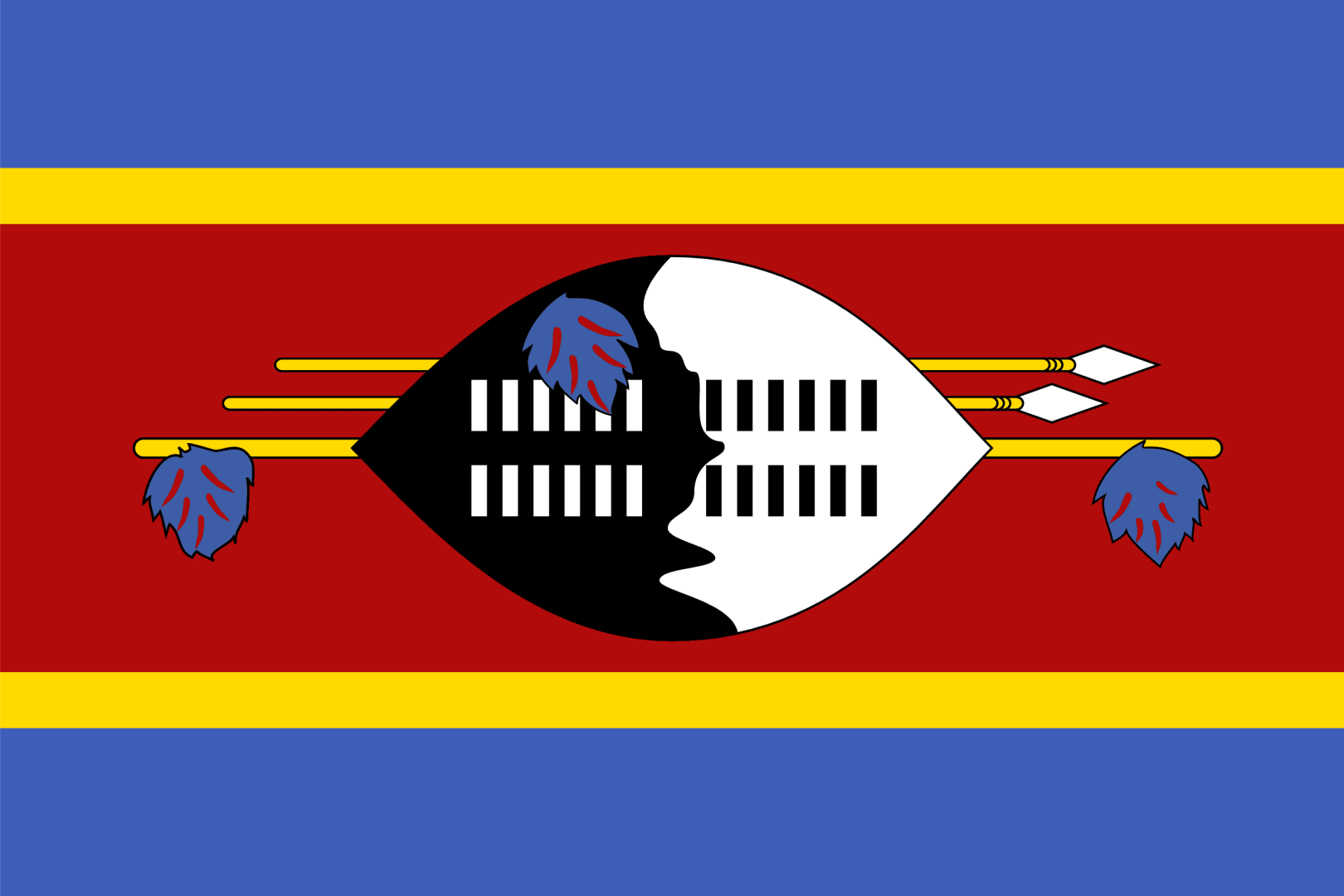
Swaziland is classified as being ruled by a fully authoritarian regime.
Swaziland (also known as Eswatini) is a monarchy ruled by King Mswati III since his accession to the throne in 1986. The country has a bicameral parliament composed of the House of Assembly and the Senate, known as the Libandla. The Constitution grants the king broad powers, including the power to appoint the prime minister, to dissolve parliament, and to veto legislation.
Key Highlights
Legislative elections are a sham, to the point where the real, mainstream political opposition does not have a realistic chance to meaningfully compete and possibly win. There is no election for the executive; the monarchy rules by succession and picks the prime minister. While legislative elections are held for some seats in the Senate and the House of the Assembly, the majority are appointed by the king, and the king holds veto power over any legislation. Political parties are prohibited from formally registering or competing in elections.
Independent media, political, civil society leaders, and organizations face overt and systematic retaliation if they openly criticize or challenge the regime. The regime regularly arrests and tortures dissenting individuals using laws like the Sedition and Subversive Activities Act of 1938 (SSA) and the Suppression of Terrorism Act of 2008 (STA). Regime officials kill protesters without accountability. The media is manipulated by the regime, which controls the majority of outlets in the country.
Institutions largely fail to serve as independent checks on the regime. The judiciary enables the regime’s cases against dissidents and strikes down attempts to reform the electoral system. Judges who are seen as unaligned with the regime are retaliated against, as the king can dismiss judges at will. Regime officials are not held accountable for abuses, including killing protestors.