259,300,000 people
Source: Tyranny Tracker
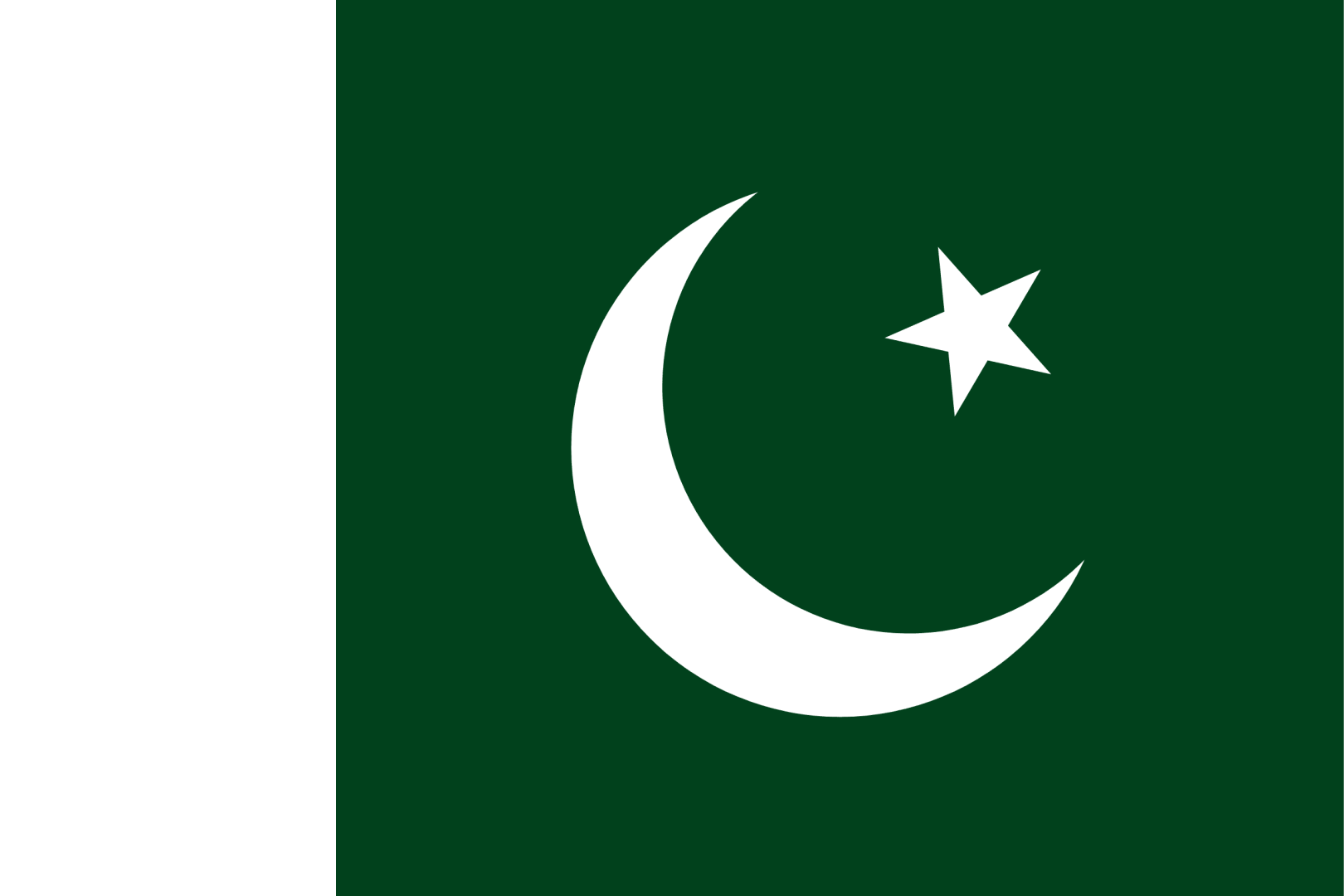
HRF classifies Pakistan as ruled by a hybrid authoritarian regime.
Since gaining independence from British rule in 1947, Pakistan’s political landscape has been characterized by an ongoing tension between democratic aspirations and recurrent military interventions, with generals seizing power from civilian governments in 1958, 1977, and 1999. Despite these challenges, the democratic framework has progressively evolved, as seen in the regular transfers of power that have taken place almost every four years since 2008. Nonetheless, the military, commonly known as “the establishment,” remains a significant force in shaping domestic and foreign policy, particularly amid recurrent border conflicts with India and insurgencies in the Balochistan and Khyber Pakhtunkhwa provinces. Following a no-confidence motion and subsequent removal of Prime Minister Imran Khan in April 2022, the parliament selected Shehbaz Sharif, leader of the Pakistan Muslim League-Nawaz (PML-N), as prime minister. Sharif was inaugurated in April 2022 and remained in office until August 2023, when a caretaker government was seated to oversee the February 2024 general election. Sharif was reelected prime minister in the delayed general election and sworn in for a second term that March.

Electoral competition is significantly skewed in favor of the regime, to the point where the real, mainstream political opposition has a highly unlikely, although realistic chance to win. The military frequently interferes in the electoral process by seriously limiting the ability of opposition candidates and parties to campaign freely. The incumbent and military have selectively targeted opposition leaders, organized harassment campaigns against them, and manipulated the media in an effort to favor the military-backed party. Since 2008, successive electoral cycles have been marred by significant voting irregularities and outbursts of violence, although election authorities have consistently denied widespread rigging.
Independent media, political leaders, civil society leaders, organizations, and regular people are seriously and unfairly hindered in their ability to openly criticize the regime. The Sharif government has relied on repressive laws, expanded law enforcement capabilities, and tightened control over online spaces to stifle dissent and undermine the opposition. Amid high protest activity since 2023, state authorities have responded to demonstrations with excessive force and mass arrests. Moreover, cases of arbitrary killings and disappearances of journalists and minority groups have been widespread. To further limit criticism, the Sharif regime has hardened penalties for online disinformation, established censorship boards, and ordered temporary bans on social networks and other websites. The government has also engaged in transnational repression against journalists abroad by harassing family members, working with foreign security services, and recruiting hitmen.
Institutions are somewhat independent but frequently constrained by the regime. The judiciary has frequently sided with the incumbent and facilitated its efforts to sideline the main opposition during elections. Through selective accountability mechanisms, courts have dismissed or delayed cases involving prominent regime officials, while disproportionately prosecuting opposition figures. Moreover, anti-terrorism laws have allowed for the prosecution of civilians in military courts, including opposition party members and supporters. Finally, a series of constitutional amendments has recently extended political influence over the structure and functioning of the judiciary, further crippling its independence.
Hit enter to search or ESC to close