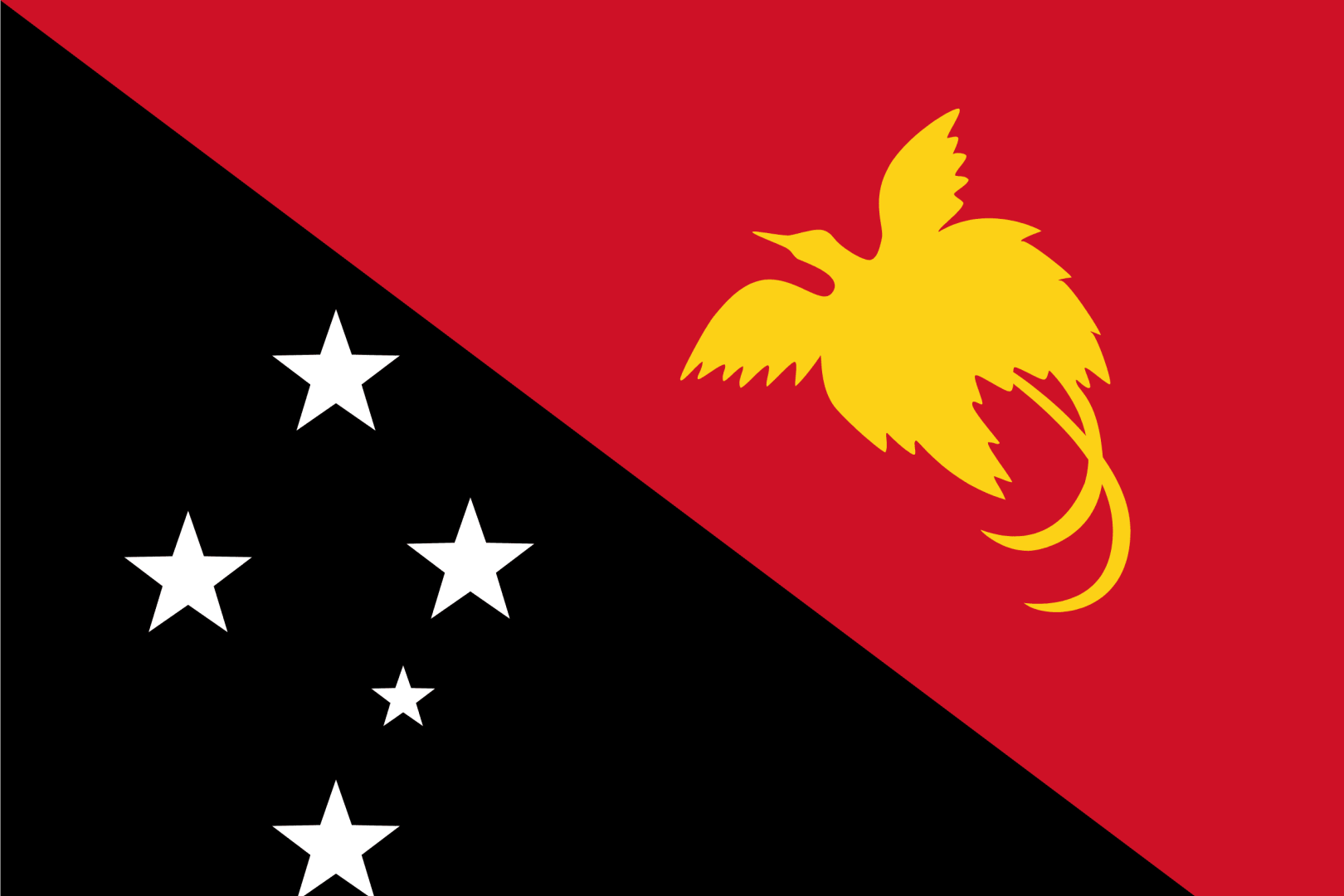
Papua New Guinea (PNG) is a constitutional monarchy with a parliamentary democracy that attained full independence from Australia in 1975, although it remains a part of the commonwealth. The first parliamentary elections were held shortly thereafter, in 1977. Members of the parliament (118-member unicameral legislature) are elected every five years from 96 single-member electorates and 22 regional electorates. James Marape was made prime minister in 2019 following the resignation of former Prime Minister Peter O’Neill. Marape served as the finance minister under O’Neill’s administration before leading a series of defections that prompted the latter’s resignation. The high-level defections include dissatisfaction with O’Neill’s leadership and, in particular, his unilateral handling of a multibillion-dollar gas deal that opponents said was a poor outcome for PNG. Marape then went on to win the leadership vote with over 90 per cent of PNG’s Parliament voting for him as the successor. In the 2022 elections, Marape won the popular vote to be reelected as the prime minister through the Pangu party in coalition with the United Resource Party, the National Alliance Party, and others.
Key Highlights
National elections in PNG are largely free and fair. The largest political parties are able to run, compete, and win in elections without significant barriers, with a regular and peaceful transfer of power. Coalition governments are the norm across PNG, with frequent switches in political alliances, often leading to weakened opposition. Independent electoral oversight is somewhat undermined by minor incidents of voter irregularities, fraud, and electoral violence.
Independent media, political leaders, civil society leaders, organizations, and the general public are largely free to openly criticize or challenge the PNG government. There is a vibrant public debate, with many diverse critical voices expressing challenges to the government. Minor hindrances to the freedom to dissent exist through certain restrictive laws and government interference with independent media.
Institutions are independent and largely serve as effective checks on the government. Rule of law largely prevails in the country where institutions operate autonomously to uphold democratic principles and act as reliable safeguards against the abuse of power, ensuring accountability, transparency, and adherence to constitutional norms.