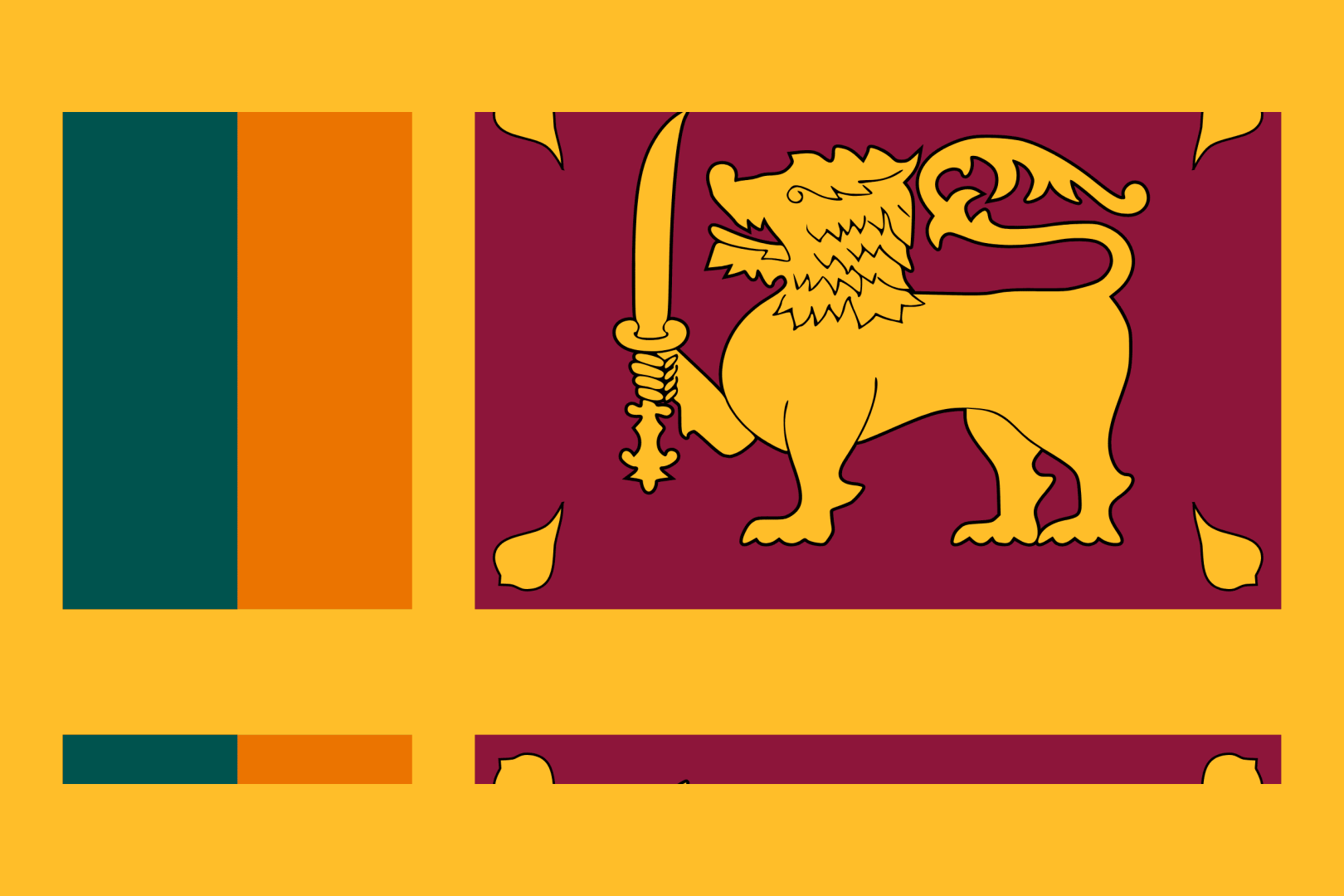
Sri Lanka — formerly Ceylon — gained independence in 1948 from the British. In 1972, the country became a republic and changed its name to Sri Lanka. Sinhalese nationalism took prominence across political, ethnic, and linguistic discourse, and the Tamil minority faced political, socio-economic marginalization. The Liberation Tigers of Tamil Eelam (LTTE) was formed in 1976 to fight for Tamil rights and aimed to establish a separate state in Sri Lanka. As a non-state armed group, the LTTE became an integral actor in Sri Lanka starting from the 1983 civil war up until 2009 when the government declared its defeat following a massive offensive by the state forces, thereby ending a 26-year civil war in the country. The civil war resulted in 70,000-80,000 deaths and some 65,000 missing persons and stagnated the country’s economic progress.
The Sri Lankan constitution was enacted in 1978 and has been amended more than 20 times. Political volatility ensued throughout the civil war and continued through the postwar period despite parliamentary and presidential elections. Successive governments faced serious accusations of corruption, nepotism, human rights abuses, and a lack of accountability for alleged war crimes. In 2019, Gotabaya Rajapaksa was elected president, and his brother, Mahendra Rajapaksa, became the prime minister, thereby holding all executive power between the two brothers. In 2022, the Sri Lankan economy collapsed, triggering a massive citizen movement known as the Aragalaya (“Struggle”), demanding a political and economic change in the country. Peaceful political protests and activism swept across the country, leading to the ousting of the Rajapaksa family and mass resignations from their government.
Key Highlights
In Sri Lanka, elections are largely free and fair. Opposition parties can run and compete in elections overall free from interference and coercion, and on a reasonably equal footing as the main party. The national elections are competitive with frequent and peaceful transfer of power between the main and opposition parties. The electoral playing field is not highly skewed in favour of the main party, and independent electoral oversight is maintained by the election commission that ensures an inclusive democratic participation.
Independent media, political leaders, civil society leaders, organizations, and members of the general public are largely free to openly criticize or challenge the government. Under the NPP-led Dissanyake’s government, public debate is vibrant with many diverse critical voices expressing challenges to the government policy and legislation. The current government does not repress public protests or restrict freedom of speech, with the exception of a few legal frameworks that could likely threaten censorship.
Institutions in Sri Lanka are independent and largely serve as effective checks on the government. The judiciary largely operates autonomously without executive overreach and acts as a reliable safeguard against abuse of power. Institutions do not fail to hold government officials accountable, and the current government did not pass reforms to restrict their operational independence.