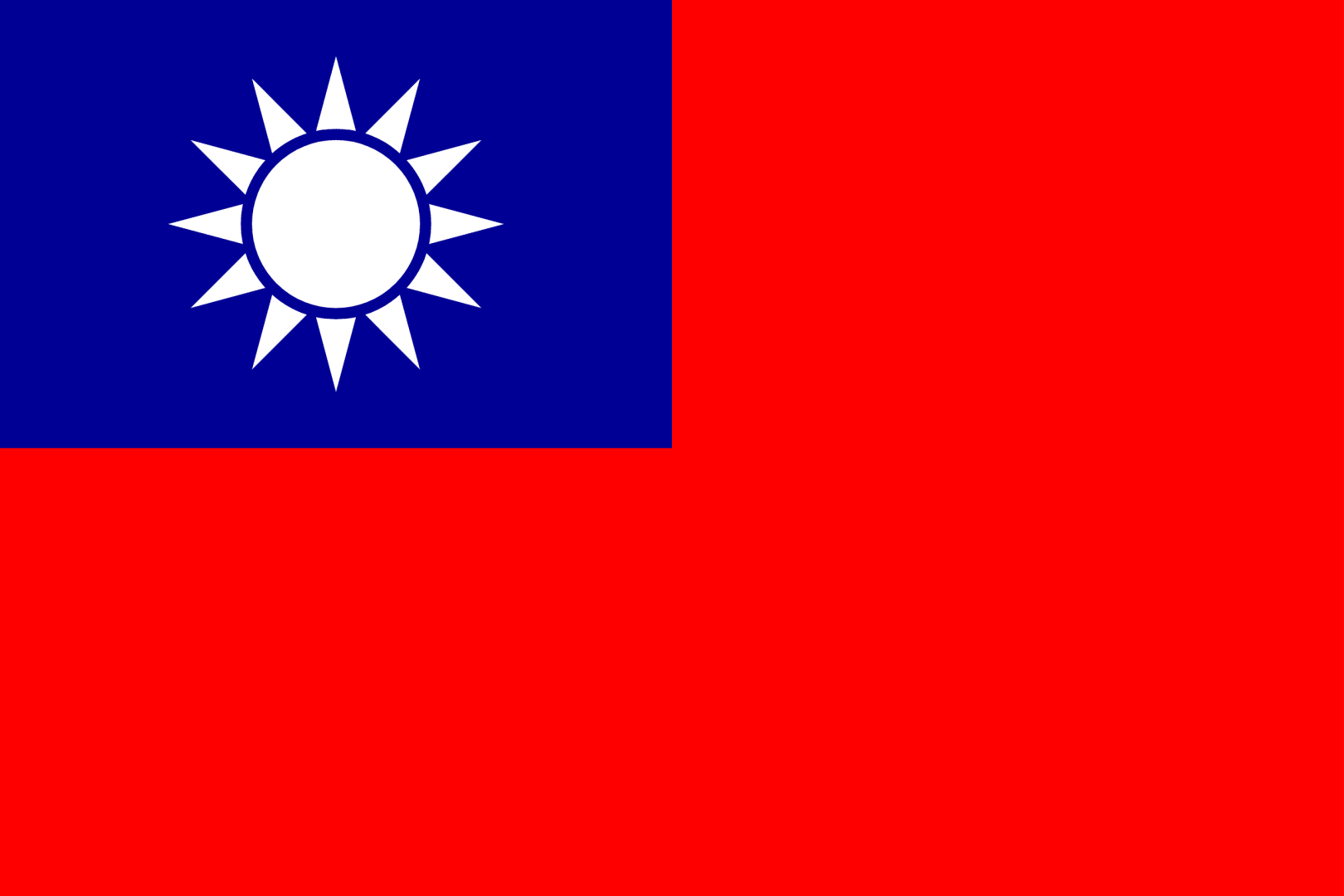
Taiwan (Republic of China) transitioned to democracy after decades of authoritarian rule under the Kuomintang (KMT). Since the first direct presidential election in 1996, Taiwan has experienced peaceful power transfers between its two main political parties: the KMT, which generally supports closer ties with the Chinese Communist Party (CCP), and the Democratic Progressive Party (DPP), which emphasizes a distinct Taiwanese identity and promotes the maintenance of the current status quo of Taiwan as an independent nation.
Key Highlights
National elections are largely free and fair. Taiwan holds presidential and legislative elections every four years. The most recent election took place in 2024, when the DPP won the presidency for a third term but lost its majority in the legislature. The election management body is independent, both statutorily and in practice. The campaign environment is open and vibrant. Evidence of election interference by the CCP has prompted Taiwanese authorities to take action against suspected infiltrators.
Independent media, political leaders, civil society leaders, organizations, and members of the general public are largely free to openly criticize or challenge the government. Civil society is abundant. The media is diverse, albeit deeply polarized. The government rarely restricts civil liberties, with a few exceptions. An anti-infiltration law passed in 2019 has been used to investigate and prosecute thousands of individuals accused of meddling with Taiwan’s internal affairs on behalf of the CCP.
Institutions are largely independent and serve as effective checks on the government. The judiciary is capable of upholding electoral integrity and reviewing potential government overreach. Judicial scrutiny of several controversial legislative proposals and criminal investigations into opposition politicians since 2024 have led the opposition to allege institutional bias.