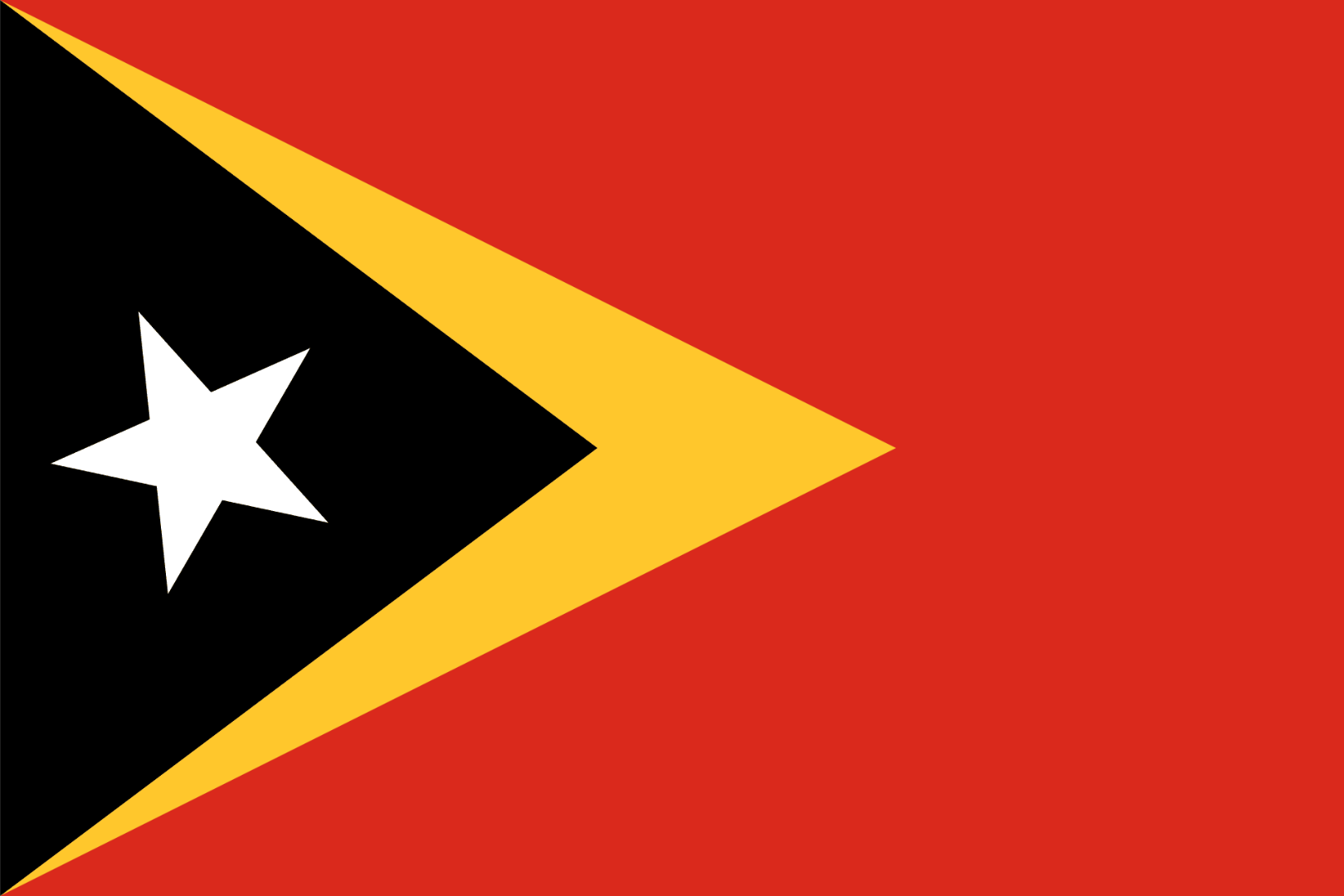
After obtaining independence from Portugal in 1975, Timor-Leste was invaded by Indonesia, which named the territory East Timor and claimed it as one of its provinces. The brutal occupation, which lasted until 1999, resulted in significant loss of life and human rights abuses. The following years were marked by violence and instability that culminated in a UN-sponsored referendum where the majority of East Timorese voted for independence. A UN transitional administration ultimately handed authority to the territory’s first elected government in 2002, creating an independent Timor-Leste, followed by the regular election of presidents at five-year intervals.
Key Highlights
National elections are largely free and fair. Both the President and the unicameral National Parliament are popularly elected every five years. Elections are competitive and have resulted in peaceful power transfers, primarily between the two largest political parties, the National Congress for Timorese Reconstruction (CNRT) and the Revolutionary Front for an Independent East Timor (Fretilin), the latter holding a central role in Timor-Leste’s resistance movement during the occupation. Elections are overseen by an independent election management body and independent monitors. Mainstream candidates also enjoy a level playing field in campaigning.
Independent media, political leaders, civil society leaders, organizations, and members of the general public are largely free to openly criticize or challenge the government. Although small, the media landscape is vibrant and has continued to diversify. There have been isolated criminalizations of journalists and activists, but individuals still enjoy ample space to express open opposition against the government.
Institutions are largely independent and serve as effective checks on the government. The judiciary is capable of upholding electoral competition and the freedom of dissent. Nevertheless, it suffers from various institutional shortcomings that undermine its operational effectiveness. Legislative and executive institutions are also capable of effective functioning. Since independence, the government has taken steps to establish new independent institutions or strengthen existing ones. Problems remain, given Timor-Leste’s entrenched culture of political patronage and consensus-driven politics.