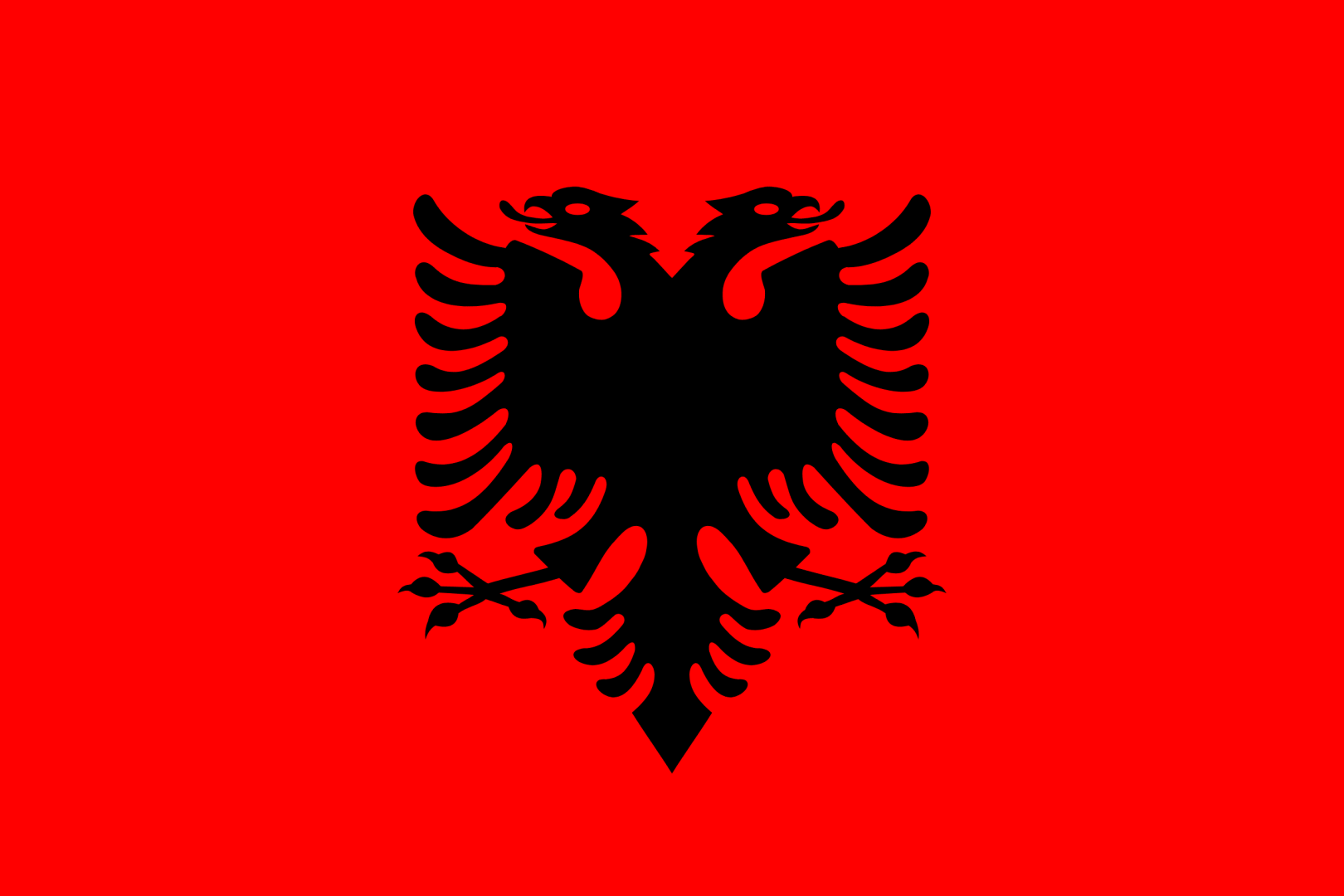
Albania is a parliamentary republic with a unicameral parliament of 140 members. Executive power is exercised by the government headed by a prime minister. The president, formally the head of state, is elected through a three-fifths vote in Parliament, for a maximum of two consecutive five-year terms. The country democratized in 1990, after 45 years of totalitarian Communist rule. Two main political parties, the Socialist Party (SP) and the Democratic Party (DP), have dominated the political scene since, taking turns in power. However, the SP’s victories in the last four legislative elections, in 2013, 2017, 2021, and 2025, have been accompanied by allegations of electoral fraud and by DP election boycotts. The deeply fractious and polarized political environment has jeopardized Albania’s ongoing efforts to reform its electoral system and judiciary.
Key Highlights
National elections remain largely free and fair, according to international observers, despite some unfair advantages enjoyed by the incumbent Socialist (PS) party, continuously in office since 2013. The PS and its main rival, the Democratic Party (PD), have dominated Albanian politics since the onset of democratization in the 1990s, taking turns in government and opposition. Both parties have traded accusations of electoral fraud and abuses of administrative resources and boycotted parliamentary proceedings or threatened to boycott national elections in response to their perceived inability to gain power through elections. In those instances, internationally mediated agreements between the two parties (2017) or substantive electoral reforms (2020) helped restore a fairly equal electoral playing field, secure the participation of the opposition, and avert protracted political crises.
Independent media, political leaders, civil society leaders, organizations, and members of the general public are largely free to openly criticize or challenge the government. Civil society is vibrant, and freedom of assembly is generally upheld in practice. Nevertheless, civil society and international bodies, such as the Council of Europe, have voiced concerns regarding the ruling PS party’s sporadic attempts to influence the editorial stance of public outlets and the increased incidence of SLAPPs (gratuitous lawsuits aimed at intimidating and silencing critics without necessarily succeeding on their legal merits).
Albanian institutions are somewhat independent but frequently constrained by the government, whether directly or through the slow and partial implementation of essential reforms. Albania has not entirely reformed its judiciary, which was once susceptible to inefficiency and overt political interference. The courts have occasionally failed to prosecute electoral fraud or uphold the freedom of dissent when current political elites have challenged this freedom. On the other hand, the current government established or largely supported the independent functioning of oversight institutions that have increasingly held political elites accountable.