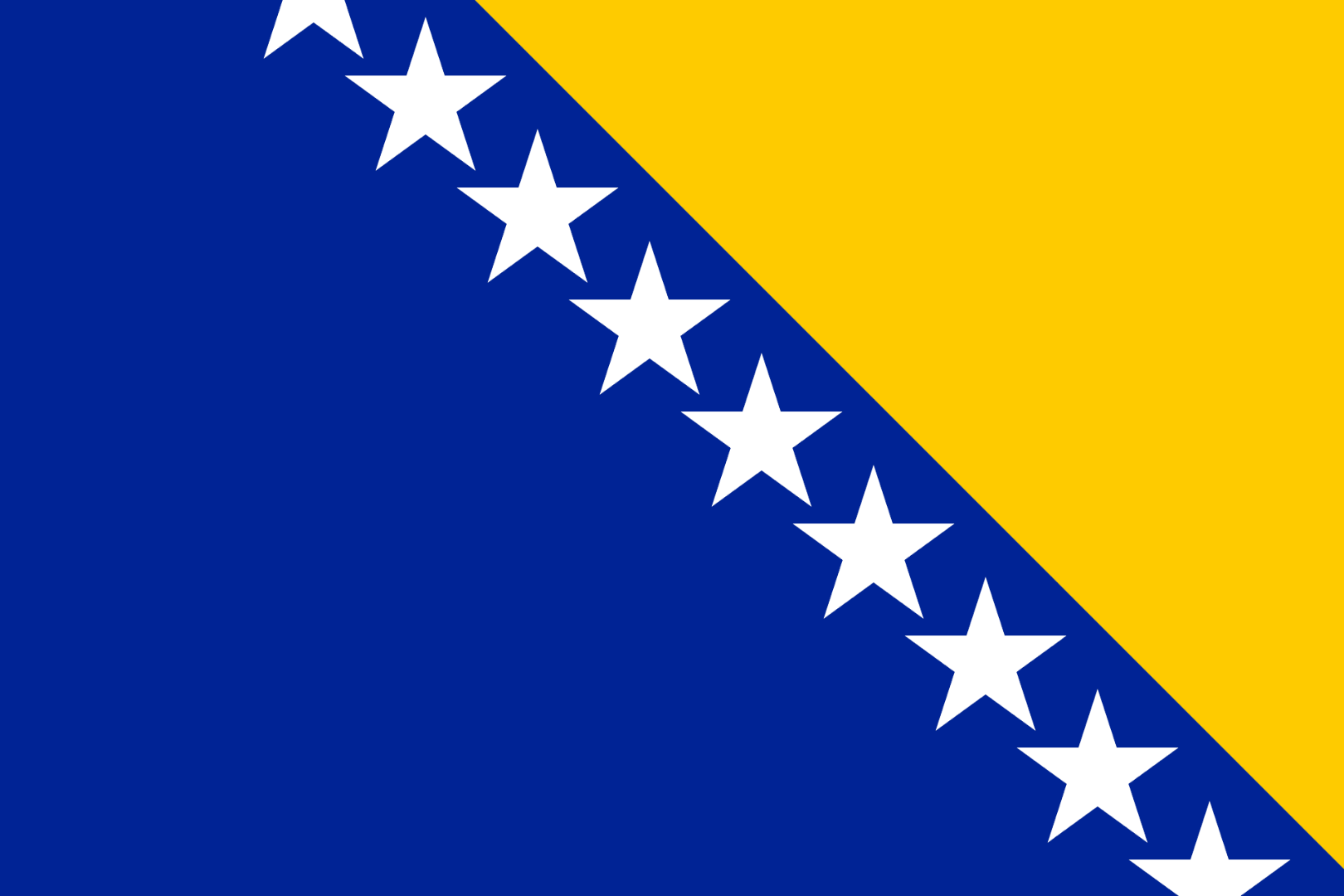
HRF classifies Bosnia and Herzegovina as democratic.
Bosnia and Herzegovina is a parliamentary representative democratic state with a highly decentralized and consociational system established under the 1995 Dayton Peace Agreement, which ended the Bosnian war of 1992–1995. Executive authority is exercised jointly by a directly elected, three-member presidency representing Bosniaks, Serbs, and Croats, which rotates its chair every eight months, and by the Council of Ministers, whose chair serves as head of government. The country is composed of two largely autonomous entities (the Federation of Bosnia and Herzegovina and Republika Srpska) alongside the self-governing Brčko District, resulting in a complex, multi-layered governance structure that remains subject to extensive international oversight, most notably through the Office of the High Representative and election monitoring by organizations such as the OSCE.
Key Highlights
In Bosnia and Herzegovina, national elections are largely free and fair, with mainstream opposition parties and candidates able to participate and campaign freely. Although allegations of electoral irregularities periodically arise, they have not been shown to affect election outcomes, and elections remain pluralistic and competitive overall.
Independent media, political leaders, civil society actors, and the general public in Bosnia and Herzegovina are largely free to criticize or challenge the government, and civil society organizations operate without being shut down. Media coverage and protests are largely allowed, but growing journalist intimidation and uneven legal protections for freedom of assembly have weakened the overall environment.
Institutions are somewhat independent but frequently constrained by the governing authority through political influence, particularly within the judiciary. Direct obstruction of the Constitutional Court and weak enforcement of accountability have contributed to a broader failure to hold government officials responsible, despite a rare high-level conviction in 2023.