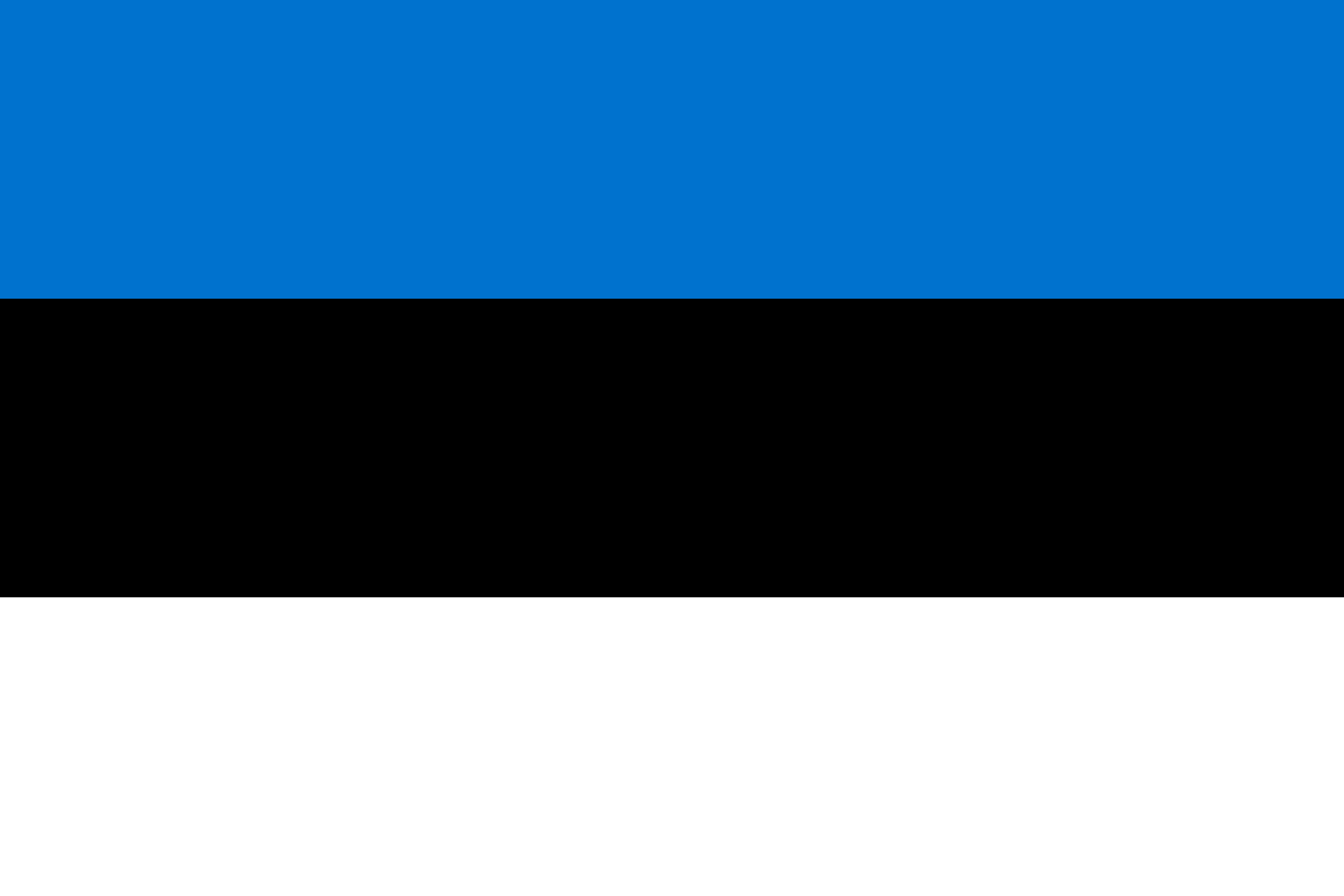
Estonia is a parliamentary republic that regained independence from the Soviet Union in 1991. In the decades since, it has built strong democratic institutions and integrated into Western frameworks, joining NATO and the European Union in 2004. The president serves as head of state with largely ceremonial duties, while executive power lies with the prime minister and government. Estonia is governed by a Reform Party-led coalition under Prime Minister Kristen Michal (together with Eesti 200), which took office on 23 July 2024 and was renewed in March 2025 after the Social Democrats left the coalition.
Key Highlights
Estonia’s elections are largely free and fair. Multiple parties vie for power, and opposition forces have genuine opportunities to win office. The March 2023 parliamentary elections proceeded openly and resulted in another peaceful transfer of authority within a coalition government. Electoral processes overwhelmingly meet democratic standards. International observers praised the 2023 elections as well-administered and pluralistic, noting only minor technical issues and recommending refinements to campaign finance rules. No mainstream opposition groups are barred from the ballot, and there is no evidence of systematic fraud or significant irregularities in the vote-counting process.
Independent media, political leaders, civil society leaders, organizations, and members of the general public are largely free to openly criticize or challenge the government. Journalists benefit from a protective legal framework that allows them to hold leaders accountable. Civic activism is vibrant; non-governmental organizations operate without arbitrary impediments, and public protests occur regularly on a range of issues. Authorities generally do not interfere with peaceful assemblies, and in cases where officials have overreached, other institutions have provided corrective checks.
Estonia’s institutions are independent and serve as effective checks on the government. The judiciary maintains robust institutional autonomy, effectively resisting undue political pressure and enjoying high public trust. Oversight bodies and the media have exposed instances of official misconduct, leading to effective accountability. Estonia consistently ranks among the least corrupt countries in the world, and new safeguards continue to be implemented. Though corruption is not pervasive, isolated cases underscore the need for continued vigilance.