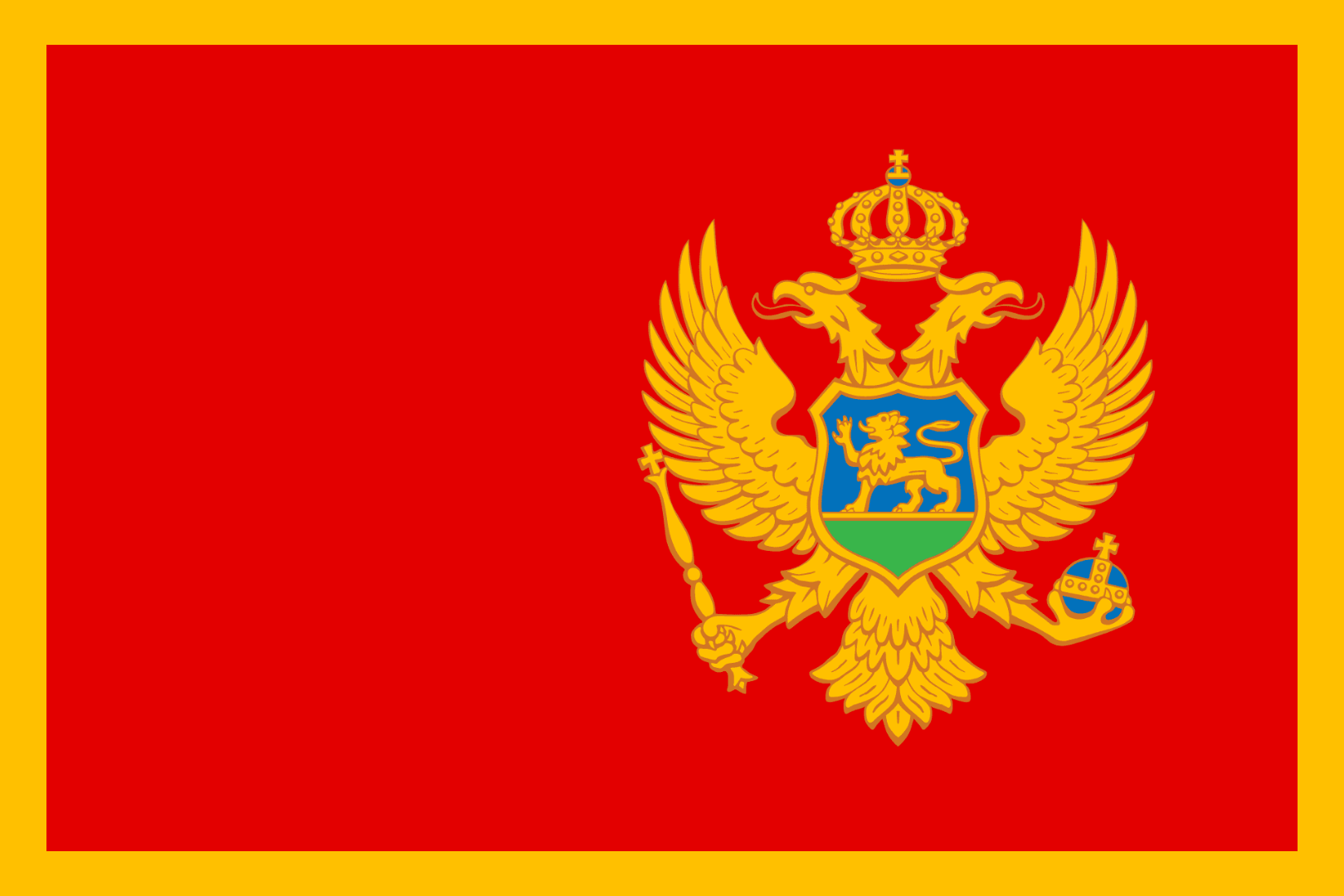
Montenegro is a parliamentary representative democratic republic in which executive authority is exercised by a government led by the prime minister, while the president serves as head of state with defined constitutional powers, including promulgating laws. Legislative authority is vested in the unicameral Parliament of Montenegro, an 81-member body elected every four years through proportional representation, producing a fragmented multiparty system in which coalition governments are the norm. Following the 2023 parliamentary elections and subsequent coalition negotiations, a new government took office in October 2023, led by Prime Minister Milojko Spajić of Europe Now! movement, while Jakov Milatović has served as president since May 2023.
Key Highlights
In Montenegro, elections are largely free and fair, with all major parties able to compete on an open basis. In recent elections, opposition parties have generally been able to campaign freely, marking a clear improvement over earlier cycles, when the then-ruling DPS benefited from substantial advantages through the misuse of state resources.
Independent media, political leaders, civil society actors, and the general public are largely free to openly criticize or challenge the government. The country has a historically open and pluralistic civic space, with legal guarantees for freedom of expression and a generally independent media that is able to scrutinize incumbents. Media operate in a diverse environment, public broadcasters benefit from measures to safeguard their independence, and protests are typically allowed to proceed without suppression.
Institutions are somewhat independent but frequently constrained by the government. Despite constitutional guarantees of judicial independence and separation of powers, and government measures intended to strengthen institutional autonomy, persistent corruption risks and continued public attacks by officials on judges undermine both public confidence and the judiciary’s effective independence. Consequently, state institutions have generally failed to hold public officials accountable.