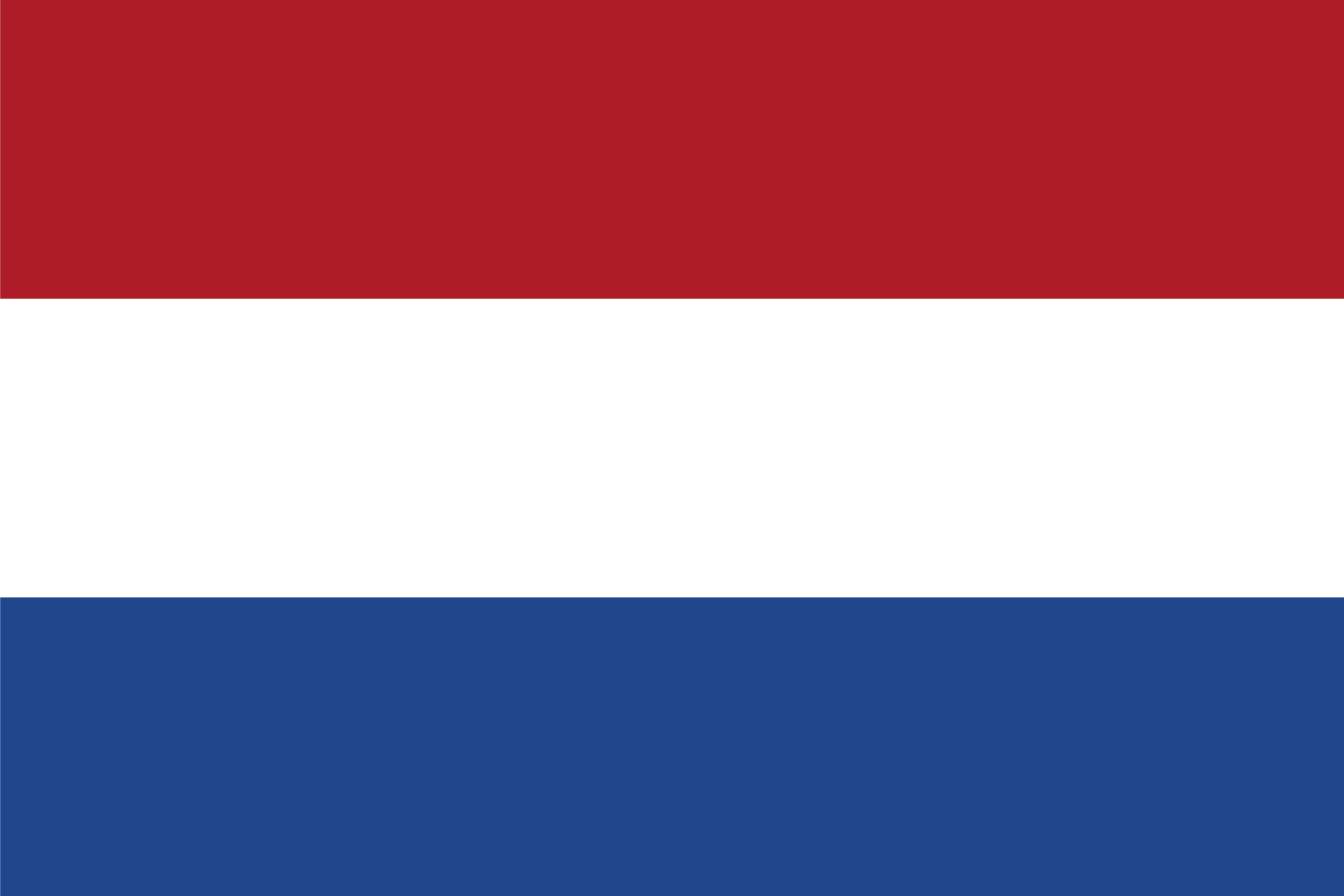
The Kingdom of the Netherlands is a constitutional monarchy with a parliamentary system of government, in which the monarch (currently King Willem-Alexander) is the formal head of state with largely ceremonial duties, while executive power is exercised by the cabinet led in practice by the prime minister. Legislative authority is shared between the government and the bicameral States General, comprising the directly elected House of Representatives (“Tweede Kamer,” 150 seats), which can initiate and amend legislation and holds the cabinet to account, and the indirectly elected Senate (“Eerste Kamer,” 75 seats), which primarily reviews legislation. Dutch politics is defined by proportional representation, a highly fragmented multiparty system, and a strong tradition of consensus-building that makes coalition governments the norm. Following the October 2025 parliamentary elections, the dispersion of seats once again necessitated prolonged coalition negotiations, which concluded in January 2026 with the formation of a rare minority government led by Prime Minister Rob Jetten.
Key Highlights
In the Netherlands, national elections are largely free and fair. The nation has a competitive, inclusive electoral system whose proportional representation rules produce a fragmented multiparty landscape that requires coalition governments. Elections in 2023 and 2025 illustrated the openness and competitiveness of the system, with all 150 parliamentary seats distributed across a wide range of parties.
Independent media, political leaders, civil society, and members of the general public are largely free to criticize the Dutch government. The state has not unfairly shut down dissenting organizations or censored media, and press freedom is protected by strong constitutional and institutional safeguards. At the same time, journalists face growing harassment from third parties, although the government has taken legislative and practical steps to address these risks. Protests generally occur without undue restrictions.
Dutch institutions function independently and provide effective checks on the governing authority. The judiciary operates without government interference, enjoys high public confidence, and continues to rule on cases challenging the state without facing retaliation. Beyond the courts, executive and oversight bodies retain operational independence, supporting effective accountability through autonomous prosecution and established enforcement mechanisms.