Source: Tyranny Tracker
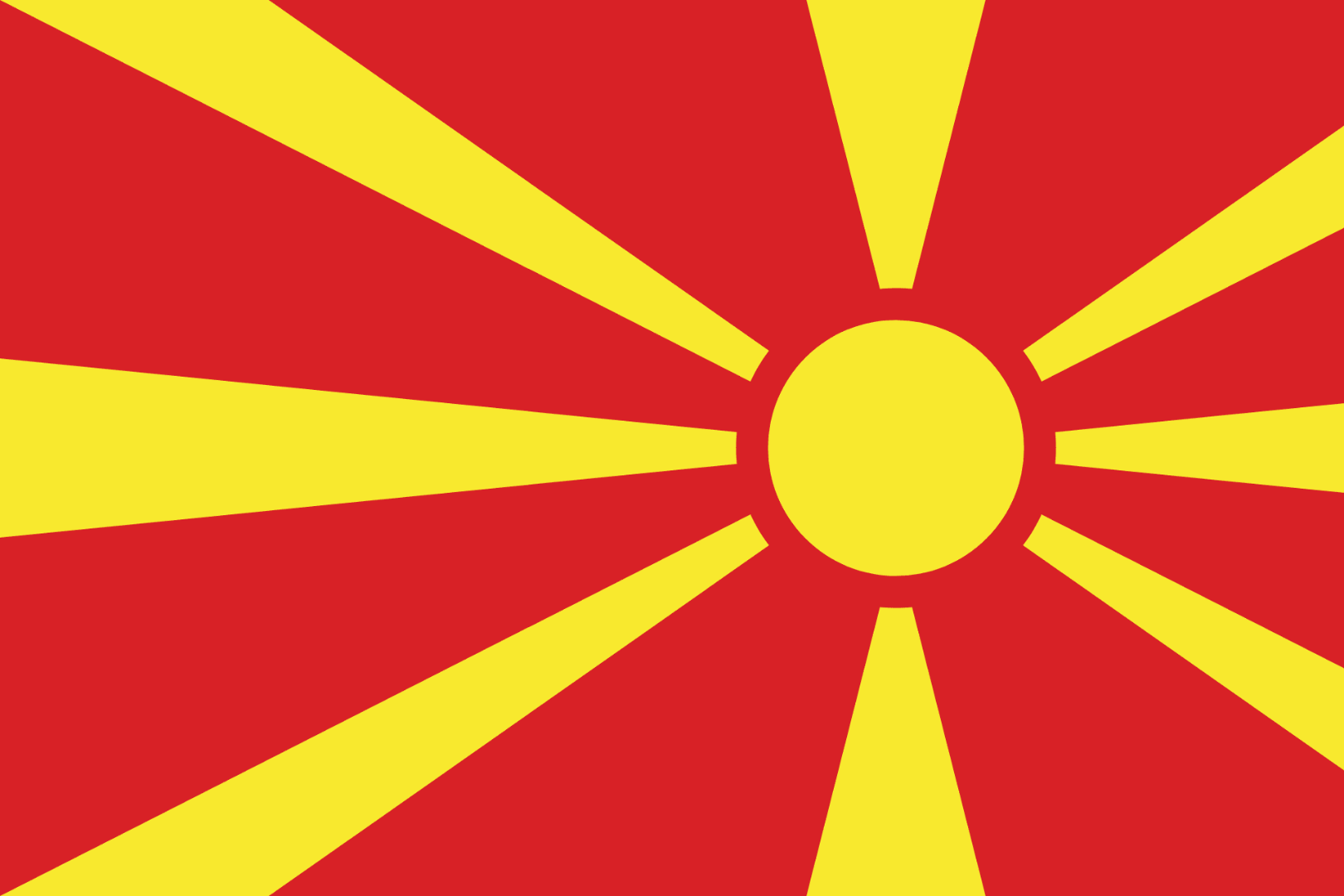
HRF classifies North Macedonia as democratic.
North Macedonia is a parliamentary republic with a unicameral legislature (Sobranie), a strong executive, and a presidency with mostly symbolic functions. Members of Parliament, between 120 and 123, serve four-year terms. Amendments to the Electoral Code in 2015 allowed for electing up to three additional MPs, depending on the proportion of votes cast abroad. The Supreme Court is the highest judicial instance of general review, while the Constitutional Court reviews the constitutionality of statutes and legislation. As North Macedonia democratized in the 1990s, dozens of new political parties emerged and successfully competed in elections. Nonetheless, the Internal Macedonian Revolutionary Organization–Democratic Party for Macedonian National Unity (VMRO-DPMNE) remained preeminent, serving as the backbone of governing coalitions for much of the 2000s and early 2010s. During its 10-year rule (2006-2017), the VMRO-DPMNE considerably eroded democratic checks and balances. The party misused state resources to skew the electoral playing field in its favor and unduly influenced judiciary members to secure rulings conducive to its interests. A 2015 wiretapping scandal, which implicated senior VMRO-DPMNE members in election fraud and abuse of power, precipitated mass protests and ultimately a transfer of power away from the governing party. Between 2017 and 2024, the Social Democratic Movement (SDSM) was at the helm of government. During its tenure, North Macedonia signed the landmark 2018 Prespa Agreement with Greece, which ended a decades-long dispute. In the 2024 presidential and parliamentary elections, the SDSM was ultimately defeated in a landslide by the VMRO-DPMNE, which has been in office since, together with its coalition partners, VLEN/VREDI and ZNAM.
National elections are largely free and fair. In contrast with prior election cycles, when the VMRO-DPMNE enjoyed significant unfair campaign advantages, including unequal media representation and abuse of administrative resources, the 2024, 2020, and 2016 parliamentary elections were well-administered and genuinely competitive. As evident from transfers of power between the dominant VMRO-DPMNE and SDSM parties, political actors campaign in a generally level playing field and have ample opportunities to engage voters.
Independent media, political leaders, civil society leaders, organizations, and members of the general public are largely free to openly criticize or challenge the government. During its tenure, the Social Democratic Movement (SDSM) implemented several policies bolstering media independence, such as empowering the Special Prosecutor’s Office to investigate crimes against journalists and introducing amendments to the Criminal Code that significantly reduced punishments for defamation and slander. Civil society is robust, and freedom of assembly is generally respected. There is little evidence to suggest that the VMRO-DPMNE has substantively reversed those policies and eroded the freedom of dissent since coming back into office in 2024.
In North Macedonia, institutions are somewhat independent but frequently constrained by the government, due in no small part to the legacies of previous executive interference and the slow pace and limited scope of subsequent reforms. The SDSM initiated an ambitious plan to transform the judiciary, but progress remained uneven. Nonetheless, the courts have upheld electoral integrity and the freedom of dissent in a number of consequential cases. In addition, they have held some public officials accountable for wrongdoings brought to light in the 2015 wiretapping scandal, including former PM Nikola Gruevski. Independent oversight bodies, some of which the VMRO-DPMNE sought to capture during its tenure, have an uneven track record of checking the executive and ensuring transparency and accountability in governance.
Hit enter to search or ESC to close