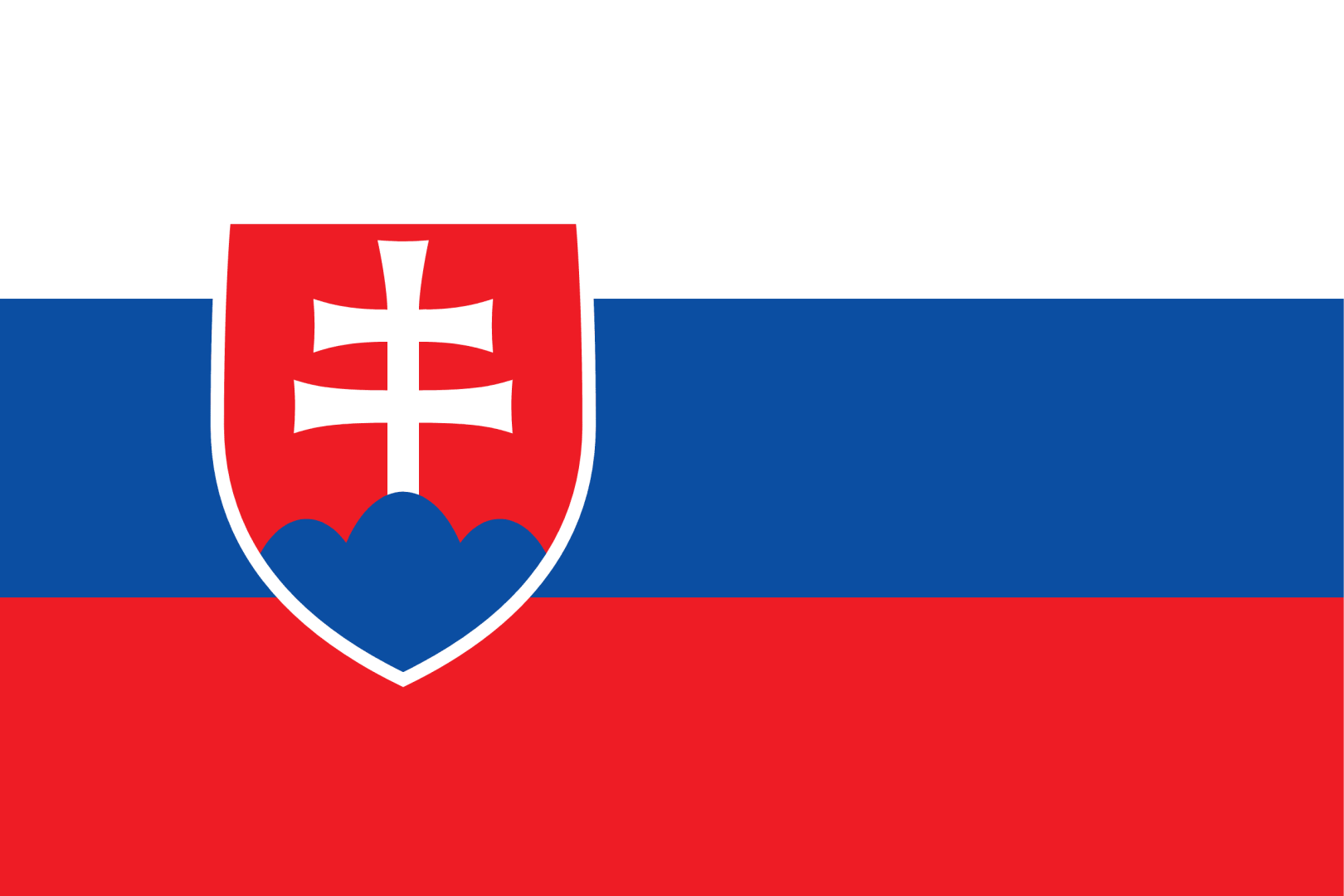
Slovakia is a unitary parliamentary republic in Central Europe that emerged as an independent democratic state on 1 January 1993 following the peaceful dissolution of Czechoslovakia after the 1989 Velvet Revolution and the collapse of communist rule. The country consolidated its post-communist transition through constitutional reforms in the 1990s and European integration, joining NATO and the European Union in 2004. Slovakia operates under a parliamentary system in which executive authority is exercised by the government led by the prime minister, while a directly elected president serves as head of state with largely ceremonial and limited constitutional powers; legislative authority rests with the 150-member unicameral National Council elected by proportional representation. In the September 2023 parliamentary elections, the populist left-wing party SMER–SD returned to power at the head of a coalition with Voice – Social Democracy (Hlas-SD) and the nationalist SNS, bringing Robert Fico back as prime minister. Since 2024, the presidency has been held by Hlas-SD’s Peter Pellegrini, leaving Slovakia under a Fico-led coalition.
Key Highlights
In Slovakia, national elections are largely free and fair. Multiple mainstream parties and candidates can participate and compete under broadly equal conditions in a competitive political environment. Opposition parties and candidates are generally able to campaign without significant obstruction.
Independent media, political leaders, civil society organizations, and members of the general public are largely free to criticize and challenge the government. The country maintains a strong civil society and a pluralistic media environment with independent private outlets, despite government efforts to pressure critical voices through rhetoric, legal actions, and recent measures that risk burdening civic activity. Most private media remain independent, though reforms to public broadcasting have increased the risk of political influence. Protests and public gatherings have generally been allowed to take place without serious or unfair obstruction.
Slovak institutions are somewhat independent but are increasingly constrained by the governing authorities. The judiciary remains formally protected by constitutional and institutional safeguards, although recent government involvement in the composition and leadership of the Judicial Council has increased political pressure on the nation’s courts, and some judges have faced public criticism from officials over decisions contrary to government interests. Moreover, the incumbent government has weakened key anti-corruption and oversight bodies, reducing the capacity to hold senior officials accountable, even though some investigations and proceedings involving public figures continue.