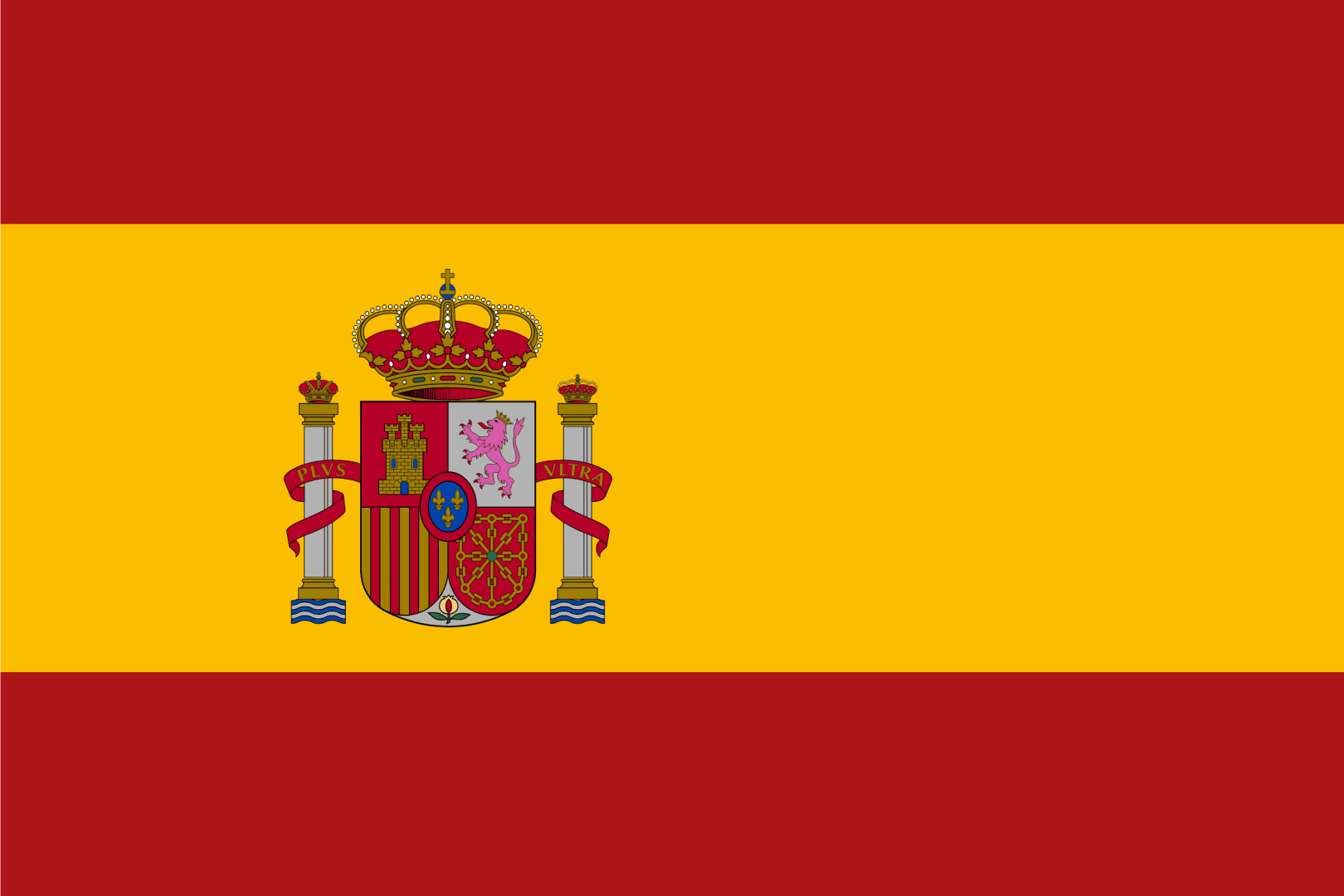
Spain is a unitary parliamentary constitutional monarchy governed under the 1978 Constitution, in which the King serves as head of state with largely ceremonial and constitutional functions (such as sanctioning laws and formally appointing the prime minister), while executive power is exercised by the Government (“Consejo de Ministros”) led by the prime minister (“Presidente del Gobierno”). Legislative authority rests with the bicameral Cortes Generales, made up of the Congress of Deputies and the Senate: the 350-member Congress is elected for four-year terms by proportional representation, while the Senate combines directly elected provincial senators with senators designated by the autonomous communities. Spain operates as a multiparty system in which governments typically depend on coalitions or parliamentary support arrangements. After the July 2023 snap parliamentary election produced a divided parliament, Pedro Sánchez, who has served as Prime Minister since 2018, was re-elected in November 2023 after reaching support agreements with the left-wing electoral alliance Sumar and several smaller regional parties.
Key Highlights
In Spain, national elections are largely free and fair. The nation maintains a competitive, pluralistic party system in which no major opposition force is barred from contesting elections, and governments often depend on coalition-building. Spain provides opposition parties with generally equal and unhindered opportunities to campaign, supported by clear legal rules, protected political freedoms, and independent electoral oversight.
Independent media, civil society, political actors, and citizens in Spain are largely free to criticize the government. The government ensures strong protections for freedom of association, a generally pluralistic media environment, and freedom of assembly that is usually respected in practice, despite some isolated legal and policing concerns that can have a chilling effect.
Independent institutions largely function as effective checks on the government: the constitutional and legal framework safeguards judicial independence, enables courts to hear cases against the state, and allows the judiciary to uphold electoral fairness, protect freedom of dissent, and hold public officials accountable for corruption and abuses of power through criminal enforcement and judicial oversight.