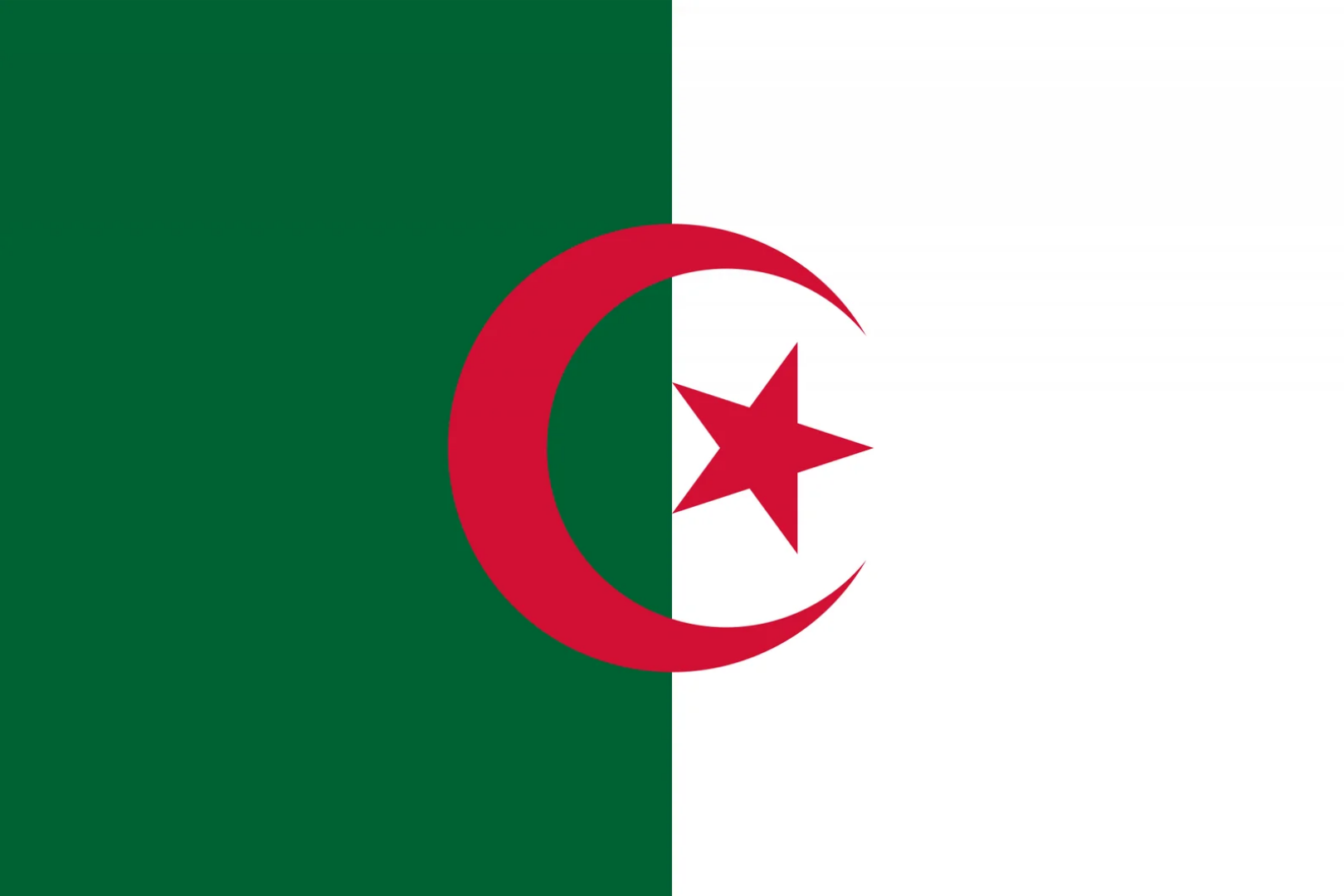
Elections in Algeria are a sham to the extent that the mainstream opposition has no realistic chance to meaningfully compete and possibly win. President Tebboune secured a second presidential term in September 2024 after winning an election marked by widespread voter abstention, following a call for snap elections, which inhibited political opponents from running effective campaigns. Furthermore, the new constitution has also allowed the regime to ban or dissolve opposition members and parties, such as by arresting leaders of the Movement for the Autonomy of Kabylie (MAK) and dissolving the Algerian League for the Defence of Human Rights (LADDH). Like his predecessor, President Tebboune continues to rule Algeria by maintaining close ties to the military, thereby guaranteeing the regime’s unchecked dominance over the political process through opaque and skewed electoral processes.
Independent media, political leaders, civil society leaders, organizations, and regular people face overt and systematic retaliation if they openly criticize or challenge the regime. Since the Hirak protests, the regime has gradually implemented measures to curtail freedoms of expression, assembly, and association. To secure his grip on power, President Tebboune altered the penal code by expanding definitions of what constitutes a threat to national security, making it easier for regime agents to arrest dissidents on false and politically motivated charges, imprison journalists, shut down critical media outlets, and dissolve human rights groups. By systematically cracking down on protests, arresting and detaining activists and journalists, the regime has instilled a climate of fear among its opponents. Regime critics and civil society activists face surveillance, intimidation, and harassment, which has led to a decline in their activities. The regime also censors media outlets, limiting the ability of journalists to report critically on its policies and practices.
Institutions largely fail to serve as independent checks on the regime. President Tebboune’s regime has effectively consolidated authority within the executive branch, reducing the independence and influence of legislative bodies. The legislative process is frequently driven by presidential directives, and opposition voices and parliamentary debates have less impact on major policy decisions. Additionally, President Tebboune heads the Supreme Judicial Council and oversees a judiciary increasingly used as a tool to suppress dissent and silence regime critics. Algeria’s judiciary has played a critical role in suppressing dissidents, including journalists, activists, and political opponents, who are often accused of politically motivated vague crimes, such as undermining national security or inciting public unrest. Furthermore, non-transparent prosecutions by specialized military courts are frequently conducted hastily, with restricted access to legal representation and evidence.