HRF classifies the Moroccan-controlled Western Sahara as ruled by a fully authoritarian regime.
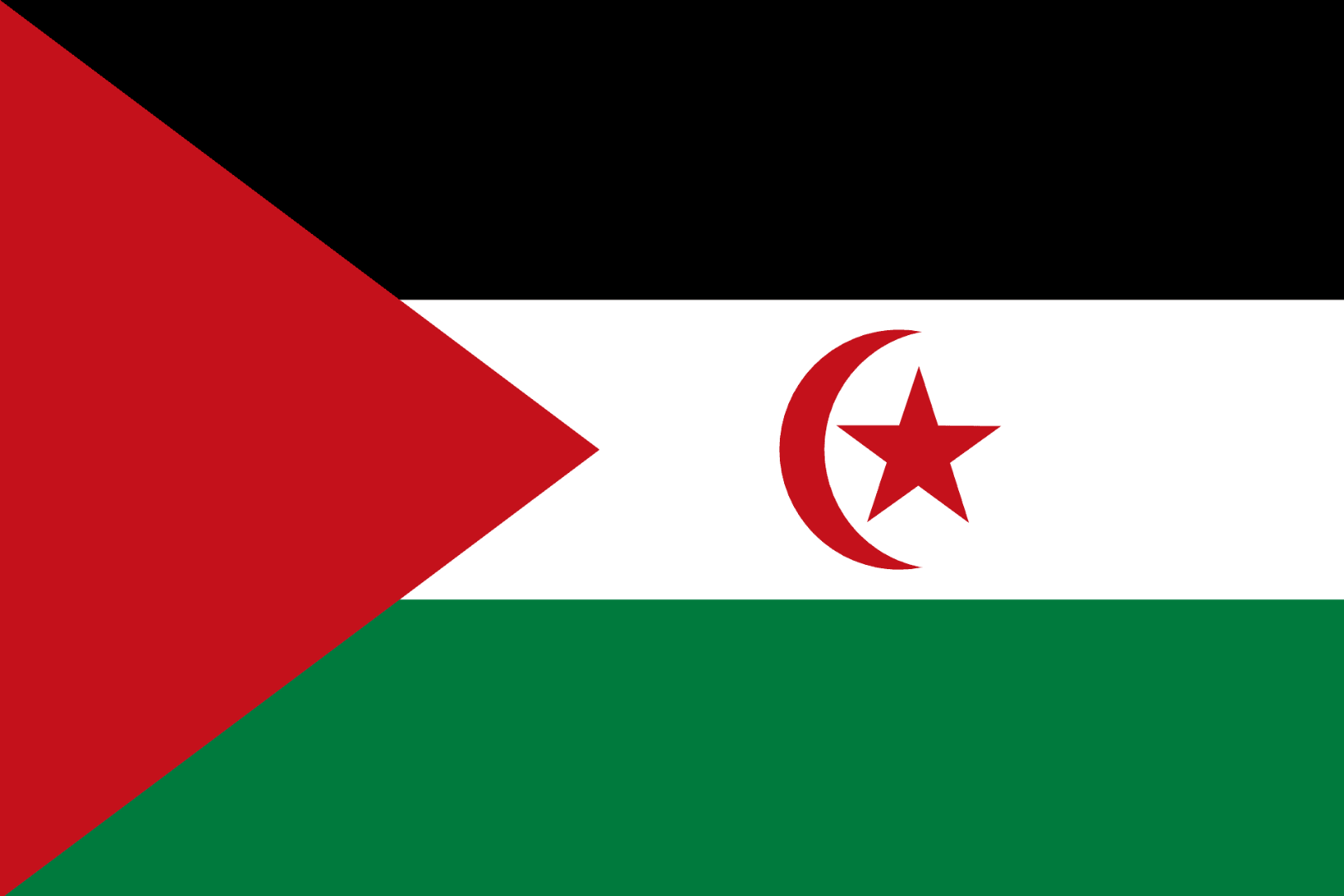
The Moroccan-controlled Western Sahara has been under de facto annexation by Morocco since the mid-1970s. After the end of Spain’s colonial authority over the region, the Moroccan regime launched a military invasion of the territory, an event often referred to as the “Green March,” which effectively triggered a conflict with the Polisario Front, an armed liberation movement that advocates for the self-determination of the Sahrawi people, the native inhabitants of the land. In 1991, an UN-brokered ceasefire was established, with the expectation of holding a referendum on self-determination for the Sahrawi people. However, this referendum has been repeatedly derailed by the Moroccan regime, and tensions with the Polisario remain high. Today, the Moroccan regime maintains authoritative control over roughly three-quarters of Western Sahara, with Moroccan settlers accounting for nearly two-thirds of the half-million residents. King Mohammed VI of Morocco wields significant powers, including the ability to appoint local officials, influence various aspects of governance, and oversee the judicial system, all while the Polisario and any calls for Sahrawi independence are criminalized. The lack of progress toward a long-promised referendum continues to fuel instability in the region.
Key Highlights
Elections are a sham, to the point where the real, mainstream Sahrawi political opposition does not have a realistic chance to meaningfully compete and possibly win. Since assuming control over Western Sahara, political expression and participation for Sahrawis, the native inhabitants, have been effectively criminalized. Moroccan laws block the formation of any political group that challenges the regime’s territorial claims in the Western Sahara, ensuring that those aligned with anti-occupation sentiments are suppressed. The electoral process is heavily influenced by the Moroccan regime, which exerts complete control over key political and administrative structures in what it refers to as “Morocco’s Southern Provinces.”
Independent media, political leaders, civil society leaders, organizations, and members of the general public face overt and systematic retaliation if they openly criticize or challenge the regime. The Moroccan regime monitors political activities closely, suppressing dissent through intimidation, imprisonment, and restrictions on freedom of speech. The Moroccan regime uses vague laws to criminalize expressions of solidarity with the Sahrawi cause, suppress freedom of expression, and censor media outlets. By labeling calls for Sahrawi independence as separatism that undermines its territorial claims, the regime aims to instill fear and discourage grassroots mobilization, effectively stifling dissent within the Sahrawi community.
Institutions largely fail to serve as independent checks on the regime. In Moroccan-controlled Western Sahara, access to a free and fair judicial system is significantly compromised for the Sahrawi population. While Morocco has established a legal framework that theoretically guarantees certain rights, in practice, this framework is often manipulated to maintain control over the territory and its inhabitants. The judiciary is complicit in the arbitrary arrests, lengthy pre-trial detentions, and torture of pro-independence Sahrawi activists, and regularly extends impunity to regime agents accused of perpetrating serious human rights violations. The political institutions in Morocco-controlled Western Sahara are largely extensions of the Moroccan regime, which is characterized by strong executive control and limited checks and balances. There is no genuine legislative institution representing Sahrawis with the ability to enact or challenge legislation affecting their territory independently of the Moroccan regime.