HRF classifies Syria as ruled by a fully authoritarian regime.
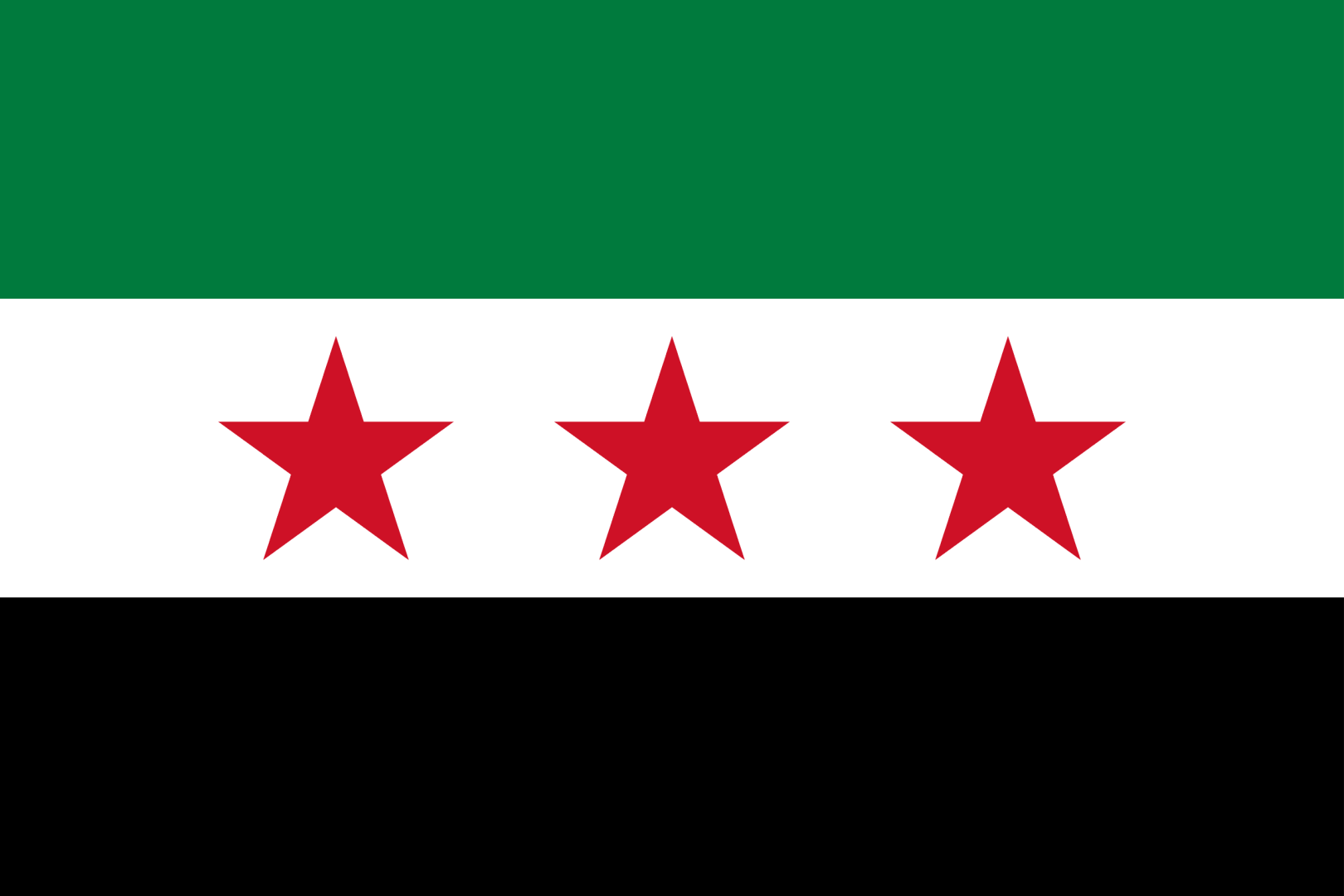
In December 2024, militant group Hayat Tahrir al-Sham (HTS) toppled the Ba’athist regime, led by the Assad family that had ruled Syria since 1970. In January 2025, the Syrian General Command appointed Ahmed al-Sharaa, a former commander of HTS, also commonly known asAbu Mohammad al-Jolani, as interim president. In March 2025, al-Sharaa issued a unilateral Constitutional Declaration that established a presidential system with parameters for a five-year transitional government led by the executive. Amid continued waves of sectarian violence and extrajudicial killings involving both transitional government forces and remnants of the former regime, separatist pressures in the Northeast, the South, and coastal regions, and troubling signs of continued kleptocracy and opacity within key governance roles under the transitional government, many in Syrian civil society nonetheless maintain cautious optimism that rests on the possibility that the transition culminates in free and fair elections, the adoption of a genuinely pluralistic constitutional order, and a decisive end to internal violence—conditions without which regime change alone has not yet yielded a free, united, or democratic Syria.
Key Highlights
There is no democratic transition of power at any level of government in Syria, rendering moot assessment of electoral competition. While the regime held limited elections for the Interim People’s Assembly in October 2025, only 6,000 Syrians were permitted to vote or run for office as members of the regime-vetted electoral college. To further limit the nature of the elections, the interim regime has continued the Assad-era ban on political parties and directly appointed 70 out of a total of 192 representatives in parliament.
Independent media, political leaders, civil society leaders, organizations, and members of the general public are seriously and unfairly hindered in their ability to openly criticize or challenge the regime. While the first year of transition has seen marked improvement from the repressive actions of the Assad regime, with greater margins of freedom for media, civil society, and protesters to operate, the interim regime continues to take measures to restrict or interfere with the freedoms of expression and association. The interim regime has blocked journalists from accessing politically sensitive areas and from reporting on topics sensitive to the regime. The executive also maintains Assad-era laws that grant it authority over the registration, funding, and administration of organizations to obstruct the work of independent organizations. The regime generally permits protests, but has at times arrested protesters and organizers under charges of espionage.
Institutions largely fail to serve as independent checks on the regime. While the interim regime has inherited state institutions that lack capacity due to financial, personnel, and infrastructural obstacles, it has also taken measures to subordinate all branches of government to the unelected president. Al-Sharaa maintains direct influence over the legislature, appointing more than one-third of its members and influencing the selection of candidates and voters of the electoral college. He also maintains the Assad-era authority to directly appoint members of the Supreme Constitutional Council and other higher courts, effectively monopolizing centralized control over the government and the course of Syria’s transition.