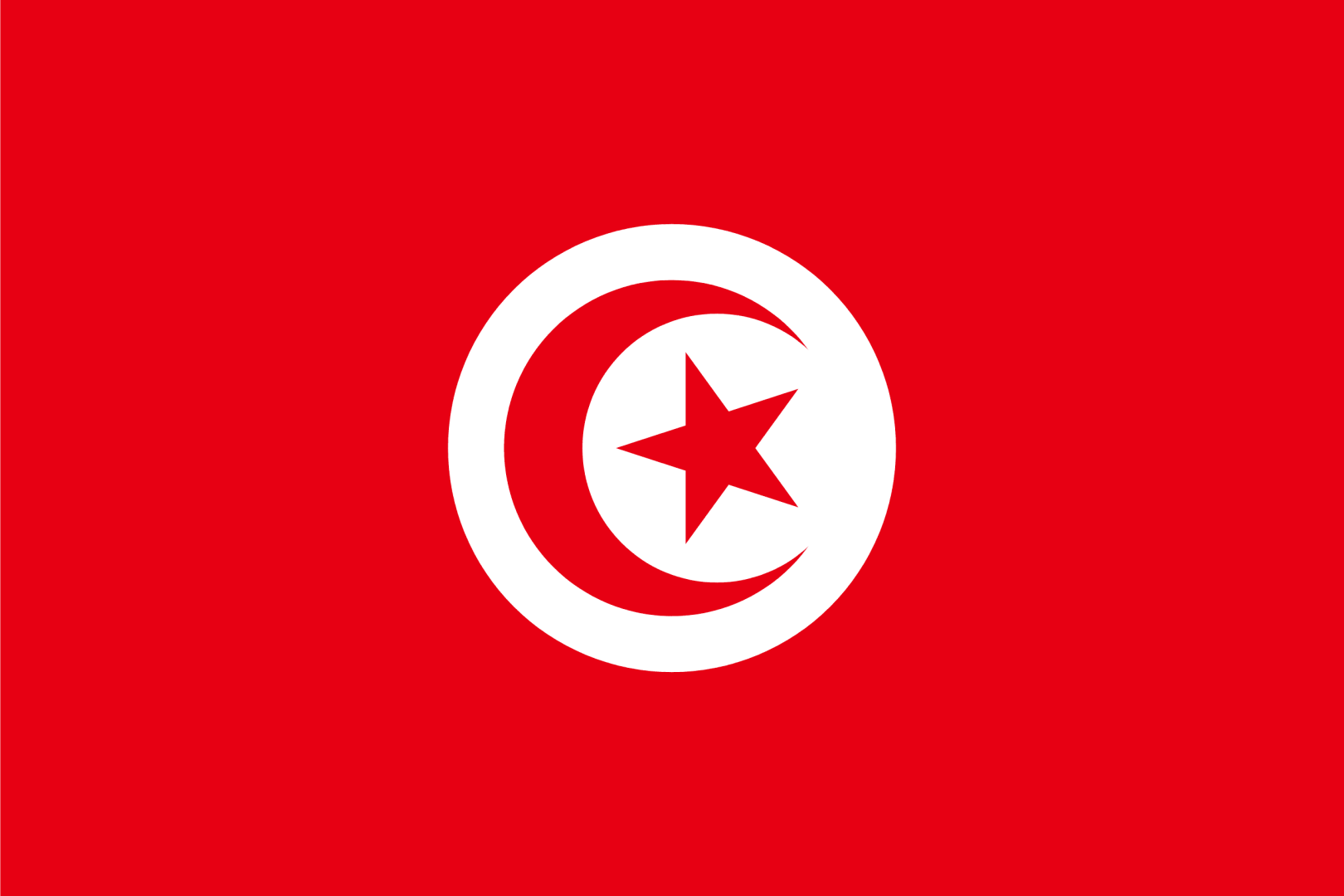
HRF classifies Tunisia as ruled by a fully authoritarian regime.
After the fall of the longtime authoritarian regime of Zine El Abidine Ben Ali in January 2011 following the anti-establishment Jasmine Revolution, Tunisia held three presidential elections in 2014, 2019, and 2024. However, since 2019, electoral, legislative, and judicial institutions have been weakened under the authoritarian rule of President Kais Saied, who, upon taking office in October 2019, began consolidating his power by redrafting the constitution and dismantling most of the country’s democratic institutions. In July 2021, President Saied suspended parliament by ordering the military to block access to the building and ousted Prime Minister Hichem Mechichi through a self-coup. In 2022, President Saied further solidified his power by passing an unpopular constitutional referendum that substantially reduced parliamentary powers. The new constitution allowed him to circumvent the checks and balances system created following the 2011 revolution.
Key Highlights
Elections in Tunisia are a sham, to the point where the genuine, mainstream political opposition has no realistic chance of competing and possibly winning. While Tunisia was initially viewed as a successful democratizing case in the Middle East and North Africa, the political situation has deteriorated since 2011. The electoral process under Saied has been marked by a lack of transparency, constraints on political freedoms, suppression of criticism, and persecution of opposition figures. This was especially evident in the run-up to the 2024 elections, when the regime called for early elections, tightened candidacy requirements, and imprisoned multiple candidates.
Independent media, political leaders, civil society leaders, organizations, and regular people face overt and systematic retaliation if they openly criticize or challenge the regime. Between 2011 and 2023, the Tunisian regime dramatically restricted the space for dissent, weakening several gains made in the context of freedom of expression established after the 2011 revolution. Following his rise to power, President Saied’s rule has been marked by an increase in authoritarianism, the issuance of presidential decrees restricting press freedom legislation, ensuring greater censorship of media outlets, and an increase in the harassment and intimidation of dissidents, political opponents, and journalists.
Institutions largely fail to serve as independent checks on the regime. With President Saied’s suspension of parliament and consolidation of power in 2021, the regime significantly undermined Tunisia’s institutional accountability by dismantling legislative oversight, sidelining judicial independence, and concentrating power in the executive. As a result, the regime increased its control over judicial institutions through extraordinary measures that compromised the separation of powers, such as taking over and appointing loyalists to the Supreme Judicial Council (the institution that is meant to ensure judicial independence) and other lower courts, and issuing a series of contentious presidential decrees that threatened judicial autonomy.