Country

Bolivia

Bolivia

Hybrid Authoritarian

Bolivia

0.15%

of the world’s population

12,749,300 people

Source: Tyranny Tracker

Overview

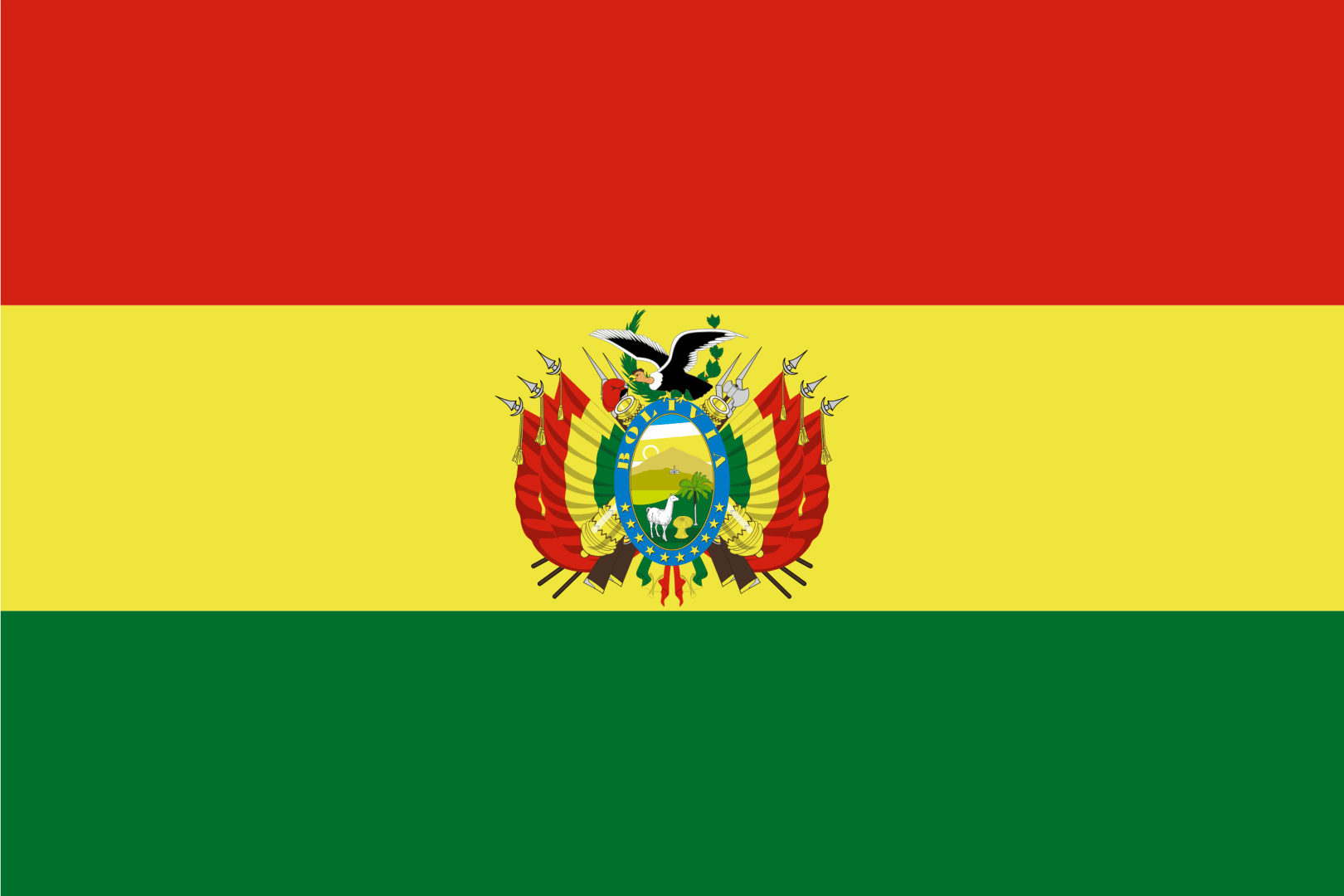
HRF classifies Bolivia as ruled by a hybrid authoritarian regime.

Bolivia operates as a presidential constitutional republic with increasingly competitive multiparty elections but a highly polarized environment. Since the rise of the Movement for Socialism (MAS) in 2006, national politics has been dominated by the political project associated with Evo Morales and its opposition. The 2009 Constitution re-founded the state as a “Plurinational State” and expanded social and political rights, but the same period was also characterized by the accumulation of authority in the executive branch. As the governing movement secured legislative majorities and extended influence over key state institutions, it gradually co-opted oversight institutions, lifted term limits for the president, and undermined the independence of electoral bodies The country experienced a major institutional rupture in 2019 following a contested presidential election marked by serious irregularities and the subsequent annulment of the vote, culminating in the resignation of Morales amid mass protests and political unrest. Although elections in 2020 were largely free and fair, leading MAS to a return to power, the crisis deepened mistrust between rival political camps and left lasting questions about the credibility of state institutions. In recent years, the MAS itself has fragmented, with tensions between factions aligned with Morales and those backing President Luis Arce weakening party cohesion and reshaping the political landscape. Political competition has continued through elections, including the competitive presidential contest that brought President Rodrigo Paz to power in late 2025, the first candidate outside the MAS to win the presidency since 2006. At the same time, confrontations related to the 2019 crisis have led to prosecutions and prolonged detention of prominent opposition figures. As a result, Bolivia’s political system combines active electoral competition with persistent polarization and contested institutional legitimacy.

Key Highlights

National elections are largely free and fair. Bolivia’s most recent elections indicate a return to competitive electoral politics after a period in which the credibility of elections was seriously undermined. In the 2025 general election, multiple opposition candidates campaigned nationwide, and the governing Movement for Socialism (MAS) obtained a very limited vote share, producing the country’s first presidential runoff and an alternation in executive power. The victory of an opposition candidate marked the first time since 2006 that the presidency was won by a figure outside the MAS political movement. This competitive environment contrasts with the 2019 electoral crisis, when significant electoral irregularities led to the annulment of the national election and a broader institutional breakdown. A new election was held in 2020, and subsequent contests have been conducted with domestic and international observation and without a comparable disruption, though disputes over the independence and composition of electoral authorities persist. Electoral competition is therefore present but recent, emerging after a prior collapse in confidence in the electoral process.

Independent media, political leaders, civil society leaders, organizations, and members of the general public are seriously and unfairly hindered in their ability to openly criticize or challenge the regime. Across successive administrations, authorities have exercised significant influence over media coverage through ownership changes, legal and administrative pressures, and the discriminatory allocation of state advertising, contributing to a constrained environment for independent journalism. Political participation in contentious activity has also entailed legal risks, as prominent opposition leaders have faced prosecution and prolonged detention in connection with the 2019 crisis, and journalists and activists have reported harassment and intimidation by both state actors and partisan groups. Demonstrations are frequent but have at times been dispersed through coercive policing, arrests, and excessive use of force, and protest-related violence has occurred under multiple governments. In addition, past investigations have documented cases of severe human rights abuses by security forces, including extrajudicial killings. Taken together, these patterns indicate that dissenting expression and mobilization remain possible in Bolivia but occur in a restrictive climate that discourages open opposition.

Institutions are somewhat independent but frequently constrained by the regime. Courts have played a decisive role in shaping electoral competition. For example, the same Constitutional Tribunal that enabled then-President Evo Morales to run in the 2019 election for what would have been a fourth term, despite a national referendum rejecting indefinite reelection, later reinterpreted constitutional term limits as restricting presidents to two terms, effectively disqualifying his candidacy ahead of the 2025 election. At the same time, criminal proceedings have repeatedly targeted prominent opposition figures, while accountability for governing authorities has been inconsistent and selective. Structural features of the judicial system, including politically mediated judicial nominations, a high proportion of provisional judges, and delays and disputes surrounding judicial elections, have weakened institutional autonomy. Although oversight bodies continue to function and elections have been administered with improved procedural credibility since 2020, the judiciary remains politicized and only partially able to constrain governing authorities.


Related Topics

Share

Bolivia Most Recent

Tyranny Tracker

A Democracy Index Built to Inform Action

Report
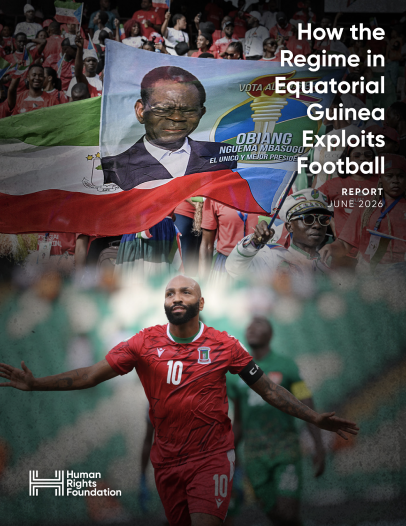
How the Regime in Equatorial Guinea Exploits Football
Equatorial Guinea’s regime has strategically exploited the global appeal of football as a political tool.
Jun 23, 2026
Report
Dictators and Diplomas: Why Foreign Autocracies Funding American Universities Threatens Democracy, Destroys Academic Freedom, and Entrenches Anti-Democratic Regimes
For years, foreign dictatorships and their proxies have searched out any number of ways to influence policy and discourse in the United States. From hiring fleets of lobbyists to setting up dark money networks, from bankrolling sports leagues to launching disinformation campaigns on American social media platforms, from backing strategic investments to hiring consulting firms and white-shoe law firms, the list of targets is lengthy.
May 12, 2026
The Quantum Threat to Bitcoin - Report Cover
Report
The Quantum Threat to Bitcoin
Bitcoin is a financial lifeline for dissidents resisting authoritarian regimes. The rise of cryptographically relevant quantum computers (CRQCs) with the ability to crack Bitcoin’s underlying cryptography could threaten the network’s security foundations.
Oct 31, 2025
Youthquake Report Asian youth movement Cover
Report
Youthquake: Youth-led Movements Shaking Up East and Southeast Asia
In recent years, youth across East and Southeast Asia, and around the world, have spearheaded the demand for democracy, justice, and freedom.
Aug 14, 2025

How can we help?

Hit enter to search or ESC to close

Join the cause by subscribing to our newsletter.

Email Us