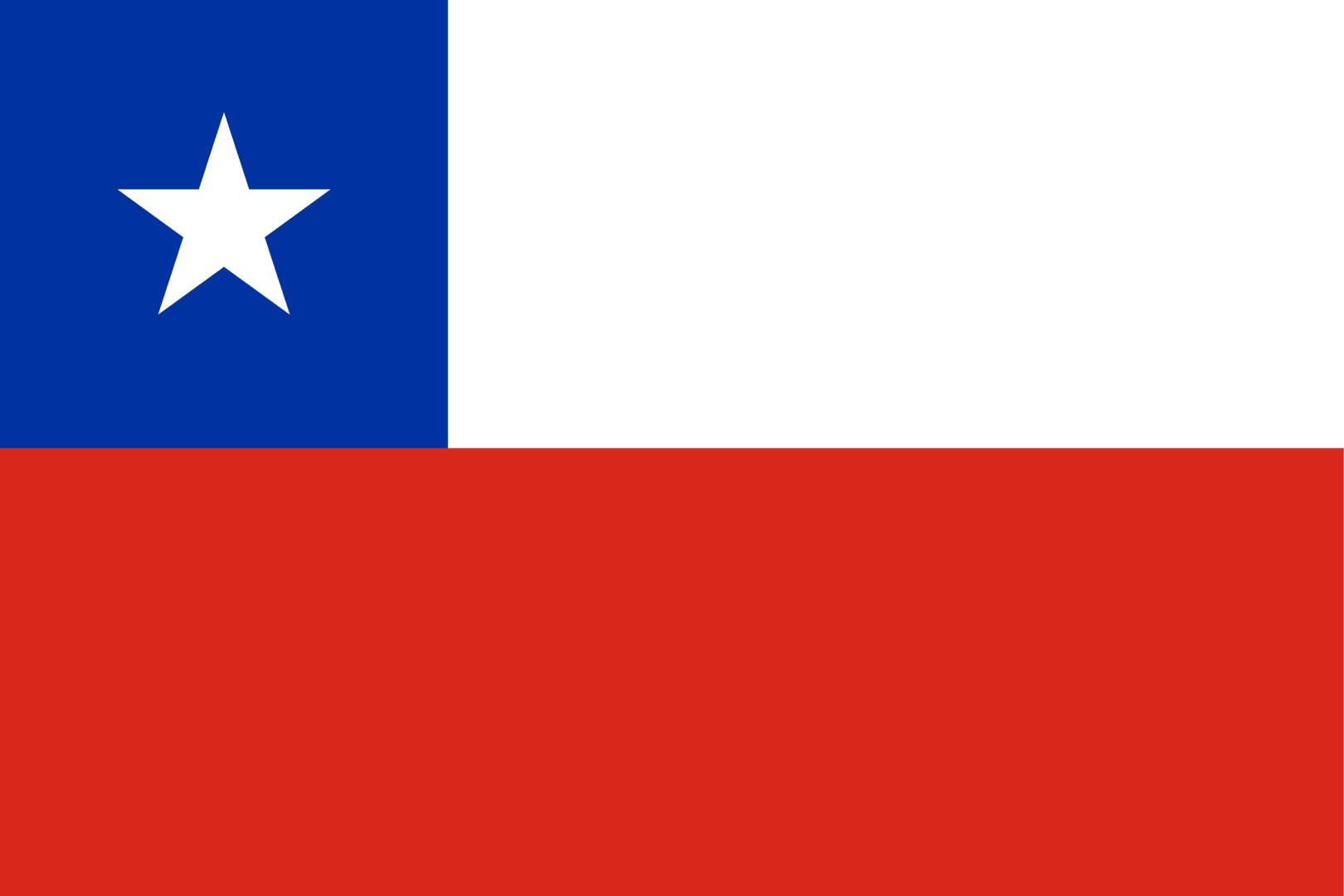
In 1990, Chile initiated a transition to democracy after 17 years of military rule under General Augusto Pinochet. Prior to the military coup, the Chilean political system was characterized by stability and growing democratization. Pinochet rose to power in 1973 after the military led an assault on the presidential palace and deposed the democratically elected left-wing president, Salvador Allende, following a constitutional crisis. The military dictatorship, responsible for widespread human rights abuses, came to an end in 1990, after the historic 1988 plebiscite in which Chileans voted to restore elections. The country’s transition to democracy has proven to be largely successful, even as socioeconomic inequalities remain. These tensions contributed to the wave of social unrest that erupted in 2019 and to the subsequent constitutional process, which included two national referendums to replace the 1980 constitution, both of which were ultimately rejected by voters. Since 2022, the Macrozona Sur region, which Mapuche communities claim as their homeland, has been under a continuous state of emergency; confrontations between informal armed groups and state security forces take place occasionally. In November and December 2025, Chile held general elections in which 178 legislative seats were renewed, and a new president was elected in two rounds of voting. Republican Party (PRCh) member José Antonio Kast won the presidential race. President-elect Kast’s inauguration is scheduled for March 2026.
Key Highlights
National elections in Chile are largely free and fair. Peaceful alternations of power between an increasingly broad range of parties and coalitions have shaped Chilean politics into a dynamic multiparty system. Many larger and more traditional parties often compete in general elections through formal coalitions, such as the right-wing Let’s Go Chile and successive center-left and left-wing alliances. Although established parties such as the Socialist Party (PS) and the Independent Democratic Union (UDI) have remained key actors within their respective blocs, newer parties have gained prominence in recent years. The Electoral Service of Chile (Servel) is an independent electoral body that effectively manages elections, and the Election Certification Tribunal (Tricel) is the independent judicial body that resolves electoral disputes. Both the Servel and Tricel operate without any undue interference from the parties in power.
Independent media, political leaders, civil society leaders, organizations, and regular people in Chile are largely free to openly criticize or challenge the government. Private media outlets are widespread, and civil society organizations (CSOs) operate freely and are able to organize effectively. While the right to peacefully assemble is protected by law, infringements upon the rights of protesters and dissidents do occur. The country’s national police, the “Carabineros,” has gendarmerie-style militarized structure and in recent years has been criticized for indiscriminate and excessive use of force as well as undue censorship of dissent. In response, the Chilean government has taken some steps to reform the Carabineros.
Institutions in Chile are independent and largely serve as a check on the government. The independence of the courts serves to mostly protect the rights of dissidents, even as the judicial harassment of dissidents continues to occur. The country’s institutions are also able to hold officials accountable for their actions; however, further room for improvement remains in holding state security agents accountable for human rights violations.