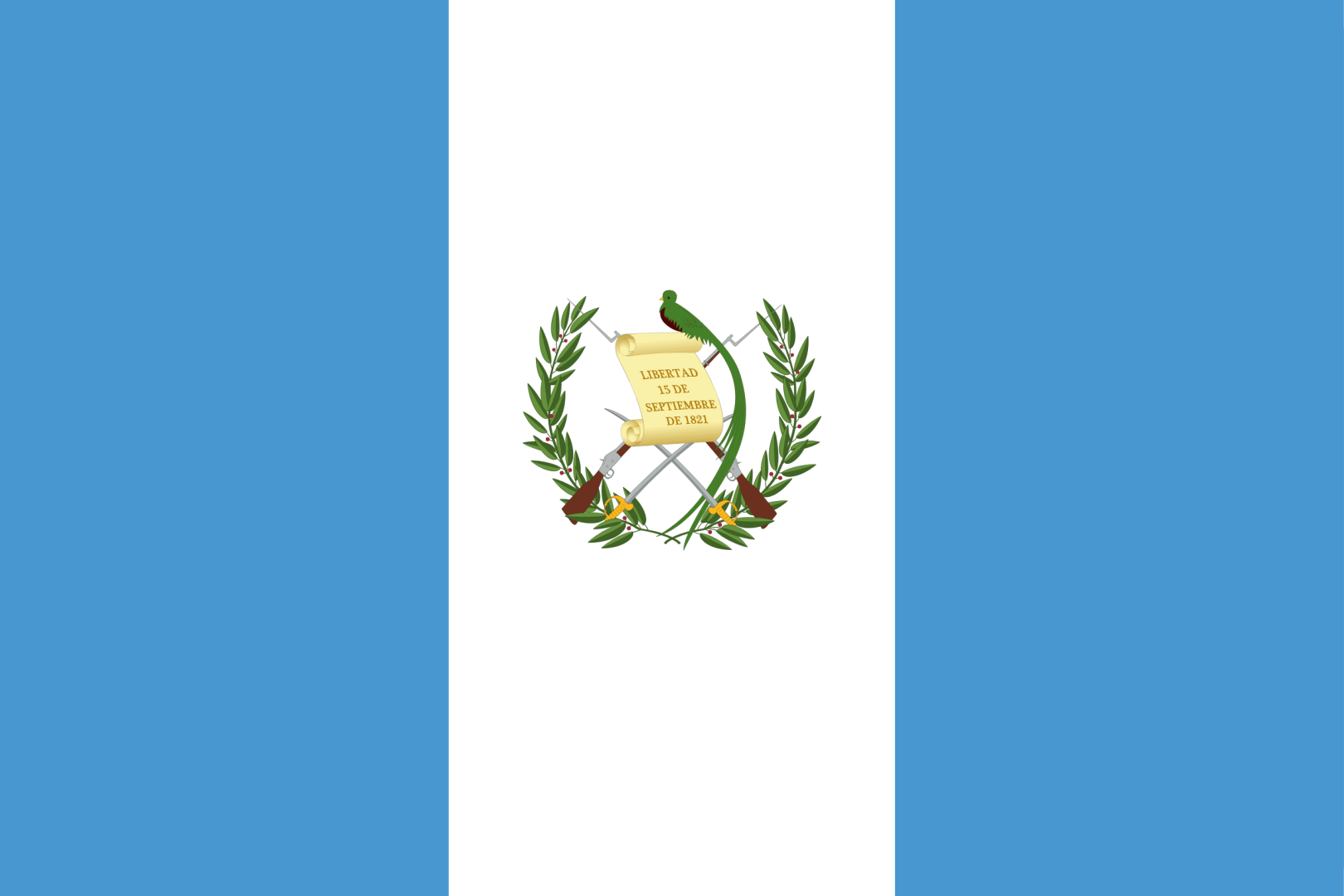
Guatemala is a presidential constitutional republic that returned to civilian electoral rule with the adoption of the 1985 Constitution after decades of military rule during a 36-year civil war (1960–1996). The 1996 Peace Accords subsequently ended the armed conflict and deepened democratic and institutional reforms. The Constitution prohibits presidential reelection, creating a recurring pattern in which each election cycle opens space for new political figures rather than continuity of incumbents. Political parties are weakly institutionalized and tend to organize around prominent personalities or short-term political objectives rather than stable ideological programs. While elections have been competitive and have produced alternation in power, the country has long faced weak state capacity, corruption, and the influence of entrenched political and economic networks within public institutions. During the 2010s, international anti-corruption efforts led by the UN-backed International Commission against Impunity in Guatemala (CICIG) exposed criminal structures embedded in the state, but the commission’s termination in 2019 marked a turning point, after which prosecutors, judges, and journalists involved in anti-corruption investigations faced increasing legal pressure. The 2023 election of Bernardo Arévalo represented a significant political disruption, as his anti-corruption platform challenged established political actors. His inauguration in January 2024 followed a prolonged institutional crisis in which judicial and prosecutorial authorities attempted to suspend his party and invalidate electoral results. Since taking office, the Arévalo administration has governed amid persistent conflict with parts of the justice system, especially the Public Prosecutor’s Office, producing a situation in which democratic competition continues to operate, but under sustained institutional pressure.
Key Highlights
National elections in Guatemala are largely free and fair. However, the 2023 electoral cycle was marked by contested candidate exclusions and legal actions by prosecutorial and judicial actors that placed pressure on electoral authorities and sought to delay or delegitimize the results. Despite these interventions, domestic and international observation remained in place, the vote was ultimately certified, and opposition candidate Bernardo Arévalo was able to compete and assume office. Since his inauguration, there is no evidence that the executive branch has attempted to exclude competitors or manipulate electoral administration, although the process has operated under continued institutional strain from actors outside the government.
Independent media, political leaders, civil society leaders, organizations, and members of the general public are largely free to openly criticize or challenge the government. President Bernardo Arévalo has publicly defended press freedom and has not directed repression against critics. However, a hostile environment for dissent persists due to actions by the Public Prosecutor’s Office under Attorney General Consuelo Porras, which has pursued criminal cases against investigative journalists, former judges and prosecutors, ex-CICIG personnel, human rights defenders, and student activists, leading to exile, detention, and prolonged proceedings. As a result, expression remains lawful and visible, but unevenly protected because intimidation largely originates from prosecutorial and allied actors rather than the executive branch.
Institutions are independent and largely serve as effective checks on the government. Courts and oversight bodies continue to function autonomously and have at times upheld electoral results and constitutional procedures. However, prosecutorial and lower-court actions following the 2023 elections also challenged the certification of results, targeted electoral authorities, and constrained both the legislature and the presidency, including repeated attempts to lift President Arévalo’s immunity. These patterns reflect a fragmented accountability system in which autonomous judicial actors both check and, at times, disrupt democratic governance, rather than executive capture of institutions.