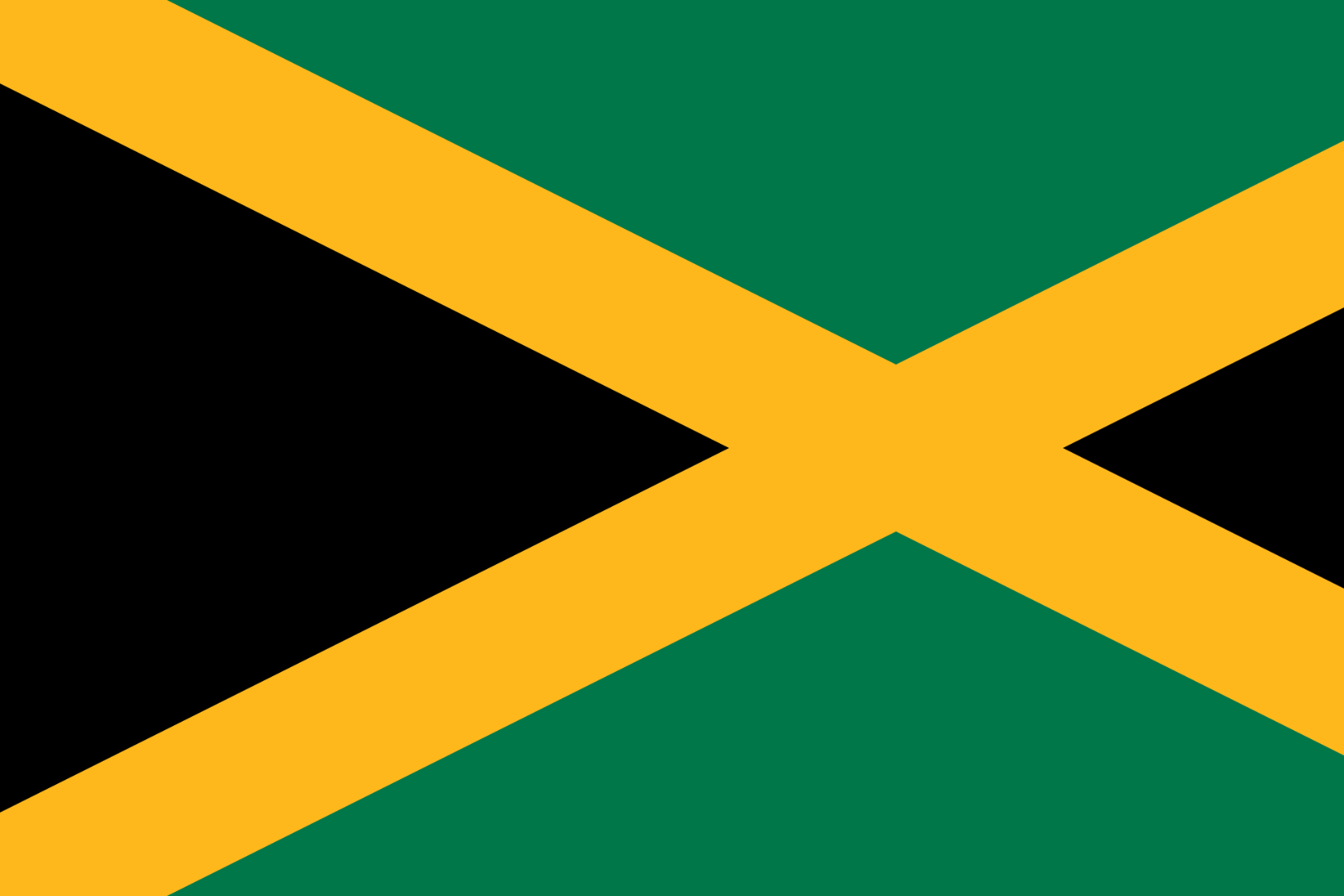
Since its independence from the United Kingdom in 1962, Jamaica has maintained a competitive multiparty system. The country operates under a parliamentary constitutional monarchy, where the prime minister and cabinet exercise executive authority, and legislative power is vested in a bicameral parliament. The party commanding a majority in the elected 63-seat House of Representatives forms the government, while the largest non-governing party serves as the parliamentary opposition. The 21 members of the Senate are appointed. Power has alternated regularly through elections, primarily between the center-left People’s National Party (PNP) and the more conservative Jamaica Labour Party (JLP). Democratic governance has remained broadly stable in recent years under Prime Minister Andrew Holness of the JLP, despite persistent challenges related to corruption, high levels of criminal violence, and the localized use of states of emergency as a public-security measure. Despite these pressures, Jamaica has preserved competitive electoral processes, space for political dissent, and functioning mechanisms of institutional accountability.
Key Highlights
Elections in Jamaica are largely free and fair. Electoral competition remains open and meaningful, with the mainstream opposition able to participate fully in contests and campaigns under generally uniform rules. Independent institutions, including the Electoral Commission of Jamaica (ECJ) and the Electoral Office of Jamaica (EOJ), continue to administer electoral processes without executive or partisan interference, supporting confidence in oversight and results. While incumbents have enjoyed recent electoral success, outcomes remain competitive and uncertain, and losing parties have accepted results and transitioned into opposition through established institutional channels.
Independent media, political leaders, civil society leaders, organizations, and members of the general public are largely free to openly criticize or challenge the government. The media environment in the island remains pluralistic and not subject to state direction, while public demonstrations and partisan gatherings are permitted and managed as matters of public order rather than suppressed for their political content. Legal and regulatory frameworks do not impose prior restraints on speech, and political expression occurs freely across broadcast, print, and online platforms.
Institutions are independent and largely serve as effective checks on the government. Courts provide an accessible venue for challenging government action, and have required authorities to justify or modify measures found inconsistent with constitutional protections. Oversight bodies such as the Integrity Commission and the Auditor General regularly investigate and publicly report on official conduct, while judicial review has preserved the independence of key accountability offices, including the Director of Public Prosecutions. Judges have issued rulings adverse to governing authorities without facing retaliation, indicating that scrutiny of executive action occurs through functioning institutional channels rather than being obstructed.