Peru’s contemporary political trajectory is deeply shaped by the internal armed conflict (1980–2000) between the state and insurgent groups such as the Shining Path and the Túpac Amaru Revolutionary Movement (MRTA), which left nearly 70,000 people dead and eroded trust in democratic institutions. In this context of violence and crisis, Alberto Fujimori rose to power in 1990 and carried out a self-coup in 1992, dissolving Congress and concentrating power in the executive. A new 1993 constitution strengthened presidential authority while weakening institutional checks, laying the groundwork for his decade-long rule. Fujimori’s regime collapsed in 2000 amid corruption and human rights scandals, ushering in a new democratic period characterized by competitive elections and more assertive oversight from institutions such as the Constitutional Tribunal and the Ombudsman’s Office. In the decades since, Peru has faced extreme party system fragmentation, recurring corruption scandals, and constant clashes between the executive and legislature. Since 2016, the country has cycled through seven presidents in just eight years, as Congress repeatedly used its broad impeachment powers to oust sitting leaders. One notable exception is the removal of Pedro Castillo in December 2022, which followed his attempted self-coup and is widely regarded as a constitutionally grounded response to an effort to break the democratic order. Beyond that case, impeachment has been applied more expansively. Following the impeachment of President Dina Boluarte in October 2025, Congress President José Jerí assumed the presidency by constitutional succession and will remain in office until July 2026, the end of the current term. With the exception of interim President Francisco Sagasti (2020-2021), nearly every living former president is imprisoned, under house arrest, or facing criminal investigations. The 2026 general elections will feature a contest that includes a record 43 presidential candidates, alongside the reintroduction of a bicameral legislature for the first time since it was abolished under the 1993 constitution.
Key Highlights
National elections in Peru are largely free and fair. The country has a weak and fragmented party system, where new parties form and dissolve every electoral cycle. Since the return to democracy in 2001, there have been multiple peaceful transfers of power between competing parties. The last general election in 2021 was highly competitive. Pedro Castillo narrowly defeated Keiko Fujimori in a tightly contested runoff. Castillo was later impeached by Congress in 2022. His Vice President Dina Boluarte assumed office and was herself impeached in 2025. Congress President José Jerí assumed the presidency in October 2025. Efforts by Congress to impeach leaders are increasingly common because of a Constitutional clause that allows impeachment proceedings to be brought in Congress on a vague “moral incapacity” provision that does not require proof of legal wrongdoing.
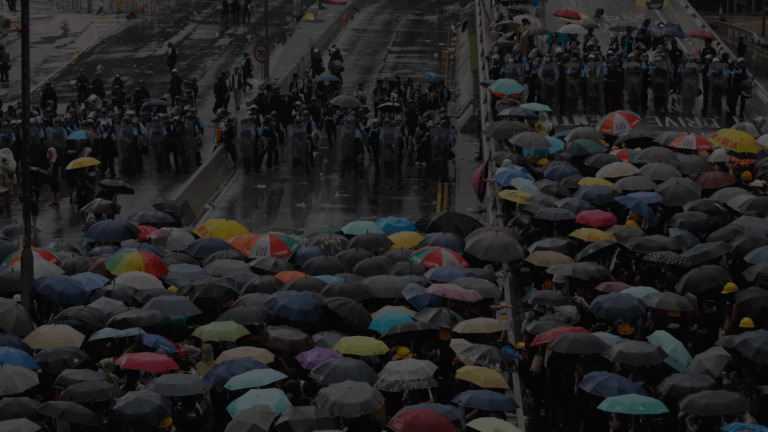
Independent media, civil society organizations, and members of the general public in Peru are largely free to openly criticize or challenge the government, though dissent has been seriously and unfairly hindered during episodes of political crisis. Civil society remains active and diverse, but the 2025 reform to the NGO law has introduced serious restrictions on civil society organizations that receive foreign funding. The press remains pluralistic and independent, with outlets such as IDL-Reporteros and Ojo Público regularly exposing corruption and abuses of power. However, protests have faced disproportionate repression: between December 2022 and March 2023, security forces under President Dina Boluarte killed 44 demonstrators and injured over 100 others during nationwide unrest.
Institutions are somewhat independent but frequently constrained by the government. Institutional accountability in Peru is uneven; while electoral authorities remain independent, other oversight and judicial institutions have been severely politicized. Courts have not unfairly enabled the government’s attempts to undermine electoral competition. However, Congress has repeatedly weaponized the presidential impeachment mechanism — removing four presidents since 2016 under the vague “moral incapacity” clause — turning an accountability safeguard into a partisan tool that has generated chronic instability. The Attorney General’s Office has also suffered from politicization and interference, with successive prosecutors facing political pressure and removal amid scandals of corruption and influence-peddling. Meanwhile, Congress has sought to weaken judicial independence by attempting to suspend the National Board of Justice (JNJ) and by appointing politically aligned Constitutional Tribunal (TC) magistrates through opaque procedures. The resulting concentration of power in the legislature and erosion of judicial autonomy have undermined institutional checks and blurred the boundaries between accountability and political control.