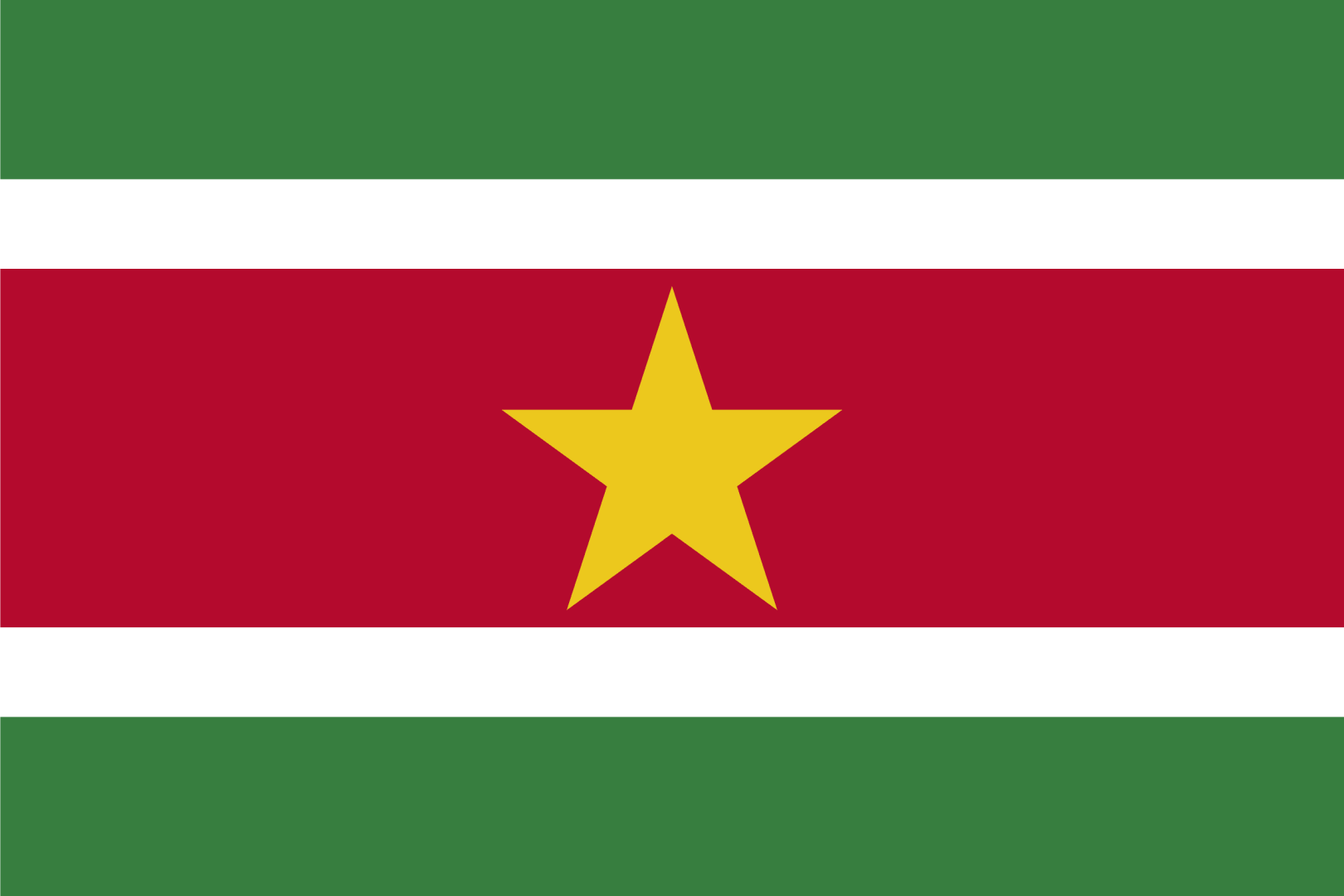
Following independence from the Netherlands in 1975, Suriname’s emerging democracy collapsed when army general Dési Bouterse led a successful coup d’etat in 1980. His junta suspended the Constitution, dissolved the National Assembly, and persecuted government critics and journalists. A subsequent civil war (1986–1992) between Bouterse’s forces and the Surinamese Liberation Army further destabilized the country, ending only with peace accords in 1992 and a gradual return to civilian rule. Throughout its transition to democracy, Suriname has had to contend with the legacy of military authoritarian rule that left behind fragile political institutions and widespread practices of corruption. In 2010, Dési Bouterse became Suriname’s head of state once again, serving two terms as the country’s democratically elected president and the leader of the National Democratic Party (NDP). In 2019, Bouterse was convicted and sentenced to 20 years in prison for crimes committed during his dictatorship. Following Bouterse’s conviction, the opposition Progressive Reform Party (VHP) won the 2020 elections. Then, in 2025, the NDP was elected back into power under the new leadership of President Jennifer Geerlings-Simons.
Key Highlights
National elections in Suriname are largely free and fair. Large mainstream parties, primarily the NDP and the VHP, as well as smaller parties, regularly compete for seats in the National Assembly. Elections are typically conducted in a way that protects the integrity of the process, but administrative errors can hamper electoral procedures and undermine public trust. Moreover, the involvement of an executive body in electoral logistics, as well as the current appointment mechanisms for electoral officials and the absence of some electoral regulation, can limit the independence and capacity of Surinamese electoral oversight institutions. Nonetheless, independent electoral missions are regularly invited to provide additional oversight and have found elections to be generally free and fair.
Independent media, political leaders, civil society leaders, organizations, and regular people in Suriname are largely free to openly criticize or challenge the government. Media companies and civil society organizations and associations (CSOs) operate freely and are able to act as government watchdogs. Occasional infringements upon the rights of dissidents have been reported, including the harassment of journalists. However, rights violations against dissidents are usually investigated, and perpetrators are sometimes held accountable. Defamation charges are sometimes abused by officials to retaliate against journalists who publish criticism of the government. The right to peacefully assemble is guaranteed by the Surinamese Constitution and generally upheld by the government.
Institutions are independent and serve as a check on the government. The independence of the courts serves to protect the rights of dissidents and Suriname’s electoral integrity. However, operational opacity, delays, and institutional weaknesses can occasionally hinder institutions’ ability to act effectively. Institutions are also able to hold government officials accountable for wrongdoing, even as accountability mechanisms could be improved and strengthened. Efforts to reform how electoral institutions function under the Santokhi administration have not seriously weakened their operational independence.