
Welcome to this week’s Financial Freedom Report.
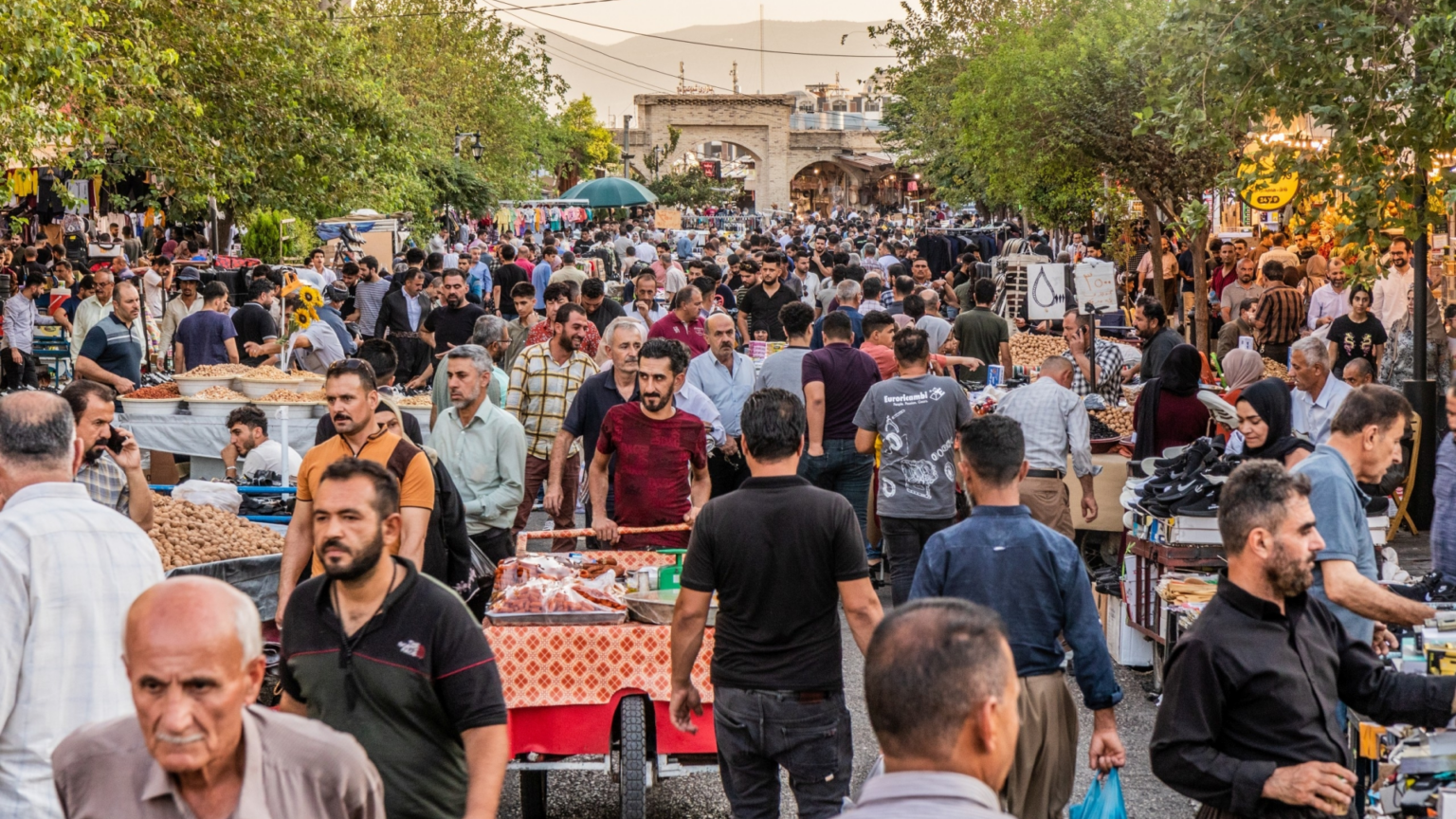
In Iraq, the hybrid authoritarian regime has decided to remove three zeros from the dinar and issue new banknotes, a move officials argue would force hoarded cash back into banks. But Iraq’s Central Bank has yet to confirm the plan or provide a timeline. While redenomination could simplify transactions, it would not restore the purchasing power Iraqis have lost after years of high inflation.
In Bitcoin coverage, open-source initiative Citadel FOSS has rebranded Coinswap as OpenSwap, expanding the privacy tool from a peer-to-peer swap protocol into an open marketplace where anyone can exchange bitcoin or provide swaps without relying on a centralized exchange. For dissidents and others facing financial surveillance, that means more ways to transact privately without putting a company in the middle.
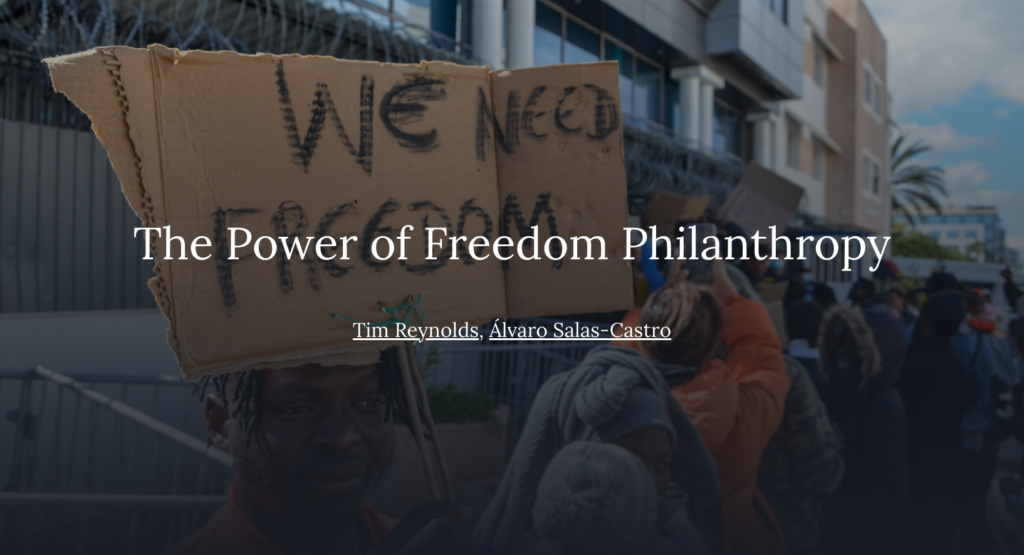
To end this week’s newsletter, we feature a new Journal of Democracy essay from Tim Reynolds and Álvaro Salas-Castro arguing that philanthropy has neglected the freedom that makes progress in every other cause possible. As authoritarian regimes increasingly weaponize money against civil society, the authors call for dramatically more investment in freedom, democracy, and technologies that help human rights defenders remain independent.
Global News
Iraq | Currency Redenomination Planned
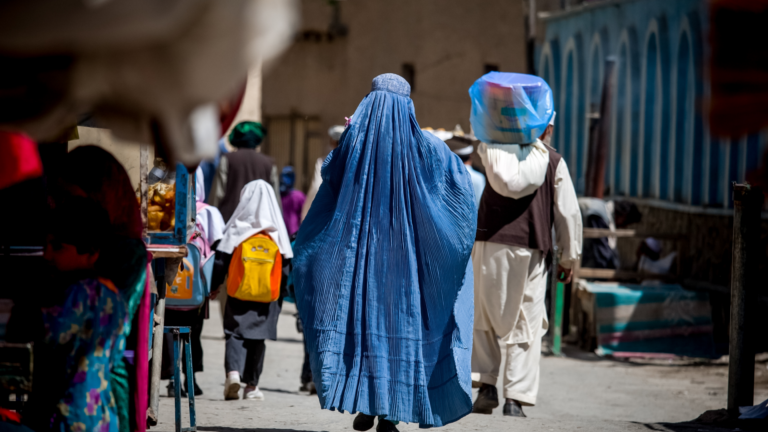
An Iraqi official announced plans to remove three zeros from the country’s currency, the dinar, and issue redenominated banknotes. This means that 1,000 dinars could now equal 1 new dinar. While the goal is to simplify payments and accounting, the change would adjust prices, salaries, and bank balances by the same ratio. However, Iraq remains a heavily cash-based economy. Many people earn and save cash informally. If exchanging old notes requires access to a bank account or proof of the cash’s origin, some Iraqis could struggle to convert their savings before the old notes lose their validity.
In context: The large numbers currently printed on Iraqi banknotes reflect decades of currency depreciation and inflation. Iraqi citizens have long had to hold their savings in a currency that has repeatedly lost purchasing power. This redenomination, in part, reflects that history.
Cuba | 94% of the Population Lives in Extreme Poverty
A new nationwide study from the Cuban Observatory for Human Rights found that 94% of Cubans live in extreme poverty. The study, based on 1,318 participants across all 15 provinces, shows that families face severe economic hardship, chronic food shortages, and deteriorating public services. Nearly 7 in 10 households said they earn less than 20,000 Cuban pesos ($30) a month. Eighty percent report skipping at least one daily meal because of a lack of money or food. Ninety-five percent of respondents disapprove of the Communist regime’s economic and social management. Taken together, the findings paint a grim picture of a country facing a deepening economic crisis.
In context: Cuba’s authoritarian regime has contributed to years of economic mismanagement and corruption, leaving ordinary Cubans to bear the burden through deepening poverty.
Russia | Depositors Keep Withdrawing Funds as War Costs Mount
Russians withdrew nearly 286.4 billion rubles ($3.4 billion) from banks during the first two weeks of August, according to Central Bank data. (This follows $7.3 billion withdrawn in July and over $4.5 billion in June.) The outflow is partly driven by fears that the Kremlin might seize private deposits to fund the war in Ukraine. The withdrawals have reduced banks’ liquidity and limited their ability to purchase regime bonds. Last month, the Finance Ministry canceled several debt auctions planned to cover the deficit. By July, the deficit had reached $76.1 billion, already surpassing the regime’s initial full-year estimate of about $44 billion (3.8 trillion rubles).
India | UPI Merchant Fees Could Reshape Digital Payments
India has paved the way for banks and payment companies to begin charging some merchants for transactions on the Unified Payments Interface (UPI), the country’s state-backed digital payment network. More than 550 million Indians use UPI; 23.6 billion transactions were processed in July 2026 alone. Now that the system has hit that scale, India is moving to change the original rules, leaving 65 million merchants who rely on it for payments with little recourse against a sudden shift in margins. While fees have not yet been set, proposals under discussion include charges of 0.3–0.5% on larger business transactions, with person-to-person payments and most everyday purchases remaining free for the time being.
Burma | Coup Pushes Families Out of Banks and Into Informal Finance
A firsthand account from Burma describes how the 2021 military coup reshaped everyday financial life. In the days after the takeover, ordinary civilians struggled to withdraw their cash from banks, while cross-border transfers increasingly shifted to informal networks. In the years since, the economy has deteriorated so sharply that some basic goods now cost 7 to 10 times what they did before the coup. Meanwhile, families increasingly rely on cash — or, for those who can, on gold — to preserve what value they can.
In context: The junta’s takeover not only erased political freedoms, but also helped push Burma into an economic crisis. It made ordinary people poorer and the formal financial system more unreliable. Families must now navigate collapsing purchasing power. Not surprisingly, technologies like Bitcoin have become a lifeline to access, preserve, and move their money.
Belarus, Kazakhstan, and Kyrgyzstan | Banks Hike Fees on Russian Cash Deposits
Banks in Belarus, Kazakhstan, and Kyrgyzstan are sharply raising fees on cash deposits of rubles from nonresidents as more physical currency flows out of Russia. Fees that were 2–5% at the start of summer have climbed to 10–15% at some banks, while Belarus’ Neo Bank Asia now charges 20%. The surge reportedly follows tighter controls on cash transactions inside Russia, which have pushed more people to move rubles into neighboring countries. Now, transferring money across the border is dramatically more expensive, and individuals trying to preserve or relocate their savings can lose as much as one-fifth of their value just to get it into a foreign bank.
Recommended Content
The Power of Freedom Philanthropy by Tim Reynolds and Álvaro Salas-Castro
In their Journal of Democracy article, Tim Reynolds, founder and chairperson of The Reynolds Foundation, along with the foundation’s president and CEO, Álvaro Salas-Castro, argue that philanthropy has consistently underfunded the freedom that enables advances in human rights, education, and beyond. Less than 1% of global giving goes toward freedom, democracy, and civil liberties, even as authoritarian regimes increasingly use financial repression to freeze accounts, seize assets, and cut civil society off from funding. The authors call for “Freedom Philanthropy,” an approach that treats freedom as essential infrastructure to be funded at scale. That includes technologies, such as Bitcoin and Nostr, that can help activists remain financially and digitally independent amid repression.
Bitcoin and Freedom Tech News
OpenSwap | Coinswap Becomes an Open Marketplace for Bitcoin Swaps
Citadel FOSS, the open-source development team that maintains the Coinswap protocol, has rebranded the project to OpenSwap. Coinswap lets Bitcoin users exchange coins with each other without handing control of their funds to a centralized exchange. This helps break the link between a user’s old and new transaction history, which is important for financial anonymity and privacy for dissidents. OpenSwap expands that idea into an open marketplace where anyone can make swaps, provide the service to others, or build the technology directly into a wallet. It gives users another way to move between coins without putting a company in the middle. Once built and production ready, the OpenSwap protocol will allow anyone to provide the infrastructure that enables better financial privacy, something vital for dissidents and others facing financial surveillance by dictatorships.
SafePal | Data Breach Exposes 40,000 Customers’ Personal Information
Hardware wallet provider SafePal disclosed a breach that exposed the names, physical addresses, and contact details of 39,798 customers who placed orders between March 2025 and April 2026. The flaw affected the system SafePal uses to track orders, not its wallets. SafePal has patched the vulnerability, notified affected customers, and says it will now retain order data for only 90 days.
Why this matters: A leaked name and home address can expose hardware wallet owners to phishing, impersonation, theft, or even physical targeting. This underscores the need for companies that sell self-custody tools to minimize the personal data they collect and retain.
Krux | New Lead Maintainer Announced
Open-source Bitcoin signing project Krux has named longtime contributor Jean as its new lead maintainer. Jean first became involved by scrutinizing Krux’s flash storage — the chip where the devices keep encrypted data — and later contributed extensive code reviews and new tools for software developers working on air-gapped devices. Former lead maintainer and HRF grantee Odudex will remain involved as a contributor.
Why this matters: Open-source security tools depend on maintainers who are willing to question, review, and improve the code others trust with their bitcoin. A healthy handoff like this helps keep critical self-custody infrastructure resilient without tying the project to any single developer.
Mostro | P2P Bitcoin Trades Get Stronger Encryption
Mostro, a global peer-to-peer (P2P) exchange for non-custodial bitcoin buying and selling, released a new version with improved message privacy. Mostro, also an HRF grantee, now uses NIP-44 encryption by default for communications between users and the protocol. NIP-44 encrypts the contents of messages sent over Nostr using a newer, versioned encryption standard, while users can optionally enable NIP-59 “gift wrapping” to further obscure metadata in those communications.
Why this matters: A private bitcoin trade can still expose sensitive information if the messages used to arrange it are poorly protected. Making stronger encryption the default helps Mostro users buy and sell bitcoin outside centralized exchanges without unnecessarily exposing the details of those trades. This protection is especially crucial for individuals acquiring bitcoin under financial surveillance or restrictions.
BitBox | Security Update Fixes Severe Firmware Vulnerabilities
Hardware wallet manufacturer BitBox released a major firmware update that fixed two severe vulnerabilities discovered during internal security reviews. One flaw could allow malicious code to run on certain devices, while the other could lock funds sent through Silent Payments, a Bitcoin privacy tool. BitBox says there are no reports of either vulnerability being exploited, and recommends that all users update to the new firmware version.
Why this matters: Bitcoin users are learning that hardware wallets are not “set it and forget it” security devices. As AI makes it easier to scan open-source code for vulnerabilities, users need to keep firmware up to date. Wallet makers, on the other hand, need to find, disclose, and fix vulnerabilities before attackers do.
Bitcoin Recommended Content
Who Pays Bitcoin Developers? by Bitcoin Dev Project
In this short explainer, Bitcoin Dev Project looks at how open-source Bitcoin development gets funded despite producing software that anyone can use for free. It outlines the mix of direct employment, company-supported development, and grants that enable contributors to work on Bitcoin full time. The post highlights funders such as OpenSats, Brink, Spiral, Btrust, and HRF’s Bitcoin Development Fund.