
Download
If you would like to save this report, you can always download it here as a PDF.
Introduction
In March 2025, a scandal broke out across Chilean news outlets. The president of the Chamber of Deputies of Chile and Communist Party representative, Karol Cariola, was found to be connected to Chinese businesses operating in the country, allegedly engaging in influence peddling to benefit a particular businessman, who goes by Emilio Yang (his real name is Yang Bo).1
Emilio Yang also traveled to mainland China along with more than a dozen Chilean legislators from across the political spectrum in July 2024, gaining preferential access to these lawmakers throughout the visit. Cariola led the delegation and met with high-ranking officials, including Liu Jianchao, minister of the International Department of the CCP Central Committee (IDCPC);2 Zhao Leji, chairman of the Standing Committee of the National People’s Congress; and Chairman of the National Committee of the Chinese People’s Political Consultative Conference Wang Huning.3
A year later, a new crisis erupted in Chile. Its consequences included threats from Washington and the revocation of US visas held by Chilean officials. The Minister of Transport and Telecommunications at the time, Juan Carlos Muñoz, signed a decree authorizing China Telecom to build a transpacific submarine cable between the Mainland and Valparaíso. The backlash was immediate, and the government had to nullify the authorization in less than 48 hours. The reasons were concerns about security, Chile’s relationship with the United States, and the bypassing of existing democratic processes in infrastructure construction. Huawei had failed to advance a similar project in 2018, and for many, this crisis only showed that Chinese intentions in the region had become more evident than ever.
In general, these stories kickstarted a series of domestic discussions, including questions about economic and political influence and even possible covert military operations (as is the case of the Ventarrones space observatory.)4 However, the heightened attention to these cases has been proven to be more of a rule than an exception, as stories regarding Chinese presence, influence, and pressure in the Latin American bloc (Latam) are nothing new. Reports warning about this trend and its potential consequences5 have been circulating for more than a decade.6 Evidence points to local corruption, flawed infrastructure, funding of authoritarian rulers, and even unfulfilled promises in terms of economic benefits. In Ecuador, the country is still dealing with the ripples of the flawed construction of the Coca-Codo Sinclair Dam and adjacent infrastructure. In Panama, the derecognition of Taiwan in 2017 and subsequent trade negotiations are intertwined with the current discussion regarding port control across the canal, which involves American interests and geopolitical pressure.
Counterintuitively and despite widely available research and evidence, little has been done to prevent or address this issue of these “sharp power” activities and their political, financial, and social consequences. While some point to the increasing dependency on Chinese capital influxes disincentivizing states to limit Chinese presence, others emphasize a lack of awareness of Latin America’s role in a wider geopolitical struggle between increasingly confrontational powers. This is why making an assessment of how much this influence has changed the regional landscape is a critical tool to face turmoil expected in the upcoming years. Civil society and decision-makers will encounter more and more incidents and cases in which awareness of the global landscape and its local repercussions will be paramount to ensure regional stability and the best possible outcomes for the population.
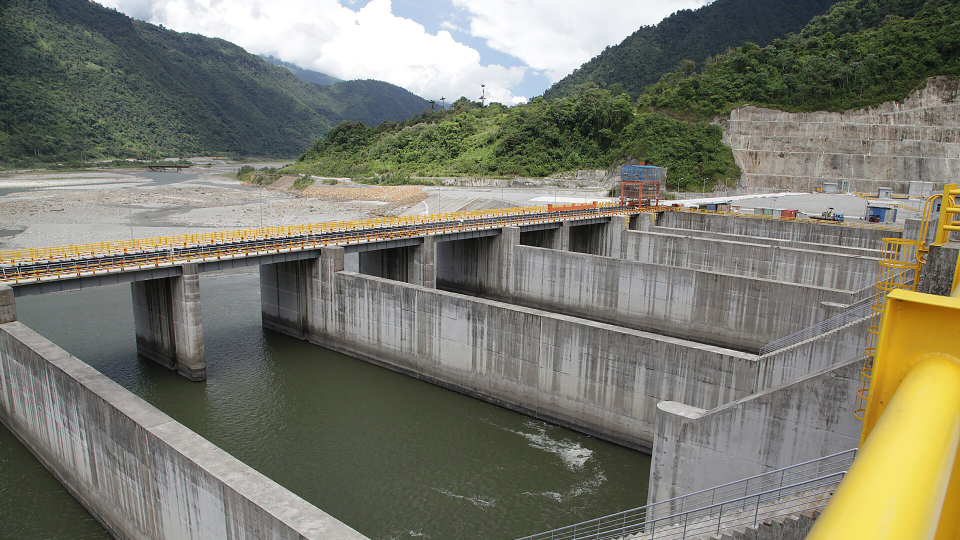
View of the Coca Codo Sinclair hydroelectric facility under construction in Ecuador, 2016
Source: Wikimedia commons
In recent years in Latin America, the goal of democratic consolidation has been narratively supplanted by more immediate and material needs, such as rapid development, political instability, security, and control of transnational crime. Surveys show that people are becoming disenchanted with democratic values and looking for alternative leadership. Some of these leaders have shown themselves to be openly anti-institutional, while others have maneuvered their way through existing legal and international frameworks.
Chinese influence in Latin America is particularly troubling in the wider international context, with the United States’s inconsistent policy toward the region that has alternated between retreat and active engagement, leaving an opportunity that has been quickly taken over by illiberal powers. But it is far from the only case of direct and indirect authoritarian influence on political processes. Accounts from parliamentary members across the region show, for example, that China has directly exerted pressure to block official trips to Taipei and to dismantle Taiwanese relations with local and state-level authorities.7 Although this is a practice that has been going on for more than a decade, it seems that both the number of incidents and intensity of these efforts has been increasing.
Illiberal — or hegemony-challenging — powers such as Russia or China have found an unprecedented opportunity to steer narratives, create direct relations with local governments, and expand their influence across the Global South. China has acted in an opportunistic manner, as a trade partner in the acquisition of natural resources, as a political partner for elites on both the left and right, and as an ally for some of the region’s ostracized governments. In addition, it has pushed for discursive and cultural influence by establishing non-negotiable points of debate but also by providing academic, artistic, philosophical, and media-related resources. Also relevant has been its effectiveness at convincing regional governments to cut official ties with Taiwan in exchange for economic benefits.
China’s influence might have had an effect on the democratic disenchantment of the region and provided alternative narratives over the ontological debate of democratic processes. In simpler words, by taking advantage of the opportunity provided by the United States’s inconsistent engagement, as well as thriving in corrupted environments or those where democracies are losing their grip, China has increased its presence and influence in the past decade. This report conducts process tracing, as well as a meta-narrative review of existing research on Chinese influence in the region, to answer three critical questions:
- How has China’s influence in the region developed over a five and 10 year-period?
- Can the Chinese opportunistic approach be linked with weakened democratic institutions?
- What are the regional, national, and civil society actions needed to minimize the risks associated with democratic erosion and authoritarian influence?
This report is based on OSINT methods, as well as interviews with decision-makers, experts, and civil society members. We interviewed 14 sources from 12 countries and from backgrounds ranging from journalism, academia, and policymaking to more technical profiles, including economic analysts and technology experts. Their opinions are not homogeneous, but there is a shared notion of a challenging relationship between Chinese influence and democratic institutions. When asked how China’s strategy toward the region has shifted in the last five to 10 years, practically all experts marked the COVID-19 pandemic as a pivotal point in terms of strategies, intensity, and objectives. The global crisis was critical both because it cast doubt over democratic efficiency to face emergencies without bypassing institutional constraints, and because it affected Beijing’s economic output, making investments in the region more strategic and less widespread, and led to an intensification of efforts in the areas of elite influence, hybrid warfare, and technology transfer. The expert diagnosis is less cohesive when it comes to a comparison or overview of the last 10 years, and it is quite divisive when it comes to the correlation and causation mechanisms between democratic decline and Chinese influence.
This research and expert testimonies identified five “nodes” of Chinese influence in Latin America that we recommend exploring to prevent further negative externalities that might impact democracies:
- Economic opportunism and strategic financing
- Sophistication of diplomatic strategies and deep, complex political consolidation
- Security rhetoric and assistance
- A multi-layered narrative strategy paired with hybrid warfare capabilities
- The isolation of Taiwanese presence
This report also addresses possible myths regarding the extent, objectives, and depth of Beijing’s presence in Latin America, in the hopes of ruling out exaggerations, overstatements of influence, or unconfirmed nexuses between authoritarian actors and phenomena that coexist with this influence but cannot be causally connected to it. The conclusions of the report present a series of takeaways and recommendations to approach a “new stage” in CCP influence and diplomatic strategy across Latin America.
Losing Faith in Democracy: Latin America’s Growing Disillusionment and the Rise of Autocratic Alternatives
While all democracies are expected to be shaped by popular vote for better or for worse, liberal democracies in particular are more prosperous and tend to respect human rights8 and uphold human development as another form of capital and resource. Despite this reality, democracy seems to be eroding everywhere. The Human Rights Foundation’s Tyranny Tracker reports that, as of 2025, 75% of the world’s population live under authoritarian rule; of those, three billion people live under fully authoritarian regimes.9 According to Freedom House’s 2025 Freedom in the World report, global freedom declined in 54 countries around the world, with only a few showing gains that could be associated with democratic improvements.10 The Varieties of Democracy (V-Dem) report provided a similar overview of the state of freedoms and democracy across the globe, pointing out that “the democratic weakening in Latin America and the Caribbean that seemed to reverse with the U-Turn in Brazil in 2023 (by population-weighted averages) is now turning back downwards due to autocratization in Argentina and Mexico.”11
“Political Risk Latin America 2025,” a report by Centro de Estudios Internacionales at the Catholic University of Chile, points to a “trust crisis” toward democracies, as the stagnation of growth is paired with the advance of autocracies and alternative populist models gaining unprecedented popularity among citizens.12 The Latinobarometer, a trusted poll for political values across the region, adds another layer to the trend analysis by capturing how citizens themselves perceive democracy, beyond how its institutions perform. Their thorough review on the state of citizen perception shows that people are highly concerned about economic development and security.13 Similarly, the 2024 report shows a slight increase in the support for democracy, back to 52%, the highest since 2017, but with more than 25% of respondents being indifferent to the form of government, higher than in 2016. This pattern points to an increasing emphasis on perceived effectiveness over regime type, which may create openings for authoritarian actors that frame themselves as capable of delivering results.
Latin America is experiencing political transformations reflected both in institutional measures of democracy, which are arguably declining, and in citizens’ opinions, which are generally favorable but show concerning exceptions. Despite being an example in terms of regional cooperation, international law, institutions, and democratization, there are clear fears of further interference and autocratic governments gaining influence and power. Autocratization, or the process of transition to autocratic practices,14 can be accelerated in a country when certain behaviors are fostered and encouraged, including the bypass of institutional frameworks and control mechanisms. With Latin American nations facing challenges on which democracies have been slow to deliver, in particular security and economic development, it is not surprising that alternatives from regimes that have invested resources and cultivated relationships with local governments are gaining traction among certain shares of the population. Security, for example, has been deemed a key entrance point for Chinese actors that offer systems, technology, and know-how to face anything from crime prevention to migration control.
Democratic decline is concerning due to its direct link with human rights and the upholding of institutions that protect individuals and communities. Likewise, there are correlations found between the way democracy develops and economic stability.15
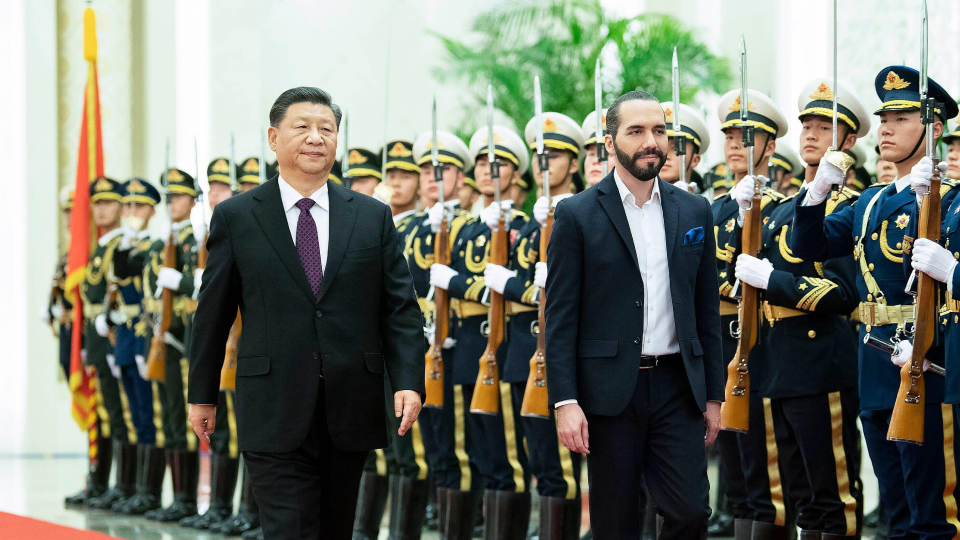
President of China Xi Jinping and President of El Salvador Nayib Bukele during a welcome ceremony at the Great Hall of the People in Beijing, 2019.
Photo credit: Alamy
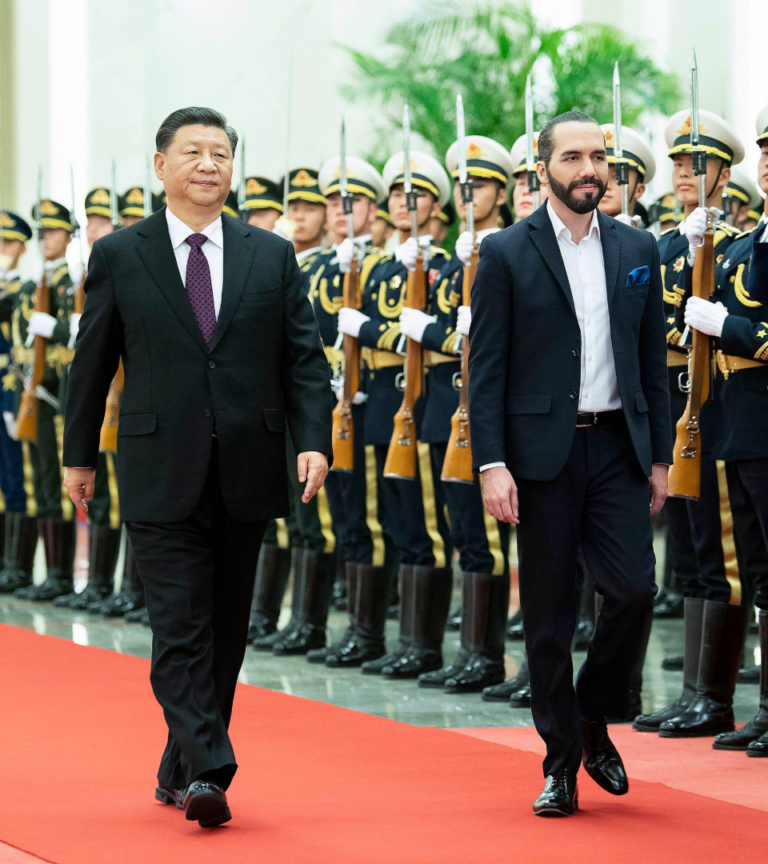
President of China Xi Jinping and President of El Salvador Nayib Bukele during a welcome ceremony at the Great Hall of the People in Beijing, 2019.
Photo credit: Alamy
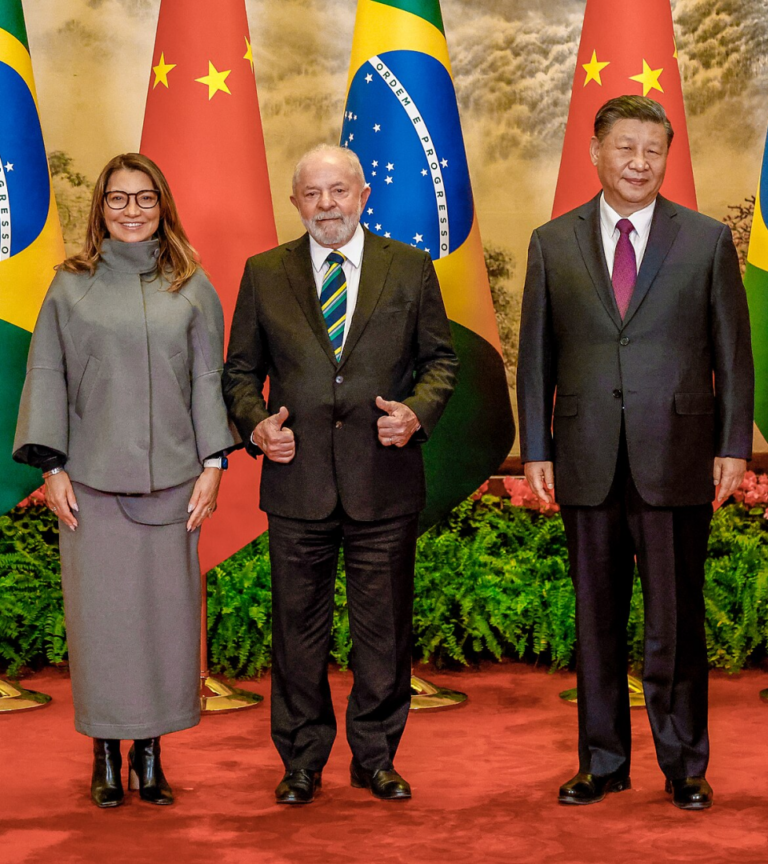
President of Brazil Luiz Inácio Lula da Silva and President of China Xi Jinping pose for a photo with their wives in Beijing, China, 2023
Photo credit: Wikimedia Commons
In the current state of democracy in Latin America, the literature generally identifies three conditions linking democratic decline to possible authoritarian influence. The first is that COVID-19 changed the political landscape and trust in democracies, while also impacting the region’s economies. The second is a generalized security crisis, to which some countries are more vulnerable than others, making citizens more receptive to alternative systems. Democracies in the region are entering a fragile period, amid a complex international context in which major liberal powers condition partnership on strategic alignment rather than democratic principles. This may leave countries vulnerable to foreign authoritarian influence, which can also accelerate the erosion of institutions as these actors exploit vulnerabilities to achieve their strategic goals. These goals, as some experts note, are not necessarily aimed at dismantling democracy itself, but they can still have significant effects on it. Therefore, analyses of these dynamics should consider both the influence of external actors and the domestic conditions that determine how that influence is exerted.
With the world’s leading democracies currently struggling with their own threats or prioritizing national interest over international assistance schemes, Latin America is left exposed to global competition with material needs that can be covered by challenging powers such as China, Russia, and their allies in the region. In V-Dem’s Democracy Report 2024, the idea of alternative democratic systems is mentioned in relation to the rise of BRICS, the “emerging economies” partnership featuring Brazil, Russia, India, China, and South Africa, which has recently incorporated countries like Egypt, Ethiopia, Iran, Saudi Arabia, and the UAE. BRICS is only one example of an assembly of middle and great powers that provide an alternative to liberal democracies while achieving economic development and growth. The BRICS+ share of the real global GDP has at least tripled in the last 30 years (from 9% in 1993 to 29% in 2023, largely driven by China), while the G7 share has shrunk from 68% to 44% during the same period. The group includes some of the world’s leading oil producers, important emerging economies, and geopolitical powers, with democracies now being largely outnumbered by hybrid and authoritarian regimes. Consequently, these regimes are presented as alternative models in Latin America, emphasizing efficiency that some citizens might prefer over traditional rights.16
The context in which China has expanded its presence in the region results from a multi-factor trend of democratic disillusionment combined with the rise of alternative regimes. However, the correlation between the decline of democratic indicators and the sophistication of authoritarian diplomacy remains contested. Defining the nature, reach, and impact of CCP influence is therefore a necessary first step in mapping its effects, evolution, and future trajectory in Latin America.
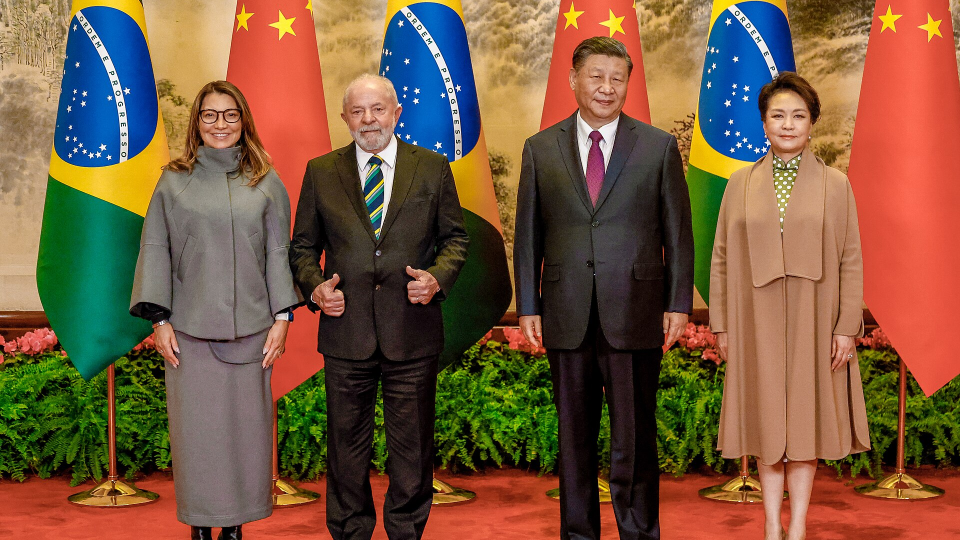
President of Brazil Luiz Inácio Lula da Silva and President of China Xi Jinping pose for a photo with their wives in Beijing, China, 2023
Photo credit: Wikimedia Commons
Experts from civil society organizations, academic institutions, and government agencies or public-policy-related organs were asked — in the context of this report — about the possible correlation between democratic decline and the People’s Public of China’s (PRC) interest in influencing Latin American countries and exerting pressure on states and local governments. Although most recognize possible negative externalities deriving from this relation, their opinions are divided into three distinct groups. First are the skeptics or critics of this hypothesis, who dismiss any form of correlation or impact of CCP influence on democratic decline. Enrique Dussel Peters, a professor of economics and coordinator of the Center for Chinese-Mexican Studies at the National Autonomous University of Mexico (UNAM), indicated that to his knowledge, no studies have empirically proven causation on this issue, and that despite being highly dynamic, Chinese presence in Latin America “is relatively limited compared to other influencing actors such as the US, the EU, and others,” and that the PRC has been consistent in avoiding domestic interference.17 The “correlation problem” between authoritarian influence and democratic erosion is also highlighted by Francisco Urdinez, director of the Millennium Nucleus on the Impacts of China in LAC and associate professor at the Catholic University of Chile (PUC). In his view, there isn’t enough evidence to connect those two phenomena, but there might be a deteriorated perception of democracies to deliver on their economic promises, which might make systems such as the Chinese economic model more attractive.18 For Marco Bastos, a Brazilian political analyst, authoritarian economic success sets a daring precedent for democracies even as a concept, since it demonstrates that it is possible for dictators to deliver on improvements to quality of life for their citizens, challenging the consolidated narrative of democratic development.19
This possible correlation between disenchantment with democracy and the promise of prosperity is shared among most experts contacted for this study. The same goes for the promises of security and the rhetoric surrounding the success of the Chinese model. In general, other experts defend the argument of a “visible correlation” between these two factors that, despite difficulties in measurability, can be openly studied by analyzing cases and establishing indirect connections that are blatantly apparent. For Gabriel Salvia, a journalist and director at the Center for the Opening and Development of Latin America (CADAL), China can affect regional democracies and provides a negative example, meaning that it might promote the idea of countries having whatever political system that suits them, even if it means violating universal human rights.20
Another vector of analysis mentioned by the sources of this report can be termed “authoritarian sponsorship.” In this proposed mechanism of influence, Chinese and Russian influence impacts democracies in the region by financing and enabling regional actors that promote authoritarian alliances that have created political, humanitarian, and economic crises which have spilled over or directly affected governance across Latin America. Simply put, by providing troubled hybrid and authoritarian regimes in the region with resources and political support, such as by recognizing contested elections, powers such as the PRC or Russia allow dictators to continue ruling and further deteriorate the institutional fabric of their countries. María Virginia Marín, executive director at Probox Digital Observatory and an expert on the narratives these regimes generate, underscores this point. In her view, the Venezuelan, Nicaraguan, and Cuban regimes would be much more willing to respond to international pressure in the absence of Chinese assistance. She also points to the direct transfers of tools that these regimes engage in to access surveillance technology and the impact of economic collaboration that encourages murky partnerships and corruption.21 This is not a shared view among China-related experts and activists. Parsifal D’Sola, executive director of Fundacion Andres Bello of Chinese Studies, refutes this view and expresses that the decline in democracy is solely the result of domestic factors, such as “the concentration of power, the erosion of institutional checks and balances, and the weaponization of electoral processes.”22 He adds that despite China’s economic support and institutional backing of these regimes, there is no evidence to suggest these countries would have followed a different path in absence of Chinese support.23 A 2024 paper by Palestini, Quispe, and Telias supports this vision by establishing the limitations of unequivocally establishing this correlation.24
Of course, recent events in Venezuela, mainly the capture of Nicolás Maduro on January 3, 2026, make it necessary to highlight that, in reality, China did not act as some might have anticipated. However, Venezuela’s regime has not changed in nature, which would partly explain China’s passive reaction. Preserving the status quo in the country has proven the best course of action for Beijing.
Counterfactual analysis is challenging here. It struggles to show what the region would look like without Chinese and Russian involvement, and that very difficulty underscores how linked democratic decline is to their presence.
Still, some researchers emphasize that there is no doubt these authoritarian forces can affect regional democracies. Armando Chaguaceda, research coordinator at Gobierno y Análisis Político América Latina (GAPAC), explains there is a premeditated attitude toward the erosion of democracy from both Russia and China in the region, but that these two countries act in very different ways. Moscow has fewer resources and therefore uses disruptive tactics like hybrid warfare, while Beijing makes use of its stronger position and economic stronghold over developing nations. He explains that there are two narratives worth looking into: “One is multipolarism and the revision of the international liberal order, pushed by Russia, which presents itself as part of the Global South and makes alliances with countries such as Cuba … while China resorts to a softer long-term strategy by changing international norms such as internet regulations or human rights perspectives, which also disrupt the international liberal order.”25
Jessica Ludwig, a fellow at the George Bush Presidential Center who has been studying these authoritarian actors’ influence for more than a decade, expresses that “both China and Russia exert forms of influence in Latin America that have undermined the effectiveness of democratic institutions, challenged democratic norms, and ultimately weakened the political will of countries in the region to defend democracy at the regional and global levels.” She puts the regional elites at the center of the influence efforts, which have resulted in obscured deals, dependency, and the undermining of the rule of law across Latin American democracies. Ludwig also points to sharp power as a critical tool in the exercise of influence and pressure and that “Beijing in particular has invested diplomatic personnel, financial, and other resources into media sector engagements, academic conferences, policy conversations, and people-to-people exchanges that are carefully managed. The aim is sidelining or crowding out independent voices and analysis on China-related activities in the Western Hemisphere while privileging the amplification of the Chinese Communist Party’s preferred narratives into the public sphere.”26
Javier Melendez, from Expediente Abierto, presents a clear connection in which it is possible to see the PRC clearly achieving their goals and engaging in autocratic endorsement. He explains that Russia has increased its presence in Nicaragua and other nations in Central America, using Nicaragua as a hub for influence, with a particular interest in Honduras. Both Russia and China are observers of the Central American Parliament, or PARLACEN. The PRC has used its influence to isolate Taiwan by influencing states to cut ties with the country and engage in diplomatic ties with the CCP instead. As a result, it is not only consistent in its support of antidemocratic rulers — arguing that it is part of their “non-interference strategy” — but it has also shaped clear changes in Central America’s overall foreign policy.27
The last line of analysis is the “void of influence and the effects of inaction,” in which global democratic decline, inefficiency of institutions, and the unattractiveness of Latin America for Western liberal nations foster conditions that enable the so-called “influencing opportunities” for authoritarian regimes. These are not always directly targeted at eroding institutions but are mentioned as the channels through which foreign influences might affect democratic outputs in the pursuit of political and economic objectives. For Hernan Alberro, an international relations consultant and member of the China In the World Network, the lack of democratic “defense mechanisms” and a systematic failure in upholding democratic values affects both the public perception of institutions and provide authoritarian challengers with room for influence. By not establishing clear limits against authoritarian practices, corruption, and the disruption of the rule of law, the region remains vulnerable to any form of negative influence. Even though neither the PRC nor Russia makes clear distinctions between democratic and authoritarian regimes, their engagement mechanisms vary, and they seem to take as much institutional advantage as possible by using the voids and governance gaps available to them.28
In 2005, Chile was the only country to have secured successful trade negotiations with the PRC, with its bilateral free trade agreement coming into effect in 2006. At the time, Central America was densely populated by Taipei allies, while the United States and Europe were heavy investors and traders in Latin America, interested in accessing natural resources and transferring culture, technology, and other products. By 2015 the situation had already changed; Chinese influence in Latin America was seen as rather neutral, if not positive. Xi Jinping had come to power two years earlier, and his international power projection strategy had begun to settle. He visited Latin America for the first time in 2014 and met some of the region’s most important leaders.
Countries in the region welcomed investments, aid, and the expansion of their diplomatic frontiers. The first China-Community of Latin American and Caribbean States (CELAC) Forum, an alternative organization to the Organization of American States (OAS) that excludes the United States and includes Cuba, was announced in 2014 during Xi’s visit to Brazil, showing growing interest in engaging with the PRC at an economic and political level. It was also a channel for China to achieve multilateral cooperation and not bilateral relations as it had been doing until that point. It was also a clear step toward the enlargement of the Belt and Road Initiative, which promised infrastructural support to struggling nations.29 This was even praised by international organizations, including CELAC.
The establishment of the China-CELAC Forum can only be analyzed as a product of its time, gathering more than 33 countries in the pursuit of regional development. The United States was disengaging from the region under President Barack Obama, whose foreign policy priorities lay in the Middle East and a much-publicized “pivot to Asia,” leaving Latin America a region of conspicuous inattention. This absence was compounded by President Donald Trump’s “America First” strategy once he took office in 2017. Meanwhile, Europe was still recovering from the collateral effects of the 2008 crisis that considerably diminished the reach of their foreign direct investment, while the United Kingdom was debating whether to remain in the bloc. It was also around this time that some countries intensified negotiations with Beijing to update and establish commitments on investment and trade agreements, in parallel ending official recognition of Taiwan’s sovereignty. Panama broke off their relations with Taipei in 2017, in what was considered a “diplomatic victory” over Washington and the Tsai Ing-wen government.30
China’s strongest influence was, without a doubt, its economic footprint in the region. Most trading partners saw opportunities in cooperating with Beijing, and the Asian power established powerful narratives that were coupled with those transpacific transfers of funding. Examples include the win-win cooperation principle, the noninterference in “domestic affairs” principle, and Global South cooperation, sometimes connected with allusions to “sustainable development” and “prosperity.” The work of Chinese state media, even to date, focuses heavily on these narratives.
The increased efforts China invested in the enlargement of its footprint in Central and South America are mirrored in studies such as DoubleThink Lab’s “China in the World,” report, which in its two editions has put nations like Peru, Chile, Panama, Argentina, and Venezuela among the most influenced by the PRC around the globe.31 In this context, several interpretations have been put forward to explain the extent and intensity of these growing relations, including lack of awareness of the Latin American counterparts or the myths that have been spread regarding China as a “bottomless golden pot” of which most countries want a share.32
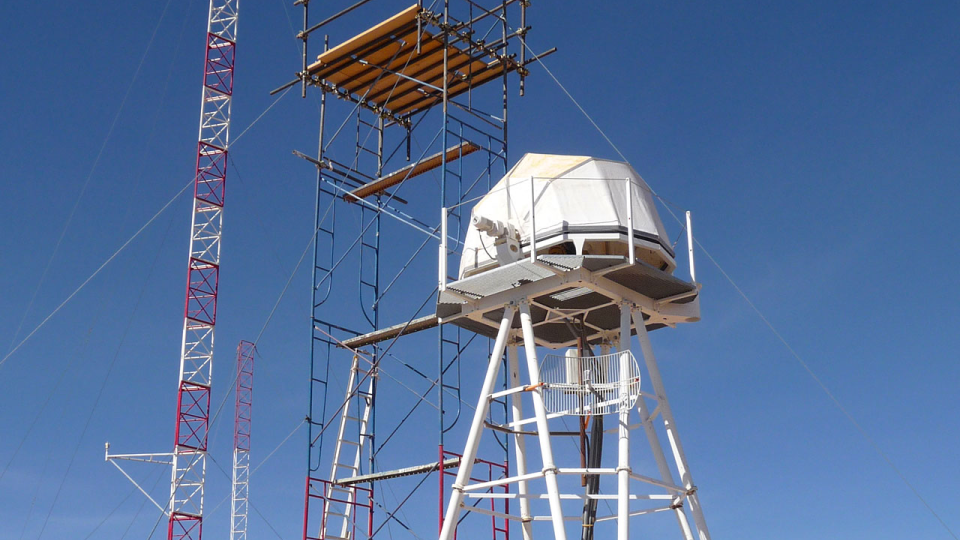
China-funded Ventarrones Observatory site in Cerro Ventarones, Chile.
Photo credit: Wikimedia Commons

China-funded Ventarrones Observatory site in Cerro Ventarones, Chile.
Photo credit: Wikimedia Commons
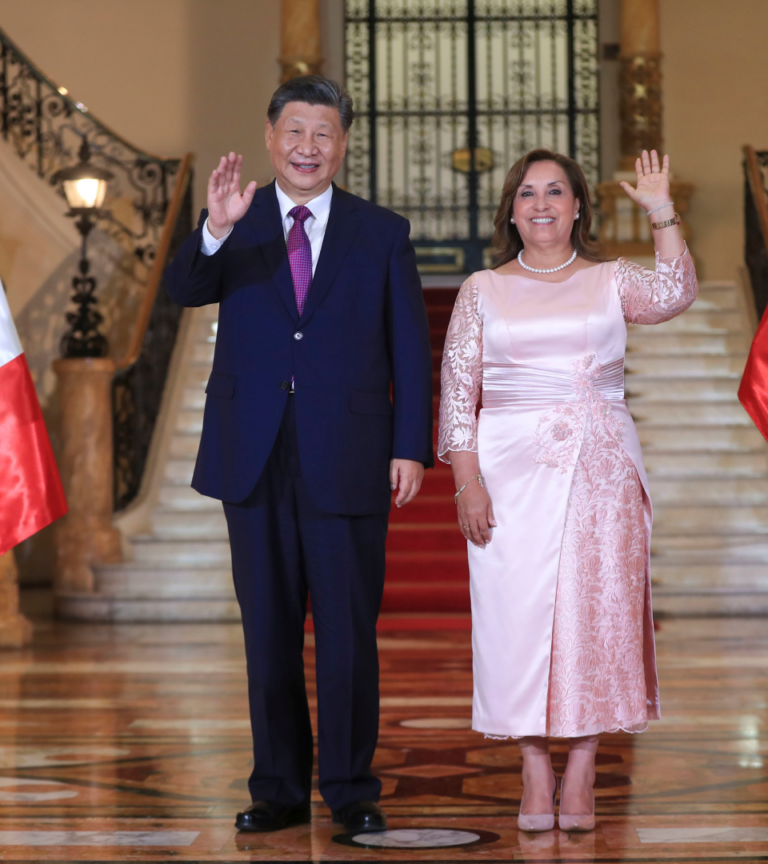
President of Peru Dina Boluarte and President of China Xi Jinping wave during an official state visit in Lima, Peru, 2024.
Photo credit: Flickr, through Google
Creative Commons License
However, China’s expansion was not without pushback. The United States, along with key political actors, long warned about possible negative effects of accepting technology, investment, or political partnerships from Beijing. Examples of these controversies include the fate of the Coca-Codo Sinclair dam in Ecuador, a 2.2 billion dollar project built by Chinese state-owned company Sinohydro using loans from the China Export-Import Bank.33 The dam is currently on the brink of collapse,34 has left the country in debt with Beijing, and is operating at nearly half of its capacity due to an accumulation of structural and environmental issues.35 A second commonly mentioned example is the Neuquén Deep Space Station, a Chinese project that was negotiated with the Argentinian government in the early 2010s for exploration that is coated in secrecy and has been feared to be connected with the Chinese military.36 According to Ricardo Ferrer Picado, a former Argentinian public servant and analyst on China-related matters, this is particularly sensitive because of the lack of information the population has over the potential dual use of the station and its capabilities.37
The Chilean “Submarine cable” case is just one of several projects that follow this same trend. The Ventarrones astronomical park, a project negotiated between Chile’s Northern Catholic University and the Chinese Academy of Sciences, was cancelled under suspicion of possible dual use by its Beijing counterpart and following American warnings and pressure on the Santiago government,38 as well as due to the confusing circumstances that led to the approval of the project. In other cases, concerns about surveillance, authoritarian influence, disinformation, economic statecraft, and corruption, among other issues, have been raised at local and regional levels.
Hit by these controversies, as well as another set of unfulfilled promises on trade, investment and assistance, the COVID-19 pandemic, a regional economic crisis, and relevant political transformations, the public support and media traction that Beijing’s cooperation with the region had during the first years of the China-CELAC Forum had evidently receded. In spite of these setbacks, Xi Jinping has referred to the tenth anniversary of the China-CELAC as the “beginning of a new era” of relations between both blocs.
In May 2025, three Latin American presidents — Gabriel Boric of Chile, Gustavo Petro of Colombia, and Luiz Inácio Lula da Silva of Brazil — attended the China-CELAC Forum ministerial meeting in Beijing. Given the opportunity, Xi Jinping made three clear announcements that reflect China’s position against US dominance in the region. The first was related to the enlargement of Chinese investments and “high quality” exports into the region. The PRC committed a $9.2 billion credit line to all CELAC members, which would be easy to access and widely available at a time of relevant transformations in the region,39 as well as a time of need for investments in countries that are not particularly attractive for Western democracies due to instability, lack of transparency, and other concerns.
The second update was the PRC’s goal to boost technology transfers and cooperation, especially in clean energy, telecommunications, and artificial intelligence (AI). Since debates concerning submarine cables, information technology, infrastructure, surveillance, and private data have become more sensitive in recent years, this point can be interpreted as Beijing doubling down on their strategy to dominate certain innovations and rule global standards by competing in the technological market.
The third and last announcement referred to their opposition to the US’s isolationist strategy at the time and commitment to collaborate with Latin American countries amidst geopolitical tensions. By referring to the controversy surrounding the Panama Canal and Donald Trump’s measures to push against Chinese influence, Xi Jinping expressed that Beijing would defend the region’s independence and sovereignty by cooperating with local governments.40
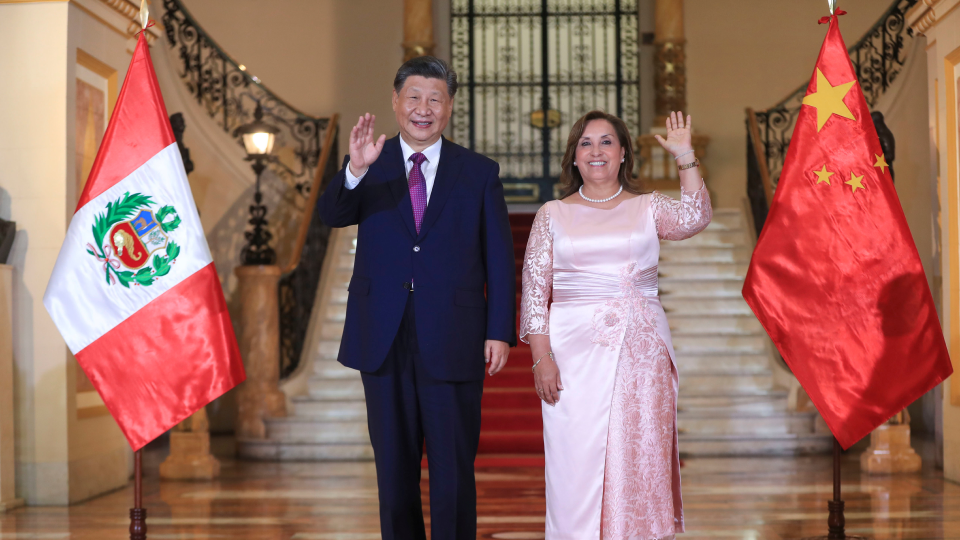
President of Peru Dina Boluarte and President of China Xi Jinping wave during an official state visit in Lima, Peru, 2024.
Photo credit: Flickr, through Google
Creative Commons License
But these three pillars are only the beginning of these “revitalized” relations. Colombia, a country that has been historically aligned with the United States, signed a cooperation agreement in the context of the Belt and Road Initiative.41 In the framework of that same agreement, the Chinese ambassador to Colombia, Zhu Jingyang, committed 3,500 “government scholarships” to CELAC, ten thousand training opportunities in China, 500 scholarships to foreign professors of Chinese language, 300 training programs for poverty alleviation, 1,000 slots for “paid visits” to China, and 300 small-scale welfare projects.42 Even if these promises are not kept, they represent a change in the approach and intensity of Chinese presence in the region, which may have unprecedented and unpredictable consequences.
A final update, which holds great historic and diplomatic symbolism, is China’s announcement of a visa-free travel program for five Latin American countries (Argentina, Brazil, Chile, Peru, and Uruguay) to visit mainland China in the upcoming years. Considering how few countries have been granted this benefit across the world, the announcement can be interpreted as a clear attempt by the PRC to extend its ties with the region and gain trust among key stakeholders. No sooner had these announcements been shared than Chile’s former President Boric was invited to participate in the latest BRICS meeting in Brazil, showing further expansion of Chinese interests over the small but influential Latin American nation. Despite his discursive criticism of authoritarian governments, Boric has met Xi Jinping more than most of his predecessors during his administration. Interestingly, the rightward shift in recent elections in Argentina, Bolivia, Chile, Peru, and Ecuador, as well as the change in leadership in Venezuela, has not translated into significant changes in China-related policy. One exception could be Panama, where several parliamentary delegations have recently visited Taiwan, prompting pressure from Beijing.
With all things considered, 2025 was a key year for Beijing’s international projection of hard and soft power and pivotal for Latin America’s democratic erosion. This makes it even more urgent to discuss both advantages and disadvantages of engaging with the CCP, especially concerning the existing risks and challenges that Latin America faces in terms of democratic development. Analyzing the impact of Chinese influence to this date is, in many ways, key to further understanding the possible impact of this upcoming phase in the presence of the PRC across all forms of government in the region. In the following pages, we analyze key elements that explain this transformation, the possible correlation between democratic decline and authoritarian influence, and the ongoing trends that should be monitored in the upcoming stage of China-Latam relations.
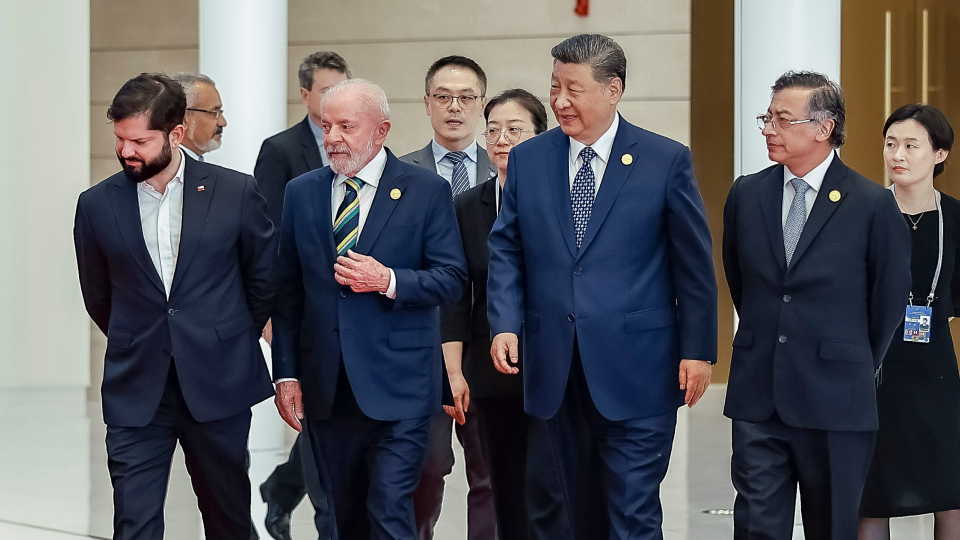
From left to right: President of Chile Gabriel Boric, President of Brazil Luiz Inácio Lula da Silva, President of China Xi Jinping, and President of Colombia Gustavo Petro during the official photo of the Heads of Delegation at the China National Convention Center II in Beijing, 2025.
Photo credit: Wikimedia Commons
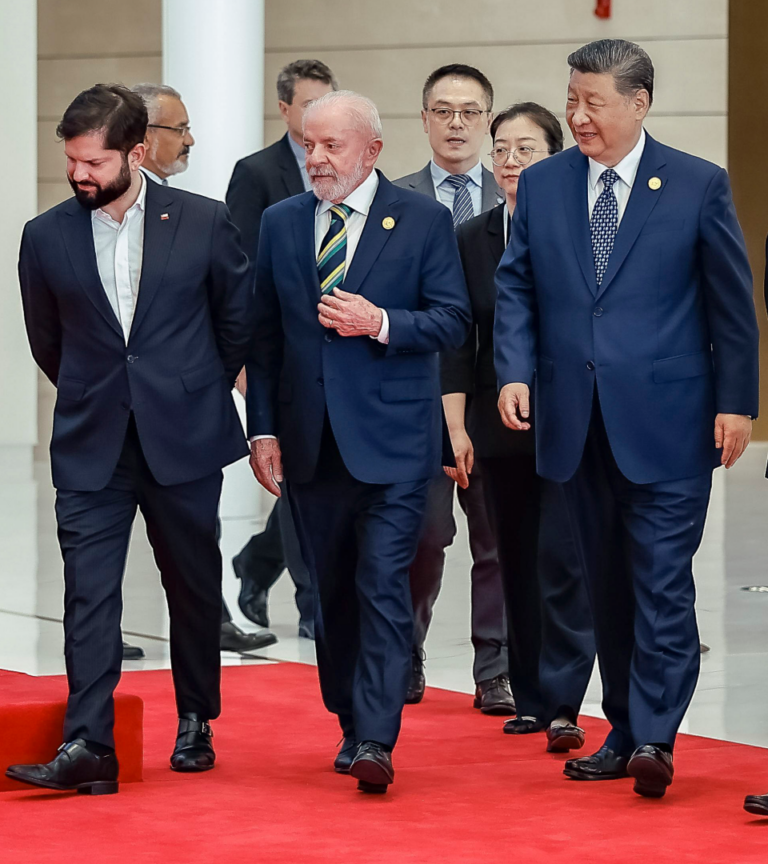
From left to right: President of Chile Gabriel Boric, President of Brazil Luiz Inácio Lula da Silva, President of China Xi Jinping, and President of Colombia Gustavo Petro during the official photo of the Heads of Delegation at the China National Convention Center II in Beijing, 2025.
Photo credit: Wikimedia Commons
COVID and the Chinese Strategy
For most experts, the evolution of China-Latam relations was heavily impacted by the coronavirus pandemic and the PRC’s changes in strategy related to their economic footprint in the region.
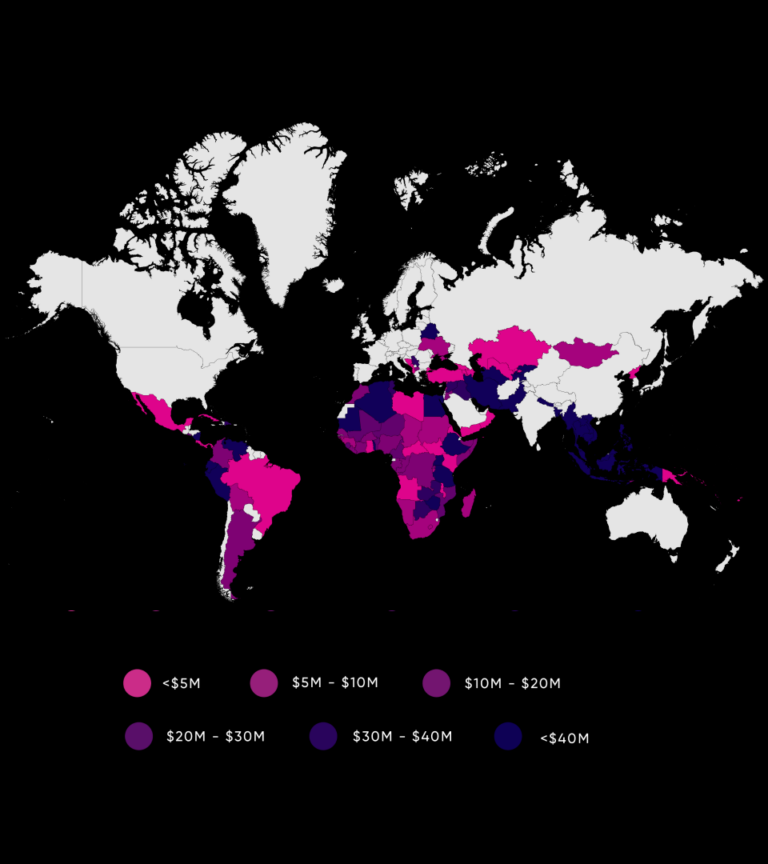
The CCP rapidly engaged with the bloc’s leaders by providing vaccines, masks, and economic support during a period of widespread uncertainty, fear, and economic collapse.43 Poverty increased significantly, affecting both the general population and regional elites in their efforts to maintain control and stability. According to Hernan Alberro, international relations and human rights consultant and associate fellow at Forum 2000, these efforts helped China consolidate its position as a global leader during the crisis, even as the country faced a severe economic downturn at home.44 For Jessica Ludwig, China took advantage of the crisis and prioritized rapid exports of its vaccines, despite debates on their effectiveness. When they did not have a direct point of entry, Chinese officials “bribed government officials with undeclared vaccine doses in order to facilitate their rapid approval. In Brazil, China’s authorities also leveraged Brasilia’s desperation for access to vaccines to convince authorities to allow Huawei to remain eligible to compete in the country’s potential buildout of a 5G market, and in Paraguay, China also threatened to withhold access to its vaccines if Asunción did not reject its diplomatic recognition of Taiwan.”45 Countries like Venezuela, Ecuador, Nicaragua, and Peru were among the main targets of aid in the region, according to a study by AidData. The same report reported that, despite China committing around 2 billion doses, only about 239 million were effectively delivered.
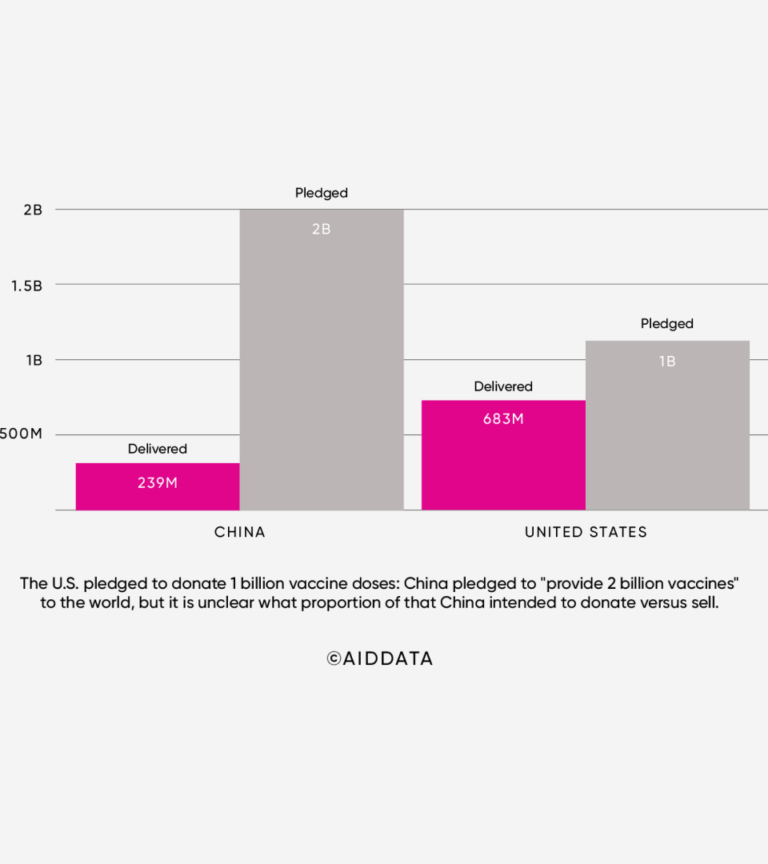
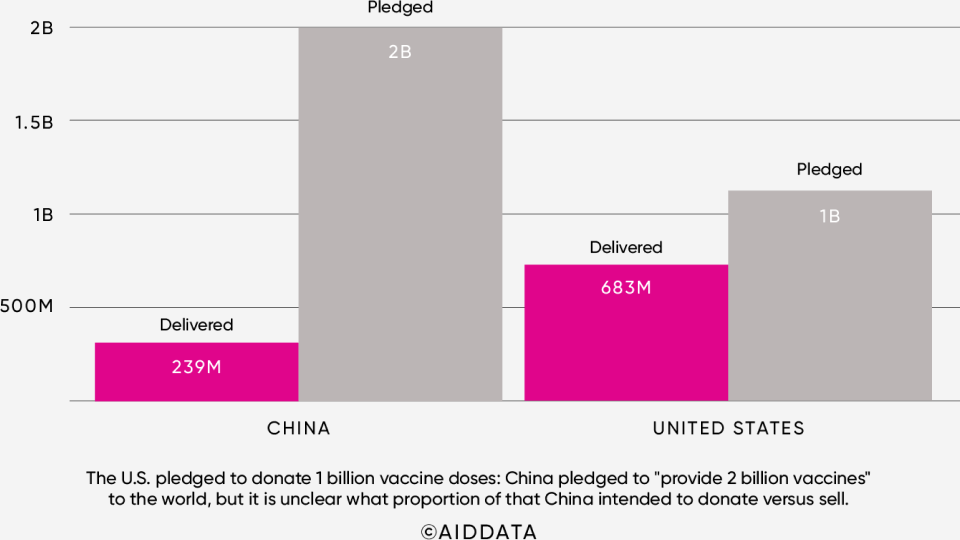
Despite these efforts and perhaps due to the drastic gap between commitments and effective aid, research shows the CCP might not have been able to shift public skepticism and the associations between the negative effects of the virus and the role the PRC played in its global spreading. This was even mentioned by regional influencing figures such as the recently passed literary Nobel laureate Mario Vargas Llosa.47 The pandemic wreaked havoc on governments’ response capacities, but it also provided an opportunity for hybrid and fully authoritarian regimes to restrict freedoms under the excuse of pandemic control on issues unrelated to sanitary measures, including unionization, electoral self-determination, and human trafficking.48
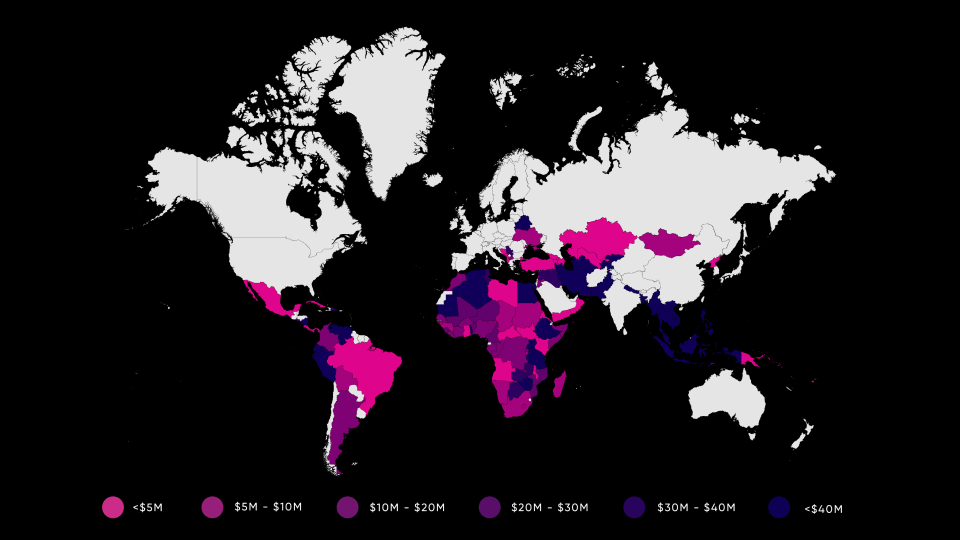
The Limits of Chinese Influence in the Region
The pandemic was followed by economic challenges for the Chinese regime, which stagnated efforts to extend China’s footprint in the region. For many experts, including the ones interviewed for this project, China’s advances had become more strategic and limited. This is in contrast to decades of intense economic engagement, which took the form of trade deals, direct investment, technology transfer, private ventures, and the takeover of some agricultural sectors. In retrospect, the question of how beneficial these deals with the PRC were for the Latin American counterparts remains. Some even argue that the pernicious effects of these agreements, which include accusations of growing dependency, corruption, debt traps, and severe environmental effects, overshadow the possible benefits of capital flows from Beijing-related institutions.49
As part of the same review, a series of reports published by CADAL Argentina in 2024 also analyzed the impact of trade agreements with Beijing across the region. Results showed that despite some countries increasing their exports to the Asia Pacific, China seems to have overwhelmingly benefited from its regional strategy in outputs that go beyond just trade. In general, free trade agreements have had very different results depending on the country. Even in those that actually increased exports, such as Chile, there are open concerns regarding dependency and the devolution of the complexity of their industries. Almost half of the country’s exports go to China, and it has been incentivized to heavily rely on raw copper ore over more refined subproducts of the mineral.50 In Peru, the free trade agreement with China and lack of regulation are linked with a negative environmental impact and problems in the compliance with labor rights, but has also potentially disincentivized national industries and “nontraditional exports” due to the volume and intensity of the demand for natural resources. In fact, 96% of Peruvian exports to China are of traditional goods.51 In Costa Rica, the derecognition of Taipei and subsequent free trade agreement with the PRC has not brought about the expected benefits more than a decade after it came into effect. In fact, trade might have stagnated and even plummeted in certain periods.52 A similar connection can be found in other cases in the change of recognition from Taipei to Beijing in Panama in 2017, where the promise of economic cooperation became a strong motivator in the negotiation process.53 Since then, only two remaining countries in Latin America, Paraguay and Guatemala, have clear diplomatic ties with Taiwan, as do some nations in the Caribbean, such as Haiti.
The recently signed free trade agreement between China and Ecuador has also been a point of contingency in the evaluation of potential nefarious effects of PRC engagement in the region. Considering the history of controversies surrounding Chinese projects — everywhere from the previously mentioned Coca Codo-Sinclair Dam to surveillance technology transfer — and potential corruption fostered by Chinese capital, experts such as Martha Roldós are concerned about the opacity of Ecuador’s policies regarding the PRC.54 She placed the bilateral debt between the two nations as high as $24 billion.55 Again, there is a concern about closed confidentiality clauses in different projects connected to Beijing, which might undermine national institutions, therefore affecting democracy.
In terms of sovereign lending, China has doubled down on its influence toward financially unstable countries. In April 2025, Argentina renewed a $5 billion swap with China in the hopes of delaying repayments during President Javier Milei’s reform and adaptation period. Nevertheless, the move could also be detrimental to Argentina’s relationship with Washington, since it is seen as an extension of Beijing’s influence over the South American nation.56 According to Ricardo Ferrer, there are concerns over possible conditions that the PRC could impose on the Argentinian administration due to their current struggles. The swap program is, in his vision, one of the clearest mechanisms that the PRC could use to pressure Argentina politically and financially.57
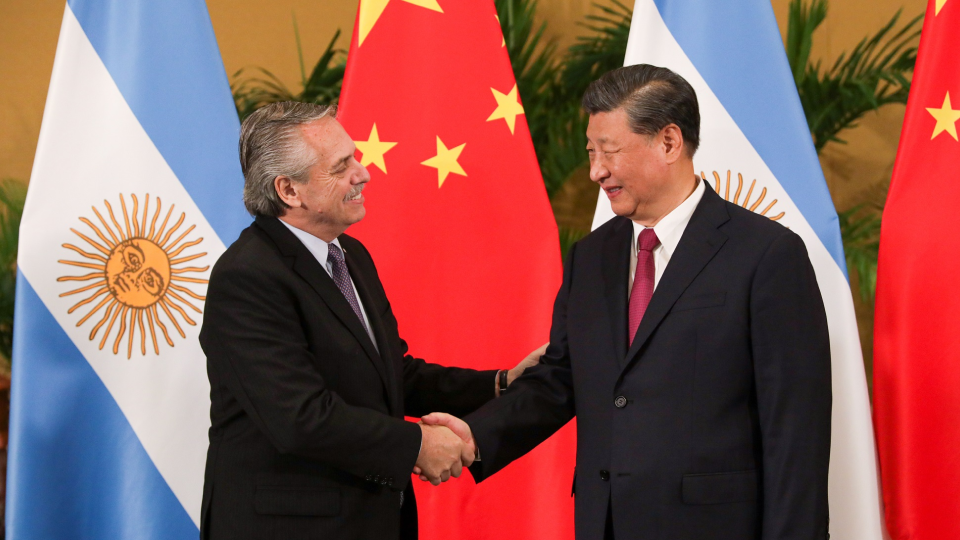
President of Argentina Alberto Fernández and President of China Xi Jinping during a meeting in Beijing, China, 2022.
Photo credit: Wikimedia Commons
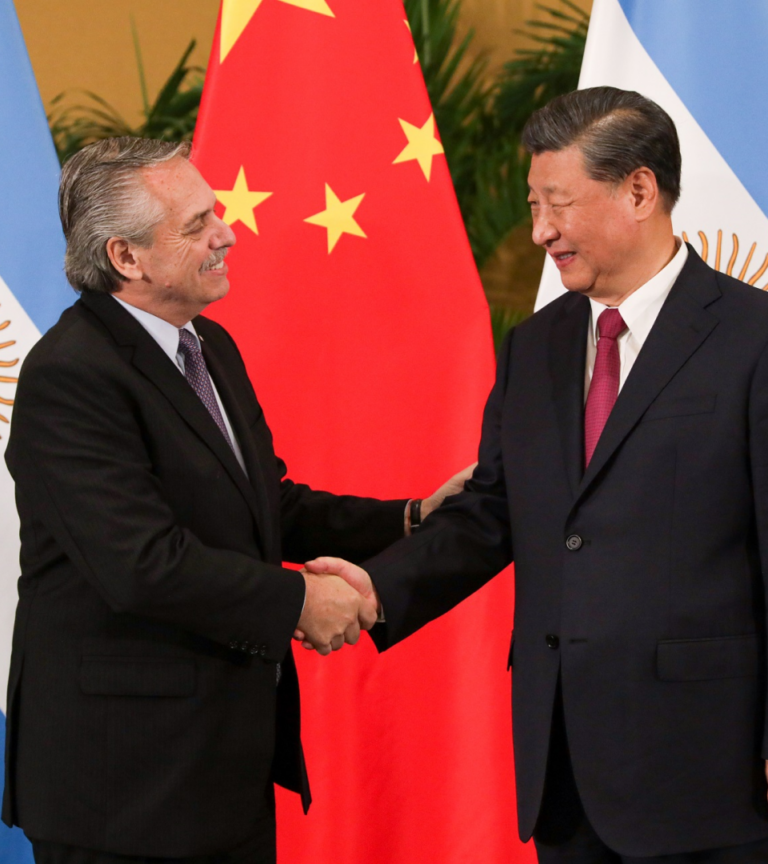
President of Argentina Alberto Fernández and President of China Xi Jinping during a meeting in Beijing, China, 2022.
Photo credit: Wikimedia Commons
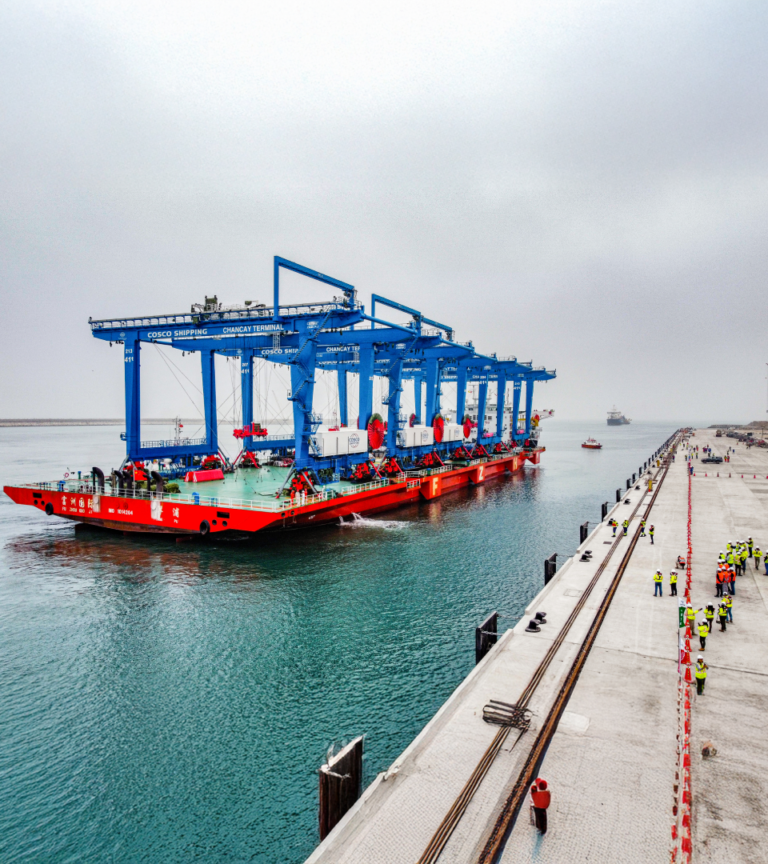
Port of Chancay
Photo credit: Wikimedia Commons
According to Javier Melendez, Central America has faced important transformations in the last decade, potentially since many countries began recognizing the PRC only recently. In his view, China’s engagement with Central America has been murky and of deep and uneven economic penetration. Although there was the promise of opening the Chinese market for Central American exporters, he highlighted the growing trade deficit for the bloc, going from around $8 billion in 2019 to almost $18 billion in 2024. Allegations of a lack of transparency related to contracts and negligence in respect to infrastructure projects in which Chinese companies are working are also of concern.58
In contrast, some economic assessments call into question the real impact, efficiency, and influence that China has over the region, and how the real transfers of resources are modest compared to the credit attributed to the PRC as a source of funding. Some point to the fact that Beijing has lost important projects in the lithium market, especially in Chile,59 in part due to cases of investments such as Tianqi’s purchase in 2018, which nearly bankrupted the company and contributed to ongoing financial struggles.60 However, in some neighboring countries such as Bolivia, the Chinese company CBC is reportedly planning an investment of around one billion dollars in lithium extraction.61
Others point to the decrease in loans and direct investment that organizations such as The Dialogue have analyzed,62 showing a change in China’s strategy and objectives. This is paired with the reality of China’s reported economic stagnation, which is reflected in a somewhat volatile GDP growth variance since 2020, high unemployment,63 and the potential effects of American pressure through tariffs.
Notwithstanding, there are flagship projects that remain under the radar of researchers. Three such examples are the Chancay Port in Peru — the largest deep-water port in South America — which has been highly controversial due to its strategic significance in the PRC resource extraction plans in the region. It was inaugurated by Xi Jinping himself and was connected to a $1 billion loan. The objectives of this project were reducing transportation costs and time to China, securing Peru’s position as a regional trade hub, and marking a new standard for Beijing-connected projects under the Belt and Road Initiative.64
A railway connecting Brazil’s De Santos port with the mega-infrastructure Chancay port has also gained attention. The so-called bi-oceanic corridor is linked with an investment of $3.5 billion and would secure Chinese dominance over the extraction and transport of natural resources across the Southern Cone, as well as increase imports from the PRC to the growing markets of South America.65 Concerns over this project range from possible quality issues to the effective influence that the PRC would exercise over the partner countries when the project is finalized. In addition, the corridor will run parallel to the bi-oceanic road that will connect Brazil, Paraguay, Argentina, and Chile.66
Finally, it is important to point to possible myths regarding the extent, objectives, and depth of Beijing’s presence in Latin America, in the hopes of ruling out exaggerations, overstatements of influence, or unconfirmed nexuses between authoritarian actors and phenomena that coexist with this influence but cannot be causally connected to it. A clear example is corruption in infrastructure. Although Chinese firms have been found to occasionally engage in corruption in Latin America, the region has been plagued with major scandals in recent decades. The infamous Odebrecht cases, in which a Brazilian construction giant bribed officials across a dozen Latin American countries to secure public contracts, took place without any Chinese involvement.
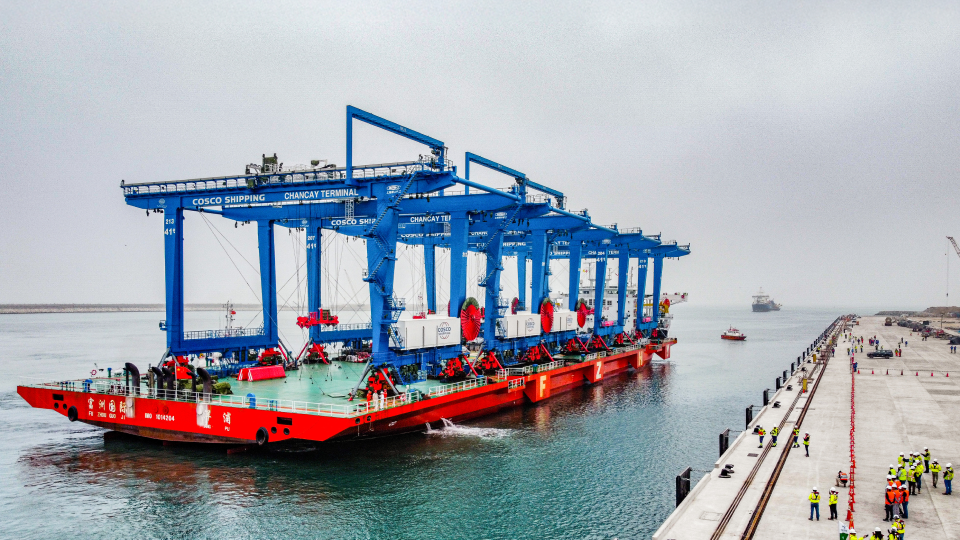
Port of Chancay
Photo credit: Wikimedia Commons
Another node of influence the PRC exerts over the region is politics and cultural dissemination. The PRC has long applied a strategy of soft power derived from reputational growth and deep links with decision makers, academics, journalists, and local communities. Their main objective is to influence the elites, through whom they bypass democratic institutions by pushing for secretive deals.67
Examples of this range from direct contact with decision makers, going through the unveiling of infrastructure and lithium exploration negotiations in Bolivia under opaque contracts,68 to the well-known and controversial negotiations under which the Neuquén Deep Space Station in Argentina was achieved, and how the project developed over time.69 Open diplomatic activities are also at the forefront of Beijing’s revitalized strategies. Armando Chaguaceda explains this is also evidenced by how Chinese diplomats have increased their presence in liberal regional media outlets such as Reforma in Mexico.70 In Chile, the Chinese ambassador often appears in liberal media outlets such as El Mercurio, and he has been seen participating in activities with local political groups, such as the Chilean Communist Party’s anniversary celebration (see Figure 7).
The encouragement of institutional bypasses, accusations of corruption, and narrative campaigns by the PRC run in parallel with the changes in democratic attitudes, especially democratic disenchantment, which have been said to be correlated with the rise of authoritarian models and power centralization. Practices that weaken checks and balances, including the ones mentioned above, essentially shift public support toward efficiency over democratic deliberation. According to the Chilean Catholic University’s Latin America Political Risk Report 2025, “These strategies […] often violate the fundamental guarantees of democratic systems. […] Broad sectors of the population […] resort electorally to leaderships that are transforming the regional political landscape toward less cooperative and more national approaches, further deepening the region’s weakness on the world stage.”71
According to expert testimonies on the matter, there are elites who widely profit from both a good relationship with Beijing and the democratic decline of the region. These actors are often the targets of engagement campaigns, are provided with paid trips to China, are featured in PRC state media,72 and are made part of projects both as key stakeholders and partners after negotiations.
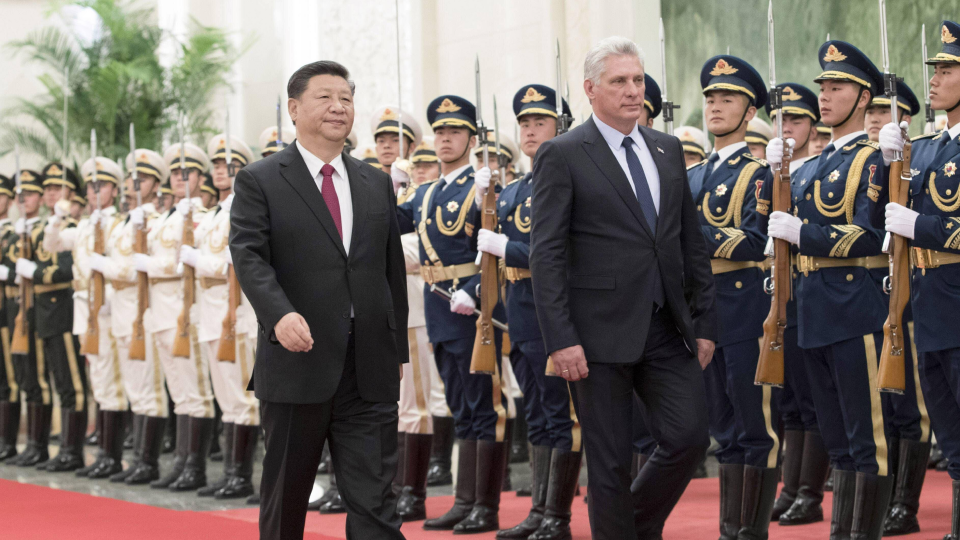
President of China Xi Jinping and President of Cuba Miguel Díaz-Canel during a welcome ceremony at the Great Hall of the People in Beijing, China, 2018.
Photo credit: Alamy
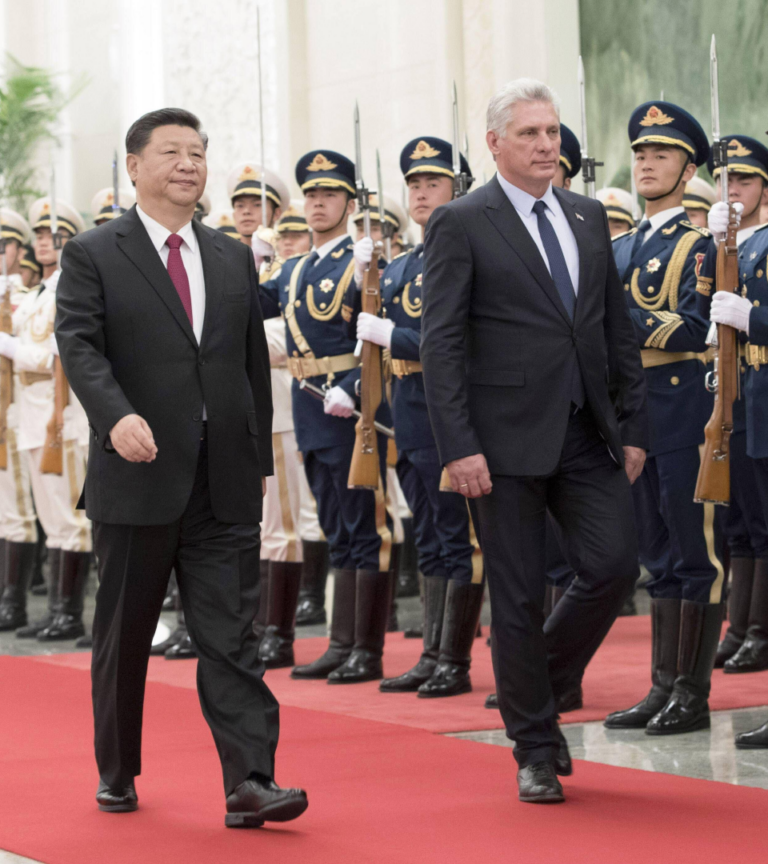
President of China Xi Jinping and President of Cuba Miguel Díaz-Canel during a welcome ceremony at the Great Hall of the People in Beijing, China, 2018.
Photo credit: Alamy
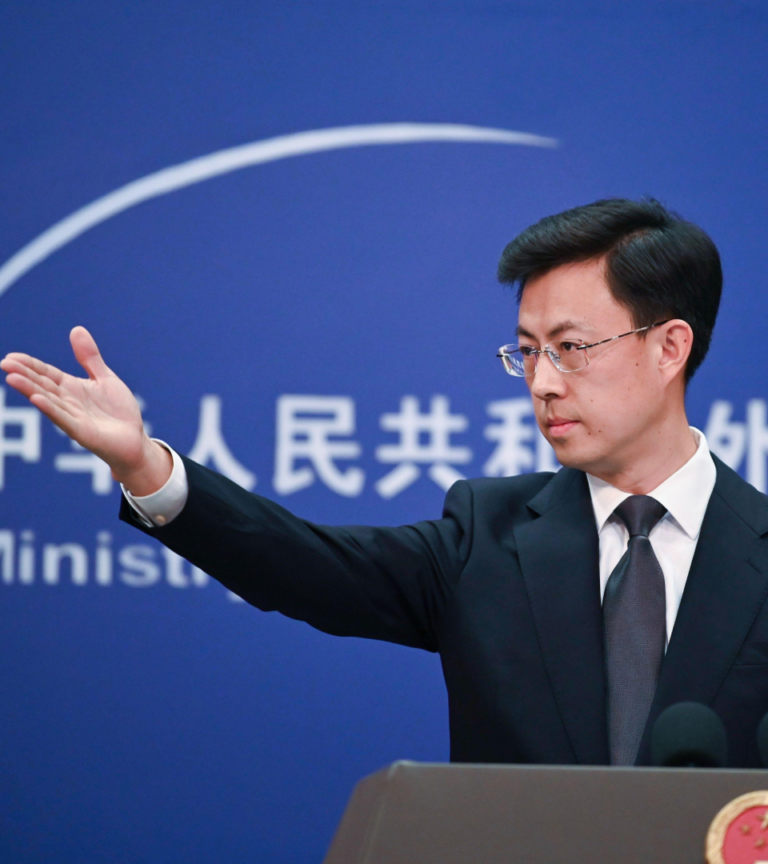
Foreign Ministry Spokesman Guo Jiakun answers questions from journalists during a daily press conference in Beijing, China, 2025.
Photo credit: Alamy
Influence on Academic Institutions and Culture
A key entry point for Chinese soft power in the region is academic institutions. Part of the controversy regarding the Ventarrones Astronomical Park was the fact that it was an agreement achieved in a bilateral manner between the Northern Catholic University and the Chinese Academy of Sciences without consultation with official diplomatic channels and institutions, such as the Ministry of Foreign Affairs. This lack of effective cross-institutional communication was instrumental in justifying the government decision to cancel the project upon domestic debate and American pressure.73
The CCP actively engages with universities and scholars to extend their soft power reach and institutionalize their cultural footprint. One of the most recognizable of these initiatives is the role of Confucius Institutes, often negotiated with local universities, which provide cultural and language education to the general public.74 Confucius Institutes became controversial due to their links to the Chinese government and possible influence on academic freedom by compromising funding or pressuring for certain topics to be discussed in China’s favor within the institutions.75 In recent years, despite the expansion of the number and reach of these centers — there are 42 in Latin America — little attention has been given to their development and the evolution of their impact. Because of the changes in strategies and the lack of significantly relevant controversies regarding these institutes, critical attention on academic influence has shifted to other phenomena. For example, the Chinese Ministry of Foreign Affairs recently announced Solidarity and the People-to-People programs with CELAC members, which are meant to strengthen cooperation and China’s diplomatic links to the region. These announcements involve paid trips to China and the distribution of scholarships and training opportunities. The total will amount to “3,500 government scholarships, 10,000 training opportunities in China, 500 International Chinese Language Teachers Scholarships, 300 training opportunities for poverty reduction professionals, and 1,000 funded placements through the Chinese Bridge program.”76 In other cases, the CCP will create instances to gather key academic and cultural stakeholders by hosting events in the region or inviting relevant figures to these initiatives.
For example, the 81st edition of the World Science Fiction Convention, held in 2023 in Chengdu, China,77 was controversial due to the exclusion of certain participants due to their political views or even their ethnic heritage.78 Nevertheless, several representatives of Latin America’s literary scene, particularly from Brazil, Chile, Peru, Argentina, and Mexico, traveled to Chengdu and served as ambassadors for the event. Some even emphasized their role, showing that, despite recognizing the context and controversy, or even human rights violations, their opinions on China could be improved thanks to these events.79
Even more recently, on June 20, 2025, the Office for Latin America and the Caribbean in the Chinese Ministry of Foreign Affairs and the China Institute of International Studies (CIIS) organized the seventh version of the Forum of Think Tanks for cooperation and exchange with the region, marking the forum’s 10-year anniversary. The meeting, which took place in Beijing, is part of a larger objective to connect with academics and decision-makers in Latin America and generate valuable outputs and commitments.80 Some of these include documents to consolidate BRICS as a cooperation node or the promotion of programs for joint development. The meeting was successful in highlighting cooperation between key actors and the PRC. For example, the Catholic Ecuadorian University (PUCE) proudly shared their involvement in these meetings and their academics’ role in them.81
In other words, these programs have a clear goal of gaining rapport among scholars and the academic community of Latin American countries. These are often decision-makers or influential figures that might have an impact on their countries’ narratives and cultural zeitgeist and therefore provide the CCP with an indirect channel of influence into democratic outputs. It is important to disclose that this is a practice that is not exclusive to China, as other countries also engage in providing scholarships or sponsoring academic activities, which enhance their recognition, reputation, and narrative approaches. The criticism that the PRC gets comes from the distortion of these activities or the manipulation of information and narrative discussions or censorship in China’s favor.
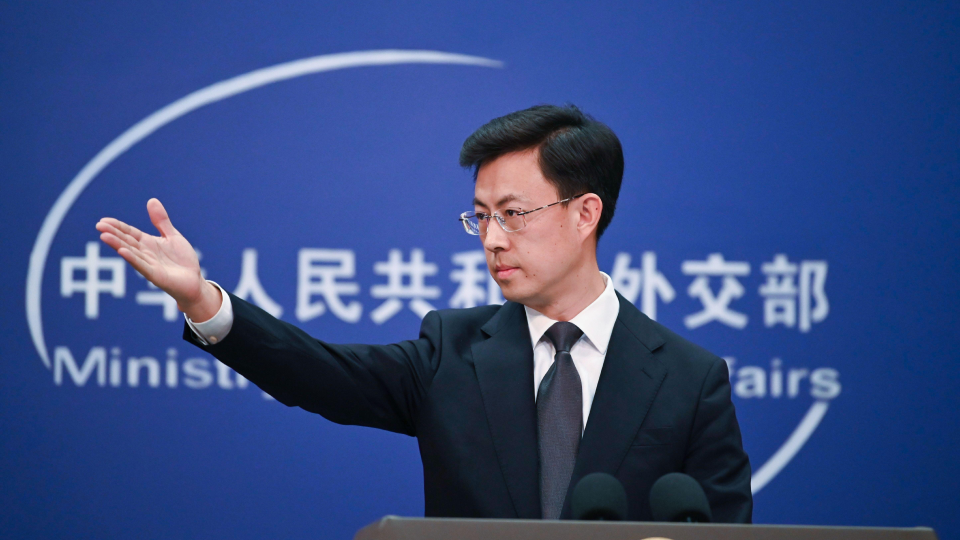
Foreign Ministry Spokesman Guo Jiakun answers questions from journalists during a daily press conference in Beijing, China, 2025.
Photo credit: Alamy
Shaping Public Opinion Through Propaganda and Disinformation
China has long engaged in propaganda and disinformation techniques to spread its narratives across the region. During the last 10 years, and especially after the pandemic, the regime has invested in improving the country’s image, promoting its vision of the world, and changing behaviors and narratives around information spaces,82 either by resorting to manipulated information, elite capture, or direct disinformation, as well as using channels that range from traditional media (as in inserts or paid programs) to proxies, digital tools, and generative AI.83 Freedom House’s 2022 Beijing Global Media Influence report details this strategy and highlights that “Democracies’ ability to counter CCP media influence is alarmingly uneven. Only half of the countries examined in this study achieved a rating of ‘Resilient,’ while the remaining half were designated as ‘Vulnerable.’” This is especially true for the Latin American countries analyzed in the report, since these case studies found the widespread presence of diaspora media, cooperation between authoritarian countries, and the dissemination of documents that directly dismissed democratic values. According to María Virginia Marín, who has been studying the information space in the region for the last five years, one of the main developments in the PRC strategy is the consolidation of a cooperative media campaign that includes content sharing and the strengthening of connections with established journalists — some even invited to China. She provides the example of Telesur, a Venezuelan state media channel that cooperates with the China Media Group (CMG), a coordinating institution sponsored by the PRC and shared by diplomatic institutions in the region.84 Other studies have also found connections between Latin American media, Russian state media such as Russia Today or Sputnik and Chinese media in Spanish,85 both through traditional and digital channels.86
Considering the relative correlation between information consumption and democratic outputs, it is safe to say that a contaminated media and digital landscape has the potential to affect values and behaviors across the region, and it is therefore one key aspect of the review of trends of CCP influence in Latin America.
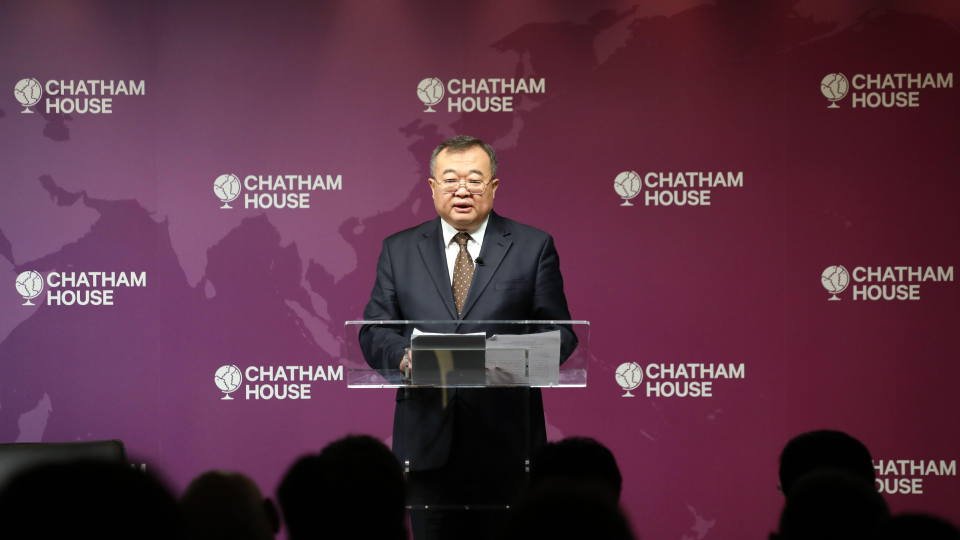
Minister of the International Department of the Communist Party of China Liu Jianchao speaking at Chatham House in London, United Kingdom, 2023.
Photo credit: Alamy
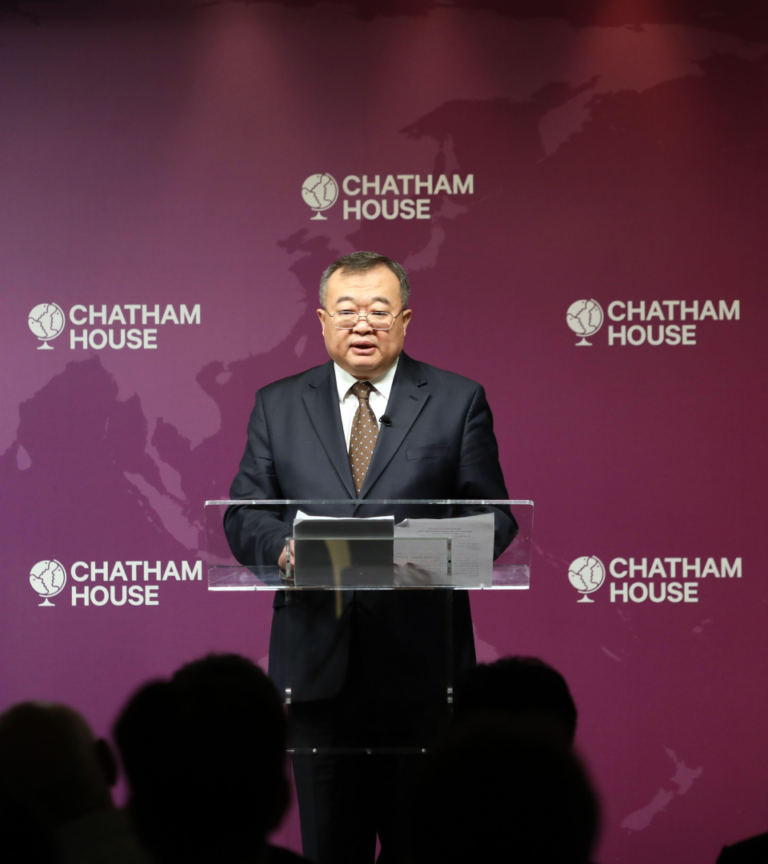
Minister of the International Department of the Communist Party of China Liu Jianchao speaking at Chatham House in London, United Kingdom, 2023.
Photo credit: Alamy
Another strategic trend in which China has consistently engaged over the past decade is the transfer of technology to Latin America. This includes systems such as telecommunications infrastructure, digital services, surveillance hardware, and space exploration projects.87 One of the most relevant cases has been the implementation of 5G networks, given the geopolitical implications of Huawei’s international presence and questions about its ties to the CCP. Huawei has continued to expand in the region, pursuing projects such as a transpacific optical fiber cable — which it ultimately did not secure — and training key stakeholders through programs like Seeds, which has educated around 2,000 young people in technology-related fields88 and signed agreements with regional government institutions, including Colombia’s Ministry of Information Technology and Communications (MINTIC).89 While the effects and content of these programs are arguably beneficial for participants and their countries, further research is needed to substantiate broader claims. Nevertheless, program participants may develop a more favorable perception of the sponsor company and its products, thereby contributing to China’s portrayal as a technology provider and potential supplier of telecommunications infrastructure for government agencies across the region.
The protection of private data and the support of authoritarian regimes are two additional points of discussion related to the transfer of Chinese technology to the region. On one hand, Chinese companies have provided regional governments with the infrastructure and technology needed to monitor and control their populations, such as ZTE supplying the Venezuelan government with an ID system that allowed significant influence over citizens.90 On the other hand, there have been challenges regarding data integrity and security, as in the case of the Chilean Passport and ID System public tender of 2021, which was initially awarded to the Chinese company AISino but was later cancelled by the Chilean government due to questions about the firm’s transparency and the lawfulness of the adjudication process.91
Regarding recent developments, the CCP’s “Development Program,” announced in the context of the China-CELAC meetings, illustrates Beijing’s aim to extend its technological reach in the region and enhance its soft power. Framed under the narrative of “common prosperity,” the initiative seeks to increase the volume of technology sent across the Pacific, including in areas such as artificial intelligence, telecommunications, the digital economy, energy, minerals, and agriculture. According to the announcement, “China will increase imports of quality products from LAC countries and encourage Chinese enterprises to expand investment in the LAC region. China will provide LAC countries with an RMB credit line.”92
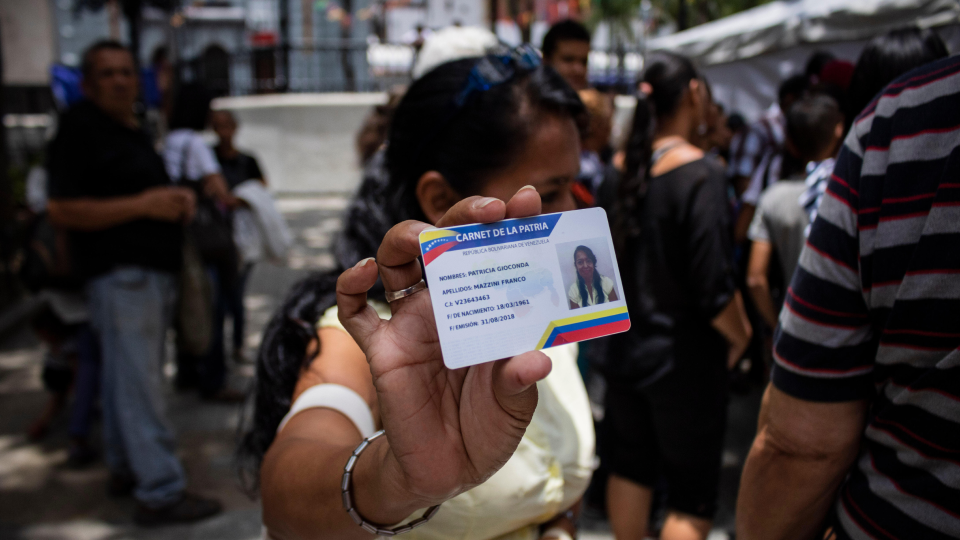
A woman holds a “Carnet de la Patria” card in Caracas, Venezuela, 2018.
Photo credit: Alamy
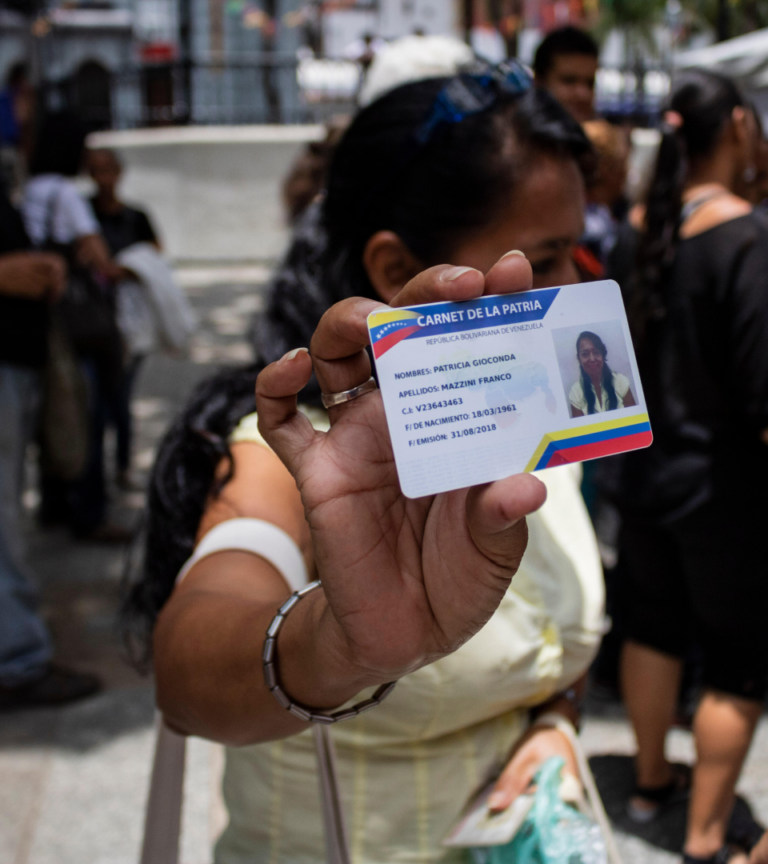
A woman holds a “Carnet de la Patria” card in Caracas, Venezuela, 2018.
Photo credit: Alamy

Security Cooperation as an Entry Point for Chinese Influence
With Latin American nations facing challenges that democracies have been slow to address — particularly in terms of security and economic development — it is not surprising that alternatives offered by regimes that have invested resources and cultivated political relations with local governments are gaining traction among certain segments of the population. Countries experiencing high levels of violence or disappointed by governments’ inefficiency in addressing these challenges may be more willing to accept authoritarian leadership — even within democracies — as a way to counter that violence. This helps explain developments in El Salvador, where President Nayib Bukele maintains an 85% approval rating despite dictatorial measures,93 or Ecuador’s recent controversial crackdowns on organized crime and violence.94
Security has therefore emerged as a key entry point for Chinese actors, who offer systems, technology, and expertise for addressing issues ranging from crime prevention to migration control. For example, Chinese companies linked to CCP surveillance — some which are even blacklisted in the US, such as Dahua and Hikvision — have been incorporated into cities across the region, including near the American border in Juarez, Mexico.95 Chile, Ecuador, Brazil, and Argentina have also cooperated with PRC-related institutions on surveillance mechanisms. In Santiago, Chile, the municipality recently partnered with the Chinese embassy and several PRC-linked organizations to install a security system and a Chinese gate in the Meiggs neighborhood, an area connected to the Chinese diaspora. The neighborhood had experienced rising crime rates in recent years, and the project was intended to strengthen security for its residents.
The effects of Chinese transfers of surveillance and security technology depend heavily on the receiving country. In democracies, these systems can be used by the PRC to improve its public image, engage in diplomatic channels, and build soft power. However, questions remain about whether such technologies enable local governments to become more authoritarian by increasing control over the population. In other words, by assisting Latin American governments in their capacity to monitor citizens, China could be indirectly supporting autocratic tendencies. In Mexico, which has received Chinese surveillance technology at various levels, concerns are growing over potential regulatory changes that could allow the government to persecute opposition members through enhanced surveillance capabilities.96
This argument must also be viewed within a multi-factorial environment, where issues such as drug cartels, uncontrolled migration, and violent crime pressure governments to seek any alternative to maintain order. In both El Salvador and Ecuador, decreasing murder rates suggest the effectiveness of government actions, and these outcomes could influence democratic satisfaction even in the absence of Chinese technology.
The clearest correlation appears when examining authoritarian countries supported by Beijing. According to María Virginia Marín, “one of the most relevant changes [in the PRC’s influence] is the expansion and use of surveillance technology and facial recognition from Chinese companies, like Huawei, that could be used by authoritarian countries such as Venezuela, Cuba, and Nicaragua […] Export of surveillance technology allows regimes not only to chart, follow, and identify, but also to silence dissidents. This is a clear threat to digital rights and freedom of expression.”97

Triads and the Growing Presence of Organized Crime in the Region
Despite the general perception of the CCP as prioritizing security over freedom and providing governments with tools to control crime or their populations, one aspect of China’s expanding footprint is actually detrimental to regional security: the presence of organized crime and hybrid operations linked to Chinese criminal organizations. The fentanyl crisis and its supply chain across the Americas remain a major concern. Called “the deadliest drug the United States has ever faced,” this opioid has connections to Chinese manufacturers and passes through several Latin American countries.98 Both the US and Chinese governments have enacted regulations to limit this issue, yet gangs connected to Fujian province continue to play a central role in worsening drug trafficking and its consequences across the region.99
Chinese triads have also been implicated in multiple crimes in Chile, including human trafficking of Chinese citizens, heist operations, and illicit marijuana plantations. These operations have been linked to local Chinese business representatives, including Yu Caixin, president of the Chinese Chamber of Commerce in Temuco.100
There is ongoing debate about the role of formal CCP institutions in enabling the expansion of Chinese criminal networks in Latin America. Nevertheless, given the importance of security in China’s regional narrative and cooperation proposals, it is crucial to recognize the shared responsibility in limiting the presence of these transnational operations. In many cases, their activities may pressure governments and citizens to distance themselves from institutional democratic mechanisms.

Photo credit: Unsplash

One clear and final point of agreement among experts recording the evolution of Chinese influence in the last 10 years has been its successful isolation strategy against Taiwan, accomplished through the promise of economic transfers and development and political alliances. Since Costa Rica made the decision to establish diplomatic relations with the PRC in 2008, many other countries have followed suit. As a result, in the last 10 years, Taiwan’s diplomatic presence in the region has been greatly diminished due to Beijing’s influence and the promise of economic benefits. Five countries in Latin America and the Caribbean have changed their alignment since 2015: Panama (2017), Dominican Republic (2018), El Salvador (2018), Nicaragua (2021),101 and Honduras (2023).102 The only two relatively major Taiwan allies that remain are Guatemala and Paraguay, which demonstrates the success of the PRC’s activities in Central America. Paraguay’s most recent election featured a critical debate over the possibility of adopting the One China Principle, and Guatemala is also in the spotlight for this reason. According to Javier Melendez, “In the last 10 years, [China] has achieved its goal of isolating Taiwan in this region, [and it is] actively engaging with social, economic, and political actors to get Guatemala to finally cut relations with Taiwan.”103
According to Juan Pablo Cardenal, the change in the “Taiwan recognition issue” can be strongly linked to the year 2017 (after which most countries changed their status) — but it is the result of an attitude change on Beijing’s side after the 2014 Sunflower Movement in Taiwan. In simple terms, the CCP prioritized a closer relationship with the Kuomintang party and paused its isolation strategy for a few years, until the movement and the arrival of Tsai Ing-wen and the Democratic Progressive Party to power. In his view, it is from here that China shifted its approach to the Taiwan question in Latin America. This intensive diplomatic operation in a geographical space that is of profound strategic importance to both Washington and Taipei is one of the main shifts the expert sees in China’s behavior in recent years.104
Overall, the process of Taiwanese diplomatic isolation is a cornerstone of Beijing’s strategy, demonstrating the consistent deployment of both hard and soft power, economic statecraft, and the capacity to influence elite perceptions and political decisions. While the presence of Taipei’s diplomatic missions does not directly correlate with stronger democracy or institutions — as some countries experienced corruption linked to Taiwan, recognized Taiwan even amid autocratization (as in Nicaragua), or maintained a Taiwanese economic office despite recognizing the PRC, Beijing’s success illustrates its ability to shape political choices across Latin America. With only a few nations still recognizing Taipei, this issue is likely to gain strategic importance in the coming years, not only for the US, PRC, and Taiwan, but also for other powers with regional interests. For example, Japan may have incentives to cooperate with Taiwan and to ensure that Paraguay — a country with a small but significant Japanese community — remains aligned with Taipei.
In any case, the “Taiwan question” in Latin America requires continuous study, including study of possible correlations with further autocratization and erosion of freedoms. Nicaragua, now aligned with Beijing, provides a clear example, while in other cases, the switch in recognition has benefited a limited elite rather than the general population.
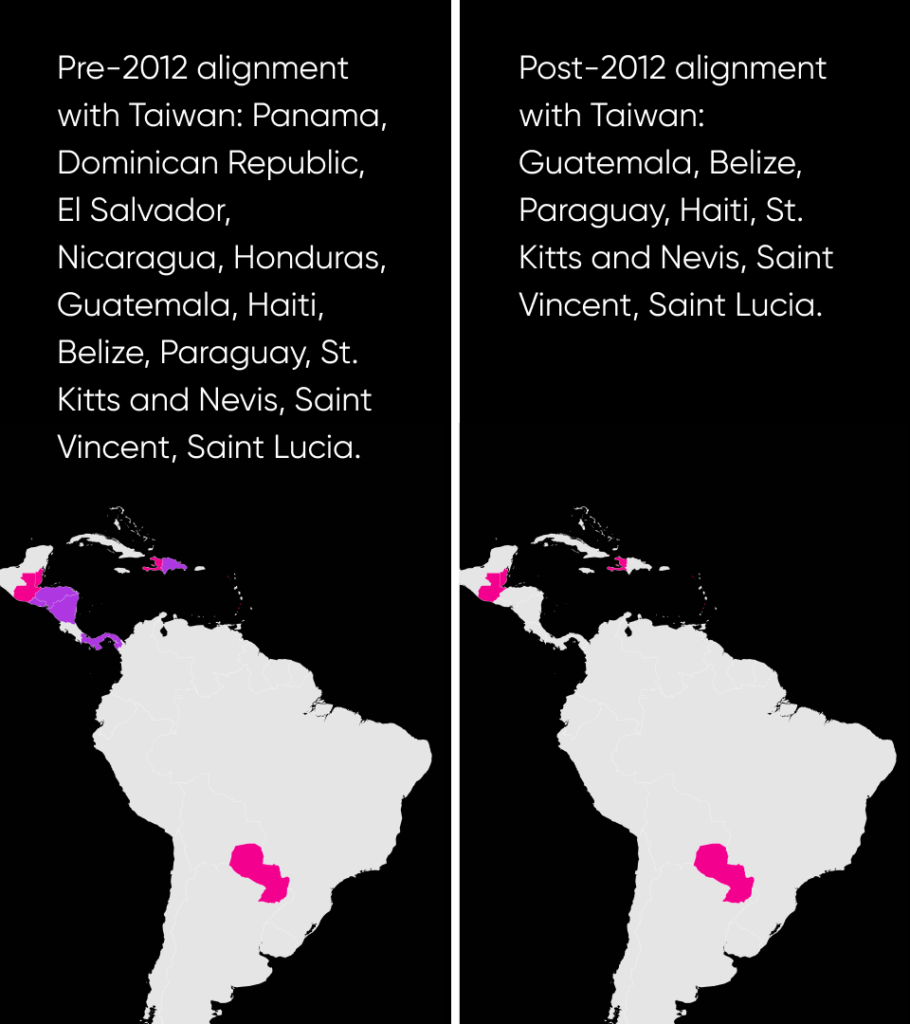
Taiwan’s Diplomatic Ties in Latin America and the Caribbean: Pre-2012 vs. Today
Conclusion: Protecting Latin American Democracy Amid Rising Chinese Influence
The international liberal order and its defenders have long promoted cooperation as a means for development and peaceful interaction. Democratic consolidation was widely regarded as a shared objective for nations, perceived as a system capable of ensuring stability and defending basic human rights. The decline in democratic support among Latin Americans, coupled with the backsliding of freedom and democracy globally, coincides with a period in which challengers such as China and Russia are intensifying efforts to gain allies and expand their presence in the region.
The democratic question, therefore, is not whether China is plotting to erase democracy in Latin America overnight. Rather, it is whether the region’s fragile institutions can manage the weight of this influence and respond to immediate needs such as personal development, security networks, and citizen safety without sacrificing hard-won rights, civil liberties, and norms of open governance. The consequences extend beyond governance, affecting citizens’ daily lives in environments where trust in the benefits of open society, human rights, and freedom is eroding. Narrative shifts are also concerning, as public discourse is increasingly shaped by influence operations seeking to distort perceptions and enter political debates. This occurs against a backdrop of rapid technological change, including artificial intelligence and tools that enhance citizen surveillance.
Evidence shows that, over the past decade, the People’s Republic of China has achieved a significant degree of entrenchment in Latin America by combining economic opportunity with strategic statecraft. This presence has evolved into a multi-layered framework encompassing opportunistic financing, sophisticated diplomatic ties, selective security cooperation, persistent narrative strategies — including disinformation — and a calculated effort to isolate Taiwan’s presence in the region. China has also taken advantage of the United States’ inconsistent policy toward the region, occupying political, diplomatic, and financial spaces traditionally filled by American actors. As the second Trump administration sent mixed signals and reduced democratic assistance channels, PRC-linked actors doubled down on influence strategies, exploiting gaps and diminished general trust.
Experts and sources consulted for this report identify several key factors in explaining China’s growing influence in recent years and what to watch for in the future. This research highlights five central points for analyzing the expanding Chinese presence in Latin America:
1) Economic opportunism and strategic financing remain Beijing’s strongest foothold.
While Chinese investments have helped fill gaps left by inconsistent Western engagement, they have also deepened dependencies and exposed institutional weaknesses. Projects such as Ecuador’s Coca-Codo Sinclair Dam and Peru’s Chancay Port illustrate how infrastructure can become leverage points extending far beyond trade. Similarly, swap lines and conditional lending — such as Argentina’s renewed $5 billion swap — show how financial lifelines can carry implicit strings attached.
2) Sophisticated diplomatic strategies and political consolidation are equally visible.
High-level visits, people-to-people exchanges, scholarships, and joint academic ventures give China access not only to physical resources but also to the region’s intellectual and political elite. The Cariola case in Chile exemplifies how informal networks can emerge when influence operates under the radar of official scrutiny. China-CELAC, BRICS, and other international institutions provide additional channels of influence that Beijing emphasizes.
3) Security rhetoric and assistance have become convenient entry points for further consolidation.
4) A multi-layered narrative strategy, paired with hybrid warfare capabilities, completes the influence framework.
The PRC has refined its ability to position narratives, co-opt local media, and build reputational capital through state-backed outlets, sponsored content, scholarships, and selective cultural programs. In doing so, it effectively sets the terms of debate on its presence while filtering critical voices from mainstream discourse.
5) The isolation of Taiwan represents perhaps the clearest demonstration of sustained strategic leverage.
Recommendations
For Latin American democracies
Close the governance gaps.
Fortify the information space.
Diversify partners.
Regionalize resilience.
Safeguard digital rights.
Invest in public understanding.
For Taiwan and other democratic partners of the region
Thank You
We thank the following experts for their contributions to this report:
Hernan Alberro
Juan Pablo Cardenal
Gabriel Salvia
Javier Meléndez
María Virginia Marin
Francisco Urdinez
Parsifal D’Sola
Marco Bastos
Martha Roldós
Jessica Ludwig
Enrique Dussel Peters
Ricardo Ferrer Picado
Armando Chaguaceda
References
“Qué Se Sabe Del Misterioso Emilio Yang, El ‘Amigo’ Empresario al Que Ayudó Karol Cariola,” Ex-Ante, March 7, 2025, https://www.ex-ante.cl/que-se-sabe-del-misterioso-emilio-yang-el-amigo-empresario-al-que-ayudo-karol-cariola/.
“Liu Jianchao Meets with Karol Cariola Oliva, Speaker of the Chamber of Deputies of Chile-Platform for Learning the Spirit of the Third Plenary Session of the 20th CPC Central Committee,” International Department of the CPC Central Committee, July 22, 2024, https://www.idcpc.gov.cn/ztwy/tbtj/20th3meetingeng/dwxj/sdbhd/202409/t20240930_165354.html.
“Zhao Leji Holds Talks with Speaker of the Chamber of Deputies of Chile Karol Cariola Oliva,” Ministry of Foreign Affairs of the People’s Republic of China, July 19, 2024, https://www.mfa.gov.cn/eng/wjb/zzjg_663340/ldmzs_664952/xwlb_664954/202407/t20240721_11457388.html.
The Ventarrones Space Observatory, in northern Chile’s Atacama Desert, hosts instruments for astrophysics research under international collaborations. Chilean authorities raised national security concerns primarily due to participation by Chinese entities, prompting scrutiny over foreign access, data sharing, and the potential dual-use nature of high-precision instruments.
“Borrowing Boats: How Are Key Influencers in Latin America Amplifying CCP Narratives about Authoritarian Models?,” National Endowment for Democracy, May 2, 2024. https://www.ned.org/borrowing-boats-how-are-key-influencers-in-latin-america-amplifying-ccp-narratives-about-authoritarian-models/.
Lisa Viscidi, Margarete Myers, and Chris Noon, “China’s Strategy in Brazil & the Southern Cone,” The Dialogue, September 28, 2015, https://thedialogue.org/analysis/chinas-strategy-in-brazil-the-southern-cone/; Sascha Hannig Núñez, “Digital Dystopia: The Tools the Chinese Government Uses to Control Its Population,” Forum 2000, October 25, 2019, https://www.forum2000.cz/en/news/digital-dystopia-the-tools-the-chinese-government-uses-to-control-its-population.
Sascha Hannig Núñez, “Una alianza para desafiar la (nociva) influencia china,” CADAL, August 30, 2024, https://www.cadal.org/publicaciones/articulos/?id=16759.
Larry Diamond, “Defining and Developing Democracy,” In The Democracy Sourcebook, 2003, 29–39.
Human Rights Foundation, Tyranny Tracker, 2026, https://tyrannytracker.org/.
Freedom House, Freedom in the World 2026: The Growing Shadow of Autocracy, 2026, https://freedomhouse.org/sites/default/files/2026-03/FIW2026_final_digital%20%281%29.pdf.
Nord, Marina, David Altman, Fabio Angiolillo, Tiago Fernandes, Ana Good God, and Staffan I. Lindberg. 2025. Democracy Report 2025: 25 Years of Autocratization – Democracy Trumped? University of Gothenburg: V-Dem Institute. https://www.v-dem.net/documents/60/V-dem-dr__2025_lowres.pdf
Jorge Sahd, Daniel Zovatto, and Diego Rojas, Riesgo Politico America Latina, 2024, 24-25, http://centroestudiosinternacionales.uc.cl/images/publicaciones/publicaciones-ceiuc/2024/Riesgo-Politico-America-Latina-2024_compressed.pdf.
Corporación Latinobarómetro, Informe 2024: La Democracia Resiliente, 2025, 22.
Andrea Cassani and Luca Tomini, “What Autocratization Is,” in Autocratization in Post-Cold War Political Regimes, 2019, 15–35, https://doi.org/10.1007/978-3-030-03125-1_2.
V-Dem Institute, Democracy Report 2024, 29.
V-Dem Institute, Democracy Report 2024, 29.
Enrique Dussel, Questionnaire on Chinese Influence in Latin America and its Evolution, digital document, April 17, 2025.
Francisco Urdinez, Questionnaire on Chinese Influence in Latin America and its Evolution, digital document, April 4, 2025.
Marco Bastos, Questionnaire on Chinese Influence in Latin America and its Evolution, digital document, April 4, 2025.
Gabriel Salvia, Questionnaire on Chinese Influence in Latin America and its Evolution, digital document, March 29, 2025.
Maria Virginia Marín, Questionnaire on Chinese Influence in Latin America and its Evolution, digital document, April 2025.
Parsifal D’Sola, Questionnaire on Chinese Influence in Latin America and its Evolution, digital document, April 2025.
Parsifal D’Sola, Questionnaire on Chinese Influence in Latin America and its Evolution.
Stefano Palestini, Luciano Quispe, and Diego Telias, “Autocracy Promotion in the Americas? Scrutinizing the Effect of China and Russia on Democracy Protection in Venezuela and Nicaragua,” Democratization, 2024, 1–23, https://doi.org/10.1080/13510347.2025.2483420.
Armando Chaguaceda, Questionnaire on Chinese Influence in Latin America and its Evolution, digital document, July 16, 2025.
Jessica Ludwig, Questionnaire on Chinese Influence in Latin America and its Evolution, digital document, May 21, 2025.
Javier Melendez, Questionnaire on Chinese Influence in Latin America and its Evolution, digital document, April 2025.
Hernan Alberro, Questionnaire on Chinese Influence in Latin America and its Evolution, digital document, April 2, 2025.
Leland Lazarus and Paul Nantulya, “Lessons from China’s Forum Diplomacy in Africa, Latin America, and the Caribbean,” Africa Center for Strategic Studies, January 22, 2024, https://africacenter.org/spotlight/lessons-from-chinas-forum-diplomacy-in-africa-latin-america-and-the-caribbean/.
Chris Horton and Steven Lee Myers, “El Efecto de La Ruptura de Relaciones Entre Panamá y Taiwán”, The New York Times en Español, June 15, 2017, https://www.nytimes.com/es/2017/06/15/espanol/america-latina/panama-taiwan-centroamerica-china.html.
“Countries and Territories,” China Index, accessed June 25, 2025, https://china-index.io/country.
“China Index: ¿Por qué Beijing gana más terreno en América Latina?,” Expediente Público, June 26, 2025, https://www.expedientepublico.org/china-index-por-que-beijing-gana-mas-terreno-en-america-latina/.
Julie Radomski, “The Writing on the River Wall: Lessons Learned from Coca Codo Sinclair and the Erosion of the Coca River,” Social Science Research Network, 3, November 1, 2024, https://doi.org/10.2139/ssrn.5106478.
Peter Millard and Stephan Kueffner, “A Sinkhole Is Threatening to Consume Ecuador’s Main Source of Power,” Bloomberg, January 9, 2025, https://www.bloomberg.com/features/2025-ecuador-power-sinkhole/.
Juan Delgado, “Presa de Coca Codo construida por China en riesgo de colapso,” Diálogo Américas, March 28, 2025, https://dialogo-americas.com/articles/china-built-coca-codo-sinclair-dam-at-risk-of-collapse/.
Sascha Hannig Núñez, Technology Transfer to Latin American Countries: Drifting Away from the United States and China?, 2025, https://doi.org/10.4324/9781003489450.
Ricardo Ferrer Picado, Questionnaire on Chinese Influence in Latin America and its Evolution, digital document, May 24, 2025.
Nicolás García, “Chile suspende proyecto de observatorio chino tras inquietud de EEUU sobre posibles fines militares,” Infodefensa, March 19, 2025, https://www.infodefensa.com/texto-diario/mostrar/5222678/chile-suspende-proyecto-observatorio-chino-inquietud-eeuu-sobre-posibles-fines-militares.
Eduardo Baptista, Joe Cash, and Liz Lee, “China Offers Latin America and the Caribbean Billions in Bid to Rival US Influence,” Reuters, May 13, 2025, https://www.reuters.com/world/china-latin-america-trade-exceeded-500-billion-2024-2025-05-13/.
“3 anuncios de Xi Jinping sobre América Latina durante la visita a China de Boric, Petro y Lula,” BBC News Mundo, May 13, 2025, https://www.bbc.com/mundo/articles/cvg7ne418n0o.
“China, Colombia Sign Belt and Road Cooperation Pact,” Reuters, May 14, 2025, https://www.reuters.com/world/china-colombia-sign-belt-road-cooperation-pact-2025-05-14/.
Zhu Jingyang (@zhu_jingyang), “En los próximos tres años, China proporcionará a los países de la CELAC 3.500 becas gubernamentales (…) https://t.co/Cac8RZci4c.” X (formerly Twitter), May 13, 2025, https://x.com/zhu_jingyang/status/1922381729555267998.
Diego Telias and Francisco Urdinez, “China’s Foreign Aid Political Drivers: Lessons from a Novel Dataset of Mask Diplomacy in Latin America during the COVID-19 Pandemic,” Journal of Current Chinese Affairs 51, no. 1 (April 2022): 108–36. https://doi.org/10.1177/18681026211020763.
Hernan Alberro, Questionnaire on Chinese Influence in Latin America and its Evolution, digital document, April 2, 2025.
Jessica Ludwig, Questionnaire on Chinese Influence in Latin America and its Evolution, digital document, May 21, 2025.
Sailor Miao, “Mapping China’s COVID-19 Aid Footprint,” Aid Data (blog), accessed June 30, 2025. https://www.aiddata.org/blog/mapping-chinas-covid-19-aid-footprint.
“China silencia a Vargas Llosa por sus comentarios sobre la gestión del coronavirus,” ABC, March 17, 2020, https://www.abc.es/cultura/libros/abci-china-silencia-vargas-llosa-comentarios-sobre-gestion-coronavirus-202003171656_noticia.html.
2023 Annual Report Trends in Human Rights Practices Worldwide, Global Rights Project, 5, https://web.uri.edu/artsci/wp-content/uploads/sites/1132/2023-Human-Rights-report-PDF-Final.pdf.
Juan Pablo Cardenal, “China’s Uncertain Trail in Latin America,” Dialogo Politico, 2024, https://dialogopolitico.org/special-edition-2024-keys-to-understanding-china/chinas-uncertain-trail-in-latin-america.
Sascha Hannig Núñez, “El TLC de Chile con China: Monocultivo del cobre, limitada diversificación y dependencia oculta,” CADAL, August 5, 2024, https://www.cadal.org/publicaciones/informes/?id=16665.
Juan Pablo Cardenal, “El TLC de Perú con China: Una relación comercial asimétrica en favor de China,” CADAL, August 12, 2024, https://www.cadal.org/publicaciones/informes/?id=16687.
Sascha Hannig Núñez, “EL TLC de Costa Rica con China: 12 años de expectativas frustradas,” CADAL, August 19, 2024, https://www.cadal.org/publicaciones/informes/?id=16728.
Elida Moreno and Philip Wen, “Panama Establishes Ties with China, Ditches Taiwan in Win for Beijing,” Reuters, June 13, 2017, https://www.reuters.com/article/world/panama-establishes-ties-with-china-ditches-taiwan-in-win-for-beijing-idUSKBN19404V/.
Martha Roldos, Questionnaire on Chinese Influence in Latin America and its Evolution, digital document, May 10, 2025.
Martha Roldos, Los Secretos de la Deuda China, 2023.
Kylie Madry, “Argentina Renews $5 Billion Swap with China in Much-Needed FX Boost,” Reuters, April 10, 2025, https://www.reuters.com/markets/argentina-renews-5-billion-activated-swap-line-with-china-2025-04-10/.
Ricardo Ferrer Picado, Questionnaire on Chinese Influence in Latin America and its Evolution, digital document, May 24, 2025.
Javier Melendez, Questionnaire on Chinese Influence in Latin America and its Evolution, digital document, April 2025.
“Empresas chinas abandonan planes de desarrollo de litio en Chile,” Minería y Desarrollo, May 7, 2025, https://mineriaydesarrollo.com/empresas-chinas-abandonan-planes-de-desarrollo-de-litio-en-chile/.
Mark Burton, “Tianqi Lithium Warns of 2024 Loss, Halts Australia Expansion,” Mining.com, accessed January 23, 2025, https://www.mining.com/web/tianqi-lithium-issues-profit-warning-and-halts-expansion/.
Daniel Ramos, “Bolivia Says China’s CBC to Invest $1 Billion in Lithium Plants,” Reuters, accessed June 28, 2025, https://www.reuters.com/markets/commodities/bolivia-says-chinas-cbc-invest-1-billion-lithium-plants-2024-11-26/.
Margaret Myers and Rebecca Ray, Feeling the Stones: Chinese Development Finance to Latin America and the Caribbean, The Dialogue, June 16, 2024, https://thedialogue.org/analysis/feeling-the-stones-chinese-development-finance-to-latin-america-and-the-caribbean-2023.
Laurie Chen and Albee Zhang, “China Suspends Youth Jobless Data after Record High Readings,” Reuters, August 15, 2023, https://www.reuters.com/world/china/china-stop-releasing-youth-jobless-rate-data-aug-says-stats-bureau-2023-08-15/.
Lea Thome, “Chancay Port Opens as China’s Gateway to South America,” AidData, November 14, 2024, https://www.aiddata.org/blog/chancay-port-opens-as-chinas-gateway-to-south-america.
Sebastián Ramírez Mendoza, “El proyecto de tren bioceánico Perú – China: las dudas sobre rutas, financiamiento y posible control estatal,” El Comercio, May 14, 2025, https://elcomercio.pe/lima/peru-acelera-proyecto-del-tren-bioceanico-con-china-pero-persisten-dudas-sobre-ruta-financiamiento-y-control-estatal-megapuerto-de-chancay-peru-china-noticia/.
“Chile presentó el plan de obras del Corredor Bioceánico Vial con Brasil, Argentina y Paraguay,” Infobae, April 15, 2025, https://www.infobae.com/america/america-latina/2025/04/15/chile-presento-el-plan-de-obras-del-corredor-bioceanico-vial-con-brasil-argentina-y-paraguay/.
Jessica Ludwig, Questionnaire on Chinese Influence in Latin America and its Evolution, digital document, May 21, 2025.
Maria Silvia Trigo, “Bolivia: En Medio de Denuncias Por Sobornos, Se Aprobó En Comisión de Diputados Un Contrato de Litio Con Una Empresa China,” Infobae, February 10, 2025, https://www.infobae.com/america/america-latina/2025/02/10/bolivia-en-medio-de-denuncias-por-sobornos-se-aprobo-en-comision-de-diputados-un-contrato-de-litio-con-una-empresa-china/.
Carlo J.V. Caro, “The Patagonian Enigma: China’s Deep Space Station in Argentina,” The Diplomat, accessed January 8, 2024, https://thediplomat.com/2024/01/the-patagonian-enigma-chinas-deep-space-station-in-argentina/.
Armando Chaguaceda, Questionnaire on Chinese Influence in Latin America and its Evolution, digital document, July 16, 2025.
Political Risk In Latin America, Centro de Estudios Internacionales UC, 2025, 25, https://centroestudiosinternacionales.uc.cl/images/publicaciones/publicaciones-ceiuc/2025/index_2025_compressed.pdf.
CGTN Español, “Presidenta de Cámara Legislativa de Chile Valora El Papel de China En El Sur Global,” YouTube, November 4, 2024, https://www.youtube.com/watch?v=p0Mh_r_fy28.
Nicolás García, “Chile suspende proyecto de observatorio chino tras inquietud de EEUU sobre posibles fines militares,” InfoDefensa, March 19, 2025, https://www.infodefensa.com/texto-diario/mostrar/5222678/chile-suspende-proyecto-observatorio-chino-inquietud-eeuu-sobre-posibles-fines-militares.
“Confucius Institutes – Latin America,” Fundación Andrés Bello, accessed July 6, 2025, https://fundacionandresbello.org/en/confucius-institutes-lac/; Sophia Acevedo and Daniela Hernández, “Una Mirada Local: Institutos Confucio En Chile,” June 22, 2024, https://zenodo.org/records/12299888.
Dominika Urhová, “The Demise of Confucius Institutes: Retreating or Rebranding?,” China Observers, September 5, 2024, https://chinaobservers.eu/the-demise-of-confucius-institutes-retreating-or-rebranding/.
“Wang Yi on Five Programs for the China-LAC Community with a Shared Future and Implementation Measures,” Ministry of Foreign Affairs of the People’s Republic of China, May 14, 2025, https://www.mfa.gov.cn/eng/wjb/zzjg_663340/ldmzs_664952/xwlb_664954/202505/t20250515_11623588.html.
“Sci-fi fans from around the world gather at Chengdu WorldCon,” The State Council of the People’s Republic of China, October 19, 2023, https://english.www.gov.cn/news/202310/19/content_WS6530e046c6d0868f4e8e070f.html.
Amy Hawkins, “Science fiction awards held in China under fire for excluding authors,” The Guardian, January 24, 2024, https://www.theguardian.com/books/2024/jan/24/science-fiction-awards-held-in-china-under-fire-for-excluding-authors.
Tanya Tynjala, “WorldCon 2023,” Amazing Stories, November 10, 2023, https://amazingstories.com/2023/11/worldcon-2023/; PublishNews, “WorldCon é realizada na China e recebe autores latinos, como a brasileira Ana Rüsche,” PublishNews, accessed July 6, 2025, https://www.publishnews.com.br/materias/2023/10/17/worldcon-e-realizada-na-china-e-recebe-autores-latinos-como-a-brasileira-ana-rusche.
“VII Foro de Think Tanks China-América Latina y El Caribe Aboga Por Profundizar Intercambio y Cooperación,” Xinhua Español, June 23, 2025, https://spanish.news.cn/20250623/29f632db54274975837cefff515fb2ca/c.html.
PUCE Ecuador (@PUCE_Ecuador). “🇪🇨✨ Nuestra docente e investigadora @LoreHerreraVin, de la Facultad de Economía y Gestión Empresarial, representó a Ecuador en el 7.o Foro de Think-Tanks de Alto Nivel de América Latina 2025, organizado por la Dirección General de América Latina y el Caribe del Ministerio de https://t.co/wCnale6WuS,” X (formerly Twitter), June 26, 2025, https://x.com/PUCE_Ecuador/status/1938069759012036809.
“China’s Voice in Latin American Media,” Wilson Center, March 11, 2024, https://www.wilsoncenter.org/event/chinas-voice-latin-american-media.
Marco Bastos, Questionnaire on Chinese Influence in Latin America and its Evolution, digital document, April 4, 2025.
Maria Virginia Marín, Questionnaire on Chinese Influence in Latin America and its Evolution, digital document, April 2025.
Marcos Sebares Jiménez-Blanco, “Venezuela Through the Sino-Russian Media Playbook,” German Marshall Fund, April 9, 2025, https://www.gmfus.org/news/venezuela-through-sino-russian-media-playbook.
Sascha Hannig Núñez, “China’s YouTube Propaganda in Latin America,” The Diplomat, February 13, 2024, https://thediplomat.com/2024/02/chinas-youtube-propaganda-in-latin-america/.
Sascha Hannig Núñez, Technology Transfer to Latin American Countries: Drifting Away from the United States and China?, 2025, https://doi.org/10.4324/9781003489450.
“Huawei celebra 10 años del programa de talento Seeds for the Future en América Latina y el Caribe,” Huawei, August 12, 2023, www.huawei.com/mx/news/mx/2023/huawei-celebra-aniversario-10-del-programa-de-talento-seeds-for-the-future-en-lac.
“30 jóvenes colombianos viajaran a México gracias a la iniciativa de Semillas del Futuro del MinTIC y Huawei,” Huawei, July 10, 2023, www.huawei.com/mx/news/mx/2023/jovenes-colombianos-viajan-a-mexico-gracias-a-semillas-del-futuro-del-mintic-y-huawei.
Angus Berwick, “A New Venezuelan ID, Created with China’s ZTE, Tracks Citizen Behavior,” Reuters, November 14, 2018, https://www.reuters.com/investigates/special-report/venezuela-zte/.
Francisco Artaza and David Nogales, “Gobierno Anula Licitación de Pasaportes a Empresa China Aisino Tras Advertencia de Cancillería y EE.UU,” La Tercera, November 15, 2021, https://www.latercera.com/pulso/noticia/pasaportes-el-registro-civil-deja-sin-efecto-la-adjudicacion-de-aisino/OZQEJBQUZ5CHVHNAMSJWLXSK5Q/.
Wang Yi, Five Programs for the China-LAC Community of Shared Future, 2025, https://www.fmprc.gov.cn/eng/wjbzhd/202505/t20250515_11623588.html.
Bryan Avelar, “Bukele Mantiene Su Enorme Popularidad a Pesar de Su Imagen de ‘Dictador’,” El País, June 3, 2025, https://elpais.com/america/2025-06-03/bukele-mantiene-su-enorme-popularidad-a-pesar-de-su-imagen-de-dictador.html.
Katherine Aguirre and Robert Muggah, “La Mano Dura Contra El Crimen Redujo La Criminalidad En Ecuador, Pero El Problema Aún Persiste,” The Conversation, February 9, 2025, http://theconversation.com/la-mano-dura-contra-el-crimen-redujo-la-criminalidad-en-ecuador-pero-el-problema-aun-persiste-249443.
Elizabeth Rosales, “Ciudad Juárez compra equipos de videovigilancia a firmas chinas vetadas por EE.UU.,” La Verdad Juárez, June 7, 2023, https://laverdadjuarez.com/2023/06/07/ciudad-juarez-compra-equipos-de-videovigilancia-a-firmas-chinas-vetadas-por-ee-uu/.
Andrea Rodríguez Eleuterio, “Ley Del Sistema de Investigación e Inteligencia: ¿Qué Implica y Cuando Será Aprobada?,” Infobae, June 26, 2025, https://www.infobae.com/mexico/2025/06/26/ley-del-sistema-de-investigacion-e-inteligencia-que-implica-y-cuando-sera-aprobada/.
Maria Virginia Marín, Questionnaire on Chinese Influence in Latin America and its Evolution, digital document, April 2025.
Leland Lazarus, Myah Havertong, Javier Alvarez Kuan, and Nicole Writt, “From Fujian to Flushing: Chinese Criminal Networks in the Americas and Beyond,” Jack D. Gordon Institute for Public Policy, December 2024.
Vanda Felbab-Brown and Fred Dews, “The Fentanyl Pipeline and China’s Role in the US Opioid Crisis,” Brookings, October 1, 2024, https://www.brookings.edu/articles/the-fentanyl-pipeline-and-chinas-role-in-the-us-opioid-crisis/.
Chris Dalby, “Why Chinese Mafias Are Moving Into Chile,” InSight Crime, September 14, 2023, http://insightcrime.org/news/why-chinese-mafias-are-moving-into-chile/.
Jonah Bock and Haley Parilla, “Why Countries Abandon Taiwan: Indicators for a Diplomatic Switch,” Global Taiwan Institute, August 21, 2024, https://globaltaiwan.org/2024/08/why-countries-abandon-taiwan-indicators-for-a-diplomatic-switch/.
“Honduras rompe relaciones con Taiwán y reconoce ‘una sola China’: qué países mantienen vínculos con el gobierno de Taipei,” BBC News Mundo, March 15, 2023, https://www.bbc.com/mundo/noticias-america-latina-64969870.
Javier Melendez, Questionnaire on Chinese Influence in Latin America and its Evolution, digital document, April 2025.
Juan Pablo Cardenal, Questionnaire on Chinese Influence in Latin America and its Evolution, digital document, March 26, 2025.