


Good morning, readers!
In Venezuela, opposition leader María Corina Machado received the Nobel Peace Prize for her steadfast defense of democracy and freedom. Despite persecution from Nicolás Maduro’s dictatorship, she continues to inspire Venezuelans with her unyielding courage.
Like many dissidents targeted by authoritarian regimes, Machado has embraced Bitcoin as a tool of financial resistance. Last year, she spoke with Alex Gladstein, HRF’s chief strategy officer, about financial repression in Venezuela and described Bitcoin as a “lifeline” for her fellow citizens. You can watch the interview here.
Meanwhile, Russian dictator Vladimir Putin signed new amendments expanding the country’s notorious foreign agent law, further positioning financial and legal systems against journalists, NGOs, and dissidents.
In freedom tech news, Block announced the launch of Square Bitcoin, enabling businesses to accept Bitcoin payments directly within the Square tap-to-pay ecosystem. This update offers greater financial independence from banks and networks that can easily block or freeze funds, especially when coerced by authoritarian regimes.
We conclude with a story of resilience from Ledn co-founder Mauricio Di Bartolomeo, who recounts how Bitcoin mining helped his family navigate Venezuela’s hyperinflation and led him to help others preserve their savings and freedom where traditional financial systems are subject to autocratic manipulation.
Now, let’s break down the full stories.
Global News
Venezuela | Nobel Peace Prize Awarded to María Corina Machado
Last week, María Corina Machado, a Venezuelan opposition leader and a fearless advocate for democracy and freedom, was announced as this year’s Nobel Peace Prize winner. The honor recognizes her decades-long fight for human rights and her unwavering leadership against dictatorship in Venezuela. Machado worked to unite the country’s fractured democratic opposition, guiding it to victory in the 2024 elections before Nicolás Maduro’s regime declared fraudulent results. Machado has supported Bitcoin as a tool of financial resistance amid the regime’s escalating financial repression. Under Maduro, the state has debauched the national currency, restricted access to alternatives like Bitcoin, and tightened financial control over NGOs.
Russia | Putin Signs Amendments to Foreign Agent Law
Russian dictator Vladimir Putin signed amendments that increase penalties under the country’s foreign agent law. Effective immediately, just one administrative violation triggers criminal prosecution. Lowering the threshold for prosecution broadens the Kremlin’s financial power to criminalize dissent and silence independent media outlets, civil society groups, and individuals with international ties or support.
Kenya | Virtual Asset Service Providers Law Passed
The Kenyan government passed a Virtual Asset Service Providers (VASP) law, creating one of Africa’s most comprehensive regulatory frameworks for digital assets. The law requires licensing for digital asset exchanges, custodians, and brokers. It also grants oversight to the country’s central bank and the Capital Market Authority. The framework warrants close attention, as further regulations under the law could centralize power in government-licensed intermediaries, expand surveillance powers, and increase compliance requirements for open-source builders.
India | CBDC Sandbox for Testing Introduced
The Reserve Bank of India introduced a sandbox for its central bank digital currency (CBDC), the digital rupee. The sandbox enables fintech startups and financial institutions to build and test the CBDC’s use cases and programmability. This expands the digital rupee beyond initial pilot tests and forms part of India’s efforts to modernize payments and introduce a programmable, government-issued currency. The expansion occurs alongside India’s intensifying financial repression: freezing opposition bank accounts, censoring dissent, and reaffirming its hostility toward open monetary networks like Bitcoin.
Côte d’Ivoire | Bitchat Usage Increases During Pro-Democracy Protests
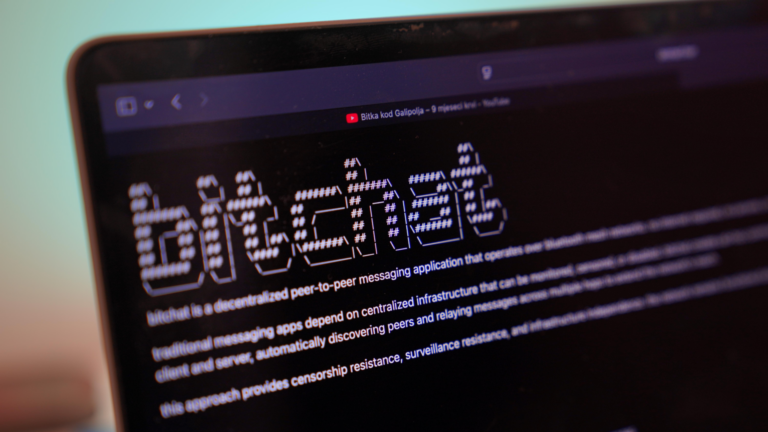
Ahead of the October 25 presidential elections, protests are spreading across Côte d’Ivoire, and use of Bitchat, an offline and encrypted messaging tool, is increasing. In early October, officials banned public protest of the Constitutional Council’s decisions to reject opposition candidates while approving the candidacy of incumbent president Alassane Ouattara, who has defied term limits to seek a fourth term in office. Security forces used tear gas on peaceful demonstrators and arrested more than 250 people. This marks the fourth recorded instance of surging Bitchat activity during periods of civil unrest, as people turn to freedom tech when rights are restricted.
Uganda | CBDC Pilot Launched
Uganda launched a pilot for its CBDC, a digital version of the Ugandan shilling built on a permissioned blockchain and backed by the country’s treasury. The CBDC adheres to strict rules that risk exposing individuals’ financial activity in a country where political freedoms are severely curtailed. It is available via smartphone, expanding its accessibility to 40 million Ugandan users. Across the African continent, central banks from several authoritarian regimes are progressively experimenting with CBDCs under the pretense of digital economy reforms.
Recommended Content
Venezuela’s Financial Repression with Mauricio Di Bartolomeo
In this podcast episode, Ledn co-founder Mauricio Di Bartolomeo shares how Bitcoin became his family’s lifeline amid Venezuela’s economic collapse. When hyperinflation wiped out savings and destroyed livelihoods, Mauricio turned to Bitcoin mining to help his family survive. Later, he used Bitcoin to escape the country and went on to co-found Ledn, one of the world’s leading Bitcoin financial institutions. Today, Mauricio builds tools that empower others facing financial repression and help people preserve their livelihoods where legacy financial systems have failed them.
Bitcoin and Freedom Tech News
Square | Bitcoin Payments Introduced
Square, a payment processor developed by Block Inc., launched Square Bitcoin, enabling merchants to accept Bitcoin as payment. The rollout, debuting November 10 in the US, extends to more than 4 million small businesses and represents one of the most significant integrations of bitcoin payments into mainstream financial infrastructure. This feature could potentially lay the groundwork for global expansion, putting the company on track to grant merchants in various challenging political and economic environments access to more open, borderless payment rails.
BULL Wallet | Open-Source Wallet with Payjoin Privacy Tools
Bull Bitcoin, a Canadian Bitcoin platform, released BULL Wallet, an open-source Bitcoin wallet that integrates Payjoin to enhance transaction privacy. Payjoin merges a sender’s and receiver’s coins into one transaction, making Bitcoin surveillance far more difficult for dictators. If widely adopted, Payjoin will strengthen privacy for all users. The addition of Payjoin to a mobile wallet was made possible in part through HRF’s Serverless Payjoin bounty, awarded to Bull Bitcoin and Bitcoin developer Dan Gould. Notably, BULL Wallet was banned immediately in China, showing that this kind of technology threatens dictators’ financial control.
Signal | Proof of Concept for Cashu Ecash Integration
Open-source software developers released a proof-of-concept demonstrating how Cashu ecash (digital cash backed by bitcoin) could facilitate private bitcoin payments within the encrypted messaging app Signal. The integration would allow users to hold and transfer value via bitcoin through encrypted chats without exposing their identities, a vital privacy need for dissidents and civil society organizations in repressive environments. The project, developed at the HRF-supported lightning++ hackathon earlier this month, could strengthen financial freedom in dictatorships and beyond.
Stable Channels | Self-Custodial Dollar Stability on Bitcoin
Stable Channels is a new app and HRF grantee that offers activists a way to maintain the stability of the US dollar while holding funds in bitcoin. The open-source app uses two-sided Lightning Network contracts between users seeking stability and those taking on volatility to keep balances pegged to the dollar. For those living under weak currencies or authoritarian regimes, Stable Channels represents a major breakthrough: it combines Bitcoin’s permissionless and bearer design with US dollar stability. This provides activists, nonprofits, and everyday users a way to save and transact without exposure to unwanted volatility or more heavily surveilled stablecoin alternatives.
Fedi | Complete Wallet and App Redesign
Fedi, a company leveraging Bitcoin and ecash technology to support communities, rolled out its most significant redesign yet. In it, they separate “Federations” and “Communities” into distinct spaces to improve usability, organization, and financial freedom. Federations act as community-run banks for shared custody and payments, while Communities serve as digital town squares for coordination and communication. The update also introduces a unified Wallet, helping users easily manage Lightning, on-chain, and ecash transactions across multiple federations from one interface. This redesign makes Bitcoin custody more accessible, social, and resilient, particularly for civil society and nonprofits seeking local, self-governed alternatives to centrally governed financial systems.
YakiHonne | Update Expands Nostr Freedom Tools
YakiHonne, a client for the decentralized nostr protocol, released a major update that strengthens censorship resilience for users communicating and transacting over Nostr. The addition of Relay Orbits lets users browse, connect to, and manage multiple relays at once, a key improvement for circumventing censorship on individual servers. The integration of NsecBunker remote signers allows users to post and interact securely through trusted third parties without ever exposing their private keys. These updates expand users’ ability to communicate and transact privately across decentralized networks.
Recommended Content
Selling Fish & Honey for Bitcoin: How a Zimbabwean Farmer Brings Stability to His Business
In this episode from the Bitcoin for Fairness channel, Bitcoin educator Anita Posch profiles Ethan, a Zimbabwean farmer who powers his operations with solar energy and mines Bitcoin to sustain his business in the face of repression and hyperinflation. Ethan sells honey and fish for Bitcoin, shielding his income from local currency depreciation and banking failures. His story demonstrates how Bitcoin can provide stability and independence in one of the world’s most inflationary economies.