
An artist’s long record of memory, democratic commitment, and peaceful resistance — from a Cultural Revolution childhood to a closed courtroom
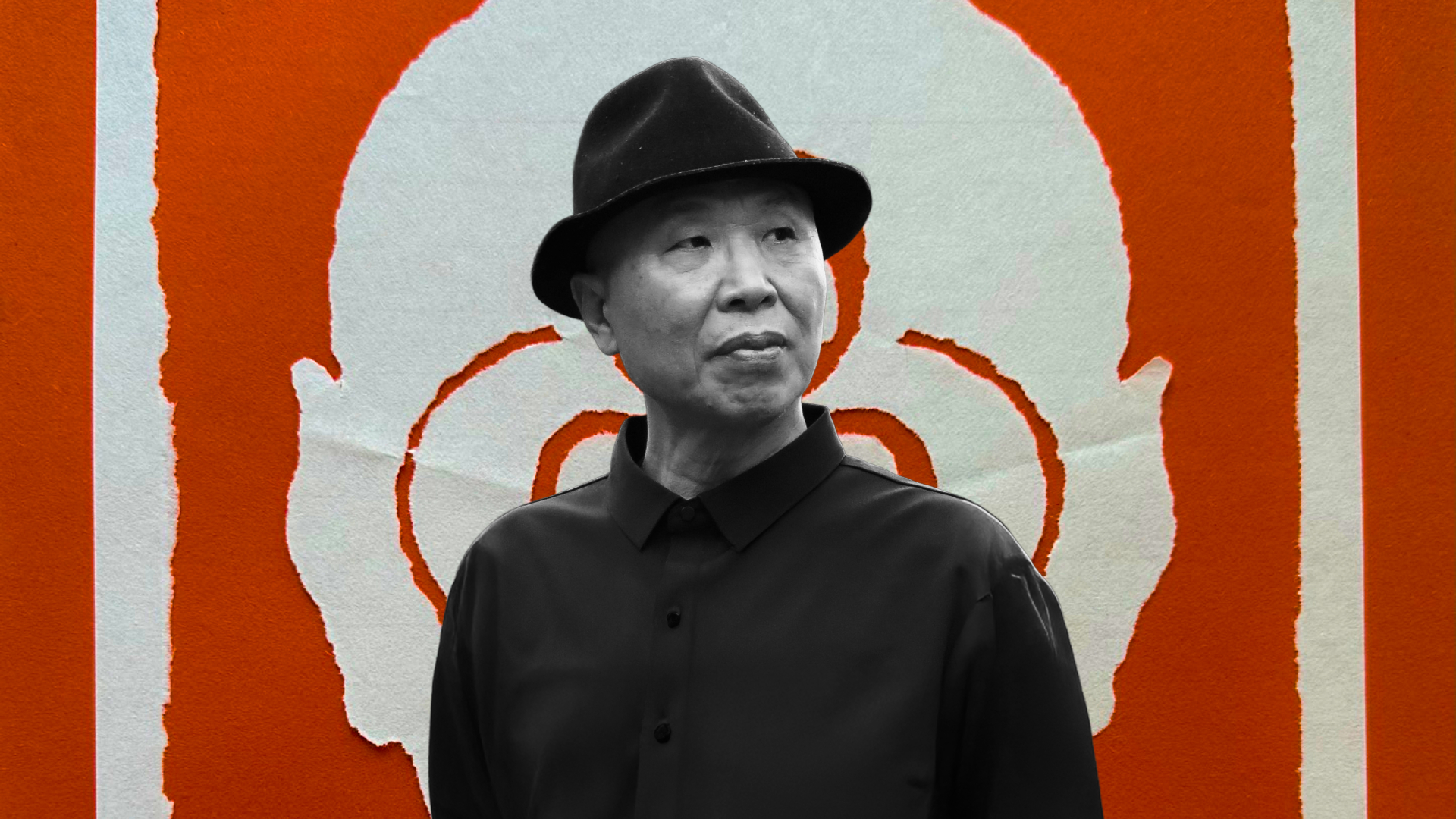
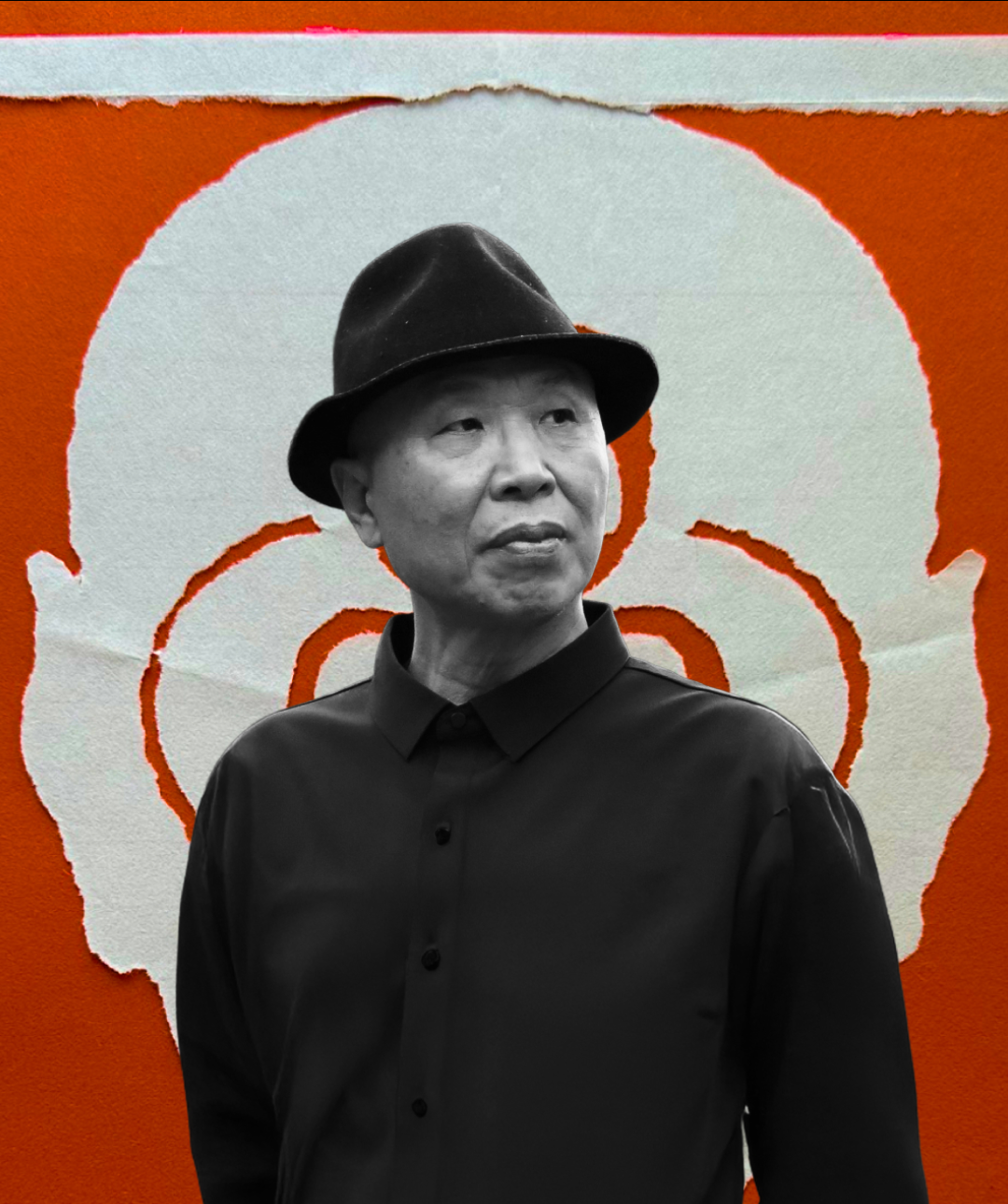
In detention, Gao Zhen made pictures from paper he tore by hand: portraits of his son, the family dog, memories of New York, and biblical figures. He was deprived of scissors — and later, according to his family, of paper and pen as well. The distinctive style is recognizably his. So is the insistence that a confined space cannot contain people’s creativity.
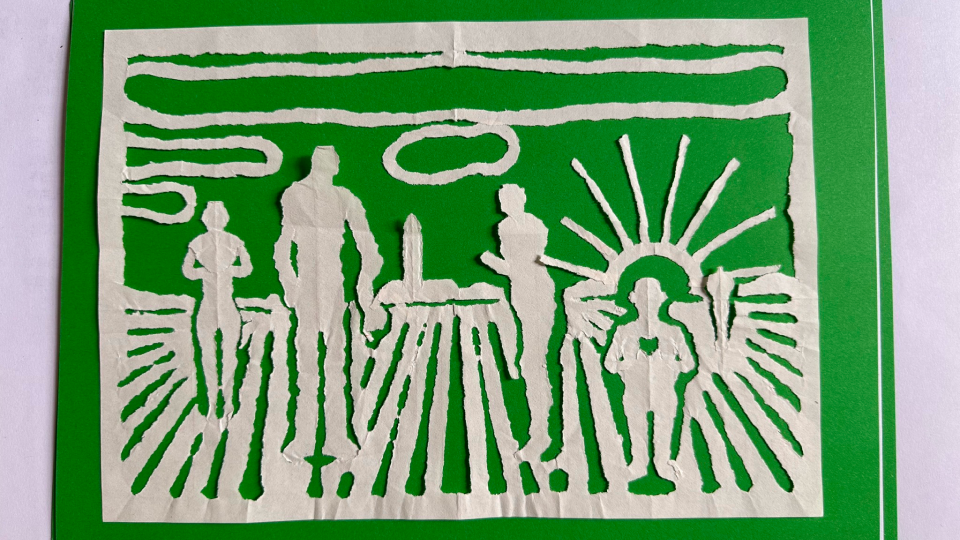
Gao Zhen is a member of the “Gao Brothers,” an internationally acclaimed Chinese artist duo. For decades, the duo’s art has pushed the boundaries and tested the limits of the regime’s tolerance of artistic expression, with some of their best-known works confronting the authoritarian legacy and violence of the Chinese Communist Party (CCP).
Now, at 70, Gao is behind bars. He was arrested in August 2024 for three sculptures he created from 2006 to 2009, even though the law under which he would be indicted did not take effect until 2018, a decade later. Prosecutors have sought to bridge that gap in the timeline by treating the sculpture’s later circulation — including online images and reproductions — as post-2018 conduct. Gao’s case marks the CCP’s escalation from censoring politically sensitive expressions to criminally prosecuting an artist who continued to resist its restrictions.
His arrest was not the beginning of Gao’s interaction with China’s authoritarianism. It is the latest episode in a life full of love and a deep commitment to advancing justice, shaped by political labeling, petitioning, blacklisting, censorship, digital suppression, and arbitrary detention.
1956
Growing Up in the Early Days of the Cultural Revolution
Gao Zhen, one of six sons, was born in Jinan, Shandong Province. His father, Gao Wencheng, worked at the Jinan Firefighting Equipment Factory. His mother often cut scraps of paper into dancers, insects, fish, and other forms. She deeply influenced his art.
Gao Zhen was 10 when then Chairman Mao Zedong launched the Cultural Revolution.
Explainer: What was the Cultural Revolution?
Mao Zedong launched the Cultural Revolution in 1966, which purged alleged political opponents, including intellectuals, teachers, regime officials, and ordinary citizens accused of having “bourgeois” or “counter-revolutionary” backgrounds. In 1968, the campaign to “cleanse the class ranks” pushed investigations into factories and work units. Detention, coerced confession, public humiliation, and arbitrary executions often operated outside meaningful legal safeguards.
Although Mao formally declared the Cultural Revolution over in 1969, the campaign continued until his death in 1976. This decade-long revolution caused widespread persecution, social and economic disruption, and the deaths of millions, creating a complete upheaval of the economy, society, and the country overall.
1968~1980
A Father Taken
In 1968, the Cultural Revolution reached the factory where his father worked. In October of that year, Gao’s father was labeled a “class enemy” and detained for investigation. Twenty-five days later, the family was told that his father, accused of being an “active counter-revolutionary,” had committed suicide out of guilt. Gao was 12. This defining event has been the foundation and motivation for much of the Gao Brothers’ work, which often seeks to put a spotlight on people, places, and events in Chinese society that are taboo.
The family did not accept the regime’s account of the death. For the next decade, they sought to overturn the accusation.
In 1979, 23-year-old Gao traveled to Beijing to petition for redress, carrying his family’s grievances. His recollection of the petitioners’ street — children among makeshift shelters, adults cooking outdoors, people waiting to be received — expanded his understanding of the scale of the injustice. Around 1980, the state rehabilitated his father and paid the family more than 3,000 yuan (about $290).
1985
Becoming the Gao Brothers
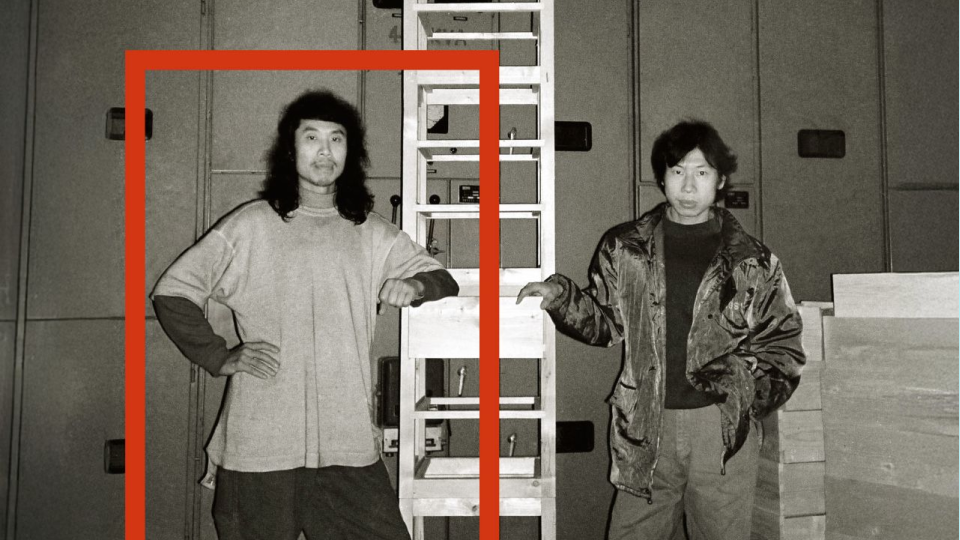
After graduating from the Shandong School of Arts and Crafts, Gao Zhen worked as a professional painter. His younger brother, Gao Qiang, also trained in art. The two began collaborating under the name “Gao Brothers.”
The rare character in Gao Zhen’s Chinese name, 兟 (shēn), is often mispronounced or misspelled. According to Gao Zhen, “using one name together was not only appropriate but also a way to avoid confusion.” Their shared name is attributed to four decades of jointly presented paintings, photography, installations, sculptures, and performances.
During the 1980s, the political environment across China was changing. Deng Xiaoping-era reforms enabled unprecedented contact with Western modernism and catalyzed a massive, nationwide experimental art movement. It marked the reopening of access to art and ideas that had previously been excluded or tightly controlled. The cultural world became a space for explorations surrounding individuality, expression, and images of a different China.
Explainer: What were the Deng Xiaoping-era reforms?
1989
An Avant-Garde Opening and a Civic Choice
In February 1989, the Gao Brothers showed “Midnight Mass” at the landmark China/Avant-Garde Exhibition in Beijing’s National Art Museum. The large installation was made with soft weather-balloon material, swollen with air, and shaped into sexualized and androgynous forms. The brothers described the concept as “inflationism” (充气主义), evoking a society where grandiose language and rapidly expanding cultural explorations concealed political instability and structural fragility beneath.
“Midnight Mass” catapulted the Gao Brothers into the national limelight. However, the exhibition itself was shut down twice — an early preview of recurring intervention by the regime that would follow their career.
During the exhibition period, the brothers participated in a political gathering, organized under the guise of a reception, where physicist Fang Lizhi’s open letter to Chairman Deng Xiaoping was circulated. The letter suggested general amnesty for prisoners of conscience and specifically calling for the release of Wei Jingsheng, the Democracy Wall activist imprisoned for demanding democratic political reforms. The letter was co-signed by intellectuals, writers, and cultural figures, including the Gao Brothers. Not long after, it became a piece of evidence the regime used to accuse Fang of being a mastermind behind the pro-democracy movement of June 4, 1989.
Explainer: What happened in China on June 4, 1989?
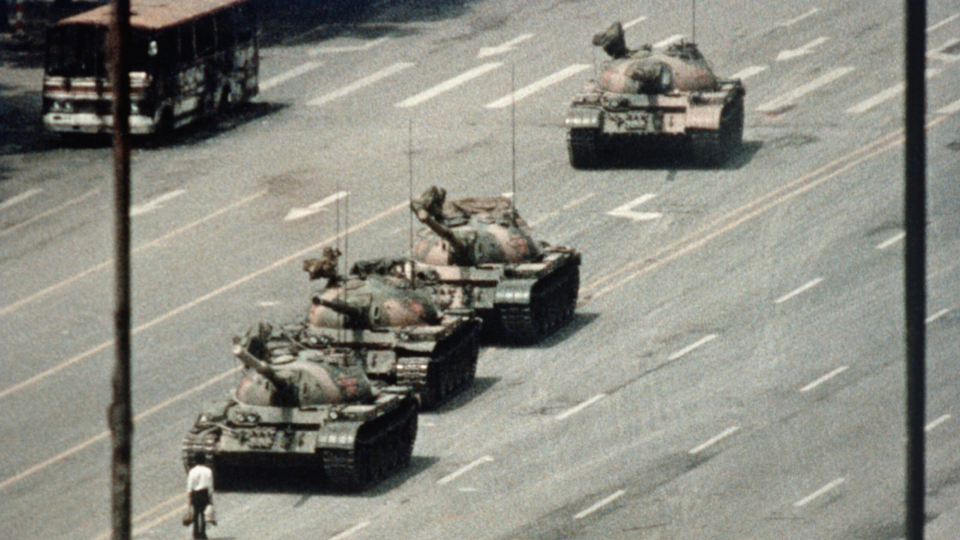
In spring 1989, public mourning for Hu Yaobang, a former CCP leader associated with political reform, developed into a nationwide movement. Students initially led demonstrations calling for regime dialogue, freedom of expression and the press, greater regime transparency, and an end to corruption. After weeks of demonstrations and a student hunger strike in Tiananmen Square, the Chinese regime declared martial law.
On the night of June 3, the People’s Liberation Army entered Beijing with tanks and armed troops and opened fire on peaceful protestors and residents. An official death toll has never been released. The crackdown brought the political experimentation of the 1980s to an abrupt end.
Public discussion and commemoration of June 4 remain heavily restricted. The victims’ families, including the Tiananmen Mothers, continue to seek accountability.
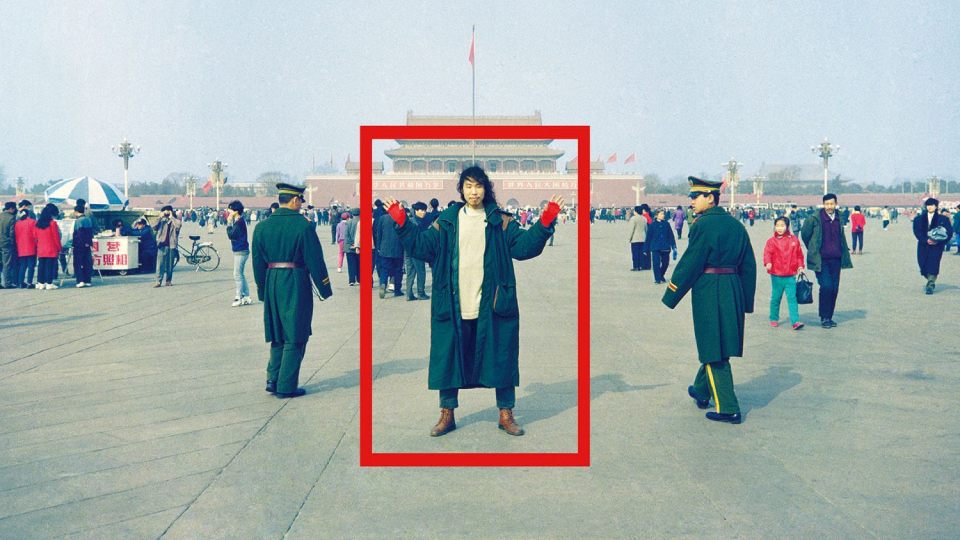
Co-signing the appeal and remaining active through the 1989 Tiananmen Square protests demonstrated the brothers’ active commitment to China’s democratic liberalization beyond familial redress. Consequently, the Gao Brothers were de facto blacklisted, their passports were confiscated, and they were unable to travel abroad for roughly the next 14 years.
They recalled that at one point, this made them so anxious that they considered leaving illegally. “But we decided against it. Perhaps it would have been a success, but then we would not have been able to return to China. That would have been even more unbearable; after all, this was our place.” This sentiment presents the dilemma behind an easy question — “Why not simply leave an authoritarian context?” — without romanticizing the danger. Their repeated decision was to speak and act, while fully aware of the cost of dissent.
2000s
What Freedom Was For

At the turn of the 21st century, the Gao Brothers used performance and photography as their main media for creation.
“A Sense of Space,” a series of six photographs, grew from the childhood memories of six boys sharing one bed and of restricted movement. Another series, “The Forever Unfinished Building” series, modeled contemporary China as an incomplete concrete structure: spectacular construction above unresolved foundations, filled with fragments of disaster, forced labor, incorporating materials related to Tiananmen Square, religion, and dissent.
The “Hug” series invited strangers to hug each other, serving as a metaphor for humanity, love, and universal connection in a divided world. In 2001, the brothers’ “Utopia of Hugging” was invited to the Venice Biennale, but the brothers were still under a travel ban.
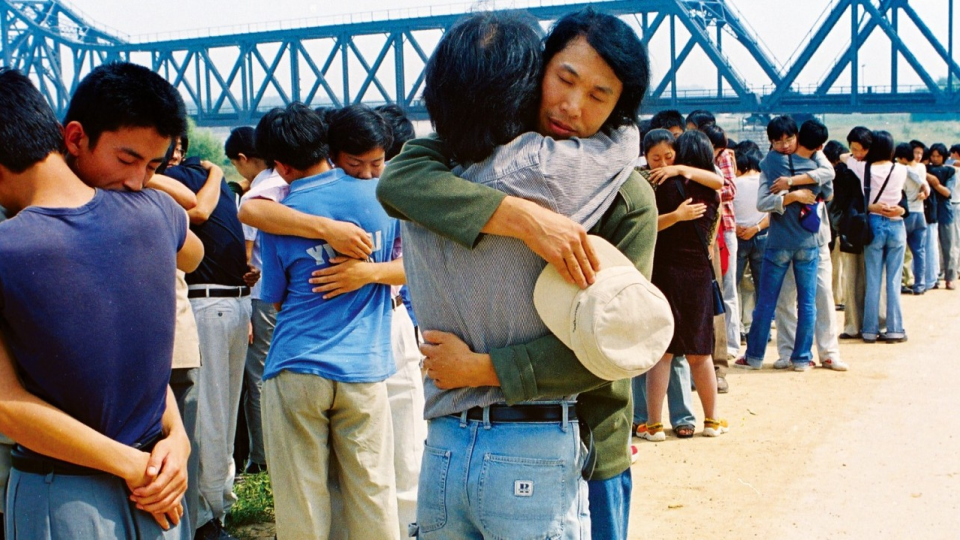
Embrace: The Utopia of Hugging for 20 Minutes
Officials returned their passports three years later, along with a briefing. The police asked them to promise not to do anything against the regime. The brothers said, “Your imagination is even wilder than ours. The only thing we can promise is that we will not lie.”
Around 2002, the Gao Brothers left Shandong to settle in Beijing. They established themselves in the 798 Art District, one of China’s most important contemporary art communities that once hosted bold, avant-garde political expressions, before censorship increasingly constrained what could be shown.
In 2006, Chinese officials effectively shut down the Gao Brothers’ “Ash Red” exhibition by ordering the removal of artworks, restricting publicity, canceling media coverage, and placing guards outside their studio.
The studio experienced heavy regime surveillance, with continuous pressure from regime officials, including police stationed outside their studio, repeated warnings, restrictions on exhibiting their work, and interference with their ability to work freely. The district’s management office, due to pressure from higher-ups, monitored their work that was deemed politically unacceptable — especially the “Mao” series, which was later used against Gao Zhen.
“Miss Mao,” “Execution of Christ,” and “Mao’s Guilt”: Against the Innocence of Mao
“Miss Mao,” a satirical series that the brothers began in 2006, challenges political symbols surrounding the party’s narrative of Mao Zedong as an unquestionable national figure. The series illustrates the CCP’s propaganda as a mother and provider, adding Pinocchio’s long nose to portray how such narratives are lies. Some versions of this series (“Miss Mao in Confinement”) use reproductive imagery as a metaphor for the persistence of Maoist habits after Mao’s death. Rather than targeting Mao as an individual, the work questions the broader system of political idolization that places leaders beyond criticism and prevents public examination of historical abuses.
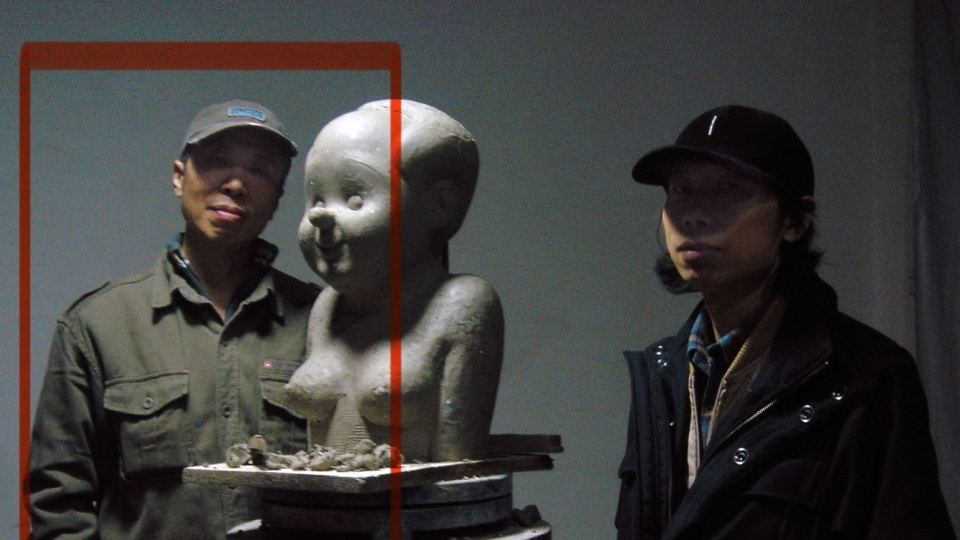
The Gao Brothers with Miss Mao
In “Execution of Christ,” six life-size Mao statues form a firing squad, aiming at a figure easily recognized as Jesus Christ. One Mao statue stands apart, his body turned as if in hesitation or shame. This piece highlights Mao’s violent suppression of religious freedoms at the time of the Cultural Revolution, contrasting Christ’s creed of universal love and nonviolence against Mao’s philosophy of violent struggle.
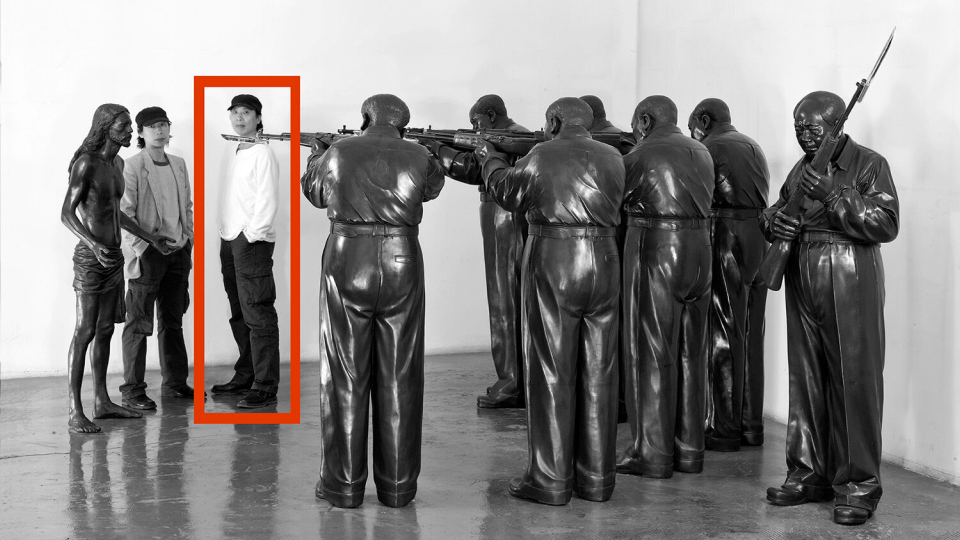
The Execution of Christ
“Mao’s Guilt” places a life-size Mao on his knees, imagining Mao taking a genuine reckoning and repenting for past abuses. Gao Qiang explained that he imagined not only Mao apologizing, but “a system saying sorry.”
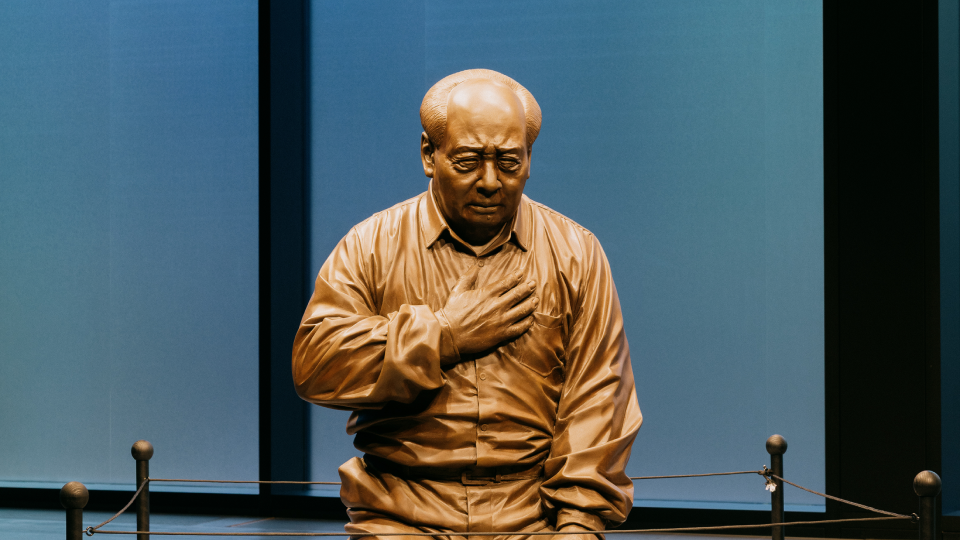
Mao’s Guilt
These three works, read in sequence, “Miss Mao,” “Execution of Christ,” and “Mao’s Guilt,” move from dismantling political propaganda to emphasizing Mao’s role in abuses, ultimately to imagining a public act of accountability.
The Mao series was created in China, but never publicly exhibited there. In 2009, the Gao Brothers displayed “Mao’s Guilt” at a secret exhibition hosted under the guise of an invite-only party, sharing the location only hours beforehand through personal contacts and coded messages.
These works of art are now all owned by people in the United States.
A defining characteristic of the Gao Brothers is their ability to use art to challenge official narratives and preserve memories. The brothers have repeatedly rejected the idea that artists should remain politically neutral. Instead, they argue that artists have a civic responsibility to engage with society, describing their work as an effort to document reality rather than to produce propaganda.
2008~2011
Before the Knock at the Door
In 2008, the Gao Brothers endorsed a collective demand for public reform by signing Charter 08, a manifesto championed by Chinese human rights activist Liu Xiaobo that called for a constitutional reform, human rights protections, separation of powers, and political liberalization. Liu was detained before the document’s formal release and sentenced to 11 years in prison for “inciting subversion of state power.” The Gao Brothers faced intensified surveillance and harassment, including repeated interference with their Beijing studio. When attempting to attend Liu’s trial hearing in 2009, the police put him under house arrest for three days.
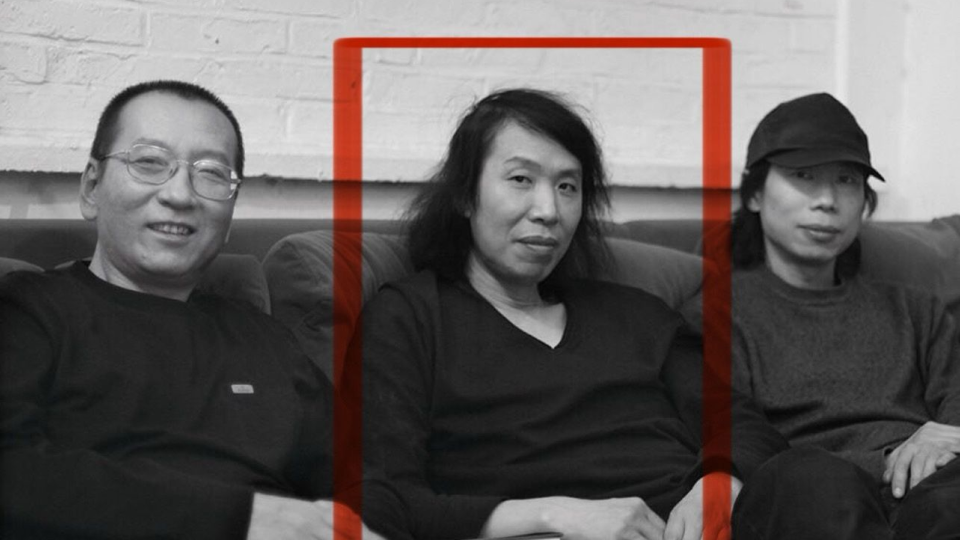
The Gao Brothers with Liu Xiaobo
By 2011, the space for creative dissent was narrowing, marked by the increasing suppression of prominent artists, including Ai Weiwei, whom the Gao Brothers publicly supported. They were subsequently questioned by police for hours, their studio was repeatedly inspected, and their Sina Weibo social media accounts and posts were repeatedly blocked or deleted.
Whenever someone asked whether he was afraid, Gao Zhen said yes, but he feared even more the person he would become if he stopped speaking the truth. That unease pushed the brothers to look into obtaining US green cards as a safety measure and exit route.
Gao Zhen continued dividing his time between the two countries.
2018
“Defaming Heroes and Martyrs”
In 2018, China introduced the Law on the Protection of Heroes and Martyrs, which criminalized actions deemed to “infringe upon the reputation or honor” of officially recognized revolutionary figures and national heroes. In 2021, a new Criminal Law provision, Article 299a, made serious cases punishable by up to three years’ imprisonment. The law significantly expanded the regime’s ability to regulate interpretations of history and political symbols.
Although the Gao Brothers’ works criticizing Mao Zedong and China’s political history were created years before the law was introduced, this legal framework became the basis for the regime’s retroactive accusations against Gao Zhen.
2024
The Arrest
In the summer of 2024, Gao returned to China with his wife, Zhao Yaliang, and their six-year-old son, Gao Jia. Gao planned to continue his art while Zhao wanted time with her aging mother. Loved ones had reportedly warned him of the risks of returning, but Gao believed that his recent work was no longer overtly political, and previous visits had ended without arrest.
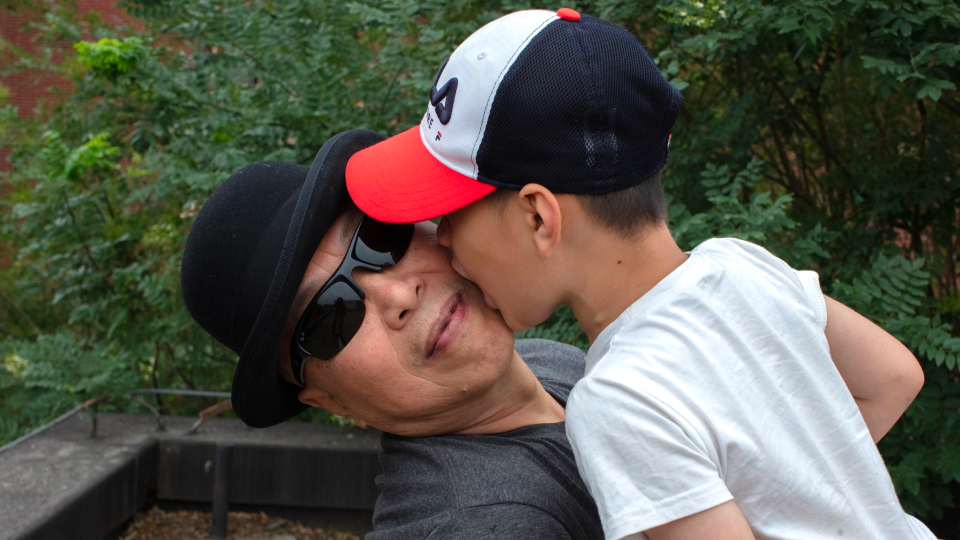
Gao Zhen and his son
On August 26, 2024, just a week before he was scheduled to return to the United States, 30 police officers barged into his studio and demanded that he surrender his phone. When he refused, officers reportedly handcuffed him, forced him down, confiscated his phone, and arrested him.
Hours later, he was informed that the regime had charged him with “slandering heroes and martyrs.” The police also questioned his Beijing-based twin brother, Gao Shen (高甡). The next day, his wife received a detention notice, and officials formally approved his arrest.
Since then, Gao has been held in the Sanhe City Detention Center.
The charges against Gao are based on three works created in 2006~2009: “Miss Mao,” “Execution of Christ,” and “Mao’s Guilt.” According to the indictment, prosecutors accused Gao of participating in the continued circulation of those works.
Gao Zhen’s lawyer was first allowed to meet him on September 2. Days later, the regime rejected the lawyer’s application for his release on bail. Gao was barred from seeing his family or having them deliver medication, and was put in solitary confinement for three weeks, subjected to repeated questioning and sleep disruption.
Officials photographed and confiscated more than 100 artworks, books, and personal belongings from Gao’s studio in China. A body of work that had accumulated over decades was carried away in trucks as a body of evidence.
In September, 2024, when Zhao attempted to return to New York with their son, they were prevented from leaving on grounds of “national security.” They remain under constant state surveillance, extending the pressure of Gao’s detention to his loved ones.
2025
“I Knew for Years That I Was on My Way to Prison”
In August 2025, Chinese dissident artist Ai Weiwei posted a letter written by Gao Zhen on social media. The letter reflected on their shared experiences of repression and warned that China’s shrinking space for artistic and political expression had made dissent increasingly dangerous. “I knew for years that I was on my way to prison,” Gao wrote. He asked Ai for support — not for a reduced sentence, but to prevent his case from becoming a precedent of silencing artists and to protect others facing similar persecution.
Officials subsequently closed the remaining channel between Gao and his loved ones, prohibiting his lawyer from bringing him letters or taking his writings and art out.
After more than a year in pretrial detention, Gao’s health deteriorated. He fainted and became reliant on a wheelchair. A doctor reportedly warned that he might have atherosclerosis, a potential precursor to a stroke. He was denied medical bail and his trial, initially set for September 2025, was postponed first to December 2025, and then to March 2026.
The prolonged detention and repeated postponements have raised concerns that judicial procedures are being used as a punishment.
2026
The Law Reached Back
In March, after Gao had spent 581 days in pretrial detention, his closed-door trial lasted a single day. Neither his wife nor members of the public, including foreign diplomats who attempted to observe the hearing, were permitted to attend.
In April, HRF submitted an individual complaint to the UN Working Group on Arbitrary Detention (WGAD) on behalf of Gao Zhen, urging the WGAD to declare his detention arbitrary and in violation of international law.
In June, the Sanhe City People’s Court postponed Gao’s verdict for another three months, citing the case’s “major and complex” nature.
On August 25th, with his wife and son being denied out of the courtroom, Gao Zhen received a three-year prison sentence, the full term sought by prosecutors. After already spending two years in detention, he has to serve the final year. Gao Zhen plans to appeal. Meanwhile, no corresponding end date has been given for his wife’s exit ban.
Gao Zhen’s prosecution can be seen as history repeating itself: a son arbitrarily imprisoned by the same political system under which his father died in custody. The common thread that runs through their story — and the stories of so many others in China — is the regime’s recurring claim to determine which accounts of the past are legitimate, and whose reputation history must protect.
This is not the story of an artist who criticized Mao and was eventually punished for it. Above all, it is the story of a pair of brothers who stayed true to themselves. Even in detention, Gao Zhen has continued to create and perform the same acts, if quieter, of peaceful resistance.