
NEW YORK (Nov. 24, 2025) — The Human Rights Foundation (HRF) today announced the first round of grants made as part of its new AI for Individual Rights program. Eight grantees, representing developers, researchers, and educators, will receive support to advance AI tools for activists and civil society struggling for freedom worldwide.
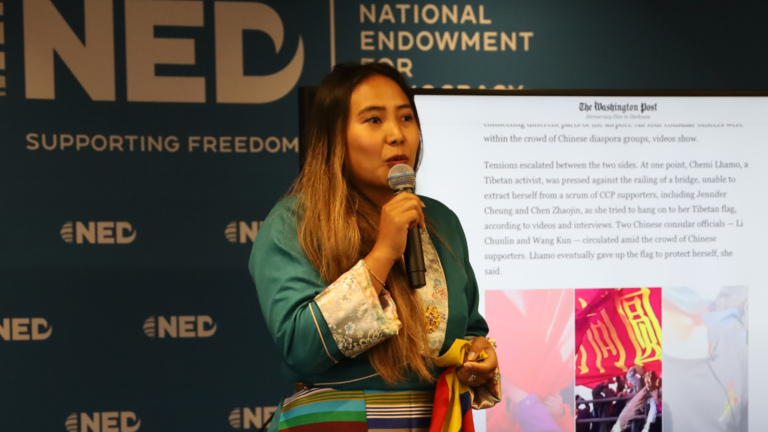
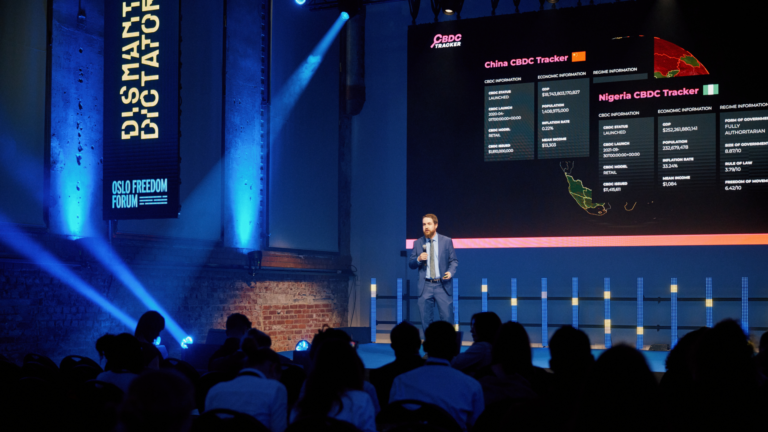
This announcement comes just a few days after HRF gathered its first AI for Individual Rights Summit in San Francisco, where some of the top AI minds from across the world gathered with some of the bravest dissidents and pioneering philanthropists.
This video captures key insights from the Summit and marks the launch of this pioneering program.
HRF is pleased to announce the following grantees:
Maple AI
Human rights defenders can leverage AI assistants to streamline their work, but nearly all LLM services store and scan sensitive information, putting users in authoritarian environments at risk. To address this, OpenSecret developed Maple AI, an open-source, end-to-end encrypted AI assistant that delivers privacy without sacrificing ease of use. With HRF support, the team will improve the model’s capabilities and build new features to help activists research, generate ideas, and manage workflows with greater privacy.
Routstr
Corporate AI providers can monitor, restrict, or censor users. Routstr, an LLM routing marketplace built on Nostr’s decentralized communications protocol, offers a permissionless, censorship-resistant alternative. Users can connect pseudonymously to buy and sell access to each other’s AI accounts, enabling inference to be traded in an uncensorable way. With this grant, activists can securely access advanced AI systems even if governments or companies block access.
The Bridge Project
Vibe coding enables activists to rapidly prototype tools that can strengthen their movements. But turning these prototypes into polished, reliable software sometimes requires more technical expertise. To address this, the Bridge Project will provide consultation to activists in HRF’s network so they can refine and deploy fully-functional applications. With HRF support, the Bridge Project will equip human rights defenders to launch essential tools and accelerate their impact.
PlebDevs
Lack of accessible developer education inhibits activists from building AI tools. PlebDevs, a developer education platform focused on Bitcoin and open-source technology, is working to close this gap. With HRF support, they will launch an AI development course designed to teach beginners how to deploy and adapt open-source AI tools. Content will appeal specifically to those working in repressive environments to build privacy-preserving AI tools that fit their contexts.
OpenCode
AI-powered coding agents can perform complex tasks and allow nontechnical activists and nonprofits to build tools tailored to their political environments. However, many leading agents are proprietary and closed-source, leaving users exposed to surveillance and unable to inspect software code. OpenCode, a fully open-source agentic coding platform, offers a transparent alternative that users can run locally on their own device. With HRF support, OpenCode will help activists and civil society groups harness AI more safely even under authoritarian rule.
Sovereign Engineering
The development of freedom tech can accelerate when developers harness the power of AI. Sovereign Engineering brings together builders in a physical space to create freedom-enhancing tools on open networks like Bitcoin and Nostr. Over two cohorts, participants will experiment with vibe coding and explore how AI can be integrated into censorship-resistant systems. This grant helps HRF-supported developers use AI-assisted development as a force multiplier for the broader freedom tech ecosystem.
Centre for Applied Nonviolent Action and Strategies (CANVAS)
Activists often lack quick, personalized support to sustain their movements. CANVAS is developing the Global Education for Nonviolent Engagement platform (GENE). Trained on decades of frontline organizing experience, this AI-powered tool helps activists plan campaigns, coordinate action, and respond in moments of crisis. With HRF funding, Gene will reach the activists who need it most.
Citizen Power Initiatives for China
There is little research on how China is weaponizing AI to strengthen authoritarian control. Citizen Power Initiatives for China, a grassroots movement dedicated to a peaceful democratic transition in China, will lead new research examining how the Chinese regime uses AI to bolster its digital dictatorship and how it exports these tools to other regimes. The project will also identify open-source AI tools that human rights defenders can use to resist digital repression. With HRF support, this project will give activists the knowledge and tools needed to resist digital authoritarianism.
About AI for Individual Rights
The AI for Individual Rights program exposes artificial intelligence used by autocrats as a tool of repression and supports open-source AI tools in the hands of dissidents. Through grants, research, education, and public awareness campaigns, we aim to disrupt AI-driven digital authoritarianism and put the power of AI into the hands of those using it to advance human rights worldwide.
Learn more about HRF’s AI for Individual Rights program and learn what tools you can use today to safely and privately advance freedom work at HRF.org/AI.
The Human Rights Foundation (HRF) is a nonpartisan nonprofit organization that promotes and protects human rights globally, with a focus on closed societies.
HRF is a registered 501(c)(3) nonprofit organization. Donations are tax-deductible to the fullest extent allowable by law.
For interview requests or media inquiries, please email [email protected].