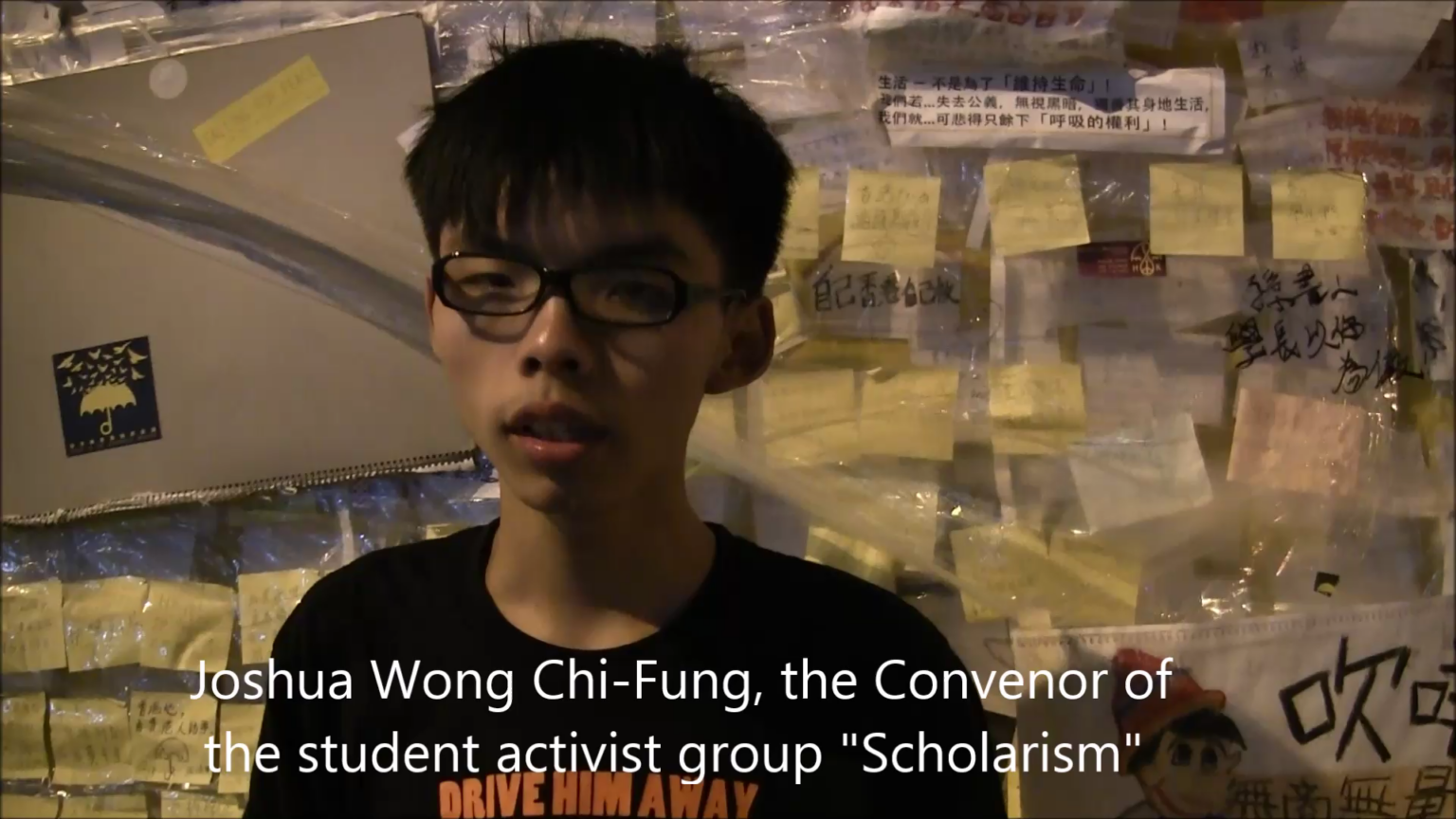


During Joshua Wong’s first stint in prison at age 20, he read 777 pages of letters sent to him. He worked in the canteen and complained about the rules: Prisoners’ cups had to go on the floor, not on desks. “No” had to become “Sorry, sir.” Joshua joked that years of video games and Japanese anime had not prepared him for drills.
By age 24, incarcerated for the fifth time, Joshua began to see prison as somewhere he had to live, rather than briefly passing through. He built routines. He taught himself guitar. He worked out enough for old friends to notice that a scrawny teenager had bulked up. In six years, he took courses and read more than 500 books, so many that his eyesight worsened and he needed new glasses. This time, Hong Kong’s political system was much more authoritarian. Bail was hard to obtain, and appeals harder to win.
Spending more than half of his twenties in prison, Joshua was looking forward to his release in 2027. He planned to go back to school, see his friends, and play the guitar for them.
Then he was arrested again inside prison.
Joshua Wong entered public life as a 14-year-old pro-democracy activist who shook Hong Kong’s politics. He tried every available political mechanism, and his record reveals where each one bent or broke and how the boundaries of political participation in Hong Kong have changed.
1996–2010
A Boy
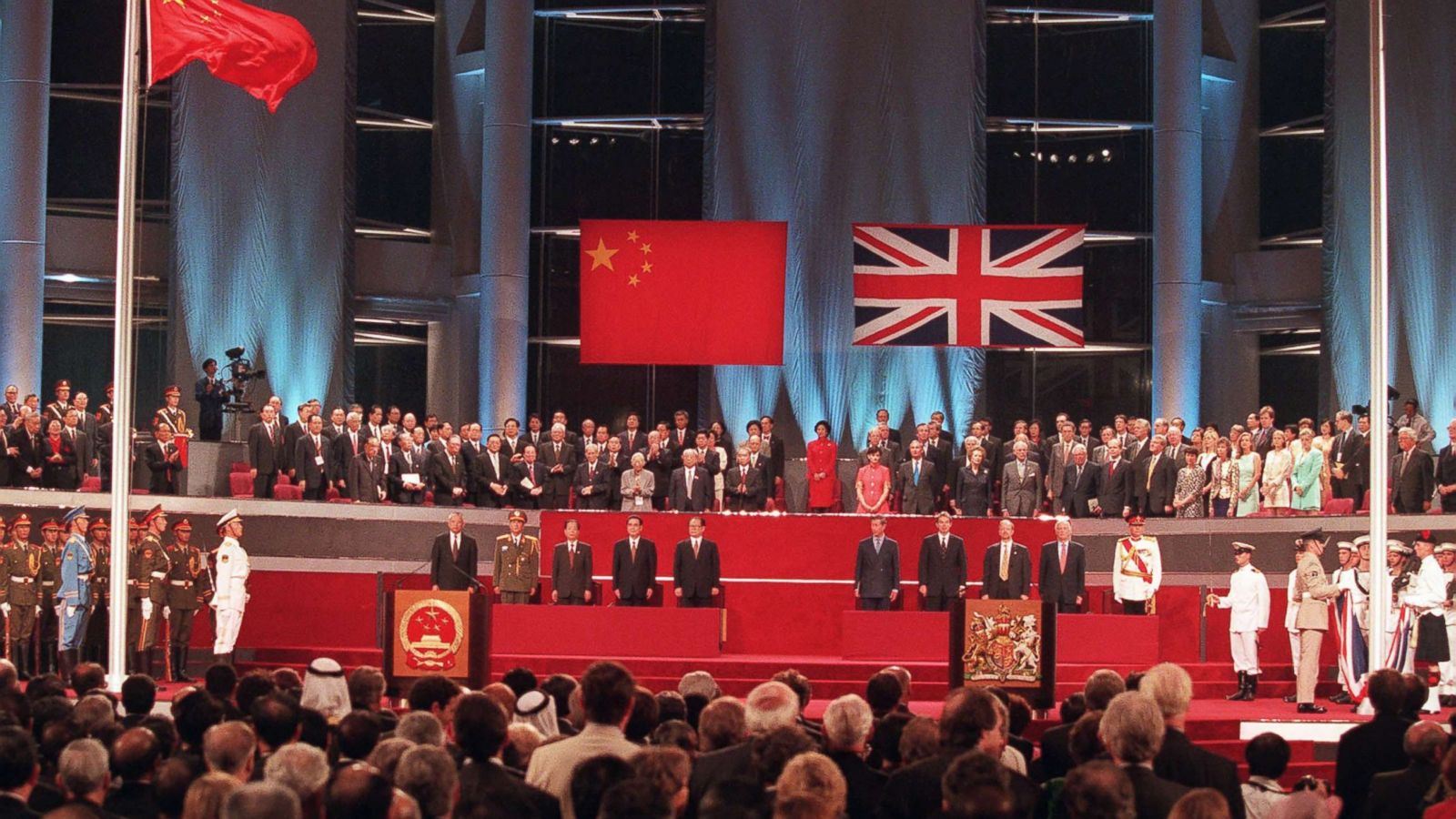
Joshua was born in Hong Kong on Oct. 13, 1996, less than a year before the city passed from British to Chinese sovereignty — the biggest turning point in its contemporary history. He was too young to remember the handover, but the political agreements created around it — “One Country, Two Systems” — was the world he inherited.
Explainer: “One Country, Two Systems”
On July 1, 1997, Britain handed Hong Kong back to the Chinese government after 156 years of colonial rule. Since then, the Hong Kong Special Administrative Region (HKSAR) has been governed under the “One Country, Two Systems” framework, in which Hong Kong maintains a high degree of autonomy and retains its capitalist economy, common-law legal system, courts, currency, and many existing social orders, including freedom of speech, assembly, association, and religion. These principles were subsequently incorporated into the Basic Law, which is recognized as Hong Kong’s mini-constitution.
Under the Sino-British Joint Declaration of 1984 — a legally binding treaty that laid out the terms of the handover — China’s authoritarian government had promised that Hong Kong would be able to enjoy democratic freedoms and civil liberties for 50 years, until 2047. In 1997, the British government transferred sovereignty on those terms, expecting that with the opening of China’s trade, the Chinese government would democratize and Hong Kong’s liberties would be preserved.
Joshua grew up in a middle-class Christian family. From an early age, his father took him to visit low-income families, partitioned flats, and neighborhood shops. He remembered his father watching a documentary on China’s underground Christianity with tears in his eyes. These experiences left Joshua with questions that would ultimately push him toward a public life: Why could some people in Hong Kong live with relative comfort while others struggled? Why could people in Hong Kong enjoy freedoms that were restricted across the border?
Still, Joshua describes his early life as little more than eating, playing video games, sleeping, and studying. School wasn’t always easy. He was diagnosed with dyslexia at age 7. Struggling with dictation and copying text, he did not fit neatly into the conventional image of academic success.
He was, however, quick to question rules and challenge explanations that didn’t make sense to him. In secondary school, he and his classmates used Facebook to complain about the school canteen’s lunches. This early activism, posting about the price and quality of food on social media, introduced him to something larger — how to gather people around a shared grievance and address the responsible institution.
Joshua began following political debates online and reading about Hong Kong’s political system. Within a year, he started organizing.
2011–2012
Students Can Make Change
In 2010, the Hong Kong government proposed a new curriculum, which it called “Moral and National Education,” for primary and secondary schools, claiming it would develop students’ values, knowledge of China, and sense of national identity. When the government issued the curriculum for consultation in 2011, students, parents, teachers, and legislators were all concerned that it was promoting loyalty to the Chinese Communist Party (CCP), not critical knowledge about China.
At 14, Joshua was part of the generation the proposed curriculum was intended to shape. He noticed that although adults were debating the proposal, there were no meaningful student campaigns. In response, he and other secondary school students he had met on Facebook co-founded “Scholarism” in May 2011. For Joshua, Scholarism expressed the idea that a student was already a member of society, not merely a “future citizen” who should wait until adulthood before participating in public affairs.
During the consultation period, Scholarism set up booths, held peaceful rallies, distributed flyers, participated in Legislative Council (LegCo) consultations, and collected more than 20,000 signatures opposing the Moral and National Education curriculum, transforming the opposition campaign into a much broader civil society mobilization.
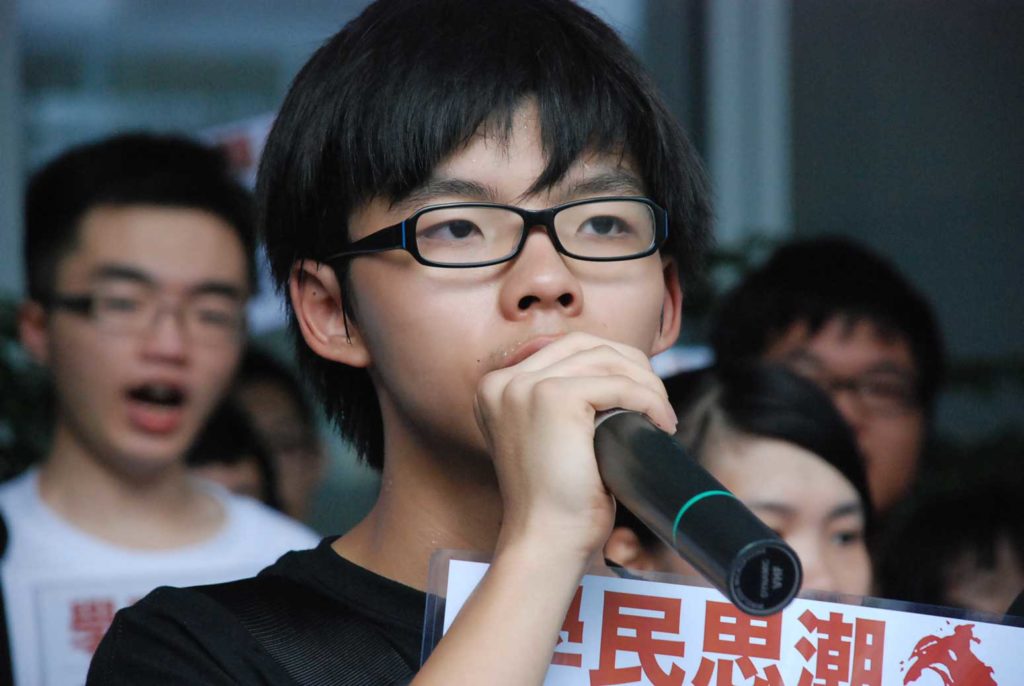
In June 2012, a booklet titled “The China Model,” published by a government-funded organization, intensified public concern and opposition due to its heavy pro-CCP framing. In August, Scholarism began an occupation outside the government headquarters. It started with roughly 80 students in 20 tents, but escalated quickly when three Scholarism members began a hunger strike. Students came after school, and parents and other supporters joined in. At its peak, the protest saw an estimated 120,000 citizens gathered in solidarity.
On Sept. 8, the government conceded. Chief Executive Leung Chun-ying announced that schools would no longer face a deadline to introduce Moral and National Education, and that the government would allow schools to decide when, how, and whether to introduce it at all. One month later, the Education Bureau formally shelved its implementation.
For Joshua, the result was formative: He learned that organized student pressure could make the government retreat. And he carried this lesson with him as the years progressed.
2013
Who Gets Onto The Ballot
In 2013, Hong Kong was approaching a looming decision. Beijing had set 2017 as a deadline for Article 45 of the Basic Law that promised universal suffrage as the “ultimate aim” for selecting Hong Kong’s chief executive. However, nobody knew what the ballot would actually look like. The 2012 chief executive election had been decided by a 1,200-member Election Committee, not the public at large.
Seeing an opportunity to organize in support of a popular vote, Scholarism decided not to dissolve and, by early 2013, shifted its efforts toward the debate over who got on the ballot. Joshua argued that universal suffrage would mean little if a small nominating body could exclude candidates before election day. Scholarism, therefore, backed a civic nomination process that would allow ordinary voters to nominate candidates directly.
However, the Basic Law states that candidates must be nominated by a “broadly representative nominating committee.” Joshua’s stance (and Scholarism’s) therefore faced disagreement even within the broader pro-democracy camp. Traditional moderate democrats and several pan-democratic parties were concerned that a push for civic nomination would cause direct confrontation with Beijing as a violation of the Basic Law.
At 17, Joshua was no longer simply a secondary school student fighting to change individual policies. With Scholarism, he was taking an independent and relatively uncompromising position, pushing for civic nomination as a central objective of the 2017 reform campaign.
2014
The Umbrella Movement
In August 2014, Beijing set out a highly restrictive framework, known as the “8.31 Decision,” for the 2017 election, intending to slam the door on demands for a popular vote. The 8.31 Decision ostensibly permitted all eligible Hong Kong voters to choose the chief executive by “one person, one vote” — but before voters saw the ballot, a nominating committee would select two or three candidates, and each candidate needed the support of more than half of the committee. Pro-democracy groups viewed this decision as a direct violation of the “One Country, Two Systems” framework.
For Joshua, the 8.31 Decision confirmed the problem he had spent the previous year warning people about. Hong Kongers might eventually be allowed to vote, but this filtering of candidates would eliminate any that were deemed unacceptable to Beijing.
In early September, Joshua returned to student organizing. Scholarism members stood outside secondary schools, explaining civic nomination to teenagers and handing out leaflets calling for a class boycott. Meanwhile, members of the Hong Kong Federation of Students, including Alex Chow and Nathan Law, were mobilizing university students.
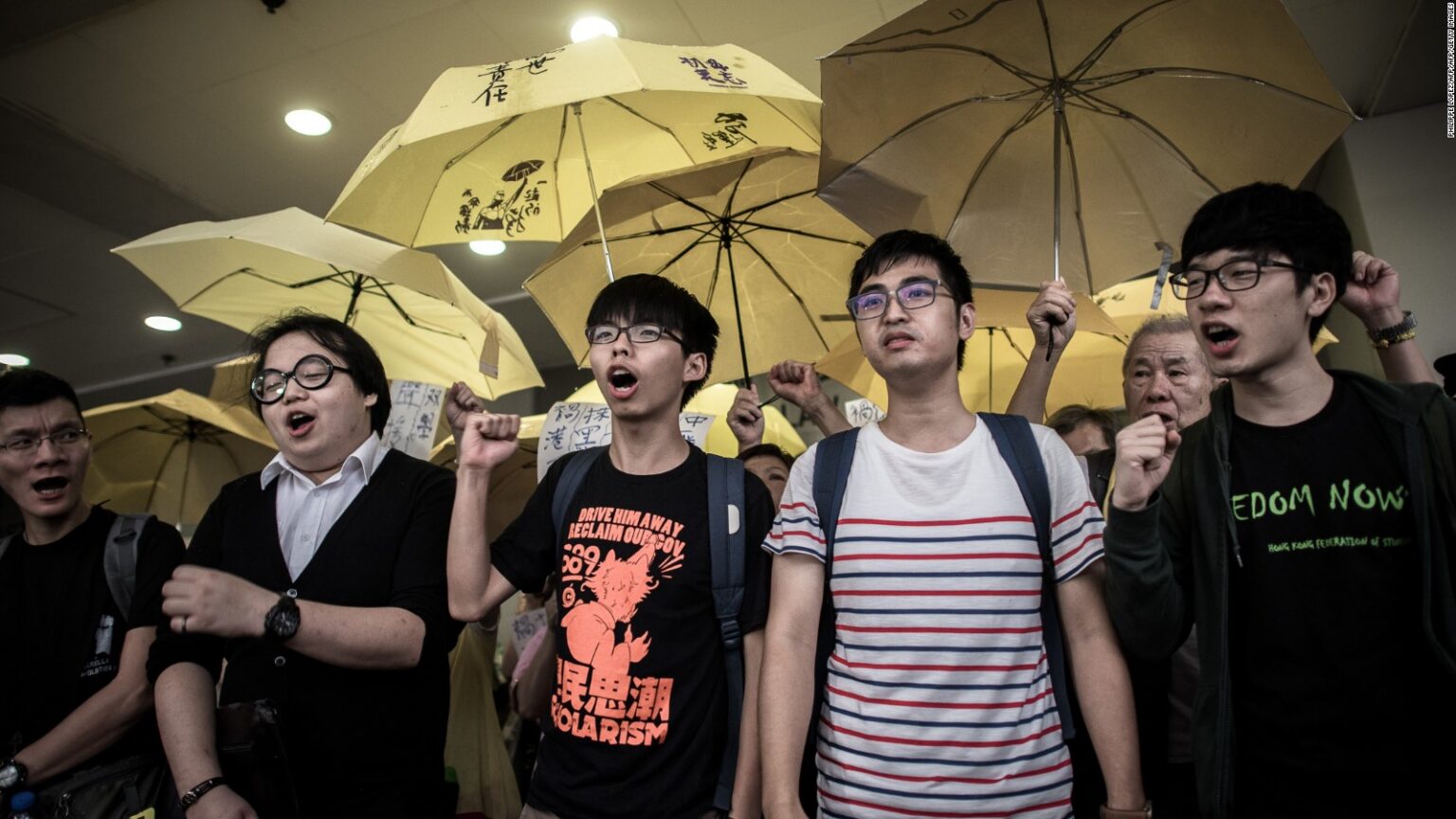
On Sept. 26, the two groups held a rally outside the Central Government Complex in Admiralty, calling for the government to reverse the 8.31 Decision and secure universal suffrage. The forecourt of the government headquarters had been the scene of demonstrations against the Moral and National Education curriculum. Activists called it Civic Square. But by 2014, it had been fenced off, and the government rejected the students’ application to assemble there. “Reclaim Civic Square” was, therefore, another immediate tactical demand.
That night, as the authorized rally was ending, Joshua stood onstage and called on people to enter the square. He ran toward the forecourt and climbed over the fence. Others followed. Security guards and police tried to stop them, and scuffles broke out. Joshua was arrested.
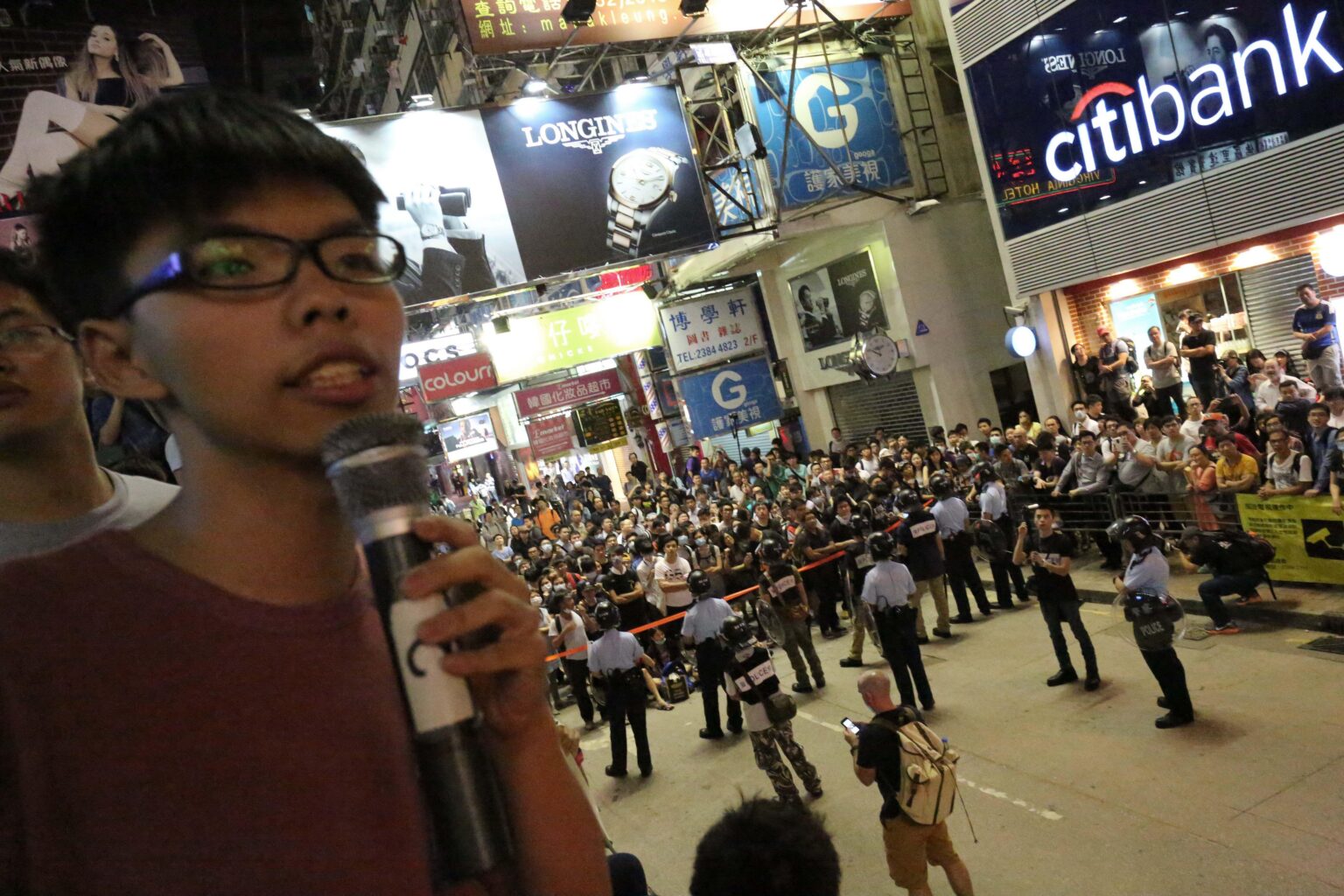
Joshua was detained for 46 hours, his first detention of many. While he was behind bars, the protest evolved into a mass movement.
Tens of thousands of people tried to reach the government complex to show support, and other democracy groups joined in, including Occupy Central with Love and Peace. On Sept. 28, riot police deployed tear gas and pepper spray against the demonstrators. Protesters opened umbrellas to protect themselves, turning that everyday item into a global symbol of peaceful resistance. The heavy-handed police response backfired, causing public outrage to explode. Demonstrators began occupying major thoroughfares and financial hubs across Hong Kong, setting up supply stations, study areas, and barricades.
This was the start of the 79-day occupation known as the Umbrella Movement.
Joshua was released from detention on Sept. 28 to find a much larger movement than he had helped set in motion. He continued to speak at rallies, give interviews, and help maintain the student-led campaign. International reporters portrayed him as the face of the Hong Kong protesters.
He turned 18 on Oct. 13, 2014, old enough to vote for the first time, while occupying the streets and demanding more meaningful choices at the ballot box. His three wishes were for the protests to remain peaceful, the protestors to remain determined, and the 8.31 Decision to be withdrawn so Hong Kong could achieve genuine universal suffrage.
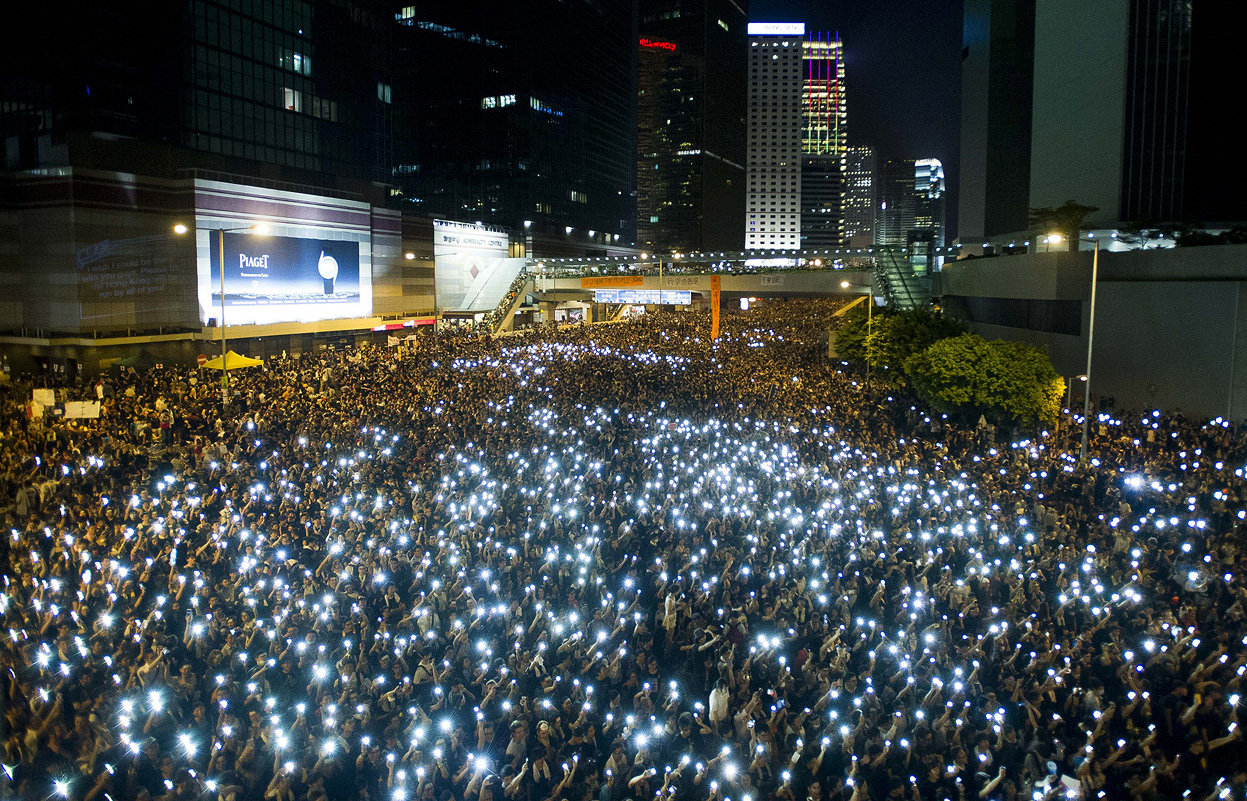
As the weeks passed, crowds were thinning and public support for continued blockades was weakening. Some fellow student leaders secured a dialogue with then Chief Secretary Carrie Lam, but reached no agreement on the central question of genuine universal suffrage. Transportation operators obtained court orders requiring protestors to leave the occupied sections of Mong Kok, and on Nov. 26, police and bailiffs moved to clear the barricades and tents. Joshua went to ensure the safety of protesters and was arrested along with more than 100 others.
On Dec. 1, Joshua and two other members of Scholarism began a new hunger strike — aiming to restart dialogue with Chief Secretary Lam about the constitutional reform process — but ended the strike after 108 hours on medical advice. Not long after, the main occupation of the Admiralty was fully cleared. The 8.31 Decision remained in place.
The Umbrella Movement had given Joshua a much larger public platform, but this time, he saw the limits of mass mobilization when confronting the political boundaries set by Beijing. He left the occupation far more famous than he entered it and with a new focus — how to turn political mobilization into real institutional power.
2015–2016
From the Streets to a Political Party
As 2015 began, the government began investigating the leaders of the Umbrella Movement. For his role in the Civic Square protest of Sept. 26, 2014, Joshua was charged with participating in an unlawful assembly and inciting others to join it.
Scholarism still had roughly 300 members, mostly secondary school students. In May 2015, following intense scrutiny and heavy workloads, none of its members were willing to run for the position of convenor. Joshua reluctantly stood again. But leading Scholarism after the Umbrella Movement was tough: He had to anticipate arrest, attacks from opposition political parties and rival factions within the pan-democratic movement, and even potential retaliation from Beijing.
Joshua’s school and private life were already hard to separate. Now, studying politics and public administration at the Open University of Hong Kong, he barely knew his classmates. Scholarism consumed almost all of his time outside classes, family, and his relationship — which he described as part of what enabled him to continue. Sometime that summer, an unknown man attacked Joshua and his girlfriend, fellow Scholarism member Tiffany Chin. Both were injured. Joshua suspected a political motive, but the police could not establish one.
2015 was the year that the Umbrella Movement generation, including Joshua, started to ask themselves, “Now what?”
Joshua became more locally focused and began moving toward creating a political party. The November 2015 District Council elections offer an insight. A crop of young Umbrella Soldiers entered electoral politics, with the lesson that if pressuring the government from outside the political system was not enough, perhaps young activists needed to enter the political institutions themselves. Joshua tried, too, but was too young to run for office. On the eve of his 19th birthday in October 2015, he went to the High Court to challenge the age limit, arguing that it unjustifiably restricted the right to stand for election, as protected by the Basic Law. He sought to have the threshold lowered to 18, but he lost.
In March 2016, Scholarism shut down. Joshua, Nathan Law, and Agnes Chow — long-time members of the student group — launched Demosistō, a pro-democracy political organization.
Failing to secure democratization by the 2017 deadline, Demosistō began talking about 2047, the Basic Law’s 50-year expiration date, as the future turning point when Hong Kongers would be able to participate directly in deciding the city’s political future. Demosistō described its position as democratic “self-determination” and planned to contest the September LegCo election.
Nathan ran as the party’s chairperson and candidate, and Joshua campaigned alongside him. On Sept. 4, 2016, Nathan received 50,818 votes and won a LegCo seat at the age of 23, becoming the youngest person ever elected at the time. This was a major success for Demosistō, especially with increasing pressure from the government.
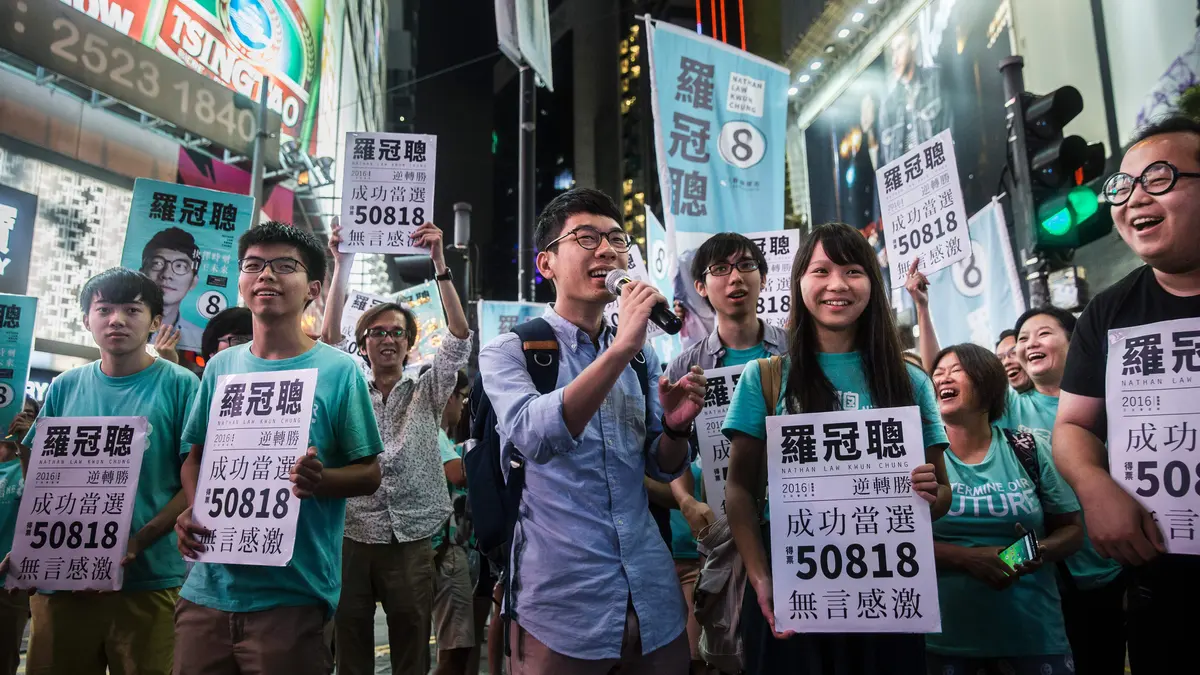
Joshua Wong, with Nathan Law and Agnes Chow / AFP
Beijing was already drawing a red line around the growing independence movement, and several openly pro-independence candidates had been prevented from standing. By late November, Beijing hardened its message, collapsing self-determination — the core Demosistō concept — into the same prohibited political category, repeatedly rebutting Joshua by claiming that calls for self-determination amounted to openly advocating for Hong Kong’s independence.
On Oct. 12, Nathan took his oath of office, but subtly altered his delivery. He first quoted Gandhi, saying, “You can chain me … but you will never imprison my mind,” and then raised his intonation while pronouncing “People’s Republic of China,” making it sound like a question. His oath was accepted that day. But after Beijing issued an interpretation of the Basic Law on oath-taking, the HKSAR government took him to court, and in July 2017, the High Court ruled his oath invalid and disqualified him from LegCo, along with three other pro-democracy lawmakers. Demosistō had lost its only legislative seat.
2017–2018
First Cell
Joshua’s political strategy had not managed to create a durable institutional foothold. Meanwhile, prosecution around the Civic Square and Mong Kok protests of 2014 caught up with him.
He had originally been sentenced to 80 hours of community service for the Civic Square protest, but the Department of Justice sought a review, arguing that the sentence was too lenient. On Aug. 17, 2017, the Court of Appeal replaced Joshua’s community service order with six months’ imprisonment.
As officers led him from court, he called back to supporters, “Hong Kong people, carry on.”
His first imprisonment was brief. He was granted bail in October, pending an appeal, and the sentence was quashed in February 2018. At that stage, Joshua observed prison through an almost ethnographic lens. He described cleaning up after meals, joking that he barely did that at home. He read Nelson Mandela’s autobiography and Apple Daily, a now-defunct pro-democracy media outlet. He said disciplinary drills were hard, but reflected,

Their logic is that if you learn to obey orders inside, you will learn to abide by the law outside. But I don’t think doing foot drills well inside translates to following the law outside.
Then came the charges for the Mong Kok protest. In January 2018, Joshua was sentenced to another three months for criminal contempt for obstructing the enforcement of a court injunction. In May 2019, the Court of Appeal upheld a finding of contempt but reduced its sentence from three months to two. Joshua went back to prison.
2019
The Extradition Bill
2019 was a big year for Hong Kong. It started quietly, but a 2018 murder case in Taiwan catapulted unresolved political tensions into the spotlight. In February 2018, a Hong Kong man allegedly killed his girlfriend while they were in Taiwan, then returned to Hong Kong. He couldn’t be sent back to Taiwan for trial because no extradition agreement existed. In February 2019, the HKSAR government responded with an extradition bill proposing to allow case-by-case transfers to jurisdictions without such agreements, including China.
For Hong Kongers, the proposed bill would, if passed, firmly sever the legal firewall separating the city from China. Some viewed it as the tip of an iceberg, and some saw it as the final straw. The possibility of an open route for transferring Hong Kongers into a CCP-controlled justice system led to society-wide concern.
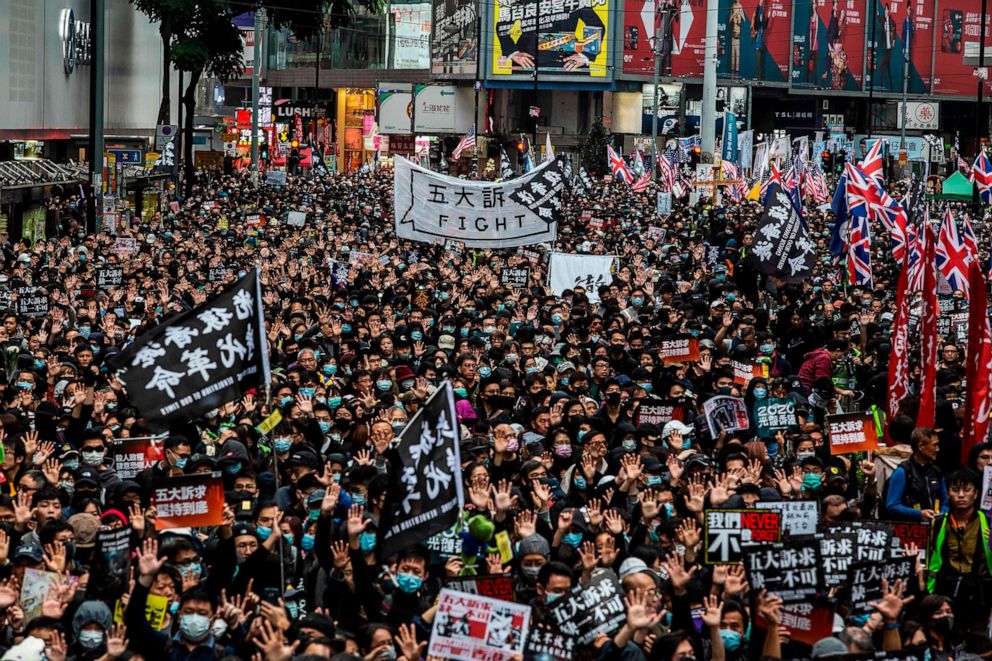
On June 9, an estimated 1 million Hong Kongers peacefully took to the streets to express their discontent with the bill. Three days later, as LegCo prepared for the second reading of the bill, tens of thousands of protestors gathered to prevent the proceedings, but police barricades and blocked traffic made access to the government complex extremely difficult. Toward afternoon, as a small group of protestors tried to breach the police line, riot police were deployed, using excessive measures (including batons, pepper spray, tear gas, and rubber bullets) against the crowd.
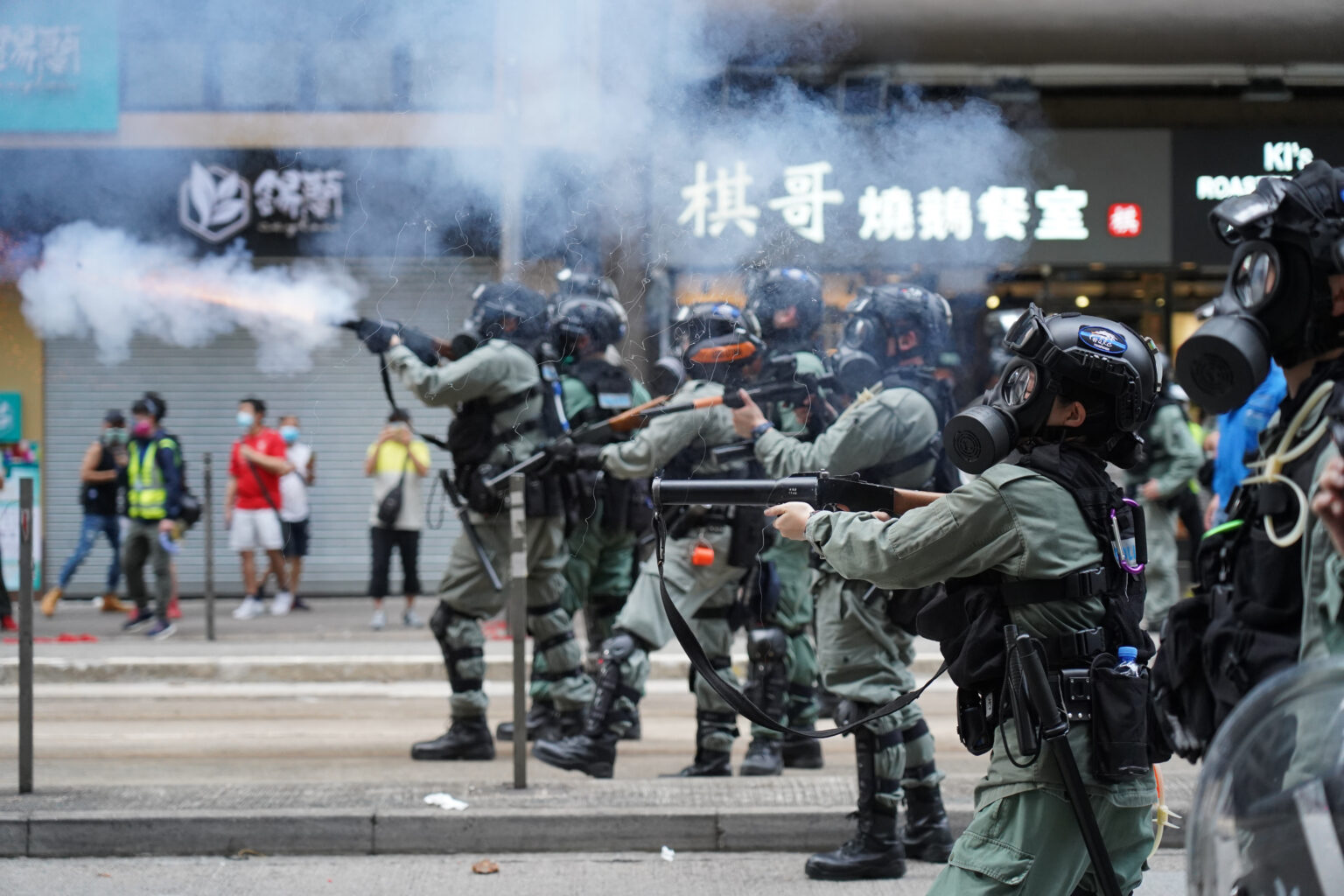
Joshua had opposed the bill before his latest imprisonment, and during a prison visit, Agnes Chow had warned him it might pass before his release. Instead, the mass public resistance forced Carrie Lam, now Hong Kong’s chief executive, to announce on June 15 that her government would suspend (but not withdraw) the legislation. The concession satisfied almost no one, and June 16 saw an even larger protest — an estimated 2 million people marching in black to demand the full withdrawal of the bill.
The movement would soon solidify into a historic rallying cry: “Five Demands, Not One Less.”
Explainer: The Extradition Bill and the “Five Demands”
Before 2019, Hong Kong’s extradition framework relied on long-term bilateral surrender agreements with specific foreign jurisdictions or multilateral international treaties. Case-by-case transfers were technically permitted, but explicitly excluded China, Macau, and Taiwan. The HKSAR government described that exclusion as a “loophole” that the Taiwan murder case had exposed, and claimed the proposed bill would safeguard protections against extradition for political offences and death penalty cases, stressing that the chief executive would decide extradition requests on a case-by-case basis.
These assurances did not quell opposition. Hong Kongers’ calls eventually broadened into “Five Demands” for (1) formal withdrawal of the bill, (2) an independent investigation into police violence, (3) withdrawal of the government’s characterization of the protests as a “riot,” (4) amnesty for arrested protesters, and (5) genuine universal suffrage.
Joshua walked out of prison on June 17. Carrying a stack of books, he went straight to LegCo, joining the protest demanding the bill’s withdrawal and Carrie Lam’s resignation. On June 21, at a protest site outside of Hong Kong police headquarters, he publicly called on the police commissioner to answer for the use of force. On Aug. 30, 2019, he was arrested for this action and charged with inciting and participating in an unauthorized assembly. He was released on HKD$10,000 bail later that day, required to follow a nightly curfew from 11 p.m. to 7 a.m. and to report to the police once a week.
In late 2019, Joshua continued to internationalize Hong Kong’s pro-democracy efforts. In Berlin and Washington, he cast Hong Kong’s struggle as an international test of whether China would honor the city’s promised autonomy.
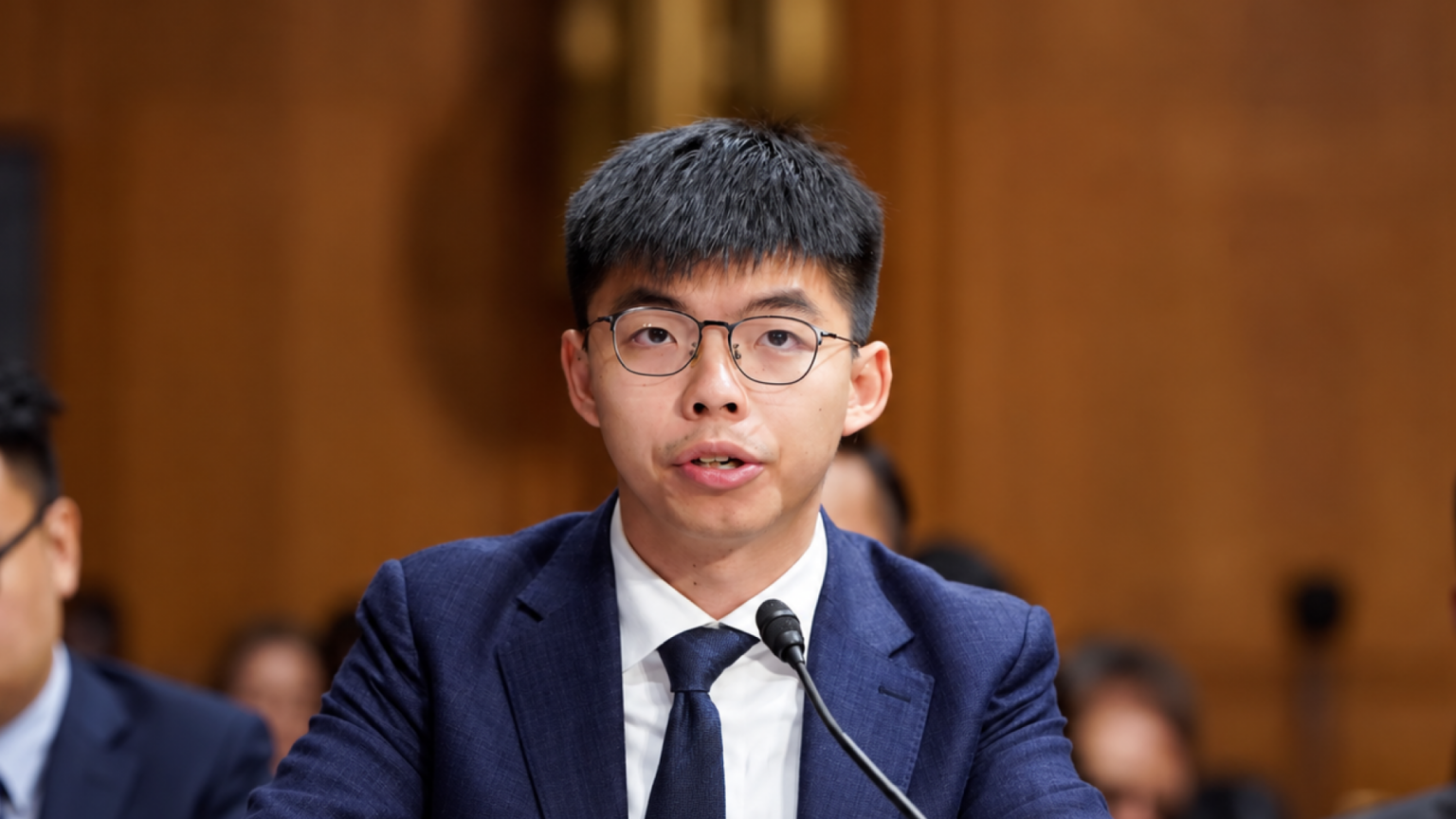
At home, he again tried the ballot box, running for a seat in the District Council election, but his nomination was soon ruled invalid for his support of self-determination. This was exactly what he had been afraid of back in 2013 — that candidates would be politically screened before their names reached the ballot. The election went ahead without him in November, producing record turnout — about 2.94 million people voting — and the pro-democracy camps’ strongest electoral performance. Pro-democracy candidates won 85–86% of the 452 elected seats.
2020
The Last Ballot
With the legislative election scheduled for September 2020, pro-democracy groups were preparing to translate their 2019 electoral momentum into a LegCo majority as an important step toward universal suffrage. To coordinate votes behind the strongest candidate in each constituency, reduce internal competition, and maximize the opposition’s chances of winning the majority, they announced an unofficial primary
Joshua’s next opportunity for a seat at LegCo would come through that effort.
On June 30, however, Beijing enacted the National Security Law (NSL), which enables charges for vaguely defined acts of secession, subversion, terrorism, and collusion with foreign forces. For Joshua, this meant direct legal risk, as he had been meeting with democratic governments and calling for sanctions, and had already declared his candidacy in the unofficial primary.
That same day, Demosistō dissolved. Nathan Law left Hong Kong for the United Kingdom, where he continues his advocacy abroad. Joshua remained, pledging to stay in his home city and continue his political work.
Knowing that the NSL put Joshua at risk of arrest once again, his friends prepared an early birthday surprise for him. Joshua later recalled eating the birthday cake with tears in his eyes, experiencing happiness and dread all at once. He was 23 and had already been imprisoned multiple times. He knew his fear was not an abstraction.
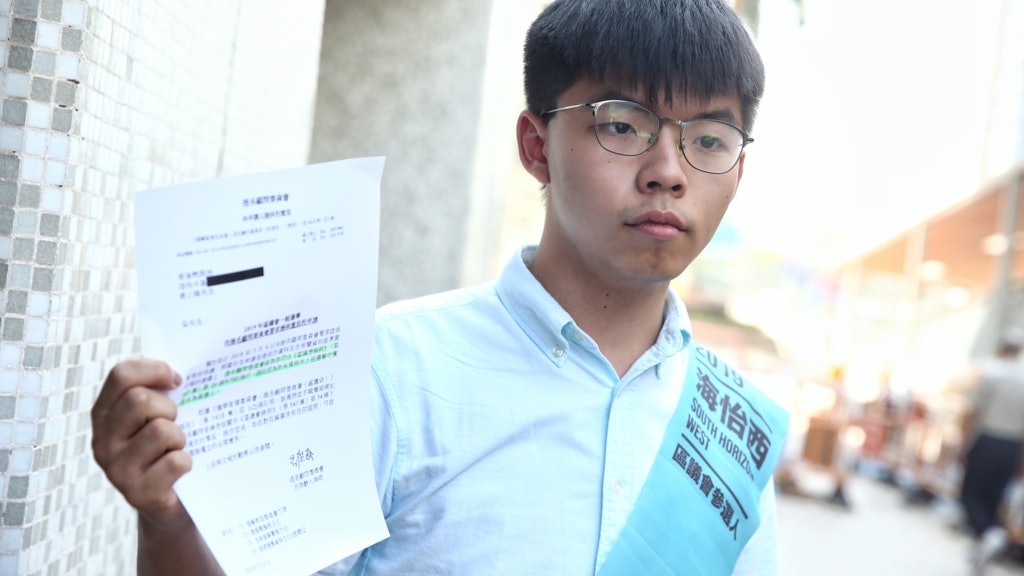
Joshua continued to campaign as an independent candidate, hoping the result would help quantify public opposition to NSL. On July 11 and 12, more than 600,000 people participated in the primary, and Joshua finished first, receiving 31,398 votes. Before voting, he described the primary as a way to “let Beijing know that Hong Kongers never bow down to China.” Afterward, he described the success of a young candidate as reflecting a continuing spirit of resistance.
Because the primary was an unofficial vote, Joshua still had to submit an official nomination to appear on the government-administered ballot and then be assessed on whether he would uphold the Basic Law and pledge allegiance to the HKSAR. On July 30, his nomination was ruled invalid, along with those of 11 others from the pro-democracy camp. The government stated that his opposition to the NSL was one of the reasons.
Reuters
The next day, the government postponed the election, citing the COVID-19 pandemic, preventing the opposition from testing its support in September 2020.
Meanwhile, Joshua’s court cases were multiplying, with at least three distinct protest-related matters hanging over him by autumn: the June 2019 police headquarters protest, an October 2019 anti-mask protest, and the Tiananmen vigil of June 4, 2020.
November 23, 2020
The Last Day of Freedom
On Nov. 23, 2020, Joshua arrived at the West Kowloon Magistrates’ Courts for a six-day trial related to his involvement in the police headquarters protest of June 21, 2019. He told reporters, “I’m prepared for the thin chance of walking free.”
That thin chance evaporated when the Magistrate Court remanded him immediately into custody, pending sentence. On Dec. 2, he received a sentence of 13 and a half months in prison.
National security charges followed shortly after. On Jan. 7, 2021, while still in prison, Joshua was arrested in connection with the unofficial primary election, a day after police arrested 53 pro-democracy figures in the same investigation. The government eventually charged 47 people, Joshua among them, with “conspiracy to commit subversion.” These 47 became known as the Hong Kong 47, or “HK47,” the largest case under the NSL. Joshua, classified as an active participant, was sentenced to 56 months (4 years and 8 months).
June 2025
Charge Stacking
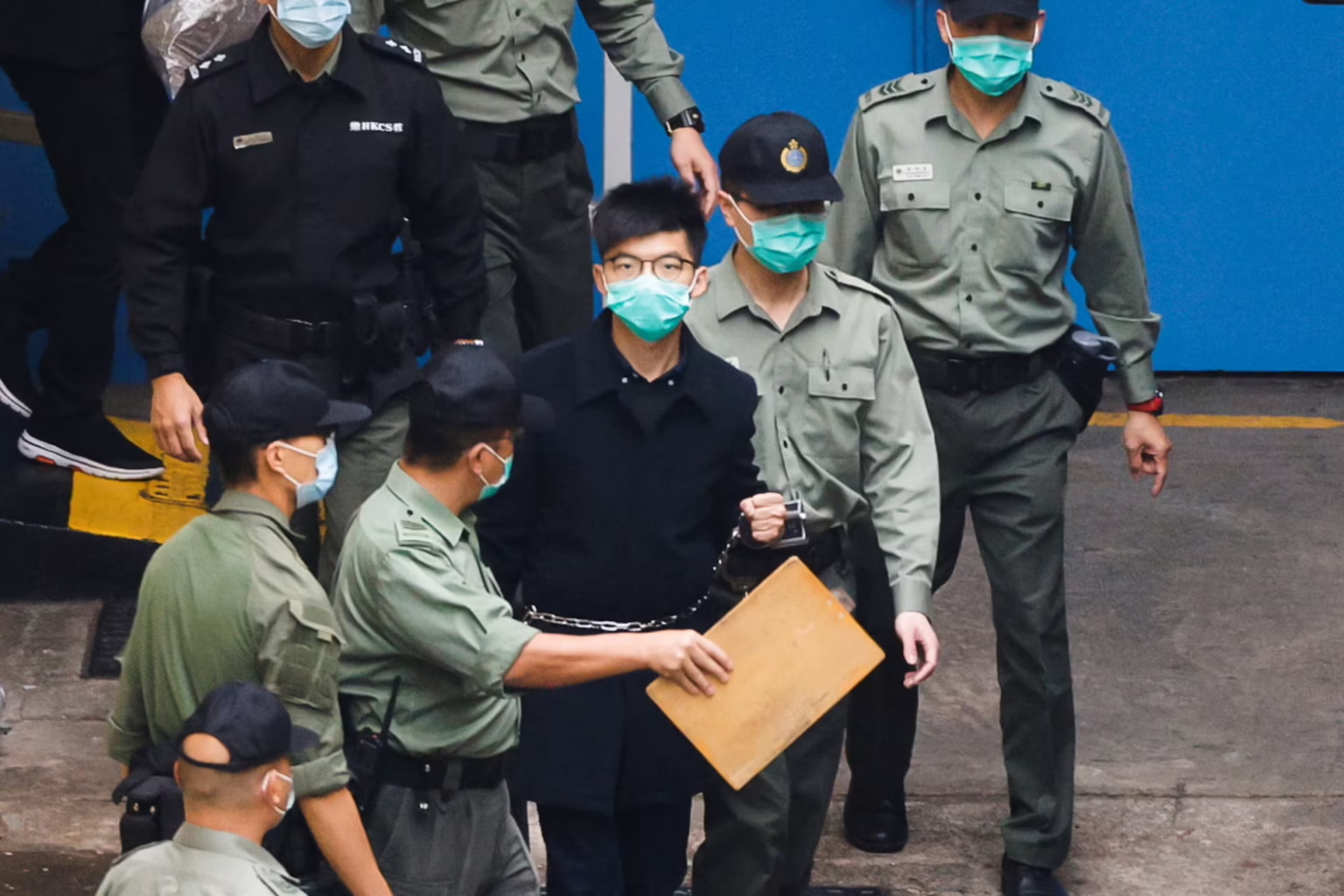
On June 6, 2025, while he was still serving his HK47 sentence, national security police arrested Joshua yet again under the NSL, this time for “collusion with foreign forces.” The prosecutors alleged that after the NSL took effect, Joshua had continued working with Nathan Law and others to seek foreign sanctions or other hostile measures against Hong Kong and China, using foreign media and social media to support that effort — an effort protected under international law, which remains in force in Hong Kong through the Basic Law.
Joshua pleaded guilty in September 2026. He now awaits his sentencing.
For the past six years in prison, Joshua has continued writing. His friends have remained present — some in Hong Kong, but most in exile. On his 25th birthday, he wrote,
Thanks to my parents’ kindness and tolerance, I have become the “Joshua Wong” that I am known as after almost a third of my life. Even in solitary confinement, I was able to experience how loved ones and I supported each other through letters. To be able to love and be loved in such a situation is an unparalleled joy amidst all these adversities. This year, for my birthday, I wish to grow up and that one day I will see everyone I remember and miss again.
On his 18th birthday, Joshua shared an umbrella-shaped cake with fellow protesters as they occupied the Central Government Complex in Admiralty.
On his 21st birthday, his friends sang him birthday songs across the dock as officers took him from prison to the High Court for the hearing on the Mong Kok protest.
As Joshua turned 26, his friends celebrated his birthday without him with a cake decorated with Gundam and Psyduck — two treasured symbols of his childhood.
It’s as if Joshua’s life and Hong Kong’s political clock have coincided, carrying each other along the way. When Joshua was first in prison, he remarked that more than 20 political prisoners were already behind bars. Today, he is one of almost 2,000 prisoners of conscience in Hong Kong.
Today, October 13, Joshua Wong turns 30.