
Download
If you would like to save this report, you can always download it here as a PDF.
Introduction
Throughout history, authoritarian leaders and governments have reached across borders to violently silence dissent abroad. In the 21st century, autocrats have weaponized technological innovation and the new mechanisms of globalization to expand their capacity to target dissidents and critics around the world. As the extent and severity of transnational repression grow, there is an increasing need to formulate effective responses and strategies to protect dissidents globally. With the publication of “No Safe Distance,” the Human Rights Foundation (HRF) seeks to contribute to new and ongoing efforts to identify and track trends and incidents of transnational repression, and develop analytical frameworks that lay bare the mechanisms by which authoritarian governments wield power over dissidents abroad.

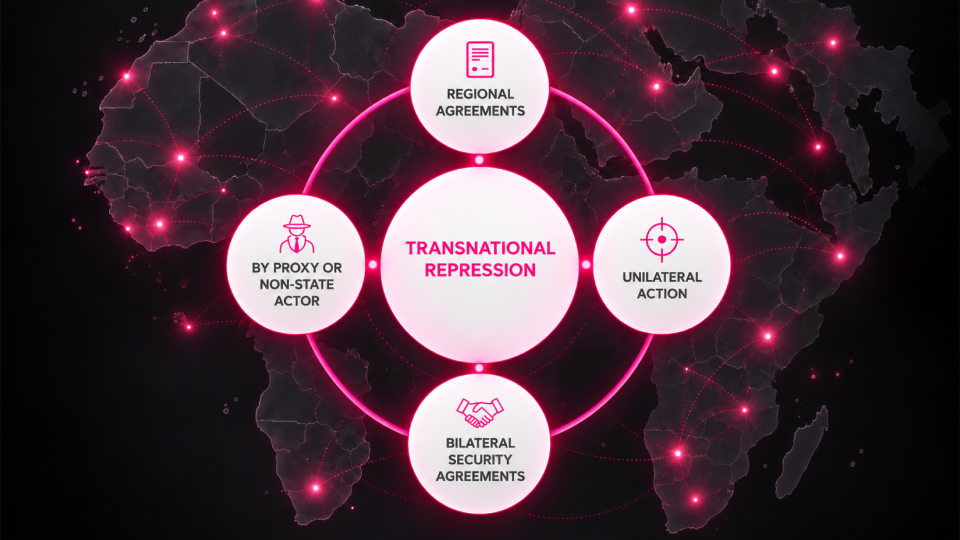
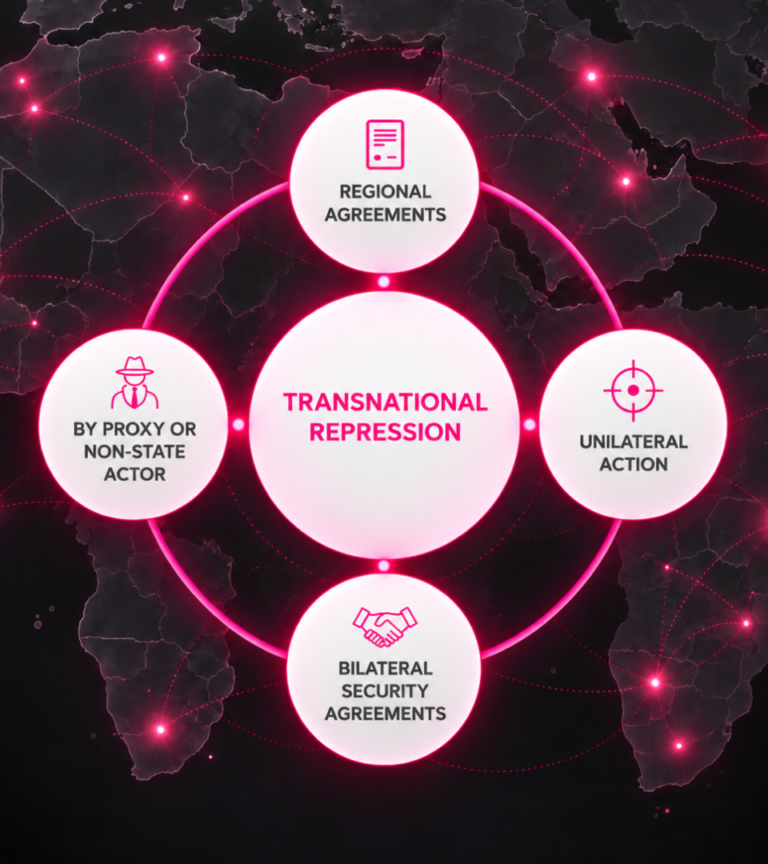
In this report, HRF highlights a shared toolset of repressive practices that has emerged as authoritarian governments increasingly learn from each other and collaborate across borders. These repressive practices can be classified into four main categories: unilateral transnational repression, bilateral transnational repression, multilateral or regional transnational repression, and transnational repression executed via non-state actors. Each case presents commonalities and variations in repressive tactics across regions. Moreover, given the dynamic and changing nature of global authoritarian collaboration, these tactics will continue to evolve. A summary table at the end of the narrative compares regime tactics discussed in this report.
Although an official, intentionally agreed-upon definition of transnational repression does not yet exist, useful working definitions have been proposed by human rights experts, academics, and civil society leaders. In this report, HRF defines transnational repression as the deliberate deployment of coercive, punitive, or restrictive actions across sovereign borders by state actors or state-allied non-state actors to silence, control, or deter political dissidents, exiles, and diaspora communities who challenge the regime’s authority. For this definition, HRF chiefly draws on the definition offered by the Office of the United Nations High Commissioner for Human Rights, which characterizes transnational repression as “acts conducted or directed by a State, or its proxy, to deter, silence or punish dissent, criticism or human rights advocacy towards it, expressed from outside its territory.”1 HRF also takes into account the more extensive working definition from the International Service for Human Rights (ISHR), which specifies that transnational repression “targets individuals directly or indirectly and often aims at instilling a broader chilling effect on advocacy and dissent. It is the act’s intended impact, rather than the act itself, that is extraterritorial or transnational.”2 ISHR notes that “particularly vulnerable are nationals or former nationals, members of diaspora communities and those living in exile.”3
The regional context of transnational repression is undergoing structural expansion, characterized by the democratization of extraterritorial coercion. According to the Tyranny Tracker, HRF’s political regime classification index, 91% of Africa’s population lives under authoritarian regimes.4 Only about 9% live under democratic governments, while 37% live under hybrid authoritarian regimes and 54% live under fully authoritarian regimes. In this expansion, African states are emerging as highly active — and innovative — practitioners of transnational repression. The region’s concentration of authoritarian rule creates a permissive environment for this trend, enabling the structural expansion of transnational repression, marked by the diffusion of extraterritorial coercion as regimes learn from one another and increasingly collaborate across borders.
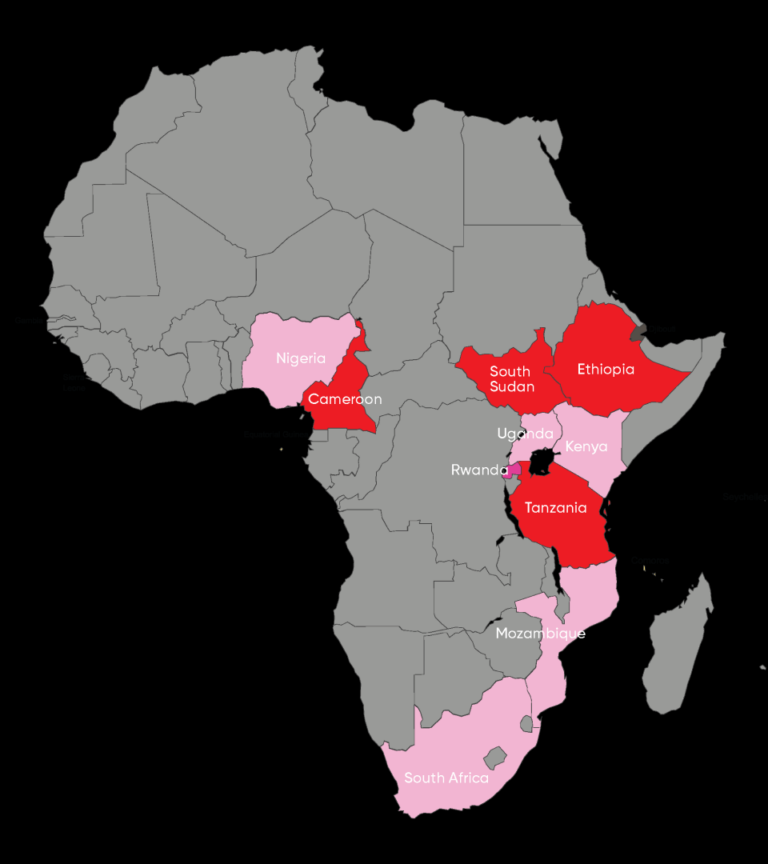
Across Africa and at the subregional level, East Africa stands out as a particularly acute site of transnational repression.5 The region has increasingly been described as a hotspot on the continent with a “mutual transnational repression arrangement.”6 Within the region, regimes have shown an ability to reach critics, opponents, defectors, journalists, and refugees across borders through a mix of formal legal instruments, police and intelligence cooperation, immigration control, counterterrorism practices, embassy-linked influence, diaspora organizations, and deniable proxy networks.
Actors and Perpetrators
In cases of transnational repression in Africa, coercion is typically exercised through concrete institutional chains with a wider ecology of actors. These campaigns are not the result of rogue security agents acting in isolation. Rather, they are state-directed leadership crimes coordinated from the highest levels of executive authority — including, for example, national intelligence services, diplomatic missions, police special branches, immigration authorities, prosecutors, and ruling-party structures overseas.
The executive-security complex of the origin state — including the presidency, ruling party, intelligence services, police, military, immigration authorities, and prosecutorial institutions — is the first actor. The same actors that control dissent at home attempt to extend that control abroad.7 They define dissent as a security threat, produce the political labels that justify pursuit, and decide whether critics abroad should be monitored, intimidated, discredited, returned, or neutralized.8 In many African contexts, this executive-security complex is especially important because coercive power is often centralized around regime survival, rather than dispersed through genuinely independent institutions. Therefore, transnational repression becomes an extension of domestic authoritarian governance.
The second actor is the diplomatic and consular apparatus.9 Embassies and consulates are formally designed to protect citizens abroad, but in contexts of transnational repression, they can become instruments of surveillance, documentary control, and political gatekeeping. They can monitor diaspora meetings, deny or delay passports, gather information on critics, pressure families, cultivate loyalist diaspora networks, and help translate political hostility into administrative vulnerability. By extension, this allows the origin state to act, to some extent, through paperwork rather than open violence.
In bilateral transnational repression, the host state emerges as the third actor. Although the host state is not always the perpetrator in a direct sense, it is often a decisive enabler.10 Its role can range from active collaboration to strategic silence, bureaucratic neglect, weak protection, or misclassification of transnational repression as an ordinary immigration, policing, or community dispute. This is where regional transnational repression in Africa becomes complex. The host state may claim sovereign control over its territory while allowing another regime’s coercive interests to operate inside its borders. Its police, courts, immigration offices, asylum systems, and local officials become important not only because of what they do, but also because of what they fail to prevent.
Correspondingly, multilateral security frameworks are the other actors.11 Transnational repression in Africa draws strength from regional habits of security cooperation, mutual regime protection, border control, intelligence sharing, and anti-terror or anti-crime frameworks. Existing regional politics in Africa, where sovereignty, regime solidarity, and security cooperation often carry high political value, can be used to portray dissidents as fugitives, criminals, rebels, terrorists, or threats to public order.12 This allows repression to travel through institutional channels that appear lawful or routine.
The contemporary landscape of transnational repression in Africa lies in the gray zone between official authority and non-state actors. It is also increasingly characterized by the pluralization and privatization of repression in a deliberate effort to systematically obscure the hand of the state. Therefore, repressive acts have also been carried out through other non-state actors, such as proxies, private companies, criminal networks, and paramilitary groups. Their importance lies in their ambiguity; their association is deliberately organized in ways that blur the line between formal state action and deniable coercion.
The diaspora intermediary is the fifth actor.13 Transnational repression is not solely vertical, from state to dissent. It also operates just as powerfully as a lateral phenomenon, spread through diaspora community ecosystems. This includes ruling-party branches abroad, embassy-linked associations, informants, community leaders, hometown networks, student groups, religious actors, or business figures with close ties to the origin state. Their role is often informal but powerful: They monitor who speaks, who attends meetings, who posts online, who sends money, who refuses to participate in state-sponsored events, and who remains connected to opposition networks. By weaponizing these overlapping social matrices, the regime effectively turns the exile’s essential support networks into conduits of horizontal surveillance.
Targets and Victims
Transnational repression in Africa often targets a diverse spectrum of civic, political, and social actors. Its targets are not selected randomly, but according to the threat they are perceived to pose to regime survival, narrative control, political legitimacy, or the cohesion of ruling networks. The relevant question for an authoritarian regime is not simply whether an exile is openly oppositional, but whether that person can convert life abroad into political influence by documenting abuses, speaking to foreign media, mobilizing diaspora communities, supporting opposition networks, exposing corruption, or presenting an alternative account of the state to international audiences. In short, the higher an individual’s perceived capacity to generate political costs for the regime, the more likely they are to attract direct attention.
At the top of the risk hierarchy are high-profile dissidents: human rights defenders, journalists, opposition leaders, prominent activists, and senior regime defectors. High-profile dissidents are often targeted not because of their public visibility, but because of the unique political assets they possess. For example, journalists and human rights defenders can expose violations and sustain international scrutiny. Opposition leaders can organize supporters and claim an alternative political mandate. Former officials, intelligence personnel, military figures, party insiders, and other elite defectors may pose a particular challenge if they possess knowledge of corruption, security practices, elite rivalries, financial networks, or internal decision-making.
This does not imply, however, that transnational repression should be understood solely as the pursuit of prominent dissidents. Regimes have also targeted individuals and groups whose significance lies in their potential, rather than their current prominence. Through preventive repression, where the objective is not to punish established dissent but to stop political voices from emerging in the first place, regimes have also targeted low-profile activists, students, refugees, recent migrants, cultural figures, professionals, and members of diaspora associations. They are monitored, intimidated, recruited, isolated, or deterred before they can develop into more influential critics.
This preventive approach is particularly important in the African regional setting because exile often does not sever social or political connections to the country of origin. Refugees, students, and migrants may remain deeply embedded in cross-border family obligations, community networks, remittance systems, hometown associations, or religious institutions. They may not identify themselves as dissidents, but they can still become politically relevant through a social media post, participation in a protest, contact with an opposition figure, public criticism of a state institution, or refusal to participate in embassy-linked or ruling-party activities. Their vulnerability comes not only from what they have done, but also from what they might be capable of doing.
This broadens the category of the victim. The direct target may be an activist abroad, but the victims often extend well beyond that individual. Family members remaining in the country of origin may face questioning, surveillance, threats, loss of employment, restrictions on movement, harassment, or arbitrary legal pressure. Friends, colleagues, lawyers, community organizers, and diaspora associates may also be drawn into the coercive field. They become indirect victims because the purpose of targeting them is to discipline the primary target.
As a result, transnational repression produces collective victims. Regimes target prominent activists, journalists, or former officials, but the intended audience is often much larger. The purpose is to create a warning effect across an entire exile community.14 When members of a diaspora see a critic threatened, detained, discredited, rendered, or punished through family members, they may alter their own behavior, even when they have not been contacted directly. They might avoid protests, withdraw from associations, cease posting online, refuse interviews, limit contact with activists, or distance themselves from political causes. Transnational repression, in other words, operates through anticipation as much as through direct coercion.
Enabling Mechanisms of Transnational Repression in Africa
The transnational repression ecosystem in Africa is shaped primarily by three enabling conditions: proximate exile, weak or politicized host-state protection, and coercive diasporic dependence.
1. Proximate Exile
2. Weak or Politicized Host-State Protection
a. Authoritarian Interoperability
Authoritarian interoperability, in this context, refers to authoritarian and hybrid regimes’ ability to connect, coordinate, and integrate their repressive systems across borders. It often involves security cooperation, institutional interoperability through regional entities, legal and administrative cooperation (such as extradition requests, immigration laws, or terrorism charges), and digital interoperability (including surveillance, spyware, and censorship to target opponents).
Hence, authoritarian interoperability refers not only to regimes’ growing capacity to align their legal, security, digital, diplomatic, and narrative systems to export repression. It is also about the host-state conditions that accommodate, facilitate, or fail to prevent transnational repression. This creates an environment of extralegal collaboration, forming part of the wider infrastructure of authoritarian cooperation.
b. Transactional Sovereignty
Transactional sovereignty captures the political bargain through which a host state selectively relaxes its protective obligations over dissidents in exchange for diplomatic, economic, or security benefits from the origin state. In this arrangement, the host state’s sovereignty, or parts of its protective authority, are strategically leased or used as a negotiable resource that is managed by the executive branch. In regional politics, transactional sovereignty thereby turns dissidents and protection into bargaining chips, making it profitable for the host state to look the other way as dissidents are quietly repressed.
Ironically, transactional sovereignty reveals a paradox at the heart of African regimes’ cooperation on transnational repression. This is because sovereignty — a principle long defended in African regional politics as a shield against external interference — is increasingly being converted into a bargaining instrument. From the Organisation of African Unity to the African Union, sovereignty has been one of the most sensitive organizing principles of African diplomacy, grounded in the protection of territorial integrity, non-interference, and the political autonomy of postcolonial states. Yet in transnational repression cases, the same sovereignty is commodified and selectively relaxed when another regime seeks access to dissidents inside the host state.
c. Legal Limbo
A further mechanism by which host states enable transnational repression — intentionally or through institutional neglect — is the creation of administrative precarity, which asylum and migration scholars often describe as “legal limbo.”15 This is a condition in which unresolved legal status leaves exiles suspended between protection and removability. Without a recognized refugee status, a dissident is legally classified as an undocumented migrant, making them vulnerable to arbitrary detention or deportation on technicalities. This also provides the host state with plausible deniability.
In theory, asylum is meant to transform exile into protection. Yet in practice, slow, overburdened, politicized, or deliberately indifferent asylum systems can produce the opposite effect. They leave exiled dissidents suspended between protection and illegality, physically present in the host country but not fully recognized by it. For dissidents, the absence of a recognized refugee status has serious political consequences that obscure the political character of their exile. Cassien Ntamuhanga’s disappearance in Mozambique illustrates how unresolved asylum status can become a source of acute vulnerability.16 Ntamuhanga fled Rwanda in 2017 and applied for asylum in Mozambique, where he continued to criticize the Rwandan regime. His application was still pending when Mozambican police took him into custody in May 2021. The authorities subsequently denied holding him, and his whereabouts remain unknown.
Therefore, what begins as a question of protection can be manipulated and reframed as a question of compliance through immigration control language such as “unlawful stay,” “breach of residence conditions,” “missing documents,” or “registration failure.” This is where bureaucracy becomes useful to repression. The host state does not necessarily need to collaborate openly with the origin state or publicly endorse the persecution of a critic. It can act through delay, silence, procedural obstruction, or selective enforcement. Seen in this way, the asylum system becomes one of the quiet infrastructures through which transnational repression is accommodated.
More importantly, asylum delay can function as an indirect technology of transnational repression. It does not always operate through visible coercion. Instead, it works by withholding recognition: The dissident is made deportable before any deportation takes place. Their vulnerability lies not only in the actual risk of removal, but in the permanent possibility of removal. This possibility disciplines behavior. An exiled critic with a precarious or fragile legal status in a host country might avoid public protest, reduce media appearances, stop organizing diaspora meetings, or soften criticism of the origin state. In this sense, bureaucratic limbo produces political silence without an explicit threat from the host state.
Administrative precarity also changes the power relationship between the exile and the host state. The dissident becomes dependent on police discretion, immigration officers, asylum boards, court delays, temporary permits, humanitarian exceptions, and political goodwill. Such dependency can be exploited; protection becomes conditional, uncertain, and reversible. The host state can claim to respect refugee law while allowing procedural delays to expose the dissident to harassment, detention, or forced return. The origin state, meanwhile, benefits from this uncertainty because it does not need full cooperation from the host state. It only needs the host government to leave the dissident unprotected enough to be intimidated.
These weaknesses become especially consequential when authorities bypass protection procedures altogether. In December 2017, for example, South Sudanese opposition official Marko Lokidor Lochapo was abducted from Kakuma refugee camp in Kenya, taken to South Sudan, and held without charge for months.17 No extradition or refugee protection procedure was allowed to operate before his transfer.
Host-state protection can also fail through official passivity after a dissident disappears or is attacked. A case in point is that of Guillaume Rutembesa, a prominent Rwandan regime critic living in Nairobi, who disappeared in November 2020.18 His case has not been publicly resolved. Kenyan authorities failed to conduct transparent investigations into his disappearance or into other suspicious attacks on Rwandan refugees and critics. The absence of a transparent investigation further illustrates how inadequate host-state responses can enable transnational repression. Passivity does not necessarily establish the host state’s participation in the original act, but it does weaken accountability, preserve uncertainty, and leave other exiles exposed to similar threats.
3. Coercive Diasporic Dependence
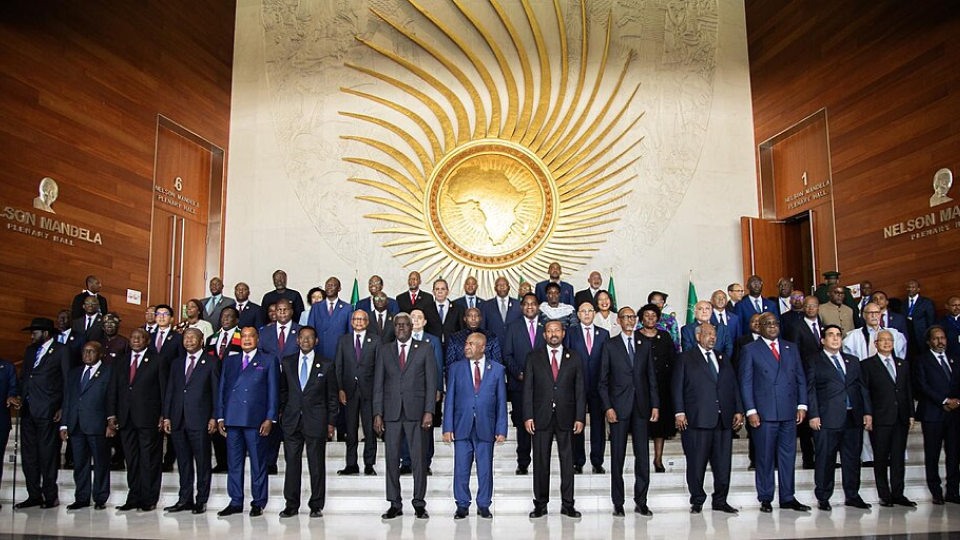
Heads of State and Government in the 37th Ordinary Session of AU Assembly
Photo credit: Johnson Matandi, Wikimedia Commons
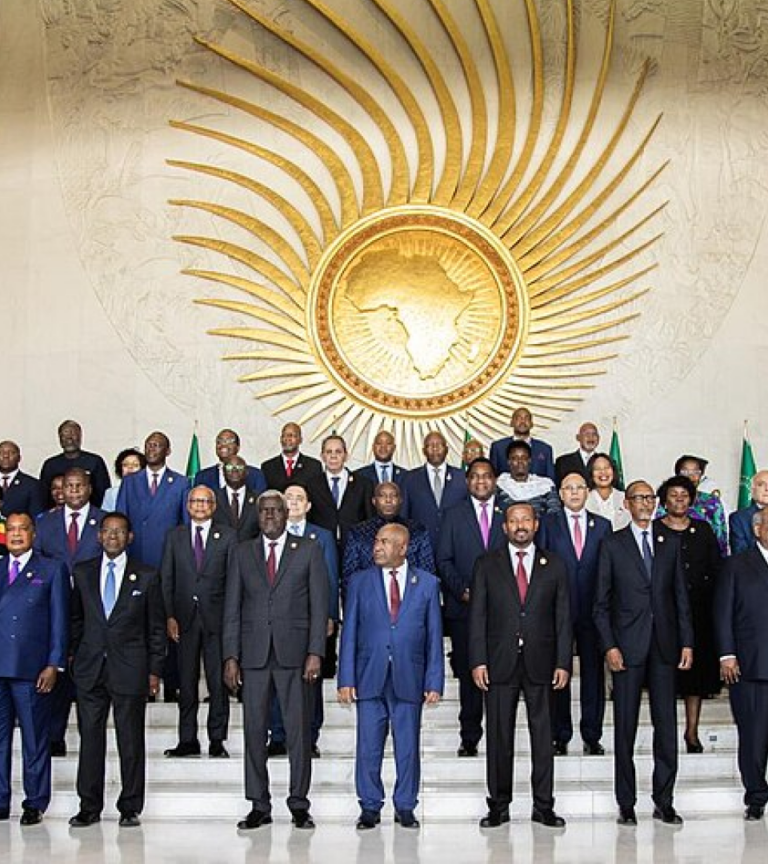
Heads of State and Government in the 37th Ordinary Session of AU Assembly
Photo credit: Johnson Matandi, Wikimedia Commons
1. INTERPOL Abuse
International watchdogs have documented a rise in African regimes exploiting channels such as international law enforcement to oppress dissidents.19 Organizations intended to pursue legitimate criminal suspects and combat transnational crime are instead misused to extend political repression beyond borders. The INTERPOL Red Notice system is one mechanism through which this transnational repression occurs. INTERPOL is intended as a means by which states can circulate international requests for the arrest and extradition of individuals on criminal charges, but authoritarians manipulate this system to issue notices against their political opponents and critics. Because INTERPOL does not have a strong investigative capacity — relying on member states to act in good faith — the vetting can, at times, be inadequate, allowing for abuse of the system. Article 3 of INTERPOL’s constitution forbids activities of “political, military, religious, or racial character,” yet exploitation still occurs.20 Additionally, even if a nation refuses to extradite a dissident, the mere issuance of a Red Notice can have severe consequences. The individual’s freedom of movement can be restricted, they can suffer financial isolation, and there may be psychological or emotional consequences.
Rwanda’s longtime president, Paul Kagame, is most notorious for issuing Red Notices to facilitate transnational repression. To avoid the Article 3 prohibition against politically motivated Red Notices, Rwanda often frames its requests on the grounds of terrorism, financial fraud, sexual assault, or other common-law crimes. One such instance of the politically motivated use of a Red Notice is that of Eugène-Richard Gasana.21 Gasana is a former Rwandan Patriotic Front senior official who was previously a close ally of Kagame. Gasana split from Kagame when Kagame made a bid for a third term in the 2017 election, and subsequently applied for permanent residency in the United States. Rwanda’s prosecutor general issued an INTERPOL Red Notice in August 2020 on charges of rape and sexual harassment alleged by a former employee. Johnston Busingye, Rwanda’s High Commissioner to the United Kingdom, facilitated the attempted persecution of Gasana. It was uncovered that during his time as Rwanda’s justice minister and attorney general (2021–present), Busingye had played a key role in abusing this system to punish dissidents.22 Ultimately, the INTERPOL commission concluded that the Red Notice was politically motivated and deleted it.
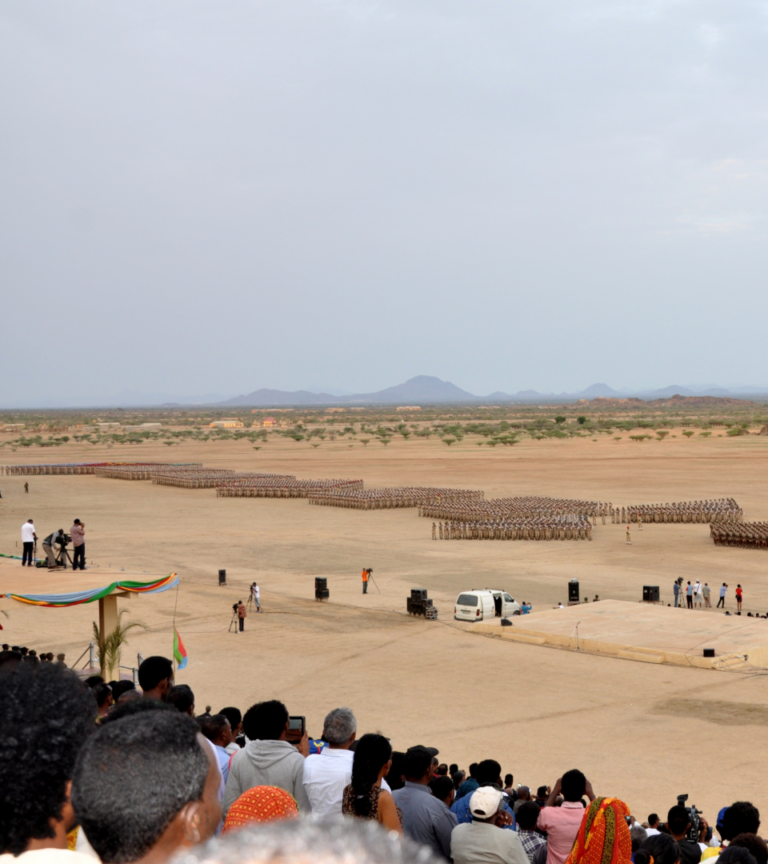
Sawa Eritrea Military Graduation Program
Photo credit: Shutterstock
2. Coercion-by-Proxy
When dissenters are out of reach, authoritarian leaders may engage in coercion-by-proxy through harassment, arbitrary detention, torture, or disappearance of dissidents’ relatives. This is an effort to persuade diasporan critics to self-censor or return home, and is not uncommon in Rwanda. Relatives of diaspora critics are often intensely interrogated by the Rwanda Investigation Bureau or military intelligence. In some cases, the state has forced family members residing in Rwanda to publicly disown or condemn their dissenting family members living abroad. They can also endure economic repercussions, including the freezing of bank accounts, seizure of property, termination of employment, or restrictions on their movement as punitive measures.
In the most extreme cases, the state resorts to outright abduction and enforced disappearances of family members. Noël Zihabamwe, a Rwandan living in Australia, provides one such example. After Zihabamwe was approached by agents of the Rwandan regime but refused recruitment, he and his family began facing harassment and intimidation. He anonymously shared his experience with the Australian Broadcasting Corporation in 2019; shortly thereafter, police abducted Zihabamwe’s two brothers, Antoine Zihabamwe and Jean Nsengimana.23 Their whereabouts remain unknown, and Zihabamwe maintains that his brothers were disappeared as a direct retaliation for his refusal to act as a regime agent.
While Rwanda’s case is more retaliatory and episodic, Eritrea also employs a form of structural coercion through a 2% diaspora tax and a mandatory military conscription regime. All able-bodied Eritrean men and unmarried women must, by law, undertake military training, followed by lifelong military or civil service. This is often open-ended, with conscripts funneled into agricultural, mining, or construction work facilitated by the ruling party and paid a meager wage. The unpopularity of this requirement has led many young Eritreans to flee the country.24 In these cases, the state punishes family members who remain behind: They may be charged exorbitant fines or arrested and held incommunicado without trial. Eritrea’s diaspora tax demands 2% of the net income of any Eritrean living abroad, and the regime weaponizes it to justify repression. Embassies and consulates enforce the tax and deny essential documents to anyone who cannot prove their compliance with the payments; they may refuse to renew passports, fail to issue birth or marriage certificates, or deny processing of power of attorney documents.25 In both cases, mandatory conscription and the diaspora tax, the family punishment infrastructure is always in place. Members of the diaspora are threatened into complying through fear of harm toward their loved ones, regardless of whether they have engaged in any specific act of dissent.
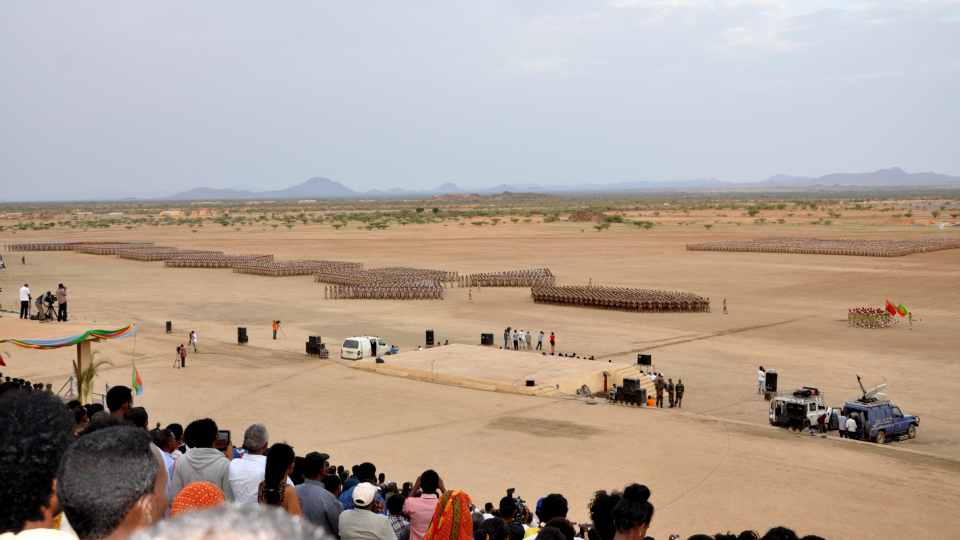
Sawa Eritrea Military Graduation Program
Photo credit: Shutterstock
3. Assassinations and Assassination Attempts
Assassinations represent the most extreme strategy in the transnational repression spectrum. This is the point at which states abandon legal mechanisms entirely and impose lethal force against critics or opponents on foreign soil. These operations are conducted covertly, typically by intelligence operatives or hired proxies, and under circumstances of plausible deniability. Assassinations are meant to silence dissent and instill fear, promoting the message that physical distance from the regime offers no protection. In essence, the targeting of high-profile exiles signals to the diaspora that nowhere is safe for those who criticize the regime.
Rwanda is the most extensively documented perpetrator of transnational repression, including assassinations and attempted assassinations abroad. Kagame’s regime has targeted its nationals in the Democratic Republic of Congo, Kenya, South Africa, the United Arab Emirates, Germany, Uganda, and Mozambique. Significant cases include Patrick Karegeya (killed in Johannesburg in 2013), General Faustin Kayumba Nyamwasa (four attempts in South Africa, beginning in 2010), Seif Bamporiki (killed in Cape Town in 2021), Revocat Karemangingo (killed in Maputo in 2021).26 Nyamwasa, an ex-Rwandan army chief, has maintained that the regime gets away with assassinations in countries susceptible to bribery. In contrast, European and US institutions are stronger, so Rwanda must resort to disinformation to evade justice.27
4. Online and Digital Repression
As more of the world’s population gains access to the internet, repression tactics have extended beyond physical threats to encompass digital channels. In Africa, digital repression has grown more sophisticated over the past few decades, often including multilayered systems of surveillance, censorship, and transnational monitoring through specialized technologies. Authoritarians employ similar tactics across the continent — monitoring social media platforms, engaging in harassment through “bot armies,” deploying commercial spyware tools, imposing internet blackouts, and targeting diaspora communities online — all to entrench their rule and silence critical voices.
An alarming pattern in recent years is the use of commercial spyware as part of a shared authoritarian toolset of repression. Rwanda represents one of the most well-documented cases of spyware used against domestic and diasporan critics. The Pegasus Project uncovered more than 3,500 phone numbers that the regime was targeting, most linked to activists, journalists, political opponents, and dissidents living abroad.28 Pegasus is a spyware product sold to government clients by the Israeli NSO Group with the stated intention to “collect data from the devices of specific individuals, suspected to be involved in serious crime and terror.”29 The technology is highly advanced, with the ability to infect devices through zero-click exploits, without any user interaction, and then grant the regime operational access. This means the operator can read texts and encrypted messages, track the victim’s GPS location, view emails, and activate cameras and microphones, all without the victim’s knowledge. In one such instance in February 2021, a forensic analysis confirmed that Carine Kanimba, daughter of opposition figure Paul Rusesabagina, had been surveilled with Pegasus beginning shortly after her father’s kidnapping by the Rwandan regime.30 The technology was active during diplomatic meetings with Belgian and US officials as she advocated for her father’s release.
While Kagame’s regime remains the most prominent case in Africa, the Togolese government has been identified as another client of Pegasus spyware, with a pattern of targeting that echoes Rwanda’s use of the technology against media and civil society. Forensic analysis by Amnesty International31 and Reporters Without Borders32 confirmed infections on the phones of journalists Loïc Lawson and Anani Sossou, building on earlier (2019) findings by Citizen Lab that had identified clergy and other civil society members as targets, with the Togolese government confirmed as an active Pegasus client through at least 2021. Three other journalists — Ferdinand Ayité, Luc Abaki, and Carlos Kétohou — appeared among the 50,000 names on the original leaked target list. In an interview with the Committee to Protect Journalists, Kétohou, director of newspaper L’Independant Express, reflected on his surveillance by the Togolese regime: “I spent nightmarish nights thinking about all my phone activities. My private life, my personal problems in the hands of strangers … It’s scary. And it’s torture for me.”33
Ethiopia has also proven to be a trailblazer in targeting the diaspora through spyware. Journalists and opposition figures living abroad have been monitored through technologies such as FinSpy, Hacking Team’s Remote Control System, and Cyberbit’s PC Surveillance System. Citizen Lab reports have confirmed that the state has misused spyware against Ethiopian civil society actors based in Canada, the United States, and Europe.34 A 2017 investigation uncovered targeted malware attacks on the Oromia Media network, a Minneapolis-based independent media outlet funded by the broader Oromo diaspora.35 Also targeted were a PhD student and a lawyer working on related issues. The regime deployed Cyberbit’s PC Surveillance system via phishing emails, inviting recipients to download a fake Adobe Flash update before viewing a video or an Adobe PDF Writer app to open a PDF document. This example demonstrates the regime’s expansive extraterritorial surveillance on diasporans, made possible through commercial spyware technologies. While no equivalent forensic case naming a specific spyware product has since come to light in Ethiopia, this could reflect a gap in public forensic reporting rather than a cessation of the practice within Prime Minister Abiy Ahmed’s regime.
Beyond targeted surveillance using commercial spyware, another well-documented tactic involves coordinated online harassment and smear campaigns. These campaigns seek to publicly and transnationally discredit and intimidate individual critics, typically through defamatory accusations and reputational attacks. Rwanda again represents a prominent case study. Pro-regime accounts, often collectively referred to as the “Rwanda Twitter Army,” systematically target diaspora critics on social media, subjecting journalists, human rights activists, and dissidents to coordinated harassment designed to damage their credibility and isolate them within their communities abroad. In recent years, those accounts have been using generative AI to reword attack messages rather than copying them verbatim across a multitude of accounts, allowing the Rwanda Twitter Army to scale its harassment. A 2024 Forbidden Stories investigation36 uncovered a network of UK- and US-based public relations firms working on Rwanda’s behalf, running coordinated smear campaigns against exiled critics and journalists and notably overlapping with the infrastructure of Team Jorge, an Israeli firm specializing in targeted defamation operations.37
Uganda under President Yoweri Museveni presents a comparable pattern. State-affiliated actors have deployed online intimidation campaigns against critics and opposition figures in the diaspora, with documented targeting of supporters of National Unity Platform (NUP) opposition leader Robert Kyagulanyi Ssentamu, commonly known as Bobi Wine, surrounding the disputed 2021 elections. Before the elections, a network of accounts linked to Uganda’s Ministry of Information and Communications Technology engaged in coordinated inauthentic behavior, running smear campaigns that discredited NUP supporters and Wine himself. Army chief Muhoozi Kainerugaba (Museveni’s son) publicly labeled NUP members as “terrorists,” a classification used to justify the monitoring, harassment, and intimidation of Wine’s many diaspora supporters.38 This rhetorical strategy discouraged Ugandan diaspora communities from publicly engaging in opposition advocacy for fear of retaliation.
Across Africa, spyware and coordinated online harassment campaigns serve the same essential function of deterring speech and signaling to dissenters that critiquing the regime will carry personal costs, regardless of whether one remains within the country’s borders or has fled abroad.
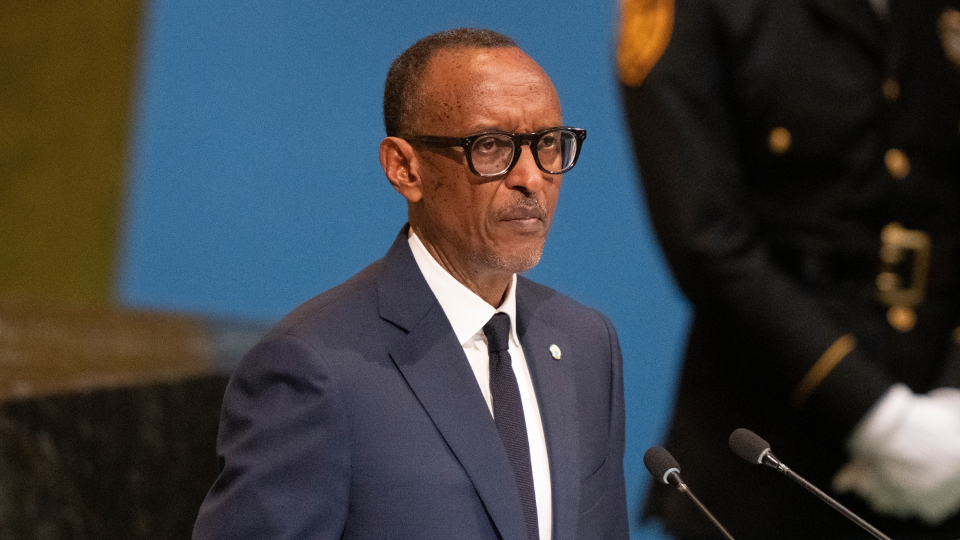
Paul Kagame, President of the Republic of Rwanda
Photo credit: Shutterstock
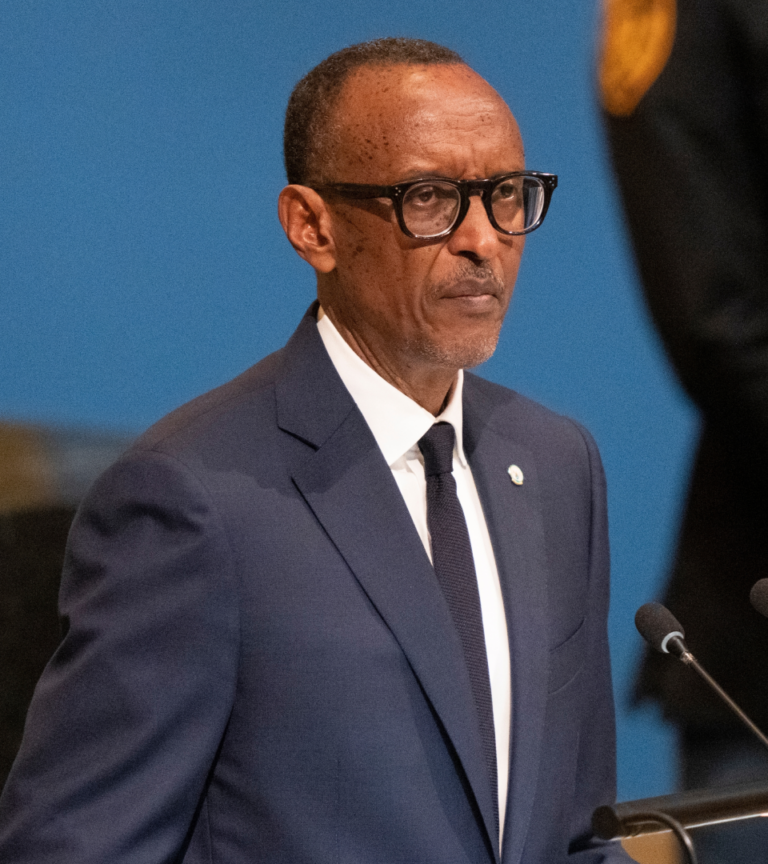
Paul Kagame, President of the Republic of Rwanda
Photo credit: Shutterstock
1. Mutual Legal Assistance Treaties
Countries use MLATs to share evidence in criminal matters. These binding international laws allow governments to request evidence, communication records, financial information, and other forms of intelligence from foreign jurisdictions. While MLATs are intended to promote cooperation on global issues such as drug trafficking, terrorism, or financial fraud, they can be exploited by autocrats. Authoritarian regimes may repress or prosecute critics under the guise of international judicial cooperation. The playbook typically follows a pattern: The regime charges an activist or political opponent with a serious crime (such as terrorism, money laundering, or cybercrime) and submits a formal MLAT request to the dissident’s host country as part of a “national security” investigation. The host country then unwittingly serves as a local investigator and provides intelligence to the regime. There is no requirement to notify the target that they are under investigation.
MLAT requests are confidential, and the mechanism is opaque by design. For that reason, it can be difficult to pin down specific instances of authoritarian regimes’ abuse of MLATs. Documented cases are typically uncovered only when the host state’s investigators later go on record or when another investigation inadvertently reveals the previous one. These treaties remain a vulnerable channel through which human rights abuses and repression can occur.39
2. Bilateral Extradition Treaties and Deportation Frameworks
While MLATs primarily assist states in gathering evidence across borders, extradition treaties serve to move the physical target back to their home country. Bilateral extradition treaties are formal, legally binding agreements between two states that allow an individual accused or convicted of a criminal offense to be arrested and transferred from one state to the other to face judgment. Like MLATs, authoritarian regimes may use the veneer of legality to enforce a political crackdown through these formal treaties. Again, they may indict political opponents or critics with fabricated charges such as financial crimes, drug trafficking, or terrorism.
Similarly, deportation frameworks present administrative and legal mechanisms by which a host country can expel a foreign national back to their country of origin, or to a third country. Typically, these frameworks are implemented when an individual has violated immigration laws, has an expired visa, or presents some sort of threat to national security. Because deportation operates through immigration law rather than criminal law, it is generally an administrative process, therefore offering fewer opportunities for judicial review and often proceeding more rapidly. In some cases, when formal extradition is unavailable or likely to be challenged, regimes may instead invoke immigration proceedings against a target.
One well-documented case is that of Dr. Leopold Munyakazi. Munyakazi fled Rwanda to the United States in 2004, arriving on a business visa. He taught French at various universities and engaged in academic lectures. In 2006, he gave a controversial speech at the University of Delaware, challenging Kagame’s official, state-imposed narrative of the genocide, instead calling the events a “civil war” and a struggle for political power. Shortly thereafter, the Rwandan regime issued an international arrest warrant for Munyakazi, labeling him both a genocide denier and a participant in the genocide. A classified 2015 Federal Bureau of Investigation report obtained by the Organized Crime and Corruption Reporting Project found that the US government’s investigation into Munyakazi had been compromised by a Rwandan intelligence agent. During the immigration hearings, his defense argued that the regime had coerced Rwandan witnesses to provide false testimonies. Ultimately, Munyakazi was deported to Rwanda in 2016 on the basis of a denial of his asylum and Convention Against Torture protection. He was sentenced to nine years in prison. In 2017, a Rwandan court convicted Munyakazi of direct involvement in the genocide and sentenced him to life in prison. He won an appeal overturning the conviction, but remained in prison to serve a nine-year sentence on trumped-up charges of downplaying the genocide.
In June 2022, Rwanda and Mozambique signed a bilateral extradition treaty and MLAT covering all crimes, including genocide, and applying to past and future crimes and sentences. The extradition treaty formalized the process to physically seize and surrender suspects accused or convicted of crimes between the two states, and the MLAT formalized the intelligence-sharing arrangement, including forensic tracking and criminal evidence gathering. The agreements were justified as ways to combat criminality and enhance regional security.40 However, Rwandan refugees in Mozambique immediately expressed concern that they would be exploited to punish dissenters. Prominent Rwandan opposition figure Victoire Ingabire stated in reference to the treaty package, “People flee countries for political reasons and persecution, and the government can use such treaties to persecute people and to make up crimes just to get them extradited.”41 There is already evidence that the two regimes have weaponized the treaties against Rwandan diasporans: The Rwanda Investigation Bureau has systematically submitted requests to Mozambique’s Ministry of Justice for intelligence on prominent diaspora business owners on the grounds that they are engaged in “terrorist financing” and “genocide evasion.”42 Many Rwandans have fled from Mozambique to South Africa or Malawi in fear of persecution.
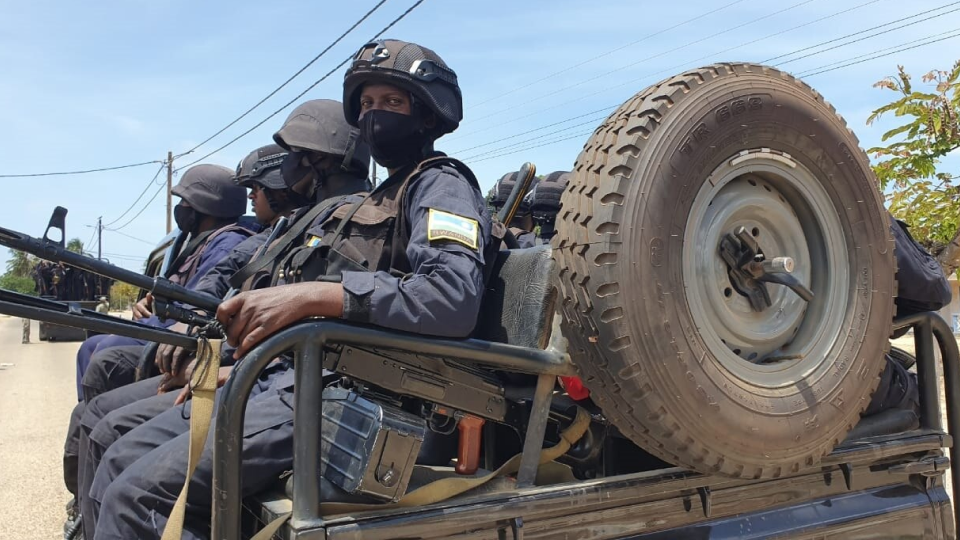
Rwandan forces patrol Mocimboa da Praia, Mozambique, October 2021
Photo credit: Wikimedia Commons
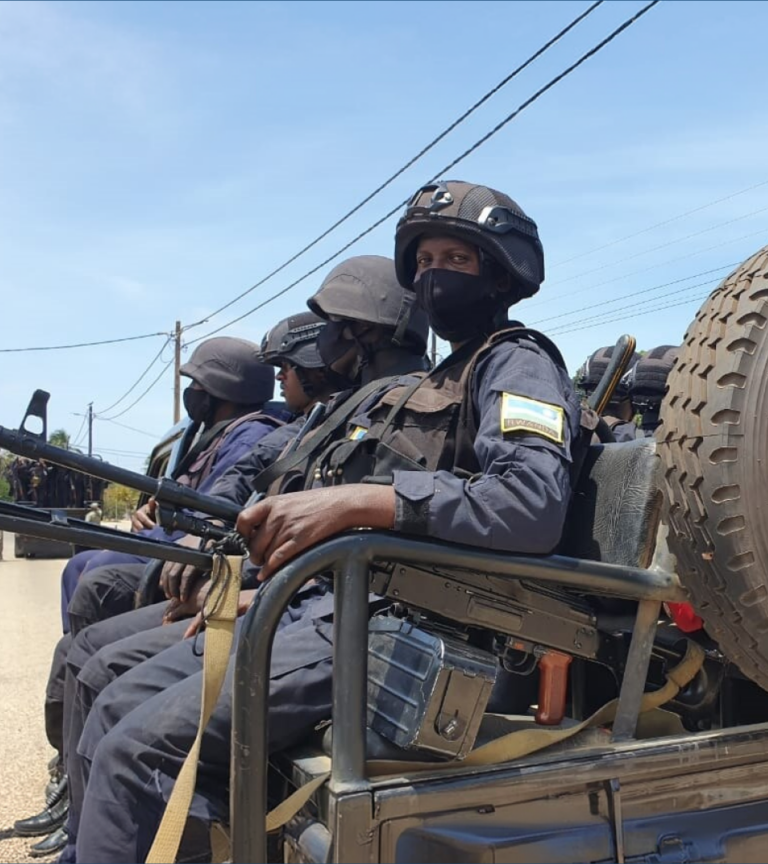
Rwandan forces patrol Mocimboa da Praia, Mozambique, October 2021
Photo credit: Wikimedia Commons

3. Formal Security Cooperation Agreements
MLATs and extradition treaties relate to specific cases, whereas security cooperation agreements establish permanent institutional relationships between countries. These agreements often do not require the judiciary, but rather are executed directly by the executive branch, via ministries of defense or intelligence and security services.43 They facilitate cooperation between security operatives to help with counterterrorism or anti-trafficking operations, effectively embedding one state’s security apparatus within another’s. In these circumstances, terrorism designations are often gateways for transnational repression. When an authoritarian regime legally designates or rhetorically frames an opposition movement as a terrorist organization — as with the Rwanda National Congress, Ginbot 7 in Ethiopia, and NUP in Uganda — it may activate counterterrorism provisions and intelligence sharing against diaspora members of those organizations.44 Further, security cooperation agreements often involve embedding intelligence personnel in partner country institutions. This can give the requesting state access to the partner country’s intelligence about its diaspora without the need for independent, covert surveillance.
Countries with formal security cooperation frameworks include Rwanda and Uganda,45 Rwanda and Mozambique,46 Ethiopia and Kenya,47 Uganda and Kenya,48 and Nigeria and Cameroon.49 In many of these cases, there is documented evidence of at least one of the parties abusing cooperation for transnational repression purposes. For example, Rwanda embedded intelligence operatives within its diplomatic mission in Pretoria, South Africa, as a cover for one assassination and multiple other attempts. The South African government exposed the plot and ultimately expelled three diplomats in 2014.50 In 2018, Nigeria leveraged its counterterrorism arrangement with Cameroon to arrest 47 Ambazonian leaders and activists in Abuja, all of whom were refugees and asylum seekers. Intelligence agents handed them over to the Cameroonian officials weeks later. Although the transfer was framed as combating terrorism, the UN Refugee Agency denounced it, and a Nigerian court later ruled the handover illegal and unconstitutional.51
4. Informal Security Coordination
In the context of transnational repression, informal security can be far more sinister. Formal agreements have a defined scope and a documented paper trail. In contrast, informal coordination can be much harder to trace, frequently operating through direct communication between intelligence services and individual officers, and is deniable by the host state. It is also not subject to judicial or parliamentary oversight, removing important mechanisms for accountability.
Many of the most serious East African cases have not proceeded through transparent extradition.52 They have occurred through abduction, informal transfer, deportation, immigration-based immobilization, or sudden expulsion. Documented cases include the forcible return of Rwandan refugee Joel Mutabazi from Uganda to Rwanda in 201353 and the disappearance of South Sudanese dissidents Dong Samuel Luak and Aggrey Idri from Nairobi, Kenya, in 2017, with credible United Nations findings that they were transported to Juba and probably executed.54 Other cases include the abduction and return of South Sudanese critic Morris Mabior Awikjok Bak from Kenya in 2023,55 the abduction in Nairobi and forcible return to Uganda of Kizza Besigye in November 2024,56 and the May 2023 abduction of Rwandan human rights defender Yusuf Ahmed Gasana from Nairobi by individuals suspected to be Kenyan state agents, followed by his alleged rendition to Rwanda, where he remains held incommunicado.57
Besigye’s case exemplifies the informal mechanism of direct intelligence-to-intelligence contact, bypassing legal channels entirely. Besigye is a prominent Ugandan opposition leader who was seized by armed men while in Nairobi to attend a book launch hosted by Kenyan lawyer and opposition politician Martha Karua. Besigye was driven across Kenya and handed over to Ugandan military custody, then held incommunicado for days. He was charged with military-grade security charges and the illegal possession of firearms. This process circumvented formal extradition laws, yet a Ugandan minister claimed that “the government of Uganda was in touch with the government of Kenya” for the arrangement.58 Kenya initially denied involvement, but the state’s foreign affairs minister, Musalia Mudavadi, ultimately acknowledged that domestic law enforcement had assisted Ugandan agents in the rendition.
The political motive was clear in that it was not an isolated incident; in July 2024, 36 members of Besigye’s Forum for Democratic Change had been assaulted and arrested by Kenyan and Ugandan security forces during a governance training workshop and also rendered to Kampala,59 where they were subsequently charged with terrorism-related offenses.60 Notably, in January 2025, the Ugandan military court overseeing Besigye’s case retroactively characterized the transfer as sanctioned. The court ruled that no extradition treaty had been breached, meaning that Uganda ostensibly invoked a formal bilateral instrument to legitimize an operation that the regime had executed entirely through informal channels.61 In other words, formal and informal mechanisms can blur together in practice.
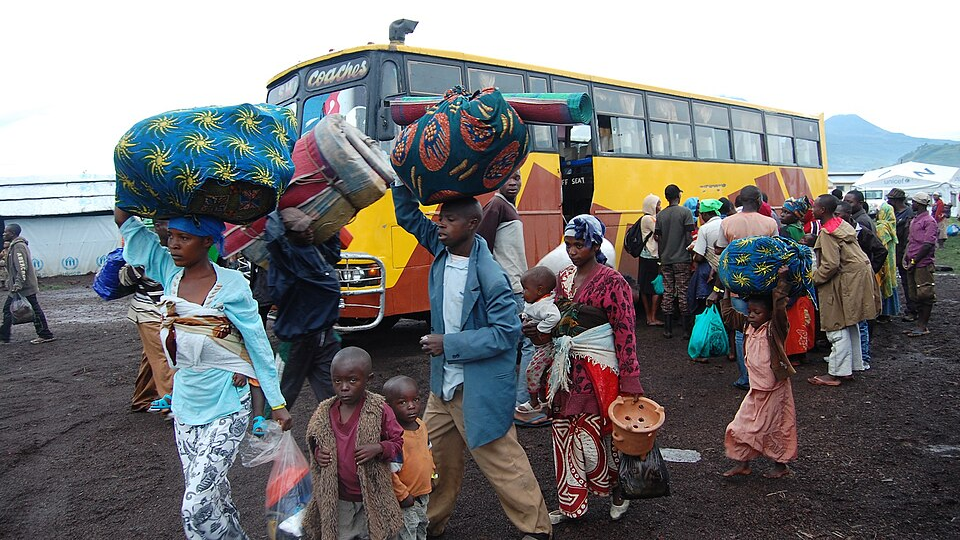
Refugees from conflict in the eastern Democratic Republic of the Congo leave the Nyakabande transit camp in Uganda for an eight hour journey to Rwamwamja refugee settlement, further into southwest Uganda, 11 April 2013
Photo credit: Wikimedia Commons
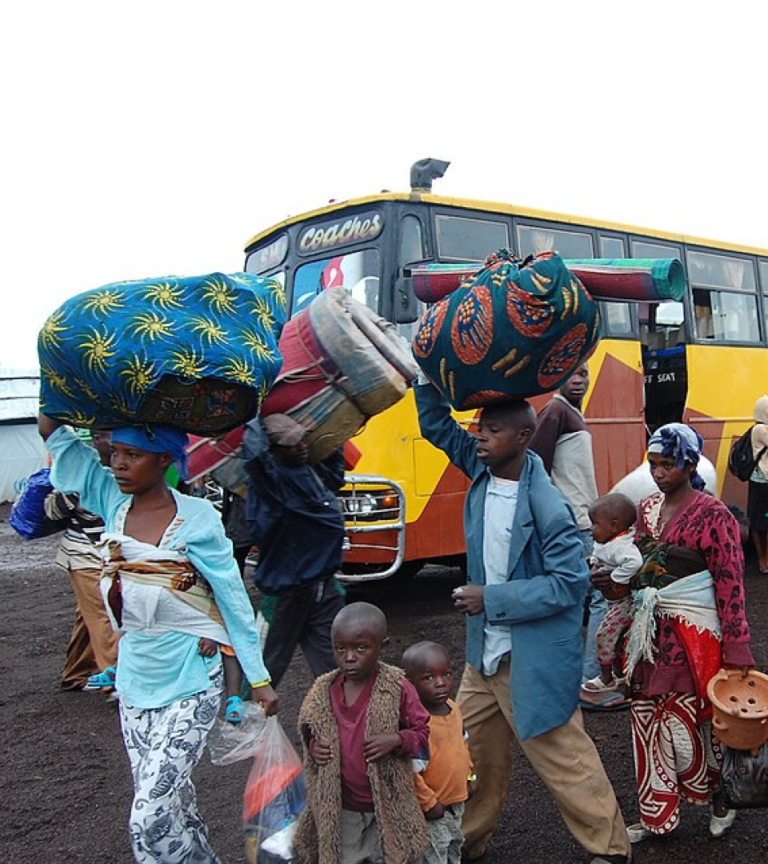
Refugees from conflict in the eastern Democratic Republic of the Congo leave the Nyakabande transit camp in Uganda for an eight hour journey to Rwamwamja refugee settlement, further into southwest Uganda, 11 April 2013
Photo credit: Wikimedia Commons
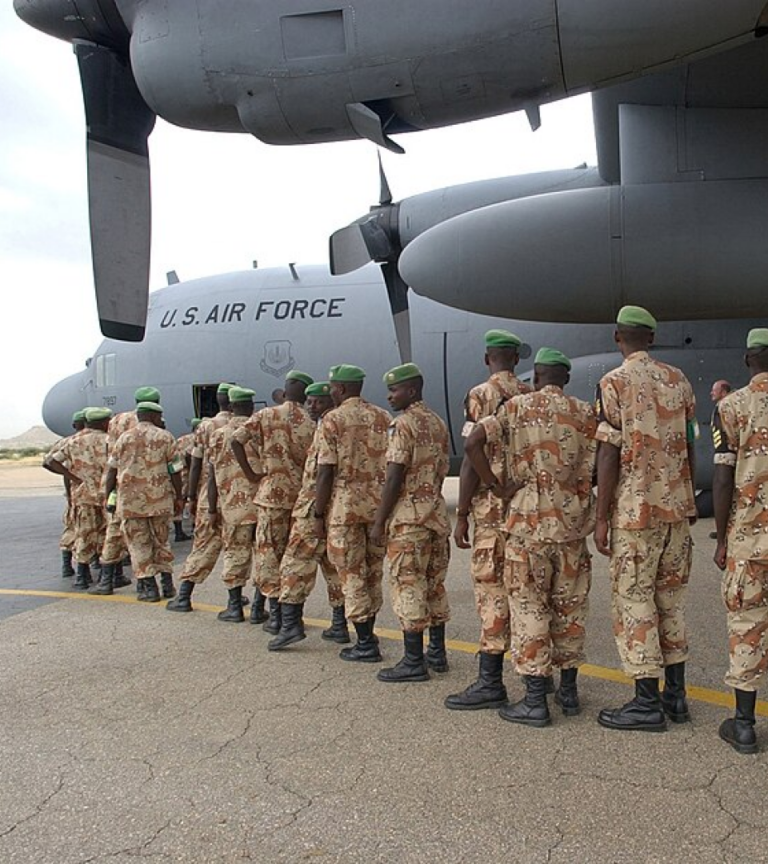
Rwandan peacekeepers prepare to board a U.S. Air Force aircraft in Sudan, October 2005
Photo credit: Wikimedia Commons
5. Military Deployments for Accessing Diaspora Communities
Military deployments can be a covert strategy for autocrats to enhance their repressive capacities toward diasporans. When a state deploys troops to a host country, this is often framed as counterterrorism assistance, peacekeeping, or general bilateral defense support. However, it also provides physical proximity to diaspora communities, where the regime can monitor them or carry out repressive schemes. These missions often receive diplomatic protection for operations, making it difficult for host countries to investigate their activities on their soil. They also receive intelligence access through military channels, including intelligence about civilian populations, and the deploying state gains access to the host country’s databases and informant networks. This can be exploited to monitor diasporans. Finally, there may be an element of quid pro quo: Once a host country has accepted a foreign military presence and becomes dependent on that assistance, it increases the political cost to challenge the assisting country’s political activities.62 Therefore, it is sometimes more advantageous to ignore abuses rather than risk the entire bilateral security relationship.
This pattern is documented most strongly in Rwanda. Kagame’s regime is well known to use its military effectiveness to its advantage, in what some call a form of “military diplomacy.”63 Rwanda remains one of the top contributors to the UN peacekeeping program, deploying thousands of soldiers as Blue Helmets. It has been said that Rwanda uses peacekeeping as leverage to “weaken criticism from [The UN’s Group of Experts on the Democratic Republic of the Congo] because they know their value is in contributing to peacekeeping.”64
In Mozambique, Rwanda deployed troops to Cabo Delgado province in July 2021 to fight Islamist insurgency, and by 2024, the Institute for Security Studies was assessing whether Rwandan troops were becoming the region’s main security provider.65 These deployments provide cover; at least three Rwandan dissident refugees were killed or disappeared while Rwandan troops were on Mozambican soil, and two others survived kidnapping attempts.66 Rwanda has built capital as a regional security provider to the extent that host nations and international organizations are disincentivized from holding Kagame’s regime accountable for transnational repression.
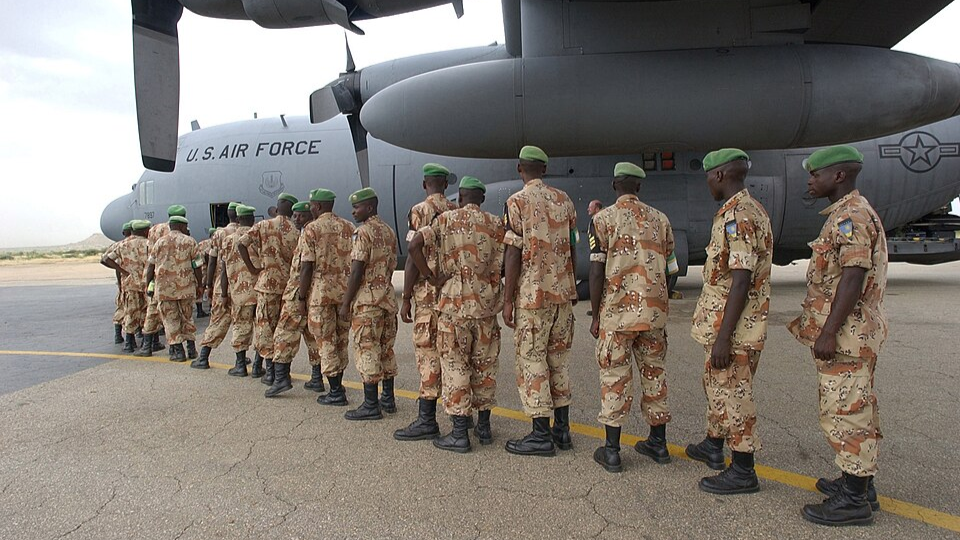
Rwandan peacekeepers prepare to board a U.S. Air Force aircraft in Sudan, October 2005
Photo credit: Wikimedia Commons
Transnational repression has been regionalized as regimes learn from, adapt, and replicate one another’s practices through the use, misuse, or opportunistic exploitation of regional security architecture, extradition arrangements, counterterrorism frameworks, security cooperation, immigration controls, and informal interstate bargains to reach exiled critics across borders. These regional security frameworks of cooperation enable the networking of repression, thereby lowering the cost of cross-border coercion. Consequently, where states label critics as security threats, terrorism suspects, criminals, or destabilizing actors, the infrastructure of legitimate cooperation can be turned into an enabling environment for abuse.
Africa has numerous and overlapping regional and subregional security frameworks of cooperation, such as the 1999 Organization of African Unity Convention on the Prevention and Combating of Terrorism, which entered into force in December 2002 and has been ratified by 40 member states.67 It emphasizes cooperation among states, criminalization, intelligence sharing, and extradition. The human rights concern is not the existence of cooperation, but the breadth and plasticity of the legal categories around which cooperation is organized. In 2015, reflecting these risks, the African Commission on Human and Peoples’ Rights adopted “Principles and Guidelines on Human and Peoples’ Rights while Countering Terrorism in Africa” because counterterrorism measures had, in practice, generated serious rule-of-law and due-process risks.68
The same pattern appears at the subregional level, with regional variation. Article 124.5 of the East African Community Treaty, for example, expressly calls for mutual assistance in criminal matters, the arrest and repatriation of fugitive offenders, intelligence exchange, joint operations, and regional security measures against terrorism.69 Although these tools are valuable for addressing genuine criminality and cross-border security threats, they are also redirected against political opponents as regimes cast those opponents as threats to state security or public order. The language of “safe havens,” “fugitives,” and “joint operations” becomes a means of pursuing exiles and other perceived critics across borders.
Similarly, the Economic Community of West African States Convention A/P.1/7/92 provides for the “widest measure of mutual assistance” in criminal investigations and proceedings, and its Extradition Convention A/P.1/8/94 requires states to surrender persons sought for prosecution or sentence enforcement.70 Similarly, the Southern African Development Community (SADC) 2002 Extradition Protocol requires state parties to extradite persons wanted for prosecution or sentence enforcement.71 The African Union Mechanism for Police Cooperation (AFRIPOL), for its part, is mandated to facilitate police cooperation, intelligence exchange, mutual legal assistance, and extradition arrangements, and the Committee of Intelligence and Security Services of Africa (CISSA) serves as a platform for intelligence sharing, providing intelligence to the African Union and member states. Several other cooperation frameworks exist at the regional level.
The East African cases examined in this report reveal three overlapping operating logics that frequently subordinate legal processes. The first is security regionalism — the idea that neighboring governments share threats and require cooperative tools. The second is political reciprocity, which is the expectation that one government may assist another against a troublesome opponent today and receive equivalent consideration tomorrow. The third is managed deniability; that is, the preference for methods that preserve outward legality or plausible uncertainty, such as “cooperation” between police units, ad hoc deportation, border interception, and civilian intermediaries rather than openly acknowledged seizure.
The frameworks of cooperation matter because they are usually quicker and less visible than judicial extradition. Mutual assistance requests, border alerts, provisional arrests, intelligence notes, or “informal” requests to detain or question an individual can take place before courts or asylum officers are engaged. For example, Rwanda has engaged in several instances of transnational repression, seeking to arrest and extradite Rwandan nationals through what appear to be unofficial requests directed at local law enforcement agencies.72 In other words, coercion can occur in the gray zone between formal legality and informal operational practice, where it is especially difficult to contest because the victim may disappear before any paperwork emerges.
It is important to note that these regional security frameworks are not inherently abusive. Regional security and criminal cooperation frameworks do not become instruments of transnational repression merely because they enable states to cooperate. They become vulnerable to abuse when political dissent is recast as an ordinary criminal, immigration, or security matter. The central problem is therefore one of classification. Once a regime describes an exiled critic as a terrorist suspect, fugitive, cybercriminal, financial offender, or threat to public order, the political context of the case can disappear behind the technical language of law enforcement.
Transnational repression is preceded by a deliberate cognitive reframing of peaceful political dissent as an existential threat to national security. Regimes systematically label exiled activists, journalists, politicians, and human rights defenders as “national security threats,” “traitors,” or “terrorists.” This deliberate rhetorical escalation legitimizes the bypassing of domestic and international legal norms to justify extraordinary measures such as cross-border abductions, extrajudicial transfer, and continuous surveillance against dissent abroad.
Therefore, the concern lies not in the existence of these regional cooperation frameworks, but in their misuse, selective application, or implementation without adequate judicial and human rights safeguards. Regional security frameworks also produce an interoperable regional security space, a set of channels through which one regime can seek another’s help, silence another’s scrutiny, or act beneath the threshold of formal accountability.
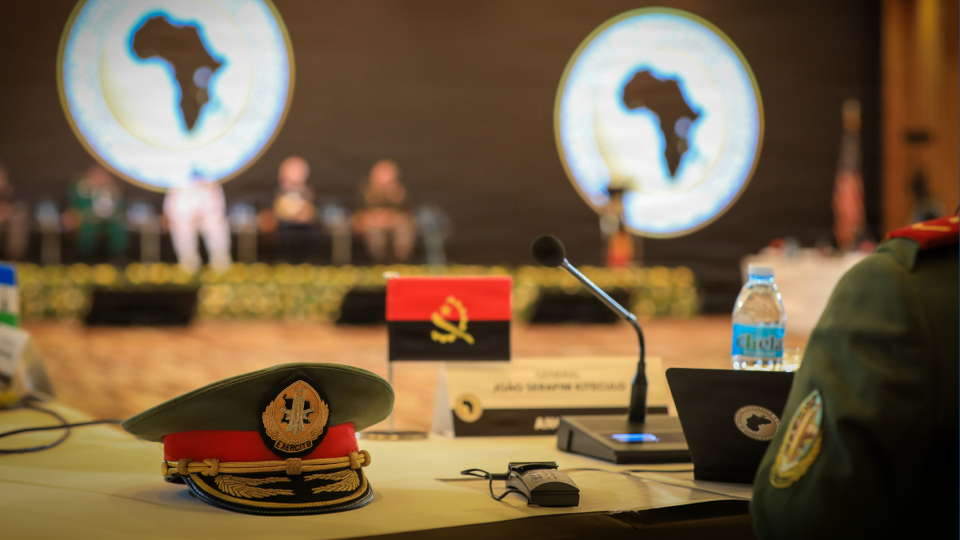
A panel at the 2026 African Chiefs of Defense (ACHOD) Conference in Luanda, Angola, June 30, 2026
Photo credit: Wikimedia Commons
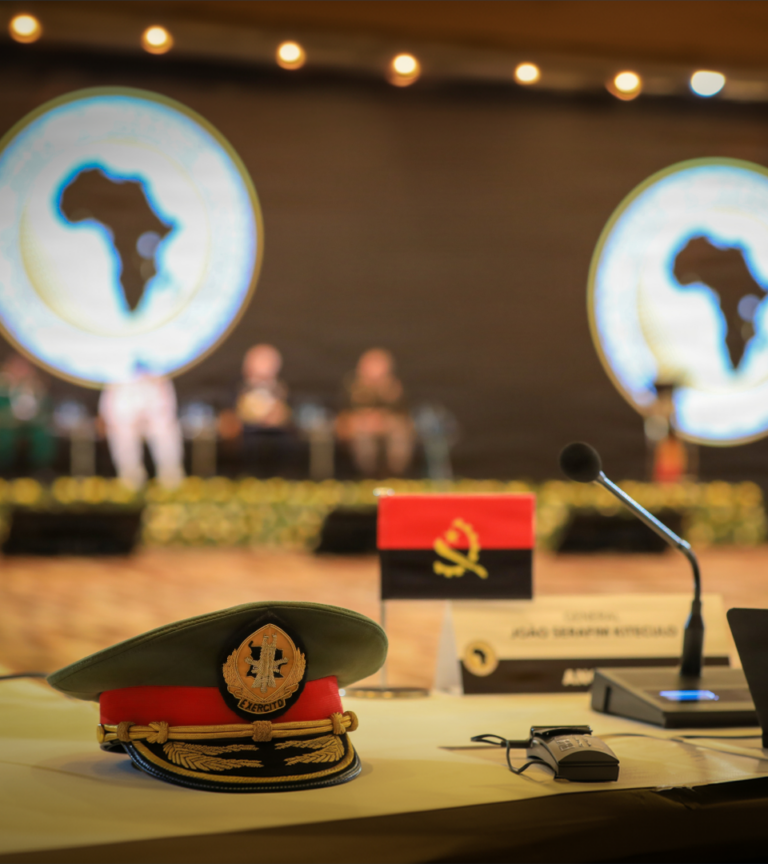
A panel at the 2026 African Chiefs of Defense (ACHOD) Conference in Luanda, Angola, June 30, 2026
Photo credit: Wikimedia Commons
African regimes engaging in transnational repression often employ non-state actors because they can solve problems that formal state power alone cannot address efficiently. In fact, non-state actors are often what makes transnational repression possible. Regimes may prefer proxies because direct action abroad is diplomatically costly and often illegal in ways that are hard to deny. Such proxies improve access, reduce visibility, and soften attribution. They are force multipliers that come with the advantage of operating through ordinary social infrastructures rather than spectacular violence. Hence, they take advantage of the diaspora’s social fabric.
These non-state actors — such as diaspora associations, ruling-party branches, embassy-linked community structures, civilian intermediaries, online networks, and locally recruited operatives — can move through social spaces that official security agents cannot easily enter. They know the language, family networks, places of worship, workplaces, refugee communities, and digital circles where exiles live and move. This gives the regime access not only to the target but also to the information, relationships, and vulnerabilities surrounding that person.
These networks also reduce the visibility of repression. A threat delivered through a community figure, pressure from a diaspora association, surveillance at a social gathering, or an assault by men in civilian clothing can be presented as a private dispute, ordinary crime, or an incident with no obvious state connection. The coercion remains political, but its operational form appears civilian or ambiguous.
Most importantly, hybrid arrangements soften attribution. They create distance between the political direction and the immediate act. The state may provide intelligence, identify the target, communicate expectations, or facilitate logistics, while non-state or semi-official actors carry out surveillance, intimidation, recruitment, or violence. The value of such arrangements lies in deniability. By separating political direction from operational execution, regimes can benefit from repression while presenting an attack as an ordinary crime or the conduct of unknown individuals.73 The January 2025 abduction in Nairobi of Tanzanian journalist and human-rights defender Maria Sarungi Tsehai illustrates this difficulty.74 Sarungi Tsehai was assaulted and abducted by unidentified men before being released several hours later after a widespread local and international outcry. The attack occurred a week after a media personality in Tanzania’s ruling party publicly called for her to be “dealt with and dragged back to Tanzania.”
1. Rwanda: Diaspora Networks and Intimidation
One such vehicle for the Rwandan regime’s use of non-state actors is the Rwandan Community Abroad (RCA). Although RCA chapters are supervised by Rwanda’s Ministry of Foreign Affairs and local embassies, they are generally community-driven. In theory, they are intended to connect Rwandans living abroad, organize cultural events, promote investment and remittances, and generally serve as liaisons between diaspora communities and the regime. The RCA states that another key purpose is to “promote Rwandan Culture, unity, and reconciliation among Rwandans as well as fighting genocide ideologies.”75 In practice, however, RCA chapters have been leveraged to surveil diaspora communities and collect information about individuals’ political activities, attendance at opposition events, and overall critiques of Kagame’s regime.
Freedom House found that the RCA functions as an arm of the Rwandan state, pressuring diasporans to join the organization and support the ruling party.76 In its report, a Rwandan asylum seeker in Cape Town recalled that youth are offered passports but must cite an oath of allegiance to the ruling Rwandan Patriotic Front: “They were made to say the oath. You know what it says in the last line? If you betray the [Rwandan Patriotic Front] you will die.” The pledge, recited at a community event, asserts that diasporans will fight “enemies of Rwanda, wherever they may be.”77
In essence, the RCA grooms young diasporans to express fidelity toward Kagame’s regime through the facade of “community.” But it also imposes intimidation tactics by creating an environment of surveillance and fear, even withholding consular services to those who are deemed critical of the regime. There is also evidence that social exclusion can result when Rwandan diasporans remain outside of the RCA infrastructure. Those engaged in “unfavorable” dissident activities can be publicly labeled as extremists or accused of genocide denial, facing reputational attacks and community isolation.78 While RCA chapters at face value represent cultural and networking associations for diasporans, they are abused to function as frontline surveillance and coercion arms of the state.

Liz Truss, then UK secretary of state for international trade, speaks at the UK-Africa Investment Summit in London on Jan. 20, 2020

Liz Truss, then UK secretary of state for international trade, speaks at the UK-Africa Investment Summit in London on Jan. 20, 2020
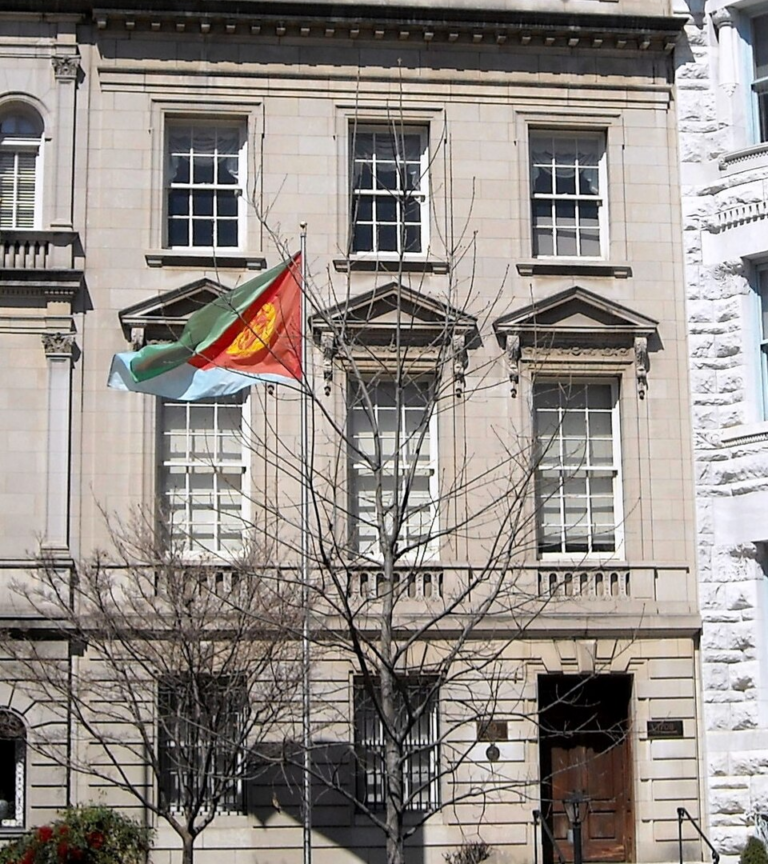
Embassy of Eritrea, US
Photo credit: APK / Wikimedia Commons
2. Eritrea: Community Control Beyond the Border
Eritrea presents one of the most elaborate systems of community control beyond its borders. The core mechanism is not primarily assassination or kidnapping, but the continuous use of embassies, People’s Front for Democracy and Justice (PFDJ) branches, community associations, festivals, and consular services to discipline overseas Eritreans.
A report commissioned by the Dutch government found that the Government of Eritrea levies and collects a 2% diaspora tax through embassies and PFDJ organs, that the tax is arbitrary in practice, and that it is collected through intimidation, coercion, extortion, blackmail, and social pressure.79 The same report explicitly describes denial of remittance access, social exclusion, vilification, and the effective conditioning of consular services on compliance.
Consequently, UN Security Council Resolution 2023 of 2011 ordered Eritrea to cease using extortion, threats of violence, fraud, and other illicit means to collect taxes abroad, and to hold accountable those acting officially or unofficially on behalf of Eritrea on member state territory. Canada expelled Eritrean consul Semere Ghebremariam O. Micael in May 2013, and the Dutch government declared Eritrea’s chargé d’affaires to be persona non grata in January 2018, following continued evidence of intimidation and coercion surrounding the diaspora tax. But these measures did not end the practice. Germany’s Federal Administrative Court in October 2022,80 and the Swiss Federal Supreme Court in October 2025, independently restricted the use of host-state procedures to compel Eritreans to sign self-incriminating letters of regret.81 In May 2026, the UN Special Rapporteur reported that Eritreans abroad continued to face the 2% diaspora tax and compulsory “letters of regret” as conditions for obtaining passports and other civil documents, with noncompliance sometimes resulting in reprisals against relatives in Eritrea.82
Eritrea’s overseas control system has evolved beyond tax extraction into festival-based mobilization and enforcement. Dr. Selam Kidane’s evidence to the UK parliament described festivals as sites of surveillance, intimidation, and community discipline.83 The 2026 report of the UN Special Rapporteur on Eritrea went further, describing organized groups linked to the Eritrean regime — such as “Eri-Blood” — as providing security at pro-regime events and acting as enforcers against perceived opponents, with coordination among embassies and community organizations around festivals in the diaspora.84

Embassy of Eritrea, US
Photo credit: APK / Wikimedia Commons
Conclusion
Exile was once a form of escape, offering critics a place of refuge beyond the reach of their own state. That assumption no longer holds across much of Africa. This report demonstrates that transnational repression on the continent is not a collection of isolated, unilateral activities, but an increasingly interconnected system in which formal cooperation, informal coordination, and non-state networks extend authoritarian control across borders.
States with different capacities, reputations, and diplomatic profiles increasingly operate through shared security frameworks, bilateral arrangements, intelligence-sharing relationships, and informal understandings. These connections allow states to exchange information, mobilize one another’s institutions, and act beneath the threshold of transparent judicial scrutiny. Each successful operation demonstrates what is possible, lowers the political cost of repetition, and contributes to the normalization of cross-border coercion.
Underlying this convergence is a process of collaboration and learning. Regimes observe which methods succeed, adapt them to their own institutional capacities, and exploit weaknesses revealed in the protection systems of other states. Through repeated interaction, practices that were once associated with particular states are becoming part of a broader regional repertoire. Political dissent is recast as terrorism, criminality, an immigration violation, or a threat to public order. This allows host-state institutions to assist the originating regime, remain passive in the face of its actions, or treat political repression as an ordinary law enforcement matter.
The evidentiary record of individual incidents may remain incomplete, but the wider pattern is increasingly difficult to dismiss. As similar methods recur across borders, they are less convincingly explained as unrelated events and more accurately understood as products of a regionalized security order that places regime protection above the rights of exiles. Addressing that order will require an equally coordinated system of regional and multilateral accountability.

The Tyranny Tracker at the 2026 Oslo Freedom Forum
The Human Rights Foundation (HRF) is a nonprofit organization that promotes and protects human rights globally, with a focus on authoritarian regimes. HRF unites people in the common cause of defending human rights and promoting liberal democracy. Our mission is to ensure that freedom is both preserved and promoted around the world.
Human Rights Foundation
350 Fifth Avenue, #6500
New York, NY 10118
References
“Transnational Repression, Civic Space Brief,” Office of the United Nations High Commissioner for Human Rights, June 18, 2025, https://www.ohchr.org/sites/default/files/documents/publications/transnational-repression-1-en.pdf.
“Addressing Transnational Repression Against Human Rights Defenders,” International Service for Human Rights, March 22, 2024. https://ishr.ch/latest-updates/addressing-transnational-repression-a-global-mandate-for-justice-and-human-rights/.
“HRC58: States Adopt Substantive Resolution on Human Rights Defenders, Emerging Technologies,” International Service for Human Rights, April 4, 2025, https://ishr.ch/latest-updates/hrc58-states-adopt-substantive-resolution-on-human-rights-defenders-emerging-technologies/.
“Tyranny Tracker,” Human Rights Foundation, accessed July 24, 2026. https://tyrannytracker.org/.
“East Africa’s Shadow Network: Coordinated Repression and the Fight Against Opposition,” Georgetown Security Studies Review, October 15, 2025, https://gssr.georgetown.edu/the-forum/regions/africa/east-africas-shadow-network-coordinated-repression-and-the-fight-against-opposition/.
Joshua Kurlantzick, “Democracies Are Scrambling to Respond as Transnational Repression Worsens,” Council on Foreign Relations, June 1, 2026, https://www.cfr.org/articles/democracies-are-scrambling-to-respond-as-transnational-repression-worsens.
“The Impact of Artificial Intelligence on the Labor Market,” European Parliament, June 2025, https://www.europarl.europa.eu/RegData/etudes/STUD/2025/754475/EXPO_STU%282025%29754475_EN.pdf.
“Eritrea: Repression Without Borders: Threats to Human Rights Defenders Abroad,” Amnesty International, June 2019, https://www.amnesty.fr/wp-content/uploads/2025/08/amnestyfr2b0de4c7-42a9-4357-9faf-fd7924f4989e_afr6405422019english.pdf.
“Eritrea – The Citizen Lab,” The Citizen Lab, December 11, 2024, https://citizenlab.ca/research/eritrea/.
“Collaboration and Resistance: Tracking Transnational Repression in 2025,” Freedom House, April 2026, https://freedomhouse.org/report/special-report/2026/collaboration-and-resistance-tracking-transnational-repression-2025.
Niki Siampakou, “The Use of Transnational Repression in the Name of Security: Implications and Concerns,” International Centre for Counter-Terrorism, August 2025, https://icct.nl/sites/default/files/2025-08/Siampakou%20-%20The%20Use%20of%20Transnational%20Repression.pdf.
“Uganda Court Charges 36 Opposition Supporters With Terrorism-Related Offences,” Reuters, July 29, 2024, https://www.reuters.com/world/africa/uganda-court-charges-36-opposition-supporters-with-terrorism-related-offences-2024-07-29/.
“Espionage, Threats, Suspicious Deaths: Rwanda Tries to Silence Its Opponents Abroad,” Forbidden Stories, May 28, 2024, https://forbiddenstories.org/espionage-threats-suspicious-deaths-rwanda-tries-to-silence-its-opponents-abroad/.
“Eritrea: Repression Without Borders.”
Ville R. Hartonen, Pertti Väisänen, Liisa Karlsson, and Sinikka Pöllänen, “A Stage of Limbo: A Meta‐synthesis of Refugees’ Liminality.” Applied Psychology 71, no. 3 (2021): 1132-1167.
“Mozambique: Grave Concerns for Rwandan Asylum Seeker,” Human Rights Watch, June 15, 2021, https://www.hrw.org/news/2021/06/15/mozambique-grave-concerns-rwandan-asylum-seeker.
“Kenya, South Sudan: Investigate Critics’ Disappearance,” Human Rights Watch, February 12, 2019, https://www.hrw.org/news/2019/02/12/kenya-south-sudan-investigate-critics-disappearance.
“Rwanda Classified: Investigating Kagame’s Repressive Regime,” Zuiderlijk Afrika Magazine (ZAM), May 28, 2024, https://www.zammagazine.com/investigations/1808-rwanda-classified.
“Collaboration and Resistance: Tracking Transnational Repression in 2025,” Freedom House, January 1,2026, https://freedomhouse.org/report/special-report/2026/collaboration-and-resistance-tracking-transnational-repression-2025.
“Constitution of the International Criminal Police Organization-INTERPOL,” International Criminal Police Organization, June 13, 1956, https://www.interpol.int/content/download/590/file/01%20E%20Constitution_2024.pdf.
Human Rights Watch. “Transnational Repression by Rwanda.” Human Rights Watch, February 15, 2024. https://www.hrw.org/news/2024/02/15/transnational-repression-rwanda.
Tom Burgis, “Rwanda’s Top UK Diplomat Oversaw Use of Interpol to Target Regime Opponents,” The Guardian, May 28, 2024, https://www.theguardian.com/world/article/2024/may/28/rwanda-uk-diplomat-interpol-target-regime-opponents.
“United Nations Hears Details of Harassment, Intimidation Following Complaint About Disappearances in Rwanda,” Australian Human Rights Institute, October 3, 2023, https://www.humanrights.unsw.edu.au/news/united-nations-hears-details-harassment-intimidation-following-complaint-about-disappearances-rwanda.
“Eritrea: Persecuted Relatives of Military Draft Dodgers,” International Center for Transitional Justice, October 12, 2023, https://www.ictj.org/latest-news/eritrea-persecuted-relatives-military-draft-dodgers-%E2%80%93-hrw.
Amal Stefanos, “Eritrea’s ‘Diaspora Tax’ Is Funding Violence and Oppression,” Al Jazeera, February 20, 2023, https://www.aljazeera.com/opinions/2023/2/20/eritreas-diaspora-tax-is-funding-violence-and-oppression.
Nate Schenkkan and Isabel Linzer, “Out of Sight, Not Out of Reach: The Global Scale and Scope of Transnational Repression.” Freedom House, February 2021, https://freedomhouse.org/sites/default/files/2021-02/Complete_FH_TransnationalRepressionReport2021_rev020221.pdf.
“Rwanda Fed False Intelligence to U.S. and Interpol As It Pursued Political Dissidents Abroad.” Organized Crime and Corruption Reporting Project (OCCRP), November 4, 2022, https://www.occrp.org/en/investigation/rwanda-fed-false-intelligence-to-us-and-interpol-as-it-pursued-political-dissidents-abroad.
“Pegasus Project: Rwandan Authorities Chose Thousands of Activists, Journalists and Politicians to Target with NSO Spyware,” Amnesty International, July 19, 2021, https://www.amnesty.org/en/latest/news/2021/07/rwandan-authorities-chose-thousands-of-activists-journalists-and-politicians-to-target-with-nso-spyware-2/.
“About the Pegasus Project,” Forbidden Stories, July 18, 2021, https://forbiddenstories.org/about-the-pegasus-project/.
Julia Mueller, “Daughter of Imprisoned Hotel Rwanda Hero to Testify on Spyware at House Hearing,” The Hill, July 26, 2022, https://thehill.com/homenews/house/3575411-daughter-of-imprisoned-hotel-rwanda-hero-to-testify-on-spyware-at-house-hearing/.
“The Pegasus Project,” Amnesty International, July 19, 2021, https://www.amnesty.org/en/latest/press-release/2021/07/the-pegasus-project/.
“In first for Togo, RSF identifies spyware on phones of two Togolese journalists,” Reporters Without Borders, January 23, 2024, https://rsf.org/en/first-togo-rsf-identifies-spyware-phones-two-togolese-journalists.
Jonathan Rozen, “‘There Is No Private Life’: Three Togolese Journalists React to Being Selected for Spyware Surveillance,” Committee to Protect Journalists, September 22, 2021, https://cpj.org/2021/09/togolese-journalists-spyware-surveillance/.
“Hacking Team and the Targeting of Ethiopian Journalists,” The Citizen Lab, February 12, 2014, https://citizenlab.ca/research/hacking-team-targeting-ethiopian-journalists.
Bill Marczak, Geoffrey Alexander, Sarah McKune, John Scott-Railton, and Ron Deibert, “Champing at the Cyberbit: Ethiopian Dissidents Targeted with New Commercial Spyware,” The Citizen Lab, December 6, 2017, https://citizenlab.ca/research/champing-cyberbit-ethiopian-dissidents-targeted-commercial-spyware/.
Phineas Rueckert and Karine Pfenniger, “In the West and Online, Rwanda’s Influence Machine Keeps Churning,” Forbidden Stories, May 28, 2024, https://forbiddenstories.org/in-the-west-and-online-rwandas-influence-machine-keeps-churning/.
“Storykillers: A Deep Dive Into Team Jorge, the Disinformation Mercenaries Operating Worldwide,” Le Monde, February 15, 2023, https://www.lemonde.fr/en/pixels/article/2023/02/15/storykillers-a-deep-dive-into-team-jorge-the-disinformation-mercenaries-operating-worldwide_6015839_13.html.
Ebenezer Obadare, “A Gathering Impunity.” Council on Foreign Relations, January 26, 2026, https://www.cfr.org/articles/a-gathering-impunity.
Lyudmyla Kozlovska, “Written Testimony of Lyudmyla Kozlovska, President, Open Dialogue Foundation,” Hearing on Transnational Repression: Trends and Policy Approaches, Tom Lantos Human Rights Commission, U.S. House of Representatives, June 24, 2025, https://humanrightscommission.house.gov/sites/evo-subsites/humanrightscommission.house.gov/files/evo-media-document/final_tlhrc_lyudmyla_kozlovska_written_testimony_open_dialogue_foundation.pdf.
“An Extradition Treaty and a Mutual Legal Assistance in Criminal Matters Agreement Were Signed Between Rwanda and Mozambique,” Government of the Republic of Rwanda, June 3, 2022, https://www.minijust.gov.rw/news-detail/an-extradition-treaty-and-a-mutual-legal-assistance-in-criminal-matters-agreement-were-signed-between-rwanda-and-mozambique.
Agence France-Presse, “Rwandans Slam Mozambique Extradition Treaty,” Voice of America, March 1, 2023, https://www.voaafrica.com/a/rwandans-slam-mozambique-extradition-treaty/6984842.html.
Luis Nhachote, “Rwanda Refugees Fear Extradition From Mozambique,” Mail & Guardian, June 26, 2022, https://mg.co.za/news/africa/2022-06-26-rwanda-refugees-fear-extradition-from-mozambique/.
Alexandra Dent, “East Africa’s Shadow Network: Coordinated Repression and the Fight Against Opposition,” Georgetown Security Studies Review, October 15, 2025, https://gssr.georgetown.edu/the-forum/regions/africa/east-africas-shadow-network-coordinated-repression-and-the-fight-against-opposition/.
“Domestic List of Terrorists and Terrorist Financiers,” National Counter Terrorism Committee, Official Gazette no Special ter, January 22, 2025. https://www.minijust.gov.rw/fileadmin/user_upload/Minijust/Publications/Domestic_list_of_designated_persons/Domestic_list__14.10.2025.pdf.
“Kenya and Rwanda Move to Deepen Defence Cooperation with New Security Pact Push,” Capital FM, May 25, 2026, https://www.capitalfm.co.ke/news/2026/05/kenya-rwanda-defence-cooperation-pact-security-agreement/.
Dent, “East Africa’s Shadow Network.”
“Ethiopia, Kenya Sign New Defense Cooperation Agreement,” Ethiopian News Agency, September 25, 2025, https://www.ena.et/web/eng/w/eng_7395506.
“Uganda and Kenya Sign Bilateral Agreement on Cooperation in Defence and Security,” Uganda People’s Defence Force, April 6, 2022, https://www.updf.go.ug/bilateral-relations/uganda-and-kenya-sign-bilateral-agreement-on-cooperation-in-defence-and-security/.
“Nigeria, Cameroon Sign Memorandum of Understanding to Strengthen Security Along the Southern Border,” Federal Ministry of Information and National Orientation (Nigeria), June 17, 2026, https://fmino.gov.ng/nigeria-cameroon-sign-memorandum-of-understanding-to-strengthen-security-along-the-southern-border/.
“South Africa Links Rwanda Diplomats to Attacks,” BBC News, March 11, 2014, https://feeds.bbci.co.uk/news/world-africa-26546105.
“Nigeria Court Says Extradition of Cameroon Separatists ‘Illegal,’” France 24, March 3, 2019, https://www.france24.com/en/20190303-nigeria-court-says-extradition-cameroon-separatists-illegal-0.
Charles Walsh, “Kenya as a Node for Transnational Repression in East Africa.” New Lines Institute, June 23, 2026, https://newlinesinstitute.org/intl-law-peace/kenya-as-a-node-for-transnational-repression-in-east-africa/.
“Uganda/Rwanda: Forcible Return Raises Grave Concerns,” Human Rights Watch, November 4, 2013, https://www.hrw.org/news/2013/11/04/uganda/rwanda-forcible-return-raises-grave-concerns.
“Entrenched Repression: Systematic Curtailment of the Democratic and Civic Space in South Sudan,” Human Rights Council, October 5, 2023, https://www.ohchr.org/sites/default/files/documents/hrbodies/hrcouncil/cohrsouthsudan/A_HRC_54_CRP.6_0.pdf.
“South Sudan: Forcefully Returned Critic Held Incommunicado: Morris Mabior Awikjok Bak,” Amnesty International, February 10, 2023, https://www.amnesty.org/en/documents/afr65/6432/2023/en/.
Wycliffe Muia, “Kizza Besigye: What We Know About Ugandan Opposition Leader’s Detention,” BBC News, December 2, 2024, https://www.bbc.com/news/articles/cp8x3vr6zj2o.
“Kenya and Rwanda Must Provide Information About Disappeared Human Rights Defender,” United Nations Special Rapporteur on the Situation of Human Rights Defenders, July 11, 2024, https://srdefenders.org/kenya-and-rwanda-must-provide-information-about-disappeared-human-rights-defender-press-release/.
Mwangi Maina, “Uganda Confirms Kenya’s Role in Abduction of Besigye,” Kenyan Foreign Policy, November 22, 2024, https://kenyanforeignpolicy.com/uganda-confirms-kenyas-role-in-abduction-of-besigye.
Christopher Kiiza, “36 FDC Members Deported from Kenya Return Home,” ChimpReports, July 27, 2024, https://chimpreports.com/36-fdc-members-deported-from-kenya-return-home/.
“Uganda Court Charges 36 Opposition Supporters With Terrorism-Related Offences,” Reuters, July 29, 2024, https://www.reuters.com/world/africa/uganda-court-charges-36-opposition-supporters-with-terrorism-related-offences-2024-07-29/.
“Uganda: Court Martial Orders Besigye to Take Plea After Dismissing Defence Objections,” AllAfrica, January 14, 2025, https://allafrica.com/stories/202501140260.html.
Alexis Arieff, “How Rwanda Leverages Peacekeeping for Influence,” Forbidden Stories/M28 Investigates, https://forbiddenstories.org/how-rwanda-leverages-peacekeeping-for-influence/.
Federico Donelli, “Rwanda’s Military Diplomacy: A New Approach to Regional Security,” The French Institute of International Relations (Ifri), October 2022, https://www.ifri.org/sites/default/files/migrated_files/documents/atoms/files/donelli_rwanda_military_diplomacy_2022.pdf.
“How Rwanda Leverages Peacekeeping for Influence,” Forbidden Stories, May 28, 2024, https://forbiddenstories.org/how-rwanda-leverages-peacekeeping-for-influence/.
“Are Rwandan Troops Becoming Cabo Delgado’s Main Security Provider? Analysis,” Eurasia Review, September 29, 2024, https://www.eurasiareview.com/29092024-are-rwandan-troops-becoming-cabo-delgados-main-security-provider-analysis/.
Clémentine de Montjoye, “‘Join Us or Die’: Rwanda’s Extraterritorial Repression,” Human Rights Watch, October 10, 2023, https://www.hrw.org/report/2023/10/10/join-us-or-die/rwandas-extraterritorial-repression.
“The African Union Counter Terrorism Framework,” African Union – Political Affairs, Peace and Security Department (PAPS), November 23, 2015, https://www.aupaps.org/en/article/the-african-union-counter-terrorism-framework#gsc.tab=0.
“Principles and Guidelines on Human and Peoples’ Rights while Countering Terrorism in Africa.” African Commission on Human and Peoples’ Rights, November 2, 1987, https://achpr.au.int/en/special-mechanisms-reports/principles-guidelines-countering-terrorism.
“Treaty for the Establishment of the East African Community,” East African Court of Justice, November 30, 1999, https://www.eacj.org/?page_id=33.
“Convention A/P.1/7/92 on Mutual Assistance in Criminal Matters,” Economic Community of West African States, July 29, 1992, https://www.ecowas.int/wp-content/uploads/2025/05/Convention-on-mutual-assistance-in-criminal-matters-1992.pdf.
“Protocol on Extradition (2002),” Southern African Development Community, October 3, 2002, https://www.sadc.int/document/protocol-extradition-2002-0.
de Montjoye, “Join Us or Die.”
Geoffrey Omara, “Uganda Police Probe Possible Murder of Rwandan Refugee in Kampala,” ChimpReports, March 10, 2022, https://chimpreports.com/uganda-police-probe-possible-murder-of-rwandan-refugee-in-kampala/.
“Tanzanian Journalist Maria Sarungi Tsehai Briefly Abducted in Kenya,” Committee to Protect Journalists, January 14, 2025, https://cpj.org/2025/01/tanzanian-journalist-maria-sarungi-tsehai-briefly-abducted-in-kenya/.
“Diaspora.” Rwanda in Germany, accessed July 29, 2026, https://www.rwandaingermany.gov.rw/de/diaspora.
de Montjoye, “Join Us or Die.”
Andrew Harding, “The Loyalty Oath Keeping Rwandans Abroad in Check,” BBC News, November 18, 2020, https://www.bbc.com/news/world-africa-54801979.
de Montjoye, “Join Us or Die.”
Wendy Buysse, Paul van Soomeren, and Mirjam van Reisen, “The 2% Tax for Eritreans in the Diaspora: Facts, Figures and Experiences in Seven European Countries,” DSP-groep Amsterdam, Tilburg University, June 2017, https://raee.eu/the-2-tax-for-eritreans-in-the-diaspora-facts-figures-and-experiences-in-seven-european-countries-september-2017/.
“BVerwG 1 C 9.21, Urteil Vom 11. Oktober 2022,” Bundesverwaltungsgericht, October 11, 2022, https://www.bverwg.de/111022U1C9.21.0.
“Verpflichtung Zur Unterzeichnung Einer Reueerklärung Beim Eritreischen Konsulat Rechtswidrig,” Schweizerische Flüchtlingshilfe, November 26, 2025, https://www.fluechtlingshilfe.ch/publikationen/news-und-stories/verpflichtung-unterzeichnung-reueerklaerung-eritreischen-konsulat-rechtswidrig.
“Situation of Human Rights in Eritrea: Report of the Special Rapporteur on the Situation of Human Rights in Eritrea, UN Doc. A/HRC/62/20,” United Nations Human Rights Council, May 7, 2026, https://docs.un.org/en/A/HRC/62/20.
Selam Kidane, “Written Evidence Submitted by the Government of the United Kingdom,” UK Parliament, October 12, 2023, https://committees.parliament.uk/writtenevidence/136503/pdf/.
“Situation of Human Rights in Eritrea.”