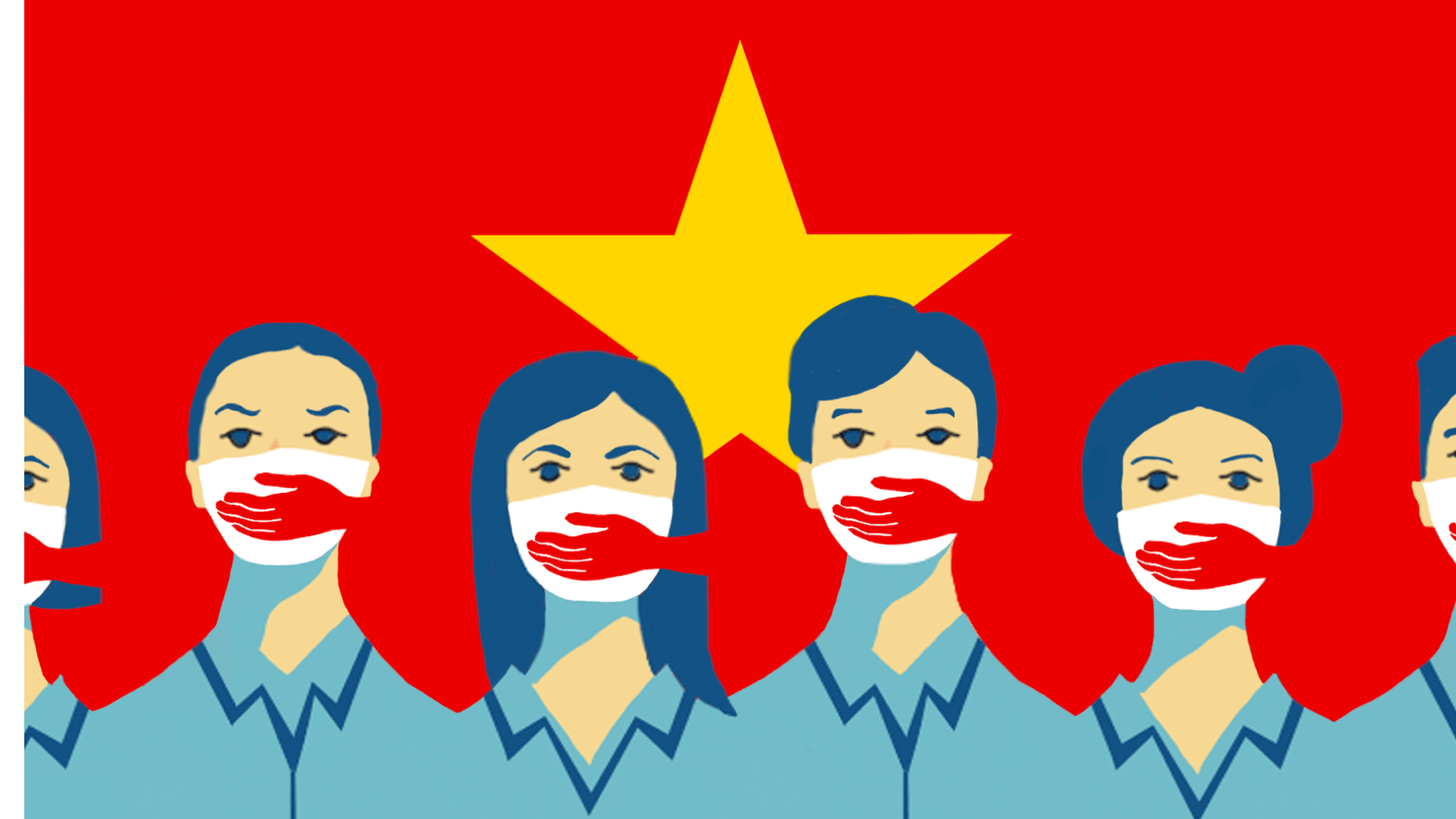
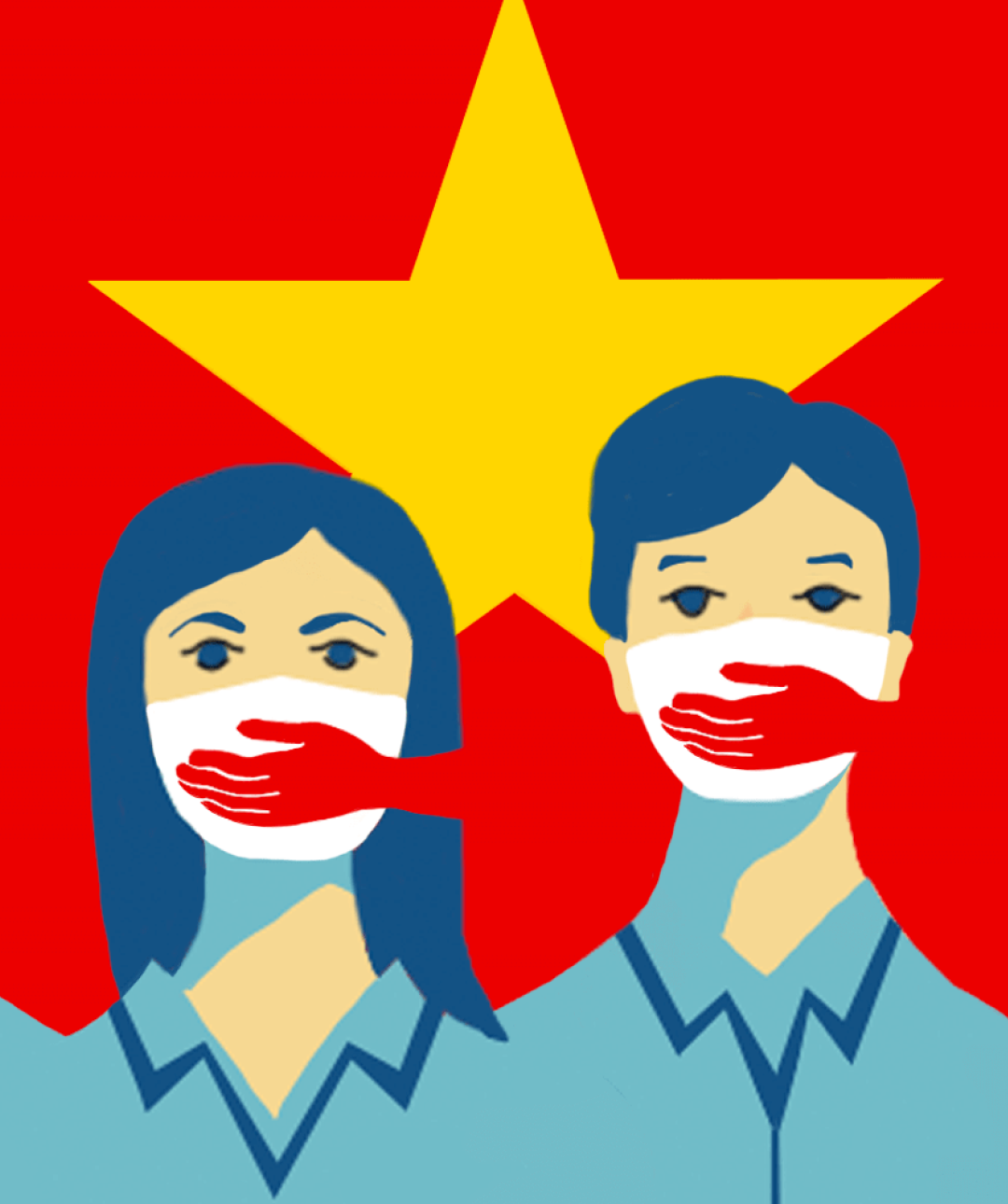

Recently, Vietnam’s government has received praise in the media for the country’s low reported COVID-19 infection numbers and death rates. However, international media outlets should not be so quick to lavish praise onto the Vietnamese government.
Thao Dinh, an activist based in Vietnam, said, “I believe Vietnam’s low infection rates is a result of collective effort: The people for doing their part, the media for informing their audience, the social networks for checking information and pressuring authorities, the international community — such as Taiwan, South Korea, and New Zealand — for role-modeling, and the Vietnamese government for being transparent and taking some good measures.”
The 2002-2004 SARS outbreak imparted painful lessons about how to deal with epidemics and led to lasting behavioral changes in the Asian countries it affected. For instance, post-SARS, mask-wearing in public when sick transformed from a rarity to a norm. One of these Asian countries where SARS made a lasting impact on citizens’ behavior is Vietnam.
So while Vietnam’s relatively low incidence of COVID-19 appears promising, the Vietnamese regime has used this time to escalate its crackdown on peaceful dissent at an alarming rate.
Political Background and Regime Type
Vietnam is a Southeastern Asian nation located on the eastern side of the Indochina peninsula that borders China, Laos, and Cambodia. Following a war between the communist North Vietnam against the U.S.-backed South Vietnam that concluded in South Vietnam’s surrender in 1975, Vietnam reunited in 1976 and became the Socialist Republic of Vietnam. This new, communist regime had no tolerance for dissidents, taking strict control over the media, schools, and religious organizations and beginning Vietnam’s long history of political repression. In the war’s aftermath, hundreds of thousands Vietnamese people were forced to undergo “re-education,” which for many meant imprisonment for years in camps where they were indoctrinated with ideology, tortured, forced to perform hard labor, and/or executed.
Today, Vietnam is a fully authoritarian, one-party regime ruled by the Communist Party of Vietnam (CPV). The CPV’s monopoly on political power is enforced by Vietnam’s constitution, which states that the party is “the only force leading the State and the society.” Elections for the 500-seat National Assembly, Vietnam’s legislative body and the “highest organ of state power,” occur every five years. The National Assembly elects the four highest leadership positions—the president, the party secretary general, the prime minister, and the National Assembly chairperson.
As is typical with fully authoritarian regimes, elections are neither free nor fair. Elections to the National Assembly are controlled by the only legally recognized party, the CPV. While most National Assembly candidates are nominated by a central or local government, since 2002 candidates have been allowed to nominate themselves. However, all candidates are screened through a three-round vetting process by the Vietnamese Fatherland Front (VFF), a popular front of pro-Communist organizations. Candidates must have the VFF’s endorsement to get their names on the ballot. In practice, the VFF serves as an extension of the CPV, only approving candidates who align with CPV policies. Controlling who is allowed to run for elections in the first place helps ensure no elected authority strays too far from the party’s ideology.
Genuine independents who attempt to run are frequently blocked from the ballot, or intimidated and harassed into dropping out. For example, singer and political activist Mai Khoi, known as the “Lady Gaga of Vietnam,” attempted to run for the National Assembly as an independent in 2016. She was not allowed on the ballot and was persecuted after her attempt, including having her concerts raided by police. In the most recent elections in 2016, only 11 candidates for the National Assembly out of nearly 900 were self-nominated. Typically self-nominated candidates allowed onto the ballot are either businesspeople or academics who are already party members or have strong government connections.
Media Landscape
The CVP not only monopolizes political power, but also the media. The regime’s control over the media is one of the strictest in the world—Reporters Without Borders’ World Press Freedom Index ranks Vietnam 175th out of 180 countries. The government owns all print and broadcast media and represses free speech. Government officials issue guidelines to local reporters for their news stories and monitor reporting trips. Reporting errors can be heavily penalized—in 2018, Tuoi Tre Online Newspaper was suspended for three months and fined hundreds of millions of Vietnam dong for allegedly misquoting President Tran Dai Quang. The government has a long history of cracking down on reporters, including in recent years, where there have been numerous instances of journalists and activists, such as Truong Duy Nhat, Le Thanh Hien, Cao Vinh Thinh, and Dang Vu Luong, falling victim to enforced disappearances, arbitrary arrests, and even death during custody.
The CVP has also extended its censorship apparatus to encompass social media. In 2013, the government passed Decree 72, banning social media accounts and blogs from discussing information that “harms national security” and the news. In 2018, the government expanded cybersecurity regulations with the passage of a law requiring social media companies like Facebook and Google to remove “anti-state” posts that “distort history” or “negate the nation’s revolutionary achievements” within 24 hours, store citizens’ data on servers within Vietnam, and provide access to user data when the government deems the law has been broken. The government also set aside resources to enforce these laws, announcing the creation of an “online troop” of 10,000 people to “fight against wrongful views” in December 2017.
Using these laws, the government has successfully pressured social media firms into compliance with its interests. Minister of Information and Communications Nguyen Manh Hung stated that as of August 2019, Facebook honors 70 to 75 percent of the Vietnamese government’s content restriction requests and Google’s YouTube honors 80 to 85 percent of requests. This cooperation has reduced the “ratio of ‘negative’ information” about the government—a metric the government monitors—from 30 percent to 10 percent.
Legal Framework
Rather than rule of law, whereby political authorities are not above the law and must comply with laws they pass, Vietnam is governed by rule by law, meaning authorities are effectively above the law and can wield it in a way that is politically convenient. Corruption, particularly high-level corruption involving government officials, is widespread. No system of checks and balances between different government branches exists, and the country’s legal infrastructure is weak. The judiciary’s role is to carry out the state’s agenda, rather than preventing rights abuses or interpreting and evaluating laws’ constitutionality. Accordingly, laws passed by the National Assembly cannot be overturned or reviewed by other government bodies. Vietnam’s lack of free and fair elections, rule of law, and system of checks and balances eliminates critical avenues for holding the government accountable, permitting the government to quash peaceful dissidents with impunity.
One legal tool the government uses to suppress dissent is the country’s vaguely worded penal code. Activists are frequently charged under the following articles: Article 109 (punishable with the death sentence and formerly known as Article 79—a revised version of the 1999 Penal Code came into effect in 2018, resulting in many articles being renumbered) for joining organizations that commit “activities against the people’s government”; Article 117 (punishable with up to 20 years in prison, formerly Article 88) for “making, storing, spreading information, material items for the purpose of opposing the State”; Article 118 (punishable with up to 15 years in prison, formerly Article 89) for encouraging the “disruption of security”; and Article 331 (formerly Article 258, punishable with up to 7 year in prison) for “abusing democratic freedoms” such as freedom of speech, press, or association “to infringe upon the interests of the State.” Citizens can also be jailed if they are found guilty of even preparing to aid or join organizations that the government does not approve of.
The criteria for what constitutes “opposing the State” or “disruption of security” are ambiguous, leaving room for the government to abuse these articles. According to the NGO The 88 Project, which documents cases of political prisoners in Vietnam, in 2019, around 40 percent of those arrested under Article 117 in 2019 were “online commentators,” and many had “no history of activism and were solely targeted for their peaceful expression online.” One charged citizen, Nguyen Quc Duc Vuong, received an eight-year sentence for Facebook posts that were pro-democracy and critical of the government.
Similarly, after being harassed and threatened for years, blogger Nguyen Ngoc Nhu Quynh, who wrote under her pen name Me Nam (“Mother Mushroom”) and frequently called out government corruption and human rights violations, was arrested in 2016 under Article 88 (currently known as Article 117) for “conducting propaganda against the state.” She was found guilty and sentenced to 10 years in prison. Her Facebook posts, blog posts, and interview to CNN and Radio Free Asia were cited as evidence of her wrongdoing.
Persecution of Civil Society
The Vietnamese government exerts strict control over civil society. Civil society organizations without approval from the state are not allowed to operate. The state has a long history of harassing, threatening, and arbitrarily arresting and detaining those involved in independent civil society organizations.
One group that has been on the receiving end of government harassment is the Brotherhood for Democracy (BFD), a non-registered civil society group that supports democratization and was founded in 2013 by activists who had previously been jailed for political reasons. Since BFD’s inception, members and their family have been harassed, arbitrarily arrested, jailed, and severely beaten to the point of having lasting medical problems. However, beginning in 2017, the government escalated its crackdown. To date, eight members have been arrested and found guilty, and at least another six were forced to flee the country. The remaining members have been threatened and have warrants out for their arrest. Jailed members include human rights attorney and BFD founder Nguyen Van Dai (sentenced to 15 years of prison and 5 years of probation), journalist Truong Minh Duc and pastor Nguyen Trung Ton (each sentenced to 12 years of prison and 3 years of probation), and secretary and translator Le Thu Ha (sentenced to 9 years in prison and 2 years of probation).
BFD is not the only civil society organization the government has targeted. In 2013, more than a dozen members of Viet Tan, a prominent, peaceful, pro-democracy opposition party based overseas, received lengthy jail sentences following two-day trials for associating with Viet Tan and peacefully expressing criticisms of the government. Many other Viet Tan members have also been physically threatened and harassed. Similarly, in 2016, police raided the offices of and interrogated, threatened, assaulted, and arrested the employees of The Vietnamese Overseas Initiative for Conscience Empowerment (VOICE), an NGO. Founded in 1997 with the goal of aiding Vietnamese refugees, VOICE has since expanded its mission to include supporting Vietnamese activists through democracy and human rights training programs.
Crackdowns on free speech during COVID-19 pandemic
In the month of June 2020 alone, at least 11 people were arrested for peaceful expression under Article 117, including land rights activist Can Thi Theau, Facebook user Nguyen Thi Cam Thuy, and journalist Le Huu Minh Tuan. While the COVID-19 pandemic rages on, the Vietnamese government has aggressively cracked down on dissent on both social media, notably Facebook, and traditional media, including the Independent Journalist Group and the Liberal Publishing House.
According to Dinh, “there is a common belief that the Vietnamese government took advantage of the pandemic to ‘clean up’ before VCP’s Party Congress in January 2021. It is evident that the government sees the people as its means to serve its political ends. It may be effective in the short-term, but it will destroy the people’s trust rapidly and cost the government in the long run.”
Facebook
Vietnam reported its first COVID-19 case in mid-January 2020. Around the same time, the government intensified its campaign to purge social media of criticism. Following a land dispute scandal where a clash between police and citizens protesting collusion in a land lease deal to a military-owned company resulted in four deaths and 30 arrests, police arrested three people for social media posts in the span of a week in January. Dozens more reported experiencing activity and account restrictions on Facebook and YouTube. Between January and March, 654 Vietnamese citizens who made Facebook posts about COVID-19, including posts criticizing the government for inaccurate death rates and corruption in its handling of the crisis, were forced to attend “working sessions” where they had to remove their posts. Some were additionally fined and/or detained for months.
Then, from mid-February to early April, the Vietnamese government significantly slowed down traffic to Facebook to strongarm Facebook into “restrict[ing] access to content which [the government] has deemed to be illegal.” Following this pressure, Facebook complied with removal requests, and traffic to the site quickly returned to normal.
On April 15, around the same time the government stopped throttling Facebook, the government passed a new law ramping up its social media crackdown. The law outlawed “fake news,” with “fake news” being defined broadly as social media posts espousing anything from misinformation about COVID-19, to banned literature, to maps contradicting Vietnam’s South China Sea claims.
Independent Journalist Group
Since the beginning of the pandemic, three prominent members of the Independent Journalist Group (IJAVN) have been arrested and detained under Article 117 for engaging in what the government perceives to be anti-state actions. IJAVN is an independent, unsanctioned press organization founded in 2014 and the only independent journalist group in Vietnam. Its mission is to promote politically independent reporting and the freedom of information in Vietnam, where the government controls the press.
Radio Free Asia reporter and IJAVN Vice President Nguyen Tuong Thuy and freelance reporter and IJAVN member Pham Chi Thanh were arrested two days apart in May, while IJAVN member Le Huu Minh Tuan was arrested in June. Another IJAVN member, IJAVN’s president Pham Chi Dung, was arrested and detained in November 2019 and still has yet to receive a trial.
Liberal Publishing House
Since October 2019, the government has launched a concerted attack on the Liberal Publishing House (LPH), an independent publisher of nonfiction, politics-oriented literature founded in February 2019. As with independent media organizations, independent publishers are nonexistent in Vietnam, and part of LPH’s mission statement is to challenge the state’s vice-like grip on publishing. LPH has been subjected to police operations to arrest its employees, cyberattacks on its Facebook page and website, closures of its bank accounts without explanation, and harassment, interrogation, and intimidation of its customers.Around 100 people have been detained or interrogated solely for possessing LPH-printed materials.
Dozens of individuals, even those only loosely affiliated with the publisher, have been abducted and detained. On May 8, Phung Thuy was arrested during a book delivery. During his detainment from 9am to 3am the next day, he was beaten and tortured, sustaining injuries, such as kidney failure and stomach bleeding, so serious that they left him incapable of moving his hands or feet. After he was released, he retreated into hiding. In response, police detained his daughter, agreeing to release her only when he returned.
According to Pham Doan Trang, a noted journalist who worked for the LPH, following this torture incident, suppression has only increased and “all members of LPH have been hunted down and abducted by police.” Due to this sustained, intense harassment, she ceased working for LPH in July.
Conclusion
Freedom of expression is a basic tenet of international human rights law and is protected under Vietnam’s own constitution. Yet, since the beginning of the COVID-19 pandemic, the international media’s reporting on Vietnam — almost entirely fixated on coronavirus statistics — has revolved around praising the government. Meanwhile, the Vietnamese government has quietly taken advantage of the situation and escalated its crackdown on dissidents and critics, routinely punishing and imprisoning citizens for peacefully expressing their opinion.
If the Vietnamese government respects the freedom of expression, it must immediately release its prisoners of conscience and cease its harsh, repressive practices towards critics. However, the government has already demonstrated a repeated willingness to crush any semblance of political dissent, especially when the world is not looking. Therefore, it is up to the international community to remain vigilant about politically motivated arrests, continue calling out and pressuring the government, and bolster the voices and stories of Vietnamese dissidents. Success containing coronavirus in no way excuses egregious violations of human rights.