

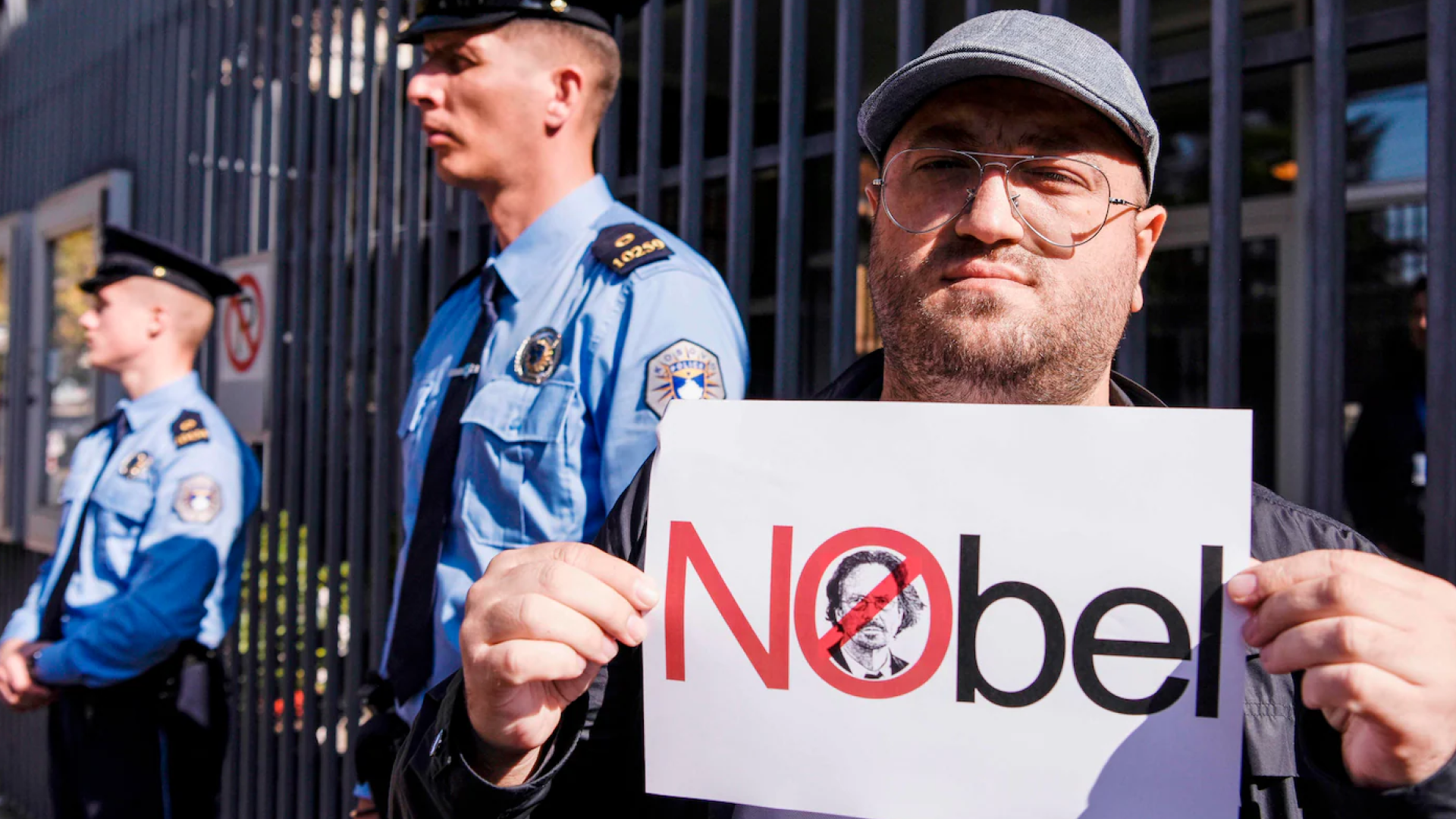


When the Nobel Committee asked the public on Twitter if they had read the works of the Austrian writer Peter Handke, one of the winners of the 2019 Nobel Prize in literature, a Bosnian man, Emir Suljagic, answered back: “No, we were busy looking for our families and friends buried in mass graves which he denied existed.”
It is a sentiment that was widely shared in the Western Balkans, a region that is still reeling from a decade of wars. We still do not have a clear accounting of all the victims of Slobodan Milosevic, the late Serbian dictator whose policies Handke publicly encouraged and endorsed.
In our part of the world, some 150,000 people, primarily Bosnian and Kosovo Albanian civilians, had their lives cut short in a senseless war that brought memories of the Holocaust and the Dark Ages back to Europe.