HRF classifies Nigeria as ruled by a hybrid authoritarian regime.
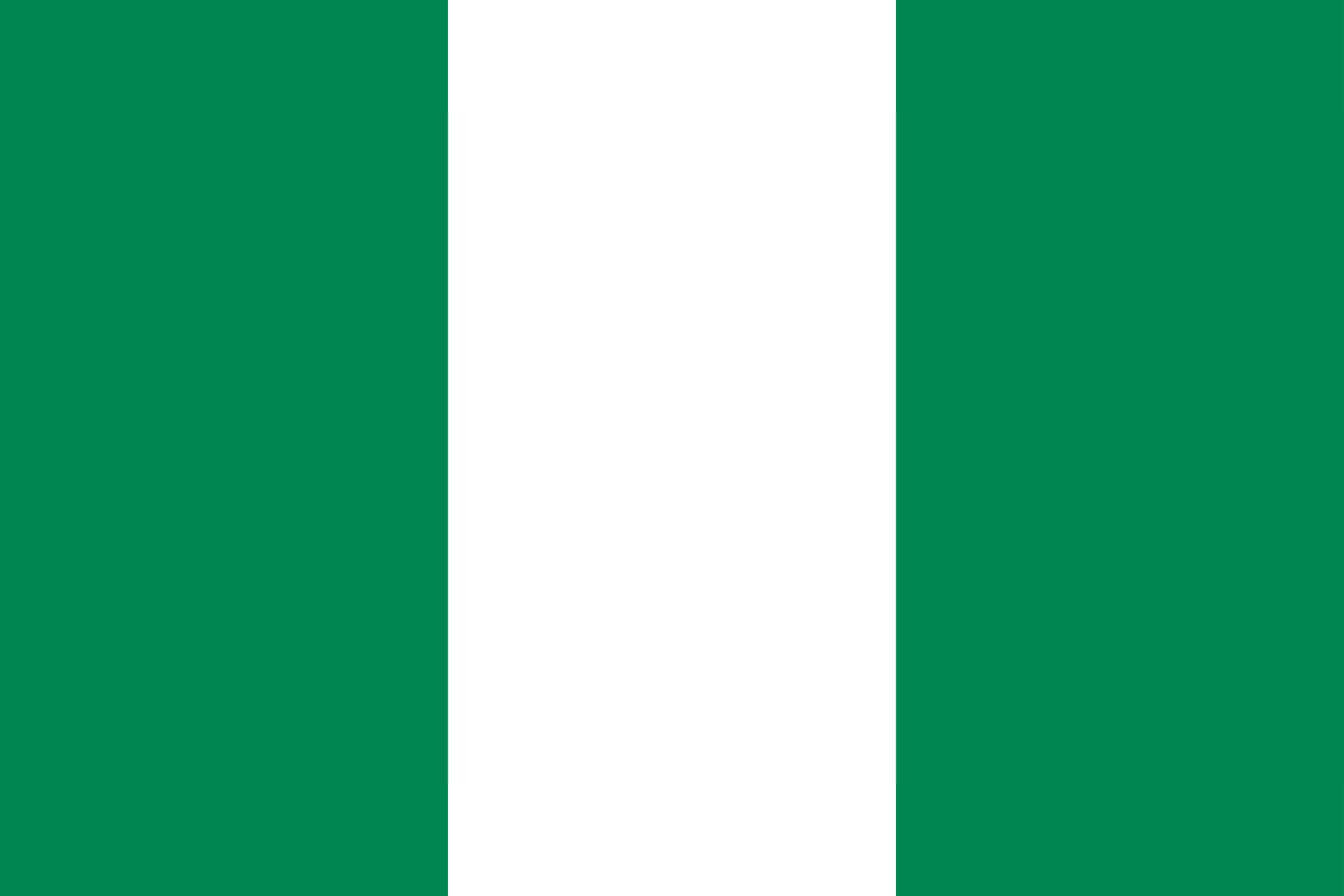
Nigeria is a federal republic of 36 states with a presidential system of government. The Head of State, Bola Tinubu, was declared the winner of the flawed 2023 election. Legal challenges, protests, and calls for annulment, violence that killed more than 100 people, the disenfranchisement of over one million people, and evidence of irregularities and manipulation discredited the integrity of the polls. Since gaining independence in 1960, Nigeria, Africa’s most populous nation, has grappled with ethno-political cleavages, which led to decades of political turmoil marked by a bloody civil war, a series of military coups, and secessionist and terrorist insurgencies. Since transitioning from military rule in 1999, Nigeria has experienced the longest period of elected civilian rule in its history, with seven consecutive elections and a peaceful transfer of power between a ruling and opposition party in 2015. However, successive governments have consolidated control over all branches of government. With no meaningful checks to executive power and an endemic culture of corruption, clientelism, and impunity, the country remains mired in a degenerating, multidimensional insecurity and maladministration crisis.
Key Highlights
Electoral competition is significantly skewed in favor of the ruling party, to the point where the real, mainstream political opposition has an unlikely but realistic chance to win. Although national elections are competitive, the regime in power and aligned non-state actors hinder the real, mainstream opposition’s campaigning, engage in voting irregularities, undermine electoral oversight, and leverage advantages drawn from the power of incumbency to tip the electoral playing field in their favor.
Independent media, political leaders, civil society leaders, organizations, and members of the general public are seriously and unfairly hindered in their ability to openly criticize or challenge the regime. The regime has seriously intimidated or obstructed the work of independent media, civil society leaders and organizations, and systematically repressed dissenting protests against its most prominent and widely publicized policies.
Institutions largely fail to serve as independent checks on the governing authority. Courts frequently and unfairly failed to check, or enabled, the regime’s attempts to significantly undermine electoral competition, repress criticism, or retaliate against those who express open opposition to its most prominent, widely publicized policies. The regime has seriously undermined institutional independence to the point where cases or issues challenging the regime are no longer brought or frequently dismissed. Judicial, legislative, or executive institutions systematically, frequently, and unfairly fail to hold regime officials accountable. The regime has subjected judicial and legislative institutions to reforms that abolish or seriously weaken their independence or operational effectiveness.