HRF classifies Burma as ruled by a fully authoritarian regime.
Since gaining independence from British colonial rule in 1948, Burma (also known as Myanmar) has experienced recurrent cycles of military rule and civilian government, alongside persistent ethnic conflicts. Following the adoption of a new constitution in 2008 and the dissolution of military rule in 2011, Burma held nationwide competitive elections in 2015, marking the beginning of political liberalization. Although the military maintained significant policy-making influence under the 2008 constitution, the opposition National League for Democracy (NLD) won the polls in 2015 and again in 2020. In early February 2021, just hours before the new parliament was set to convene, the military seized power in a coup d’état, alleging widespread fraud in the November 2020 election. Senior General Min Aung Hlaing subsequently assumed the leadership of the junta, also officially known as the State Administration Council (SAC). As the junta ended the state of emergency in July 2025, the SAC was officially dissolved and replaced by the State Security and Peace Commission (SSPC), a body tasked with overseeing the phased elections scheduled between December 2025 and January 2026.
Key Highlights
National elections are absent, rendering moot assessment of electoral competition. In February 2021, the Burmese military, led by General Min Aung Hlaing, seized power and imposed a total of four-and-a-half-year-long state of emergency. The ruling junta substantially went after the opposition, imposed restrictive conditions for political parties, and packed the electoral oversight body with loyalists to serve its interests.
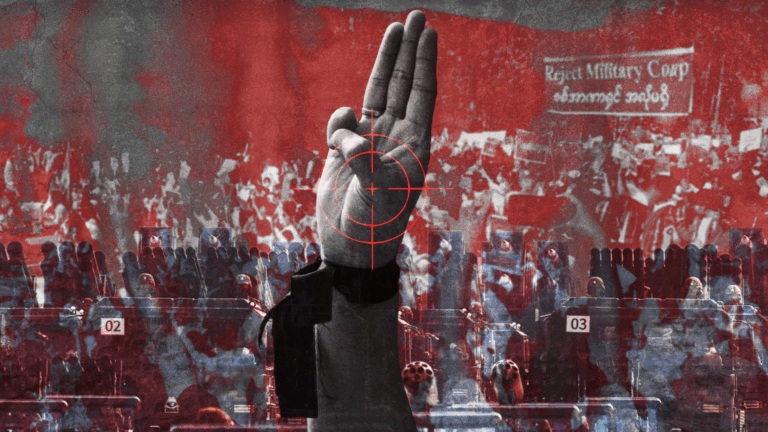
Independent media, political leaders, civil society leaders, organizations, and members of the general public face overt and systematic retaliation if they openly criticize or challenge the regime. The junta has repeatedly attacked independent news organizations, detained and prosecuted journalists, political figures, and pro-democracy activists. Peaceful protesters have been subjected to harsh penalties, including police violence and execution. The junta has also toughened legislation to criminalize criticism of the coup and the military corps, while significantly broadening online surveillance.
Institutions largely fail to serve as independent checks on the regime. Since the coup, the junta has retained a monopoly over legislative, executive, and judicial powers. Courts have become heavily militarized, and cases concerning civilians are largely decided by either courts-martial or special courts that operate inside prisons under military supervision.