



In August 2025, HRF published “Youthquake: Youth-led Movements Shaking Up East and Southeast Asia,” which examined how youth movements in Hong Kong, Burma, Thailand, the Uyghur Region, Tibet, and diaspora communities mobilized from 2019 to 2023 to demand democracy, justice, and freedom. Across East and Southeast Asia, young people emerged as a dynamic force for democratic change, rising up against authoritarianism rooted in military rule, one-party dominance, or dynastic politics. Youth embraced innovative nonviolent strategies to galvanize large swaths of the population.
However, crackdowns on these movements have intensified since 2020, as authoritarian regimes have returned to a familiar playbook of repression: imprisoning activists, enforcing draconian laws, and orchestrating campaigns of transnational repression against those in exile.
Hong Kong: Convicted into Silence, Pursued into Exile
The Hong Kong government responded with a heavy hand to shut down the city’s 2019-2020 pro-democracy protests. Through the passage of draconian legislation such as the National Security Law (NSL) and Article 23 of the Basic Law, Hong Kong officials overhauled the rule of law to overtake the court systems, indiscriminately detain peaceful protesters and democracy advocates on baseless charges, and shut down media organizations and dissenting voices.
Exiled activist and former elected district councillor Carmen Lau has confronted the Hong Kong government head on. She fled political persecution in 2021, but the regime has continued to pursue her in exile to prevent her from speaking out. Last year, her neighbors in the United Kingdom received letters containing innuendos and sexualized, AI-generated photos, purporting to be from Lau. The letters, posted from Macau, included her address and body measurements. A similar pattern was directed at Ted Hui, a former member of the Hong Kong Legislative Council based in Australia, and his wife. A fake sexualized poster depicting his wife as a sex worker was sent to his boss. Both incidents underscore how the regime attempts to smear exiled activists using gender-based violence.
The Hong Kong government has also continued to hunt critics of the regime in their new homes abroad by issuing arrest warrants and bounties, and by harassing family members of activists in exile. In February 2026, a Hong Kong court sentenced Kwok Yin-sang — the father of US-based Anna Kwok, activist and former executive director of the Hong Kong Democracy Council (HKDC), — to eight months in prison under Article 23 for “attempting to deal with financial assets belonging to an absconder.” His conviction was widely seen as retaliation for his daughter’s advocacy and an attempt to intimidate other exiled activists into silence by threatening their families in Hong Kong.
Many brave activists who have remained in Hong Kong are kept behind bars or face a growing threat to their work. Prominent activist Joshua Wong, who has been continuously imprisoned since 2020, was handed another charge of “foreign collusion” while in prison for allegedly conspiring with exiled activist Nathan Law and another individual to call on the international community to impose sanctions or blockades against Hong Kong and the Chinese Communist Party (CCP). If convicted, he faces possible life imprisonment.
In February 2026, the Hong Kong government sentenced pro-democracy media tycoon and British citizen Jimmy Lai to 20 years in prison under the Beijing-imposed NSL on charges of “sedition” and “conspiracy to collude with foreign forces.” His sentence is by far the most severe penalty imposed under the city’s national security offenses.
Hong Kong has even gone so far as to restrict access to books about Lai’s life and political views. In June 2026, police arrested Leticia Wong, a former elected district councillor and owner of an independent bookstore, and her co-owner for selling seditious materials, including Lai’s biography, Troublemaker, and hosting discussions with opposition figures such as former lawmaker Margaret Ng Ngoi-yee and cartoonist Zunzi. Before the arrests, the store was already undergoing constant government harassment and “administration checks” for displaying commemorative motifs and references, such as “35/5” signs in memory of the Tiananmen Square Massacre or “612” for the 2019 pro-democracy protests. The arrests, along with growing restrictions on books and publications, highlight just how much Hong Kong’s civic space has shrunk.
Thailand: Rejecting Reform of the Royal Defamation Law
Since the youth-led pro-democracy movement in Thailand began in 2020, more than 1,900 people have been persecuted for their political expression or their participation in protests. The Thai regime has increasingly employed the royal defamation law (Article 112 of the Criminal Code), charging at least 285 individuals as of December 2025. Among those accused is prominent human rights lawyer Arnon Nampa, who publicly called for democracy and reforms to the monarchy. Nampa was sentenced to 31 years and nine months in prison and faces additional pending royal defamation cases.
Sopon “Get” Surariddhidhamrong, a Thai activist and a member of the pro-democracy group Moke Luang Rim Nam, was sentenced to an additional two years in prison in September 2025 after his fourth conviction under Article 112 for reading a statement reportedly criticizing the monarchy’s alleged role in constitutional amendments, politics, and receiving financial or other benefits from merchants during the 2022 Asia-Pacific Economic Cooperation summit in Thailand. He faces a total of 10 years in prison. Surariddhidhamrong’s detention, which was deemed arbitrary by the UN Working Group on Arbitrary Detention, highlights Thailand’s continued targeting of young activists.
Thai activist Angelo Sathayu Sathorn compared the environment for peaceful dissent in the country to that of Hong Kong. “Thailand also responded to waves of change or waves of hope with violence. This violence manifests in both physical and legal forms. It not only weakened the capacity of activist groups but also fostered an atmosphere of fear, causing individuals — particularly newcomers or prospective participants in movements — to rethink security. Simply put, the state escalated consequences for exercising such rights,” he said in an interview with HRF.
Democratic reform and justice for political prisoners remain a long way off, with more than 90% of bail requests for political prisoners denied from 2024 to 2025. In July 2025, Thailand’s House of Representatives voted down draft proposals that sought to grant amnesty to those charged under Article 112. The outcome reflects deep division in Thai politics, as issues concerning the monarchy remain untouchable.
Faced with legal charges and the threat of imprisonment, some young activists have been forced to leave the country and begin new lives in exile. Parit Chiwarak, a prominent activist who faces 25 counts under Article 112 and could face a prison sentence of more than 300 years if convicted on all charges, fled the country in 2024.
Burma: Normalizing the Junta’s Rule
Despite ongoing human rights violations amidst a worsening civil conflict, Burma’s military junta staged a three-phase election, starting in December 2025, to cement its transition to “civilian rule.” Make no mistake: The elections were a sham marked by rampant irregularities that restricted genuine competition. Several parties, including the National League for Democracy (NLD), were excluded from running. Under martial law and amid continued clashes between the military and resistance groups, citizens from several townships were barred from voting, and ethnic minorities — including the Rohingya and the Tamils — were stripped of their right to vote. Despite the United Nations, European Union, and human rights groups denouncing the elections, the regime proceeded with the election and declared coup leader Min Aung Hlaing president in April.
The regime has continued to whitewash its “civilian government” by seeking to establish diplomatic relations while silently escalating civilian violence. More than 14,000 people remain in prison under worsening conditions, despite amnesty granted to some prisoners in the wake of the regime’s victory in the sham elections it engineered. Sai Zaw Thaike, a photojournalist who is still serving a 20-year prison sentence with hard labor for his reporting, has reportedly been tortured and beaten in Insein Prison. Sai Zaw Thaike has also been denied medical treatment for his kidney disease and hemorrhoids.
Like so many youth in Hong Kong and Thailand, many young people from Burma escaped to neighboring countries when the military junta’s crackdown on protests began. In exile, activists have experienced psychosocial challenges and weak refugee protections while attempting to raise awareness about human rights violations under military rule. Since the junta banned encrypted messaging applications and virtual private networks in 2024, exiled activists have struggled to maintain communication with sources inside Burma.
The regime has strengthened its ties with like-minded authoritarian regimes, including Beijing, collaborating to target critics and dissidents abroad. In June, the CCP arrested Min Zin, an American political analyst and founder of the nonprofit Institute for Strategy and Policy (ISP) Myanmar, under espionage charges during a visit to China for a conference. Min Zin’s work focuses on the CCP’s growing influence in Burma. His arrest sends a chilling message that those criticizing the Burmese military regime are unwelcome in authoritarian third countries such as China.
China: Diaspora Communities Persist Despite Rising Transnational Repression
Transnational repression remains both a key challenge and a central advocacy point for youth mobilization against the CCP in exile. Leveraging family ties and the often unstable legal status of refugees and émigrés, the CCP continues to expand its transnational repression tactics, from increasing use of foreign proxies to gendered and AI-enabled online harassment.
In July 2025, Zhang Yadi (“Tara”), a Chinese student and Tibetan rights advocate based in France, was arrested after returning to China for a planned trip to the Tibetan region. Charged with “inciting others to split the country and undermine national unity,” she faces up to 15 years in prison. Although the arrest took place in China, she is being punished for her advocacy efforts in France. The message from the regime to the diaspora is clear: Peaceful advocacy abroad can be punished retroactively upon re-entry into China. In the context of China’s newly enacted ethnic unity legislation, which criminalizes ethnic rights advocacy abroad, this further endangers freedom of movement.
The CCP also collaborates with authoritarian regimes to suppress criticism and control narratives. In August 2025, China’s Embassy staff in Bangkok pressured the Bangkok Art and Cultural Centre to shut down its exhibition, titled “Constellation of Complicity: Visualizing the Global Machinery of Authoritarian Solidarity,” and remove artwork by Tibetan, Hong Kong, and Uyghur artists.
The CCP’s efforts to control international narratives have even extended to democracies. In the United States, Eileen Wang, a Chinese-American politician and former mayor of Arcadia, California, was charged and pled guilty to acting as an illegal agent for a foreign government. Wang used the “US News Center” website to promote Beijing’s propaganda. In 2021, Wang published an article, sent to her by a CCP agent, denying reports of persecution and abuses of Uyghurs. The case demonstrates the extent to which CCP agents and affiliates seek to sway public opinion in the United States and in broader diaspora communities.
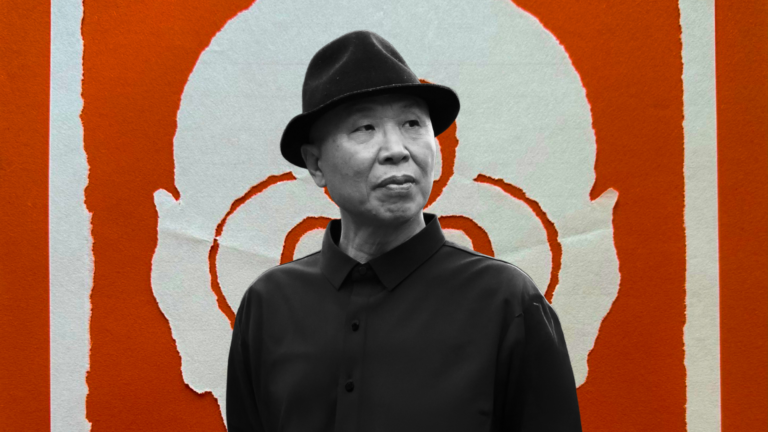
Democratic countries have begun to increase their policy responses to transnational repression. In March 2026, Italian authorities expelled eight Chinese nationals suspected of spying on and harassing leading Chinese dissident activist Li Ying, known as Teacher Li, whose social media platform became a conduit for sharing uncensored information from inside China with the world. According to Safeguard Defenders, this “marks the first decisive action against the CCP’s ongoing transnational repression operations on Italian soil,” and it coincided with broader efforts in Europe to frame transnational repression as a human rights issue requiring a zero-tolerance response. In Canada, Motion M-62’s resettlement pathway for 10,000 Uyghurs offers a more protective response to transnational repression by prioritizing at-risk refugees, including young diaspora members whose vulnerability and civic potential are often overlooked.
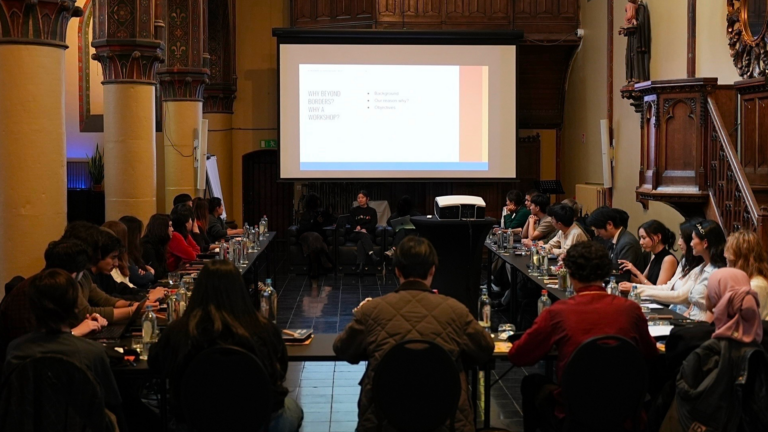
While institutional responses are uneven, young activists continue to combat community fragmentation, an intended effect of the CCP’s repression, by anchoring in communal protection and resilience. In Zhang Yadi’s case, her friends, supporters, and other diaspora activists have kept her case internationally visible, and continue to sustain pressure campaigns for her release. Youth-led diaspora movements have continued to collaborate through joint peaceful protests, advocacy campaigns, and long-term resilience-building projects, such as HRF’s Beyond Borders initiative, which aims to contribute to the growing efforts to strengthen online and in-person connections across communities and generations.
Conclusion
By embracing new strategies and building new collaborations, young people in East and Southeast Asia continue to lead pro-democracy movements through courage, creativity, and nonviolence. HRF continues to support youth activists through capacity building, amplifying the movements’ voices and experiences, and policy advocacy.