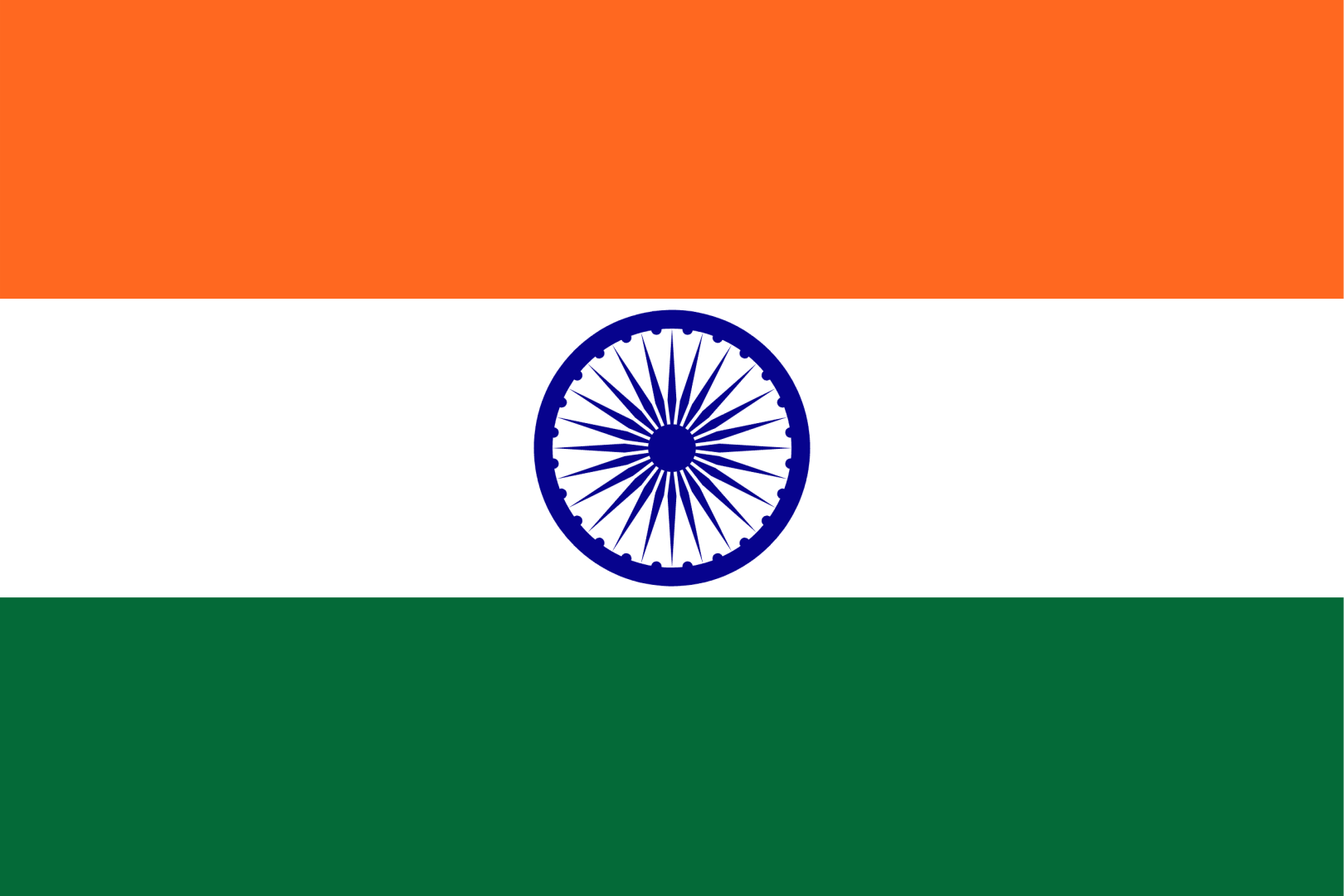
HRF classifies India as ruled by a hybrid authoritarian regime.
After independence in 1947, the Indian National Congress (Congress) emerged as the dominant party and governed for most of the next six decades, shaping the country’s postcolonial institutions under the leadership of the Nehru–Gandhi dynasty. In 2014, Narendra Modi, then Chief Minister of Gujarat, led the Bharatiya Janata Party (BJP) to a decisive victory, ending Congress’ long electoral dominance and inaugurating an era of right-wing Hindu nationalist rule. Modi has since secured three consecutive terms – the first Indian prime minister to do so since Jawaharlal Nehru – cementing both his personal authority and the BJP’s central role in national politics. His government remains deeply polarizing, with supporters celebrating him for economic growth and assertive nationalism, and critics pointing out the systematic dismantling of democratic freedoms, weakening institutional independence, and targeting Muslim and other minority communities.
Key Highlights
Electoral competition is significantly skewed in favor of BJP to the point where the real, mainstream political opposition has a highly unlikely although realistic chance to win. While the 2024 election denied the BJP an absolute majority for the first time in a decade, forcing it into coalition, the party still commands the largest bloc in parliament and benefits from structural advantages. These stem from years of politically motivated investigations and arrests of opposition leaders, an entrenched campaign finance imbalance fueled by the electoral bonds scheme, which was annulled in 2024, and weakened electoral oversight.
Independent media, political leaders, civil society, and regular people are seriously and unfairly hindered in their capacity to openly criticize or challenge the regime. The BJP has ordered the shutdown of several international NGOs, expanded censorship powers through sedition and anti-terrorism laws, and relied on raids and financial scrutiny to intimidate media outlets. Non-state actors such as paramilitary right-wing Hindu organizations, including the Rashtriya Svayamsevak Sangh, further amplify repression through online harassment and attacks on journalists, activists, and protesters. Muslims and other marginalized groups have been disproportionately targeted through police violence, punitive demolitions, and cow-vigilante attacks, narrowing their ability to dissent.
Despite progress in certain aspects, courts and other independent institutions still frequently and unfairly side with the regime when reviewing challenges to regime policies or interests, with courts often showing excessive delays in election-related cases and reluctance to curb the misuse of laws against critics. Legislative institutions have been weakened by the BJP curtailing time for debate in the upper and lower house and mass suspensions of opposition lawmakers. Oversight bodies such as the Election Commission, Enforcement Directorate, and Information Commissions have also seen their autonomy eroded through statutory reforms that concentrate appointment and tenure powers in the hands and main interests of the regime.