
In the News
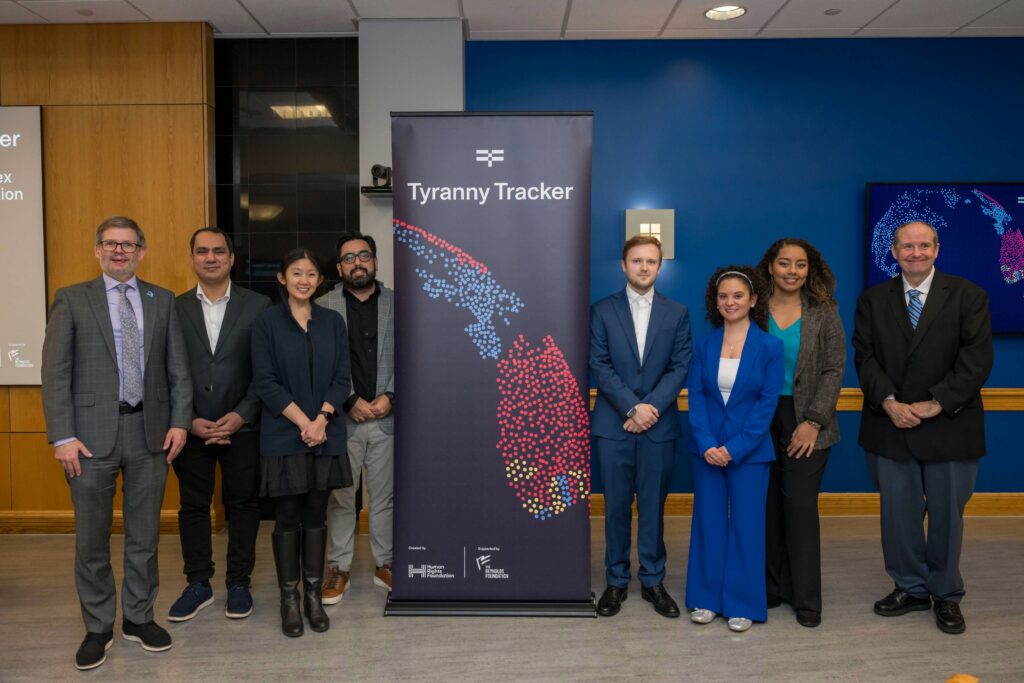
On Oct. 27, HRF and Action for Democracy celebrated a new partnership between the Tyranny Tracker and Action for Democracy’s Authoritarian Collaboration Index (AuthCollab Index) in London. The AuthCollab Index is a “first-of-its-kind, machine-assisted database that systematically detects, tracks, and categorises transnational collaboration events between authoritarian regimes, authoritarian-leaning governments, and authoritarian-leaning parties globally – in near-real time.” Action for Democracy relaunched its ACI this month, now built on the Tyranny Tracker. The integration pairs A4D’s automated mapping of transnational authoritarian collaboration with HRF’s structured intelligence and classification of authoritarian regimes, producing a more complete picture of how autocrats coordinate.
The events on Oct. 27 included a press conference with HRF and Action for Democracy, featuring HRF Chairwoman Yulia Navalnaya, HRF Chief Legal and Policy Officer Javier El-Hage, Action for Democracy Executive Director David Koranyi, Action for Democracy Director for Advocacy Domonkos Kovács, Venezuelan opposition leader and former political prisoner Jesús Armas, and Hong Kong dissident Carmen Lau. Action for Democracy announced the release of its “October 2026 Trends Report,” which finds that although China and Russia remain the “primary anchors of a global axis of autocracy,” other autocratic countries — especially in Africa and Asia — have institutionalized media and technical cooperation.
HRF also announced the release of its report, “No Safe Distance: How Authoritarian Regimes in Africa Pursue Critics Across Borders,” which explores African regimes’ use of and collaboration in transnational repression. HRF and Action for Democracy also hosted a private dinner at the National Liberal Club in London to continue building a community committed to defending democracy and combating authoritarianism around the world.
New Research & Reports
No Safe Distance: How Authoritarian Regimes in Africa Pursue Critics Across Borders
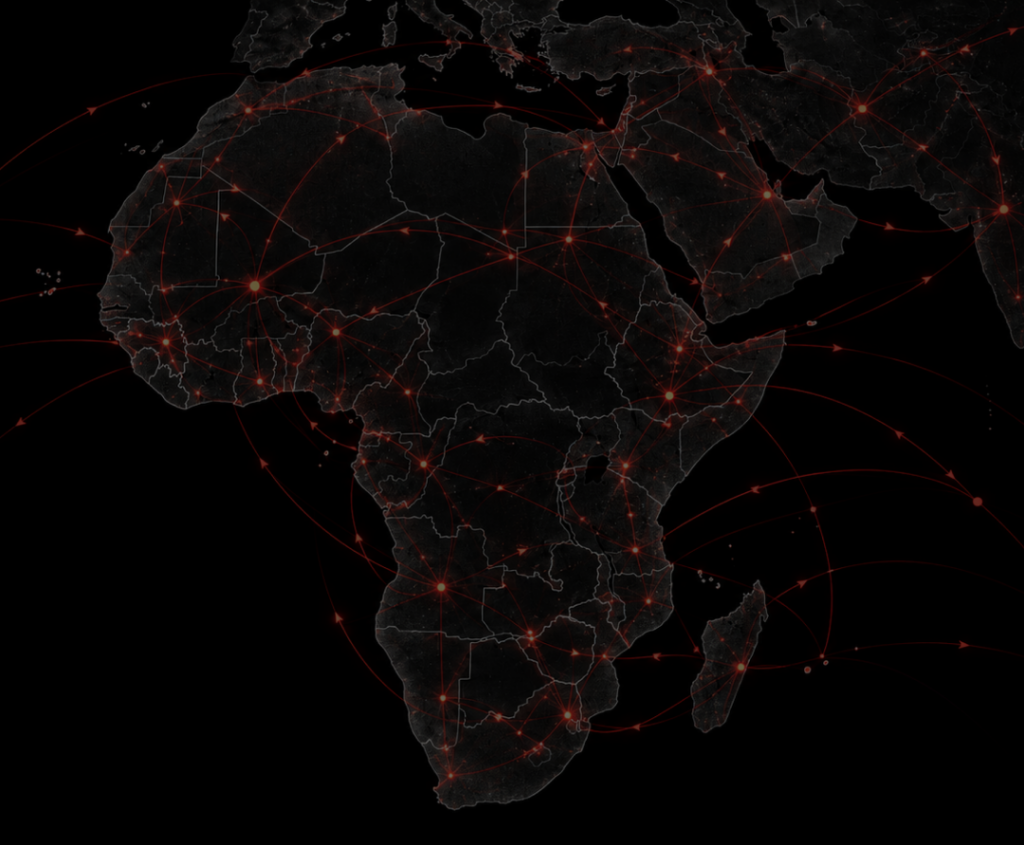
This month, the Tyranny Tracker team released the first in a series of reports on transnational repression. This first report examines how authoritarian governments in Africa pursue critics abroad through an expanding system of transnational repression, including through Interpol abuse, spyware, digital harassment, threats against family members, cross-border abductions, forced returns, and assassinations. It also examines how regimes collude to exploit bilateral agreements, immigration and asylum systems, intelligence sharing, regional security frameworks, and diaspora networks to extend repression beyond their territories.

Kazakhstan Voted. But the New Constitution Had Already Chosen the Winner
On Aug. 23, Kazakhstan elected its parliament for the first time under its new constitution. However, neither a single independent candidate nor a single party opposed President Kassym-Jomart Tokayev. The new constitution was sold as a modernization of the state, but this first election revealed its real purpose — not to open the political system, but to make the rule of Kazakhstan’s current elite more legally convenient and more durable. HRF’s blog post by Policy Researcher Tigran Sargsyan examines the historical buildup to Kazakhstan’s new constitution and how it follows the playbook of other post-Soviet regimes to maintain power.
Tyranny Tracker Events
The Tyranny Tracker Abroad …
This month, HRF presented the Tyranny Tracker at several events in Europe, including the Czech Republic, the Netherlands, Spain, and the United Kingdom. On Oct. 12, we hosted and moderated a panel discussion on elections in Latin America at the Forum 2000 in Prague, featuring Venezuelan pro-democracy activist Pedro Uruchurtu, Nicaraguan dissident Edipcia Dubon, and elections expert Miguel Angel Lara Otaola. On Oct. 14, we presented at The Hague’s Asser Institute, where the Tyranny Tracker team was joined by Asser Institute researcher Dr. Stephanie Triefus, Swazi activist Tanele Maseko, and Syria Justice & Accountability Centre Legal Director Alan Haji.
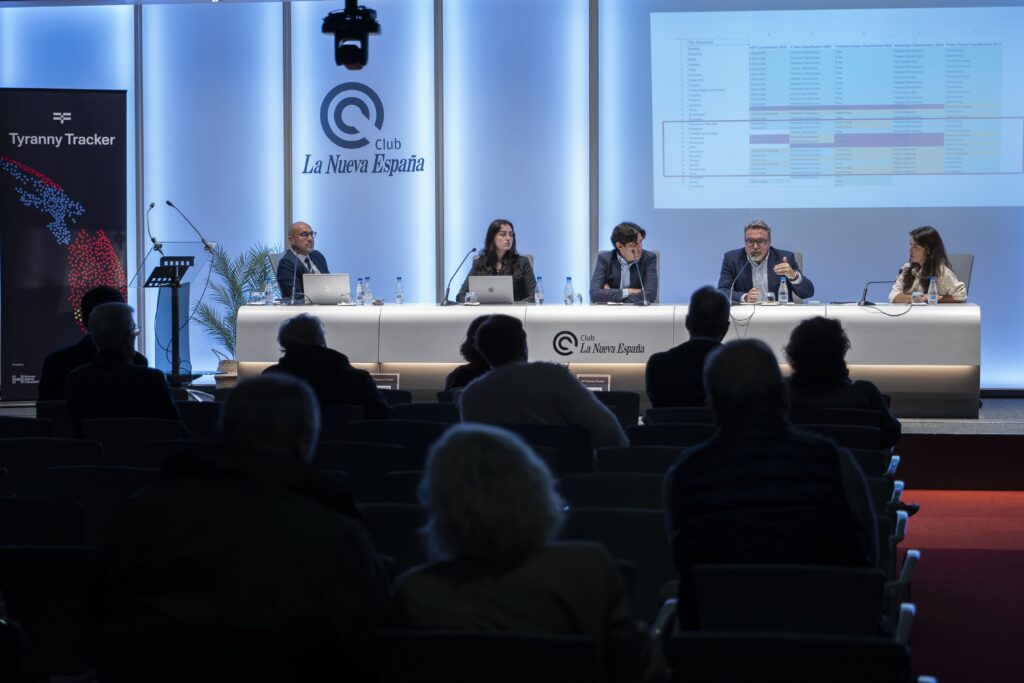
The next week, HRF hosted three events across Spain. At Club de Prensa de la Nueva España (Oviedo), Sociedad El Sitio (Bilbao), and Universidad Loyola (Sevilla), the team examined authoritarianism and democratic backsliding in Latin America. HRF was joined by pro-democracy leader Leopoldo López, Senator Íñigo Fernández García, Jesús Armas, and Nicaraguan dissident Luis Alberto Montoya.
The Tyranny Tracker team then headed to the UK to present the index at the Institute of Economic Affairs (IEA) in London on Oct. 26, and the University of Manchester on Oct. 29. Lord Daniel Hannan, IEA’s director general, and Jesús Armas joined the discussion at the Institute of Economic Affairs. At the University of Manchester, Anna Ridgway, the national coordinator of Students For Liberty, provided opening remarks, with Carmen Lau joining the discussion.
These events bookended the joint press conference and dinner with Action for Democracy on the Tyranny Tracker and AuthCollab Index.
On Oct. 29, HRF also presented the Tyranny Tracker at the Hertie School in Berlin. Dr. Violeta Loreno-Max, Professor of International Law and Director of the Centre for Fundamental Rights, provided opening remarks, with Lisa Voigt, a PhD candidate in Governance at the Hertie School, and Esra Demir-Gürsel, research fellow at the Centre for Fundamental Rights, joining HRF’s researchers as panelists.
… And Back Home
On Oct. 19, HRF presented the Tyranny Tracker at Seton Hall University, with introductory remarks by Courtney Smith, dean of the School of Diplomacy and International Relations, and Associate Dean Martin Edwards moderating the discussion. Faisal Saeed Al Mutar, founder and president of Ideas Beyond Borders, gave the keynote address, sharing his expertise on developments in the Middle East. See The Setonian’s article and the university’s recording of the event!
Country Spotlight
India
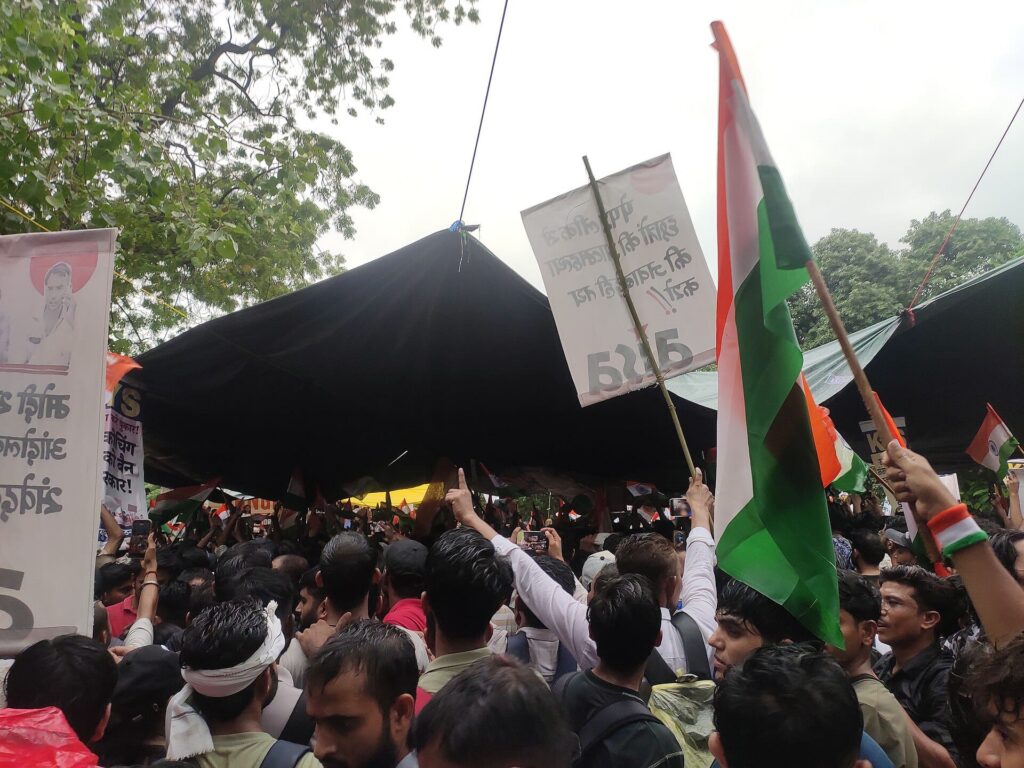
Since July, Indian students and other young people, frustrated with the Modi regime’s policies and lack of accountability, have taken to the streets to express their dissent. A remark by the chief justice of India against unemployed youth sparked a satirical online movement — the Cockroach Janta Party (CJP) — that grew into a serious youth-led movement nearly overnight.
In July 2026, the Delhi police used excessive force to suppress a peaceful protest led by the CJP, with tens of thousands of people — primarily students and Gen Zers — marching to the Indian Parliament from Jantar Mantar to demand the resignation of Education Minister Dharmendra Pradhan for his ministry’s failure over leaks of the NEET, India’s national medical entrance exam. At least 21 students have committed suicide since the government canceled the NEET earlier this year over the leaks, forcing thousands of students to retake the test. The police reportedly used tear gas, batons, and barricades to disrupt the peaceful protests. Sonam Wangchuk, an engineer, education reformer, and activist, had been on a hunger strike for 26 days to protest the government’s lack of accountability for the leaks. Earlier that week, he was forcefully taken to a government hospital, where he continued his fast. CJP supporters and organizers announced their own hunger strike after Wangchuk was taken away.
This month, the CJP leaders and opposition leaders from the INDIA bloc participated in demonstrations demanding the resignation of Chief Election Commissioner Gyanesh Kumar over the alleged discriminatory execution of the SIR. The protests led to mass detentions of at least 700 protesters by Delhi police at Jantar Mantar; at least 43 journalists covering the protests across the country were also detained. The protesters — civil society leaders, advocates, and opposition politicians — accused the Delhi police of using draconian measures, including deploying thousands of police to force people into buses, closing metro stations near Jantar Mantar, imposing an internet shutdown, and sexually assaulting three journalists. Most of the detained individuals have been released, but the actions of the police raise concerns over civic freedom in India, with the regime increasing its repression of dissenters.
To learn more about the state of dissent in India, read the Tyranny Tracker’s analysis.