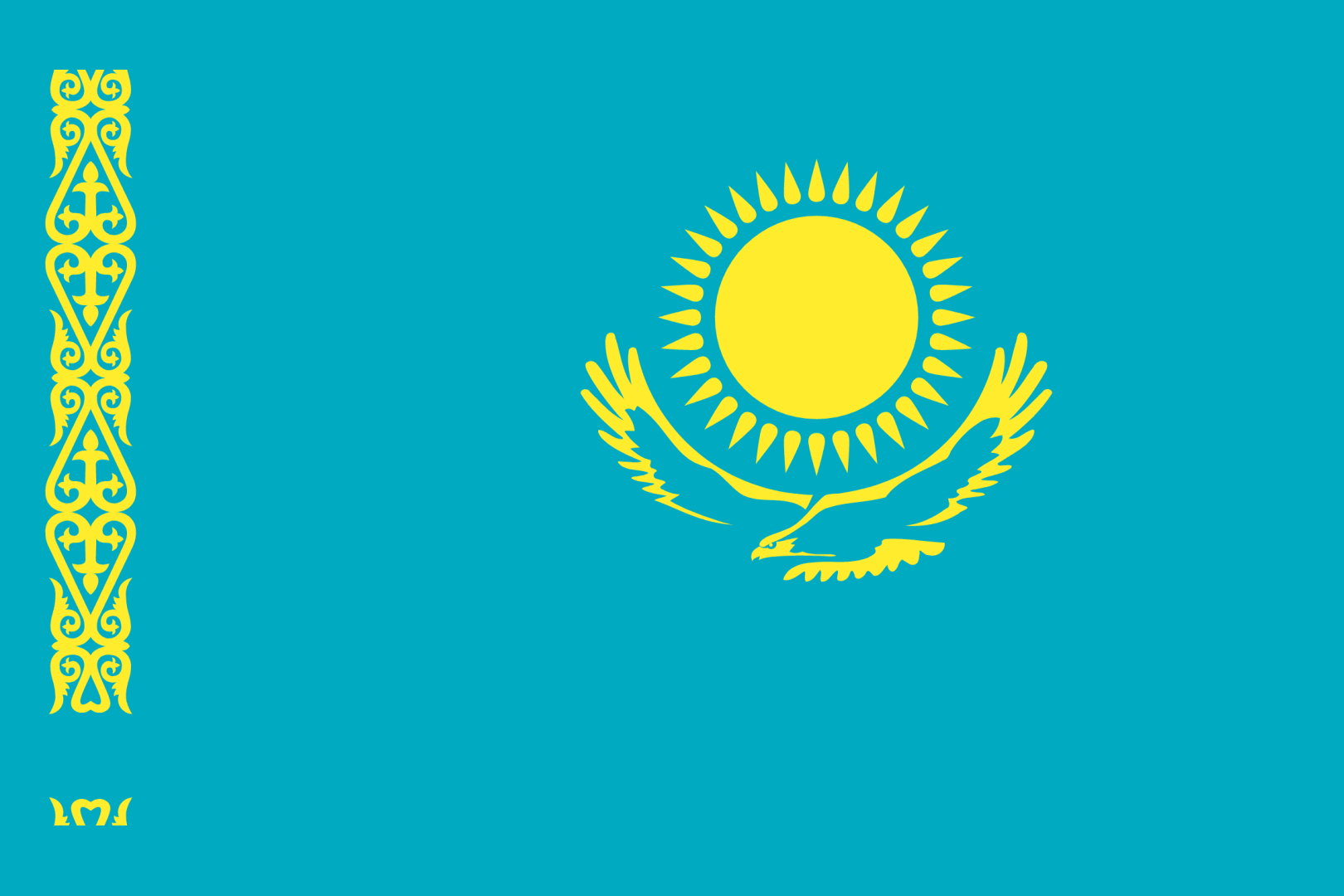
HRF classifies Kazakhstan as ruled by a fully authoritarian regime.
Kazakhstan is a presidential republic in which the head of state serves a single seven-year term following constitutional amendments adopted in 2022. The president appoints the prime minister and cabinet, subject to parliamentary approval. The bicameral parliament consists of the 98-seat lower house (Mazhilis) and the 50-member Senate. After Kazakhstan gained independence from the Soviet Union in 1991, Nursultan Nazarbayev, the former First Secretary of the Kazakh Communist Party, consolidated a stable authoritarian regime through a combination of constitutional amendments that vastly expanded presidential powers and the overt persecution of political opponents. Nazarbayev ruled for nearly three decades, formally stepping down in 2019 and transferring power to his hand-picked successor, Kassym-Jomart Tokayev. Nazarbayev initially retained significant influence as a ceremonial “Leader of the Nation” and chair of the National Security Council, before Tokayev stripped them away following widespread unrest that shook the country in 2022. While Tokayev styled himself a reformer and pursued some constitutional amendments that formally introduced checks on the executive and allowed greater political pluralism, these reforms did not yield significant democratic gains. The executive retains vast powers that it has frequently abused to suppress dissent and preempt potential challenges to its rule.
Key Highlights
Under the rule of Nazarbayev’s hand-picked successor, Kassym-Jomart Tokayev, national elections are a sham, to the point where the real, mainstream political opposition does not have a realistic chance to meaningfully compete and possibly win, despite some nominal openings for political alternatives. The indiscriminate designation of real opposition movements as “extremist” and the judicial persecution of their leaders and ordinary members, together with the large-scale electoral fraud repeatedly perpetrated by the regime, has entrenched the ruling Amanat party (previously, Nur Otan). Largely denied legal status and routinely barred from elections, the real, mainstream political opposition has no available avenues to democratically challenge the regime.
Freedom of dissent in Kazakhstan has been so severely undermined that independent media, political leaders, civil society leaders, organizations, and members of the general public face overt and systematic retaliation if they openly criticize or challenge the regime. Most of the few independent outlets that have survived the regime’s repression operate entirely online and are susceptible to blocking and internet blackouts, tactics the regime has deployed while cracking down on dissenting protests to obscure its widespread human-rights violations. Civil society groups are routinely denied registration, harassed, and obstructed through administrative and legal sanctions. The regime has also systematically repressed dissenting demonstrations using tactics of varying severity, from onerous “prior notice” regulations to overt state-sponsored violence.
Institutions thoroughly fail to serve as checks on the regime. Lower courts have systematically convicted dissidents on dubious or trumped-up charges and only enabled the regime’s attempts to deny the real, mainstream opposition legal status and thus the opportunity to compete in elections. Trials against opposition figures and activists have long been marred by due process violations, including the use of evidence obtained through torture and ill-treatment in detention. While purportedly bolstering checks and balances, Tokayev’s 2022 constitutional amendments only nominally empowered parliament while effectively reaffirming its subservience to the executive. Finally, the regime’s control of key executive agencies, such as those related to national security, and independent oversight bodies has further enabled the suppression of dissent and the consolidation of a highly centralized, personalized dictatorship.