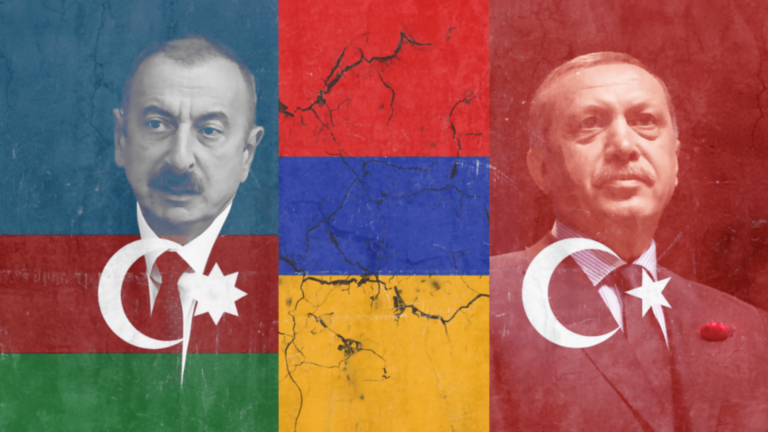
HRF classifies Turkey as ruled by a fully authoritarian regime.
The modern Turkish state emerged in 1923. The Turkish National Movement, led by Mustafa Kemal Atatürk, fought a successful independence war (1919-1923), culminating in the Grand National Assembly’s proclamation of Turkey as a sovereign republic, with Ankara as the capital and Atatürk as its first president. He would hold this office until his death in 1938, driving sweeping modernization and secularization reforms that transformed nearly every aspect of governance, from public education to the civil service. While Turkey held free and fair elections starting in 1950, democratic consolidation stagnated, and the military organized a series of coups in the second half of the 20th century, ostensibly to uphold the country’s secular foundations.
In 2002, the Islamist-rooted Justice and Development Party (AKP) won a landslide election victory. The party had pledged to uphold the secularist principles embedded in the constitution and pursue pragmatic economic policies and greater integration with the West. The AKP and Recep Tayyip Erdoğan have been in power since, overseeing the gradual, but systematic, dismantling of the country’s democratic checks and balances and the increasing persecution of the mainstream political opposition. This erosion intensified following a failed coup attempt in 2016, which the ruling party used as a pretext for sweeping purges within the military, civil service, academia, and media, and further executive aggrandizement.
Key Highlights
Under the continuing rule of the AKP, electoral competition is significantly skewed to the point where the mainstream political opposition has an unlikely but realistic chance to win. Erdoğan’s regime has persecuted prominent members of the main opposition parties, the Republican People’s Party (CHP) and the pro-Kurdish People’s Democratic Party (HDP) and its successor, Peoples’ Equality and Democracy Party (DEM), under false pretenses of corruption or extremism. It has also obstructed their electoral campaigns and undermined independent electoral oversight. Despite such structural disadvantages, the mainstream opposition has made significant strides in recent years, increasing its nationwide results in the 2023 parliamentary elections and winning in major cities, such as Istanbul and Ankara, in the 2019 and 2024 local elections.
Independent media, political leaders, civil society leaders, organizations, and regular people face overt and systematic retaliation if they openly criticize or challenge the regime, particularly following the massive 2013 Gezi park protests and a failed 2016 coup (whose perpetrators have not been definitively identified as of 2025), attempting to topple Erdoğan and the AKP-led Parliament. Even pre-2016, Turkey frequently jailed critical journalists on bogus charges. However, the judicial persecution of dissidents worsened dramatically in the aftermath, with the country frequently ranking amongst the leading jailers of journalists worldwide. The regime has also shut down dozens of independent NGOs, seized the assets of critical media outlets and placed them under its control, and violently repressed dissenting protests. Its crackdown on dissenting journalists and members of the general public intensified in response to the outpour of public support for the mayor of Istanbul, Ekrem İmamoğlu, following his arrest in March 2025, with some estimates suggesting more than 2,000 individuals were arbitrarily detained for taking part in peaceful demonstrations condemning his persecution. Lastly, the regime has used its protracted armed conflict against the militant Kurdistan Workers’ Party (PKK) as justification for its systemic discrimination against Kurds.
Turkish institutions largely fail to serve as independent checks on the regime. In 2017, Erdoğan initiated a successful referendum on transitioning to a super-presidential system, which, in turn, severely limited the operational effectiveness of the legislative and judicial branches. While the Constitutional Court has occasionally acted to check the AKP and President Erdoğan, the judiciary as a whole has largely enabled the regime’s attempts to skew the electoral playing fields in its favor and repress criticism. Turkish courts have routinely rubber-stamped the persecution of prominent opposition leaders and dissidents on bogus charges and censored critical media content.