Country

Kuwait

Kuwait

Fully Authoritarian

Kuwait

0.06%

of the world’s population

5,102,770 people

Source: Tyranny Tracker

Overview

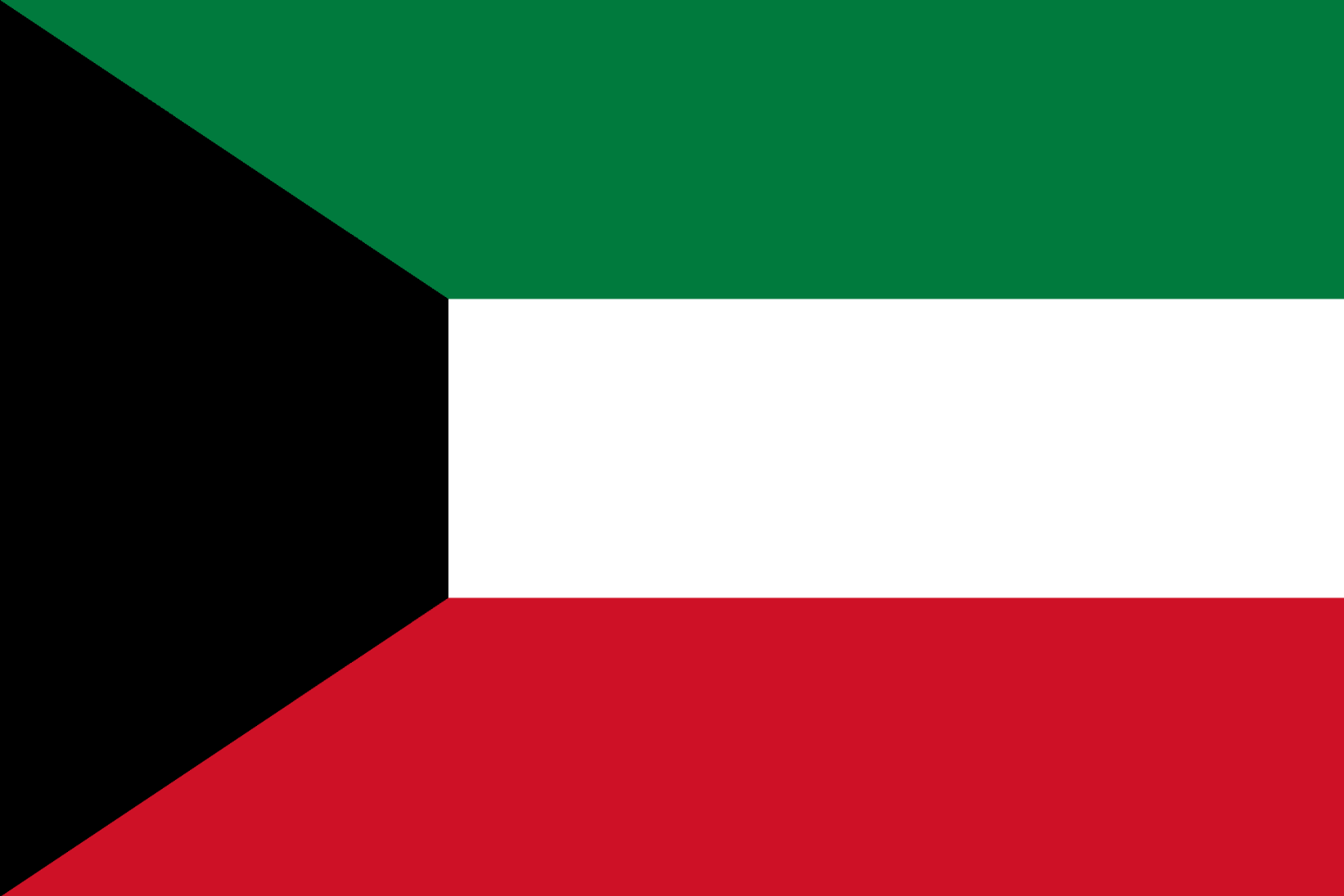
HRF classifies Kuwait as ruled by a fully authoritarian regime.

The State of Kuwait is a hereditary emirate in which, prior to the suspension of the legislature by royal decree in May 2024, elected members of the unicameral National Assembly and the partially independent judiciary checked the otherwise broad powers of the dynastic al-Sabah monarchy. Kuwaiti citizens, who enjoy relative political and civil freedoms, comprise a minority 30 percent of the population of the country, while foreign residents and the Bidoon, a community of stateless people indigenous to the Gulf region who claim Kuwait as their national homeland, are systematically denied access to the political and social privileges of citizenship. Since the spread of protests against authoritarian regimes across the Middle East and North Africa in 2011, often referred to as the Arab Spring, the regime in Kuwait has made both democratizing reforms and regressive actions. The present emir, Sheikh Meshal al-Ahmed al-Jaber al-Sabah, came to power in late 2023 and, under the pretext of enacting much-needed reforms, he suspended parliament and two articles of the constitution in May 2024 for a period of “not more than four years” in response to prolonged gridlock between his cabinet and elected legislators. While some in Kuwait remain optimistic about potential reforms, the removal of significant popular checks on the al-Sabah family has resulted in controversial policies, such as the removal of citizenship from more than 40,000 naturalized Kuwaitis, resulting in abrupt statelessness and a lack of rights for nearly three percent of the citizen population in the year following the suspension of parliament.

Key Highlights

National elections in Kuwait have been absent since the suspension of parliament in May 2024. Prior to the suspension, elections for the National Assembly were competitive and procedurally free and fair despite the regime prohibiting the formation of political parties and sometimes using the controversial National Assembly Election Law of 2016, known colloquially as the Offender Law, to disqualify opposition candidates convicted under unfair defamation laws. Candidates with Salafi, Muslim Brotherhood, liberal, populist, and leftist platforms have won increasingly larger electoral majorities from 2016 to 2024, forming a fluid opposition coalition that broadly checked the regime. Under the pretext of resolving political gridlock that arises from such popular checks on its authority, the regime has regularly abused its constitutional authority to dissolve the National Assembly, triggering frequent snap elections, nullifying democratically introduced legislation in parliamentary dockets, and forcing candidates to focus on expensive campaigns.

Independent media, political leaders, civil society organizations, and members of the general public are seriously and unfairly hindered in their ability to openly criticize or challenge the regime, while those who criticize or challenge the regime’s treatment of stateless persons and other politically sensitive regime policies face overt and systematic retaliation. In general, Kuwaiti citizens enjoy a vibrant civil society and a critical political sphere. However, the regime restricts the freedom to dissent by enforcing vague defamation and cybersecurity laws, manipulating the media and civil society, and repressing citizen activists who protest human rights abuses against non-citizens and the Bidoon. While the regime does not retaliate against all dissenting speech, it imposes high fines, long jail sentences, travel bans, and sometimes revokes the naturalized citizenship of its most outspoken critics, which may intimidate journalists, organizations, and regular people into self-censorship.

Institutions previously partially autonomous have become systematically controlled by the regime since Emir Meshal suspended parliament in 2024, assuming its legislative responsibilities and effectively eliminating the elected National Assembly’s capacity as an independent check. As a result, institutions fail to serve as independent checks on the regime. The regime also exerts heavy influence over the judiciary, whose judges are partially independent yet tend to unfairly side with the regime in its attempts to limit the power of the elected opposition and silence voices critical of its human rights abuses. The courts protect the right of citizens to protest, yet regularly uphold politically motivated charges under vague defamation and cybersecurity laws, and have failed to check the regime’s suspension of parliament and two articles of the constitution.

Share

Kuwait Most Recent

Tyranny Tracker

A Democracy Index Built to Inform Action

Report
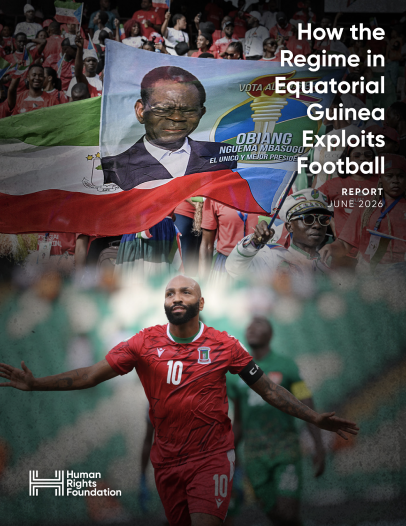
How the Regime in Equatorial Guinea Exploits Football
Equatorial Guinea’s regime has strategically exploited the global appeal of football as a political tool.
Jun 23, 2026
Report
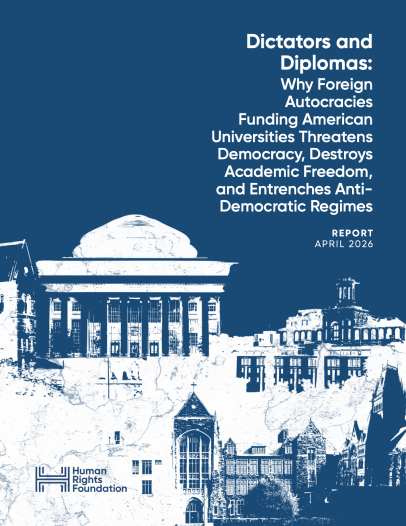
Dictators and Diplomas: Why Foreign Autocracies Funding American Universities Threatens Democracy, Destroys Academic Freedom, and Entrenches Anti-Democratic Regimes
For years, foreign dictatorships and their proxies have searched out any number of ways to influence policy and discourse in the United States. From hiring fleets of lobbyists to setting up dark money networks, from bankrolling sports leagues to launching disinformation campaigns on American social media platforms, from backing strategic investments to hiring consulting firms and white-shoe law firms, the list of targets is lengthy.
May 12, 2026
The Quantum Threat to Bitcoin - Report Cover
Report
The Quantum Threat to Bitcoin
Bitcoin is a financial lifeline for dissidents resisting authoritarian regimes. The rise of cryptographically relevant quantum computers (CRQCs) with the ability to crack Bitcoin’s underlying cryptography could threaten the network’s security foundations.
Oct 31, 2025
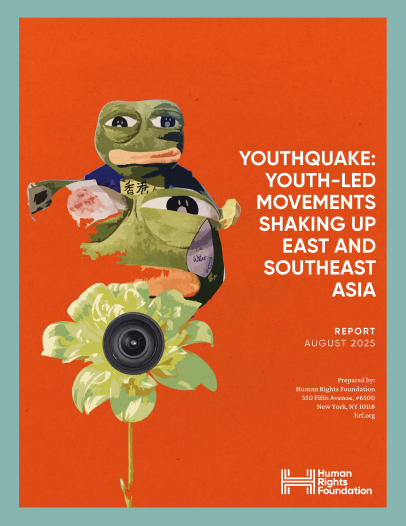
Youthquake Report Asian youth movement Cover
Report
Youthquake: Youth-led Movements Shaking Up East and Southeast Asia
In recent years, youth across East and Southeast Asia, and around the world, have spearheaded the demand for democracy, justice, and freedom.
Aug 14, 2025

How can we help?

Hit enter to search or ESC to close

Join the cause by subscribing to our newsletter.

Email Us